



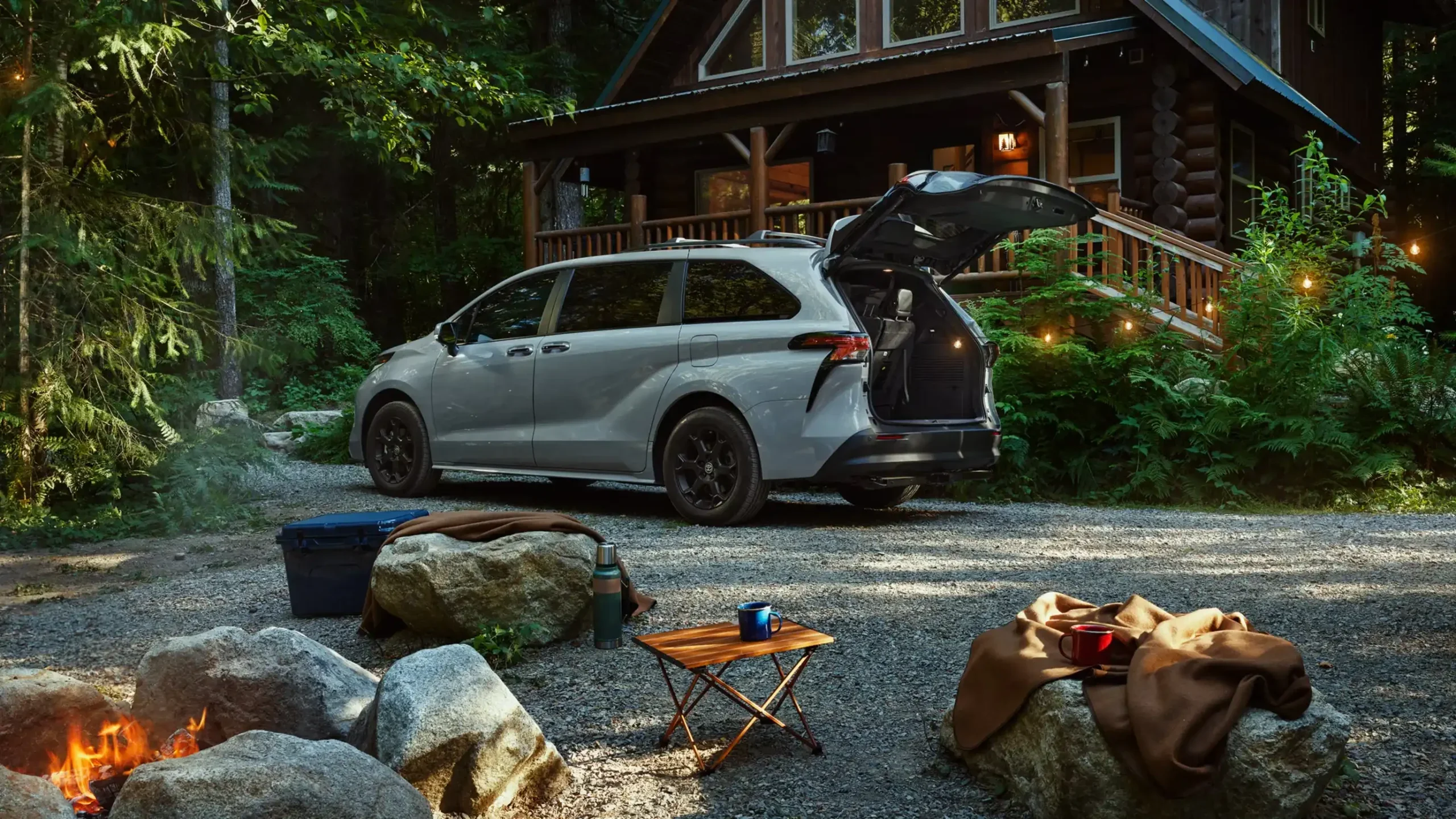
Blog / Durham Toyota Dealer

2026 Toyota Sienna AWD Guide for Durham Families

2026 Toyota Sienna AWD Guide for Durham Families
2026 Toyota Sienna AWD Family Guide | Mark Jacobson Toyota

The 2026 Toyota Sienna AWD is a strong family choice for Durham because it combines a hybrid-only powertrain, available all-wheel drive, up to 36 combined EPA-estimated MPG, sliding doors, three rows, flexible cargo space, and family-friendly convenience. At Mark Jacobson Toyota, we recommend it for families who want SUV-like confidence with minivan access and hybrid efficiency. For a Cary family with two kids, sports bags, a stroller, and regular RDU airport trips, Sienna XLE AWD can make daily loading, passenger access, and fuel planning easier.

Sienna is different from many family vehicles because every 2026 model uses hybrid power. That means families do not need to choose between a gas minivan and a hybrid minivan. The choice becomes which trim, seating setup, and drivetrain fit the household. Available AWD adds confidence for rainy Triangle mornings, while sliding doors and a flexible cabin make school pickup, child-seat loading, grandparent access, and road-trip packing feel more natural.

This guide explains hybrid power, MPG, available AWD, seating, cargo, sliding doors, local family use cases, trim recommendations, and ownership support. We will also compare Sienna with three-row SUVs so Durham, Raleigh, Chapel Hill, Cary, and Apex families can decide whether a hybrid minivan or SUV-shaped family vehicle fits better.

View Toyota Sienna Details

Definition: The 2026 Toyota Sienna AWD is a hybrid minivan with available all-wheel drive, three-row seating, sliding doors, and flexible cargo space. It is designed for families that need efficient daily transportation and easier passenger access. For drivers in Durham, Raleigh, Chapel Hill, Cary, and Apex, it supports school runs, road trips, and family travel.

Hybrid-Only Powertrain, MPG, and AWD Confidence

The 2026 Sienna gives families hybrid efficiency as standard, available AWD confidence, and enough power for daily family driving without requiring a plug-in routine.

245 Net Combined Horsepower, Hybrid MPG, and Why Every Sienna Is Electrified

The 2026 Sienna uses a hybrid system that Toyota rates at 245 net combined horsepower. Toyota also lists an EPA-estimated combined rating of up to 36 MPG, which is a major reason families compare Sienna before choosing a three-row SUV. For Durham parents who drive school routes, work commutes, grocery runs, and weekend activities, that efficiency can matter every week.

The 2026 Toyota Sienna combines 245 net combined horsepower with up to 36 combined EPA-estimated MPG, making it a practical hybrid minivan for families that need three rows and lower fuel use. We recommend it for Durham parents who want family space without switching to a plug-in vehicle. For a parent commuting around Durham with kids, bags, and daily errands, Sienna makes hybrid efficiency part of the normal routine.

Hybrid-only also simplifies the lineup. Families do not have to ask whether the hybrid version is worth it because every Sienna uses the hybrid system. That lets shoppers focus on trim, AWD, seating, technology, and budget. We like that structure because it makes the family decision clearer.

  • If your family wants strong MPG without charging, we recommend starting with Sienna.
  • If you need three rows and easier child-seat access, we recommend comparing Sienna before a three-row SUV.
  • If you drive rainy Triangle roads often, we recommend considering available AWD.
  • If road trips are part of your routine, we recommend comparing XLE, Limited, and Platinum comfort features.
Family Value Factor2026 Toyota SiennaWhy It MattersBest For
PowertrainHybrid system standardNo need to choose between gas and hybrid versionsFamilies wanting simple hybrid shopping
Horsepower245 net combined hpSupports daily family driving and highway mergingDurham and Raleigh family commuters
Fuel economyUp to 36 combined EPA-estimated MPGHelps reduce fuel stops for school, work, and weekend routesFamilies with repeated weekly mileage
AWD availabilityAvailable all-wheel driveAdds confidence for rain and loaded family travelCary and Apex households
Charging needNo plug-in charging requiredHybrid savings fit a normal family routineBusy parents who do not want a charging schedule
Ideal Use CaseHybrid family minivanCombines efficiency, access, seating, and cargo flexibilityFamilies comparing minivans and SUVs

Based on Toyota official website.

Check Sienna Availability

Available AWD for Triangle Rain, Hills, and Loaded Family Travel

Available AWD is one of Sienna’s biggest advantages for Triangle families. Durham, Cary, Apex, Raleigh, and Chapel Hill drivers know that heavy rain can change a normal commute quickly. AWD can be especially useful when the vehicle is loaded with passengers, backpacks, sports equipment, strollers, luggage, or weekend gear.

For an Apex family that drives in rainy conditions and often carries extra cargo, we recommend comparing Sienna AWD configurations because the added traction confidence can be worth the step up. For families that stay mostly on flat paved roads and want the simplest efficiency setup, front-wheel drive may still be the right choice. The decision should follow the roads, parking, and travel patterns your family uses most.

Our sales team walks families through this during test drives because AWD is not only a spec. It is a confidence feature. When a family regularly drives to RDU, Chapel Hill, school events, and weekend activities, that confidence can matter more than it looks on paper.

Why Sienna Works for Family Fuel Savings Without Plug-In Charging

Sienna works for many families because it brings hybrid efficiency without asking anyone to plug in. Parents already manage school schedules, work, groceries, sports, appointments, and family travel. Adding a charging routine may not fit every household. Sienna avoids that issue because the hybrid system works automatically.

For a Durham parent commuter, that makes the ownership experience simple. The vehicle uses regular refueling habits, while the hybrid system helps with fuel economy in daily driving. Compared with a plug-in hybrid, Sienna does not depend on home charging access, apartment parking, or public charging availability.

What we see here in Durham is that many family shoppers want electrified efficiency but do not want the planning that can come with a plug-in vehicle. Sienna fills that space well. It gives families the access and room of a minivan with hybrid efficiency built into every trim.

Ask About Sienna AWD

Seating, Cargo, Sliding Doors, and Daily Convenience

Sienna’s biggest family advantage is not only fuel economy; it is how sliding doors, three-row seating, and flexible cargo space make daily loading easier.

Minivan Practicality vs Three-Row SUV Family-Use Comparison

Many families start by comparing minivans and three-row SUVs. SUVs can be great choices, especially Grand Highlander, Highlander, Sequoia, and RAV4 for different household needs. Sienna is different because it is built around passenger access. Sliding doors, a wide cabin path, and easy loading can matter more than SUV styling when a parent is handling car seats, grocery bags, sports gear, and crowded parking lots.

We recommend Sienna for families that load people and gear every day. We recommend Grand Highlander or Highlander when a family wants SUV shape, available towing, or a more traditional crossover driving feel. For child-seat use, school pickup, and grandparent access, Sienna often feels easier because the doors and cabin layout are doing more of the work.

Family Need2026 Toyota SiennaThree-Row Toyota SUVBest For
Child-seat loadingSliding doors and lower step-in accessSwing-out doors and SUV ride heightSienna for frequent car-seat use
School pickupEasy passenger entry in tight lanesStrong visibility and SUV feelSienna for busy pickup lines
Cargo flexibilityFamily-focused cargo loading and Split & Stow 3rd RowVaries by SUV size and seating positionSienna for strollers and gear
Fuel efficiencyHybrid power standardHybrid availability varies by modelSienna for standard hybrid efficiency
Weather confidenceAvailable AWDAvailable AWD or 4WD depending on modelBoth can fit Triangle rain needs
Ideal Use CaseFamily with kids, strollers, sports bags, and frequent passenger loadingFamily wanting SUV style, ride height, or model-specific capabilityChoose based on access versus SUV personality

Based on Toyota official website.

The key difference between Sienna and a three-row SUV is daily access. We recommend Sienna for families who regularly load kids, grandparents, car seats, strollers, sports bags, and luggage because the sliding doors and minivan cabin reduce everyday friction. We recommend an SUV when the family values SUV stance, towing choices, or a more rugged shape more than loading ease.

Schedule a Sienna Test Drive

Cary, Apex, RDU, and College Move-In Use Cases

Sienna makes the most sense when a family’s daily routine is busy and repetitive. Our customers with children often tell us that convenience matters more over time than they expected. Sliding doors, easy access to the second row, flexible third-row use, and cargo loading all become part of the ownership experience.

  • If you are a Cary family with two kids, sports bags, and regular RDU trips, we recommend Sienna XLE AWD because it balances access, comfort, and traction confidence.
  • If you are an Apex weekend family carrying coolers, folding chairs, and sports gear, we recommend Sienna Woodland Edition or another AWD configuration because extra confidence and cargo flexibility matter.
  • If you are a Chapel Hill family with grandparents riding often, we recommend Limited or Platinum because second-row comfort and convenience features become more important.
  • If you are moving a student into Duke, UNC, or NC State, we recommend checking Sienna cargo flexibility because the cabin can handle people and packed gear more easily than many shoppers expect.

For families asking which Toyota works best for RDU trips, school activities, and college move-in, Sienna is one of our strongest recommendations. It keeps the loading process easier, gives passengers real three-row comfort, and uses hybrid power to support repeated family mileage. The more often your family loads people and cargo together, the more Sienna’s design makes sense.

Visit Us to Compare Sienna and Toyota SUVs

If you are deciding between Sienna and a Toyota SUV, we recommend visiting our Durham showroom so we can test the daily-family details with you in person. Bring the car seats, stroller, sports bags, or luggage you use most often so we can help you compare sliding-door access, second-row comfort, third-row use, and cargo loading. Our team can also help you review Sienna AWD availability, current vehicle options, and trim differences through https://www.markjacobsontoyota.com/searchnew.aspx before you choose. Families from Durham, Raleigh, Chapel Hill, Cary, and Apex can call us at 919-493-5599 or schedule a visit around school, work, or weekend timing. We want the test drive to answer the practical questions that matter after the first week of ownership.

Value Your Family Trade

Sienna Trims We Recommend for Triangle Families

The right Sienna trim depends on how often your family uses AWD, how much comfort you want, and whether daily access or premium travel features matter more.

LE, XLE, Woodland Edition, Limited, and Platinum Family Recommendations

Sienna trims each solve a different family need. LE is the practical starting point for families that want the Sienna concept without moving into higher equipment levels. XLE is often the trim we recommend first because it adds comfort and convenience while keeping the family value clear. Woodland Edition is a strong fit for drivers who want a more adventure-oriented Sienna with standard AWD. Limited and Platinum are better for families that want premium comfort, technology, and long-distance convenience.

For Durham and Raleigh families, the best trim often depends on daily loading and trip frequency. For Cary parents with school, sports, and RDU airport runs, XLE AWD is a very strong place to start. For Apex families that drive on rainy roads and head out for weekend activities, Woodland Edition deserves a close look. For Chapel Hill families carrying grandparents or college students on longer trips, Limited and Platinum can make the cabin feel more comfortable.

Sienna TrimFamily PersonalityLocal Use CaseBest For
LEPractical family starting pointDurham family entering minivan ownershipFamilies wanting core Sienna value
XLEComfort and convenience balanceCary family with school, sports, and errandsMany daily family routines
Woodland EditionAdventure-minded Sienna with standard AWDApex family with weekend travel and rainy-road needsFamilies wanting AWD confidence and outdoor personality
LimitedPremium comfort family trimChapel Hill family carrying grandparents or older kidsLonger drives and comfort-focused households
PlatinumTop comfort and technology expressionRaleigh or Durham family wanting maximum Sienna featuresPremium minivan shoppers
Ideal Use CaseTrim matched to daily family routineTriangle household comparing access, comfort, AWD, and budgetFamilies choosing by real weekly needs

Based on Toyota official website.

For Triangle families, we recommend starting with XLE if you want the strongest everyday balance. We recommend Woodland Edition if standard AWD and adventure-friendly character matter. We recommend Limited or Platinum if your family takes longer trips, carries adults often, or wants a more premium cabin. The best Sienna trim is the one that fits your loading routine, not just the longest feature list.

Get Pre-Approved for Sienna

Compare Sienna Trims With Our Team

If you are ready to compare Sienna trims, we can help you look at current vehicle availability, trade value, finance options, and ToyotaCare support in one visit. Our team works with families from Durham, Raleigh, Chapel Hill, Cary, and Apex who want clear answers about seating, sliding doors, cargo space, AWD, and hybrid ownership. We can also help you compare Sienna with Highlander, Grand Highlander, RAV4, and Sequoia if you are still choosing between a minivan and SUV. Our Mark Says Yes! approach keeps the conversation practical, friendly, and focused on your family’s actual routine. Call us at 919-493-5599 or visit https://www.markjacobsontoyota.com/contactus.aspx so we can help you choose the Sienna configuration that fits your household.

Schedule Sienna Service

Family and Lifestyle Fit: Why Sienna Can Beat an SUV for Daily Family Life

Sienna can beat an SUV for daily family life when access, child-seat loading, passenger comfort, and cargo practicality matter more than SUV styling.

The reason families keep coming back to Sienna is simple: it makes daily access easier. A Raleigh parent loading a child seat in a tight pickup lane may feel the difference immediately. Sliding doors reduce door-swing stress, and the lower step-in height can help kids, grandparents, and parents moving quickly through busy routines.

SUVs still make sense for many households, but we recommend Sienna when the family’s most repeated task is moving people in and out of the vehicle. A three-row SUV may look more rugged, but a minivan often wins the practical test when the family deals with backpacks, car seats, strollers, sports bags, groceries, and grandparents.

For a Chapel Hill family with grandparents riding often, Limited or Platinum can make passenger comfort a major advantage. For a Durham parent with two young kids, XLE may make the biggest difference because the doors, seating, and cabin layout reduce everyday effort. That practical ease is the reason Sienna remains one of the smartest family vehicles we recommend.

Local Driving Insight: How Sienna Fits RDU Trips, College Move-In, and Triangle Weekends

Sienna fits Triangle family life because it can handle daily school runs, RDU luggage, college move-in gear, and weekend mileage without asking families to give up hybrid efficiency.

Triangle families rarely use a vehicle for just one job. A single week can include school pickup in Durham, work in Raleigh, groceries in Cary, soccer in Apex, and a weekend airport run to RDU. Sienna is built for that kind of mixed routine because the cabin can carry people and gear while the hybrid system keeps fuel use reasonable for the size.

College move-in is another Sienna strength. Families helping a student move into Duke, UNC, or NC State often need seats and cargo flexibility in the same trip. Sienna’s Split & Stow 3rd Row and wide family-focused cabin help make that kind of packing more manageable.

  • If your family makes regular RDU trips, we recommend Sienna for luggage access and passenger comfort.
  • If you help with Duke, UNC, or NC State move-in, we recommend checking Sienna cargo flexibility before choosing an SUV.
  • If weekends include sports, coolers, chairs, or pets, we recommend XLE or Woodland Edition based on AWD needs.
  • If road trips are frequent, we recommend comparing Limited and Platinum for added cabin comfort.

For families that use one vehicle for school, travel, errands, and weekend plans, Sienna gives the kind of flexibility that becomes more valuable over time.

Key Takeaways

  • The 2026 Sienna uses a standard hybrid powertrain with 245 net combined horsepower.
  • Sienna offers available AWD and up to 36 combined EPA-estimated MPG.
  • XLE is a strong everyday family trim for many Durham and Cary households.
  • Woodland Edition fits families that want standard AWD and weekend versatility.
  • Sienna is strongest when sliding doors, access, and cargo loading matter every day.

2026 Toyota Sienna AWD Durham Family FAQ

Is the 2026 Toyota Sienna AWD good for Durham families?

The 2026 Toyota Sienna AWD is a strong choice for Durham families because it combines hybrid efficiency, available all-wheel drive, three-row seating, sliding doors, and flexible cargo space. We recommend it for parents who need easier child-seat loading, school pickup convenience, and family-trip comfort. For a Cary family with kids, strollers, sports bags, and RDU airport runs, Sienna XLE AWD can make daily access and travel planning easier than many SUV-shaped alternatives.

What MPG does the 2026 Toyota Sienna get?

Toyota lists the 2026 Sienna with an EPA-estimated combined rating of up to 36 MPG. That rating matters because every Sienna uses a hybrid powertrain, so families get electrified efficiency without plugging in. We recommend Sienna for Durham and Raleigh parents who want three-row practicality and fewer fuel stops during school, work, grocery, and weekend routines. Exact MPG can vary by trim, drivetrain, driving conditions, and how the vehicle is loaded.

Which 2026 Sienna trim is best for families?

We recommend Sienna XLE for many families because it balances comfort, convenience, and value well. We recommend Woodland Edition for Apex or Cary families that want standard AWD and a more adventure-minded personality. Limited and Platinum are better for families that want more premium comfort for longer trips, grandparents, or older kids. LE is a good starting point when the main goal is core Sienna practicality at a lower trim level.

Is Sienna better than a three-row SUV for family use?

Sienna can be better than a three-row SUV when sliding doors, child-seat loading, lower step-in access, and cargo flexibility matter most. We recommend Sienna for families that regularly load kids, grandparents, strollers, sports gear, and luggage. We recommend Highlander or Grand Highlander when a family wants SUV shape, ride height, or different capability priorities. The better choice depends on whether daily access or SUV personality matters more.

Related Articles

Keep reading more Toyota family guides, hybrid comparisons, and ownership tips from our Durham team.

SUV Comparison

2026 Toyota Highlander vs Grand Highlander: Which Toyota SUV Fits Your Family?

Compare space, MPG, trims, towing, and family fit for two Toyota three-row SUVs at Mark Jacobson Toyota.

Read More

Hybrid Commute

2026 Toyota Camry Hybrid MPG and Commute Guide for RTP Drivers

See how the all-hybrid Camry fits RTP commutes with MPG, comfort, AWD availability, Toyota Safety Sense, and ToyotaCare.

Read More

Buying Guide

Toyota Car Buying Checklist for Triangle College Graduates

Prepare documents, budget, rebate basics, model choices, and finance steps before buying a first Toyota after graduation.

Read More

Service Guide

Toyota A/C Service & Repair Guide for Durham Summer Driving

Understand weak cooling, odors, airflow concerns, cabin filter checks, and summer service timing for Toyota owners.

Read More

Posted in:

Related Posts

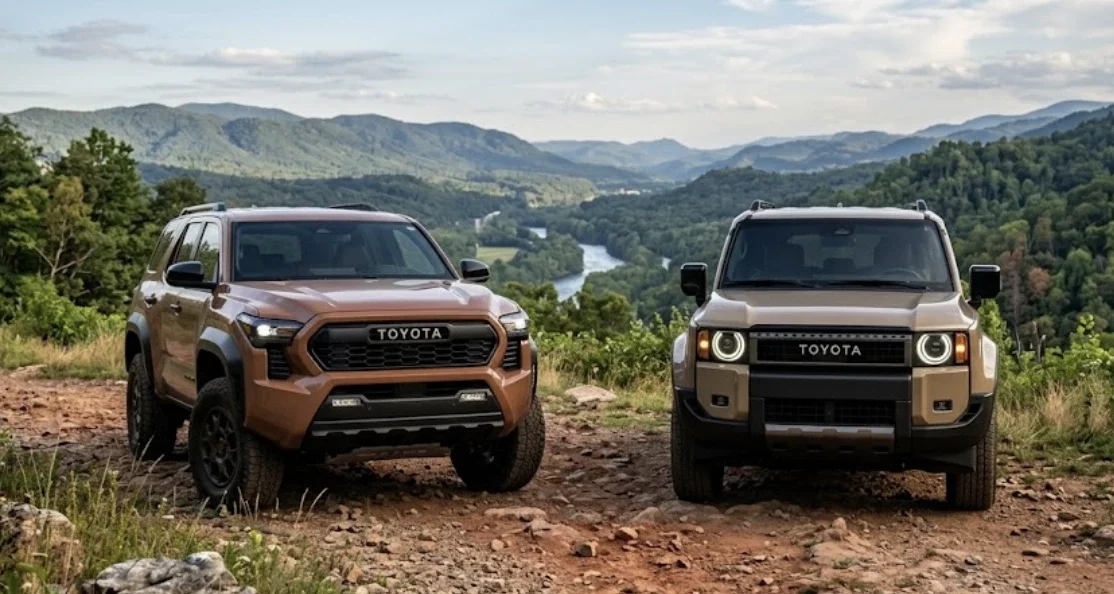
Toyota 4Runner vs Land Cruiser Durham SUV

Toyota 4Runner vs Land Cruiser: Durham SUV Guide

The Toyota 4Runner is the better choice for Durham drivers who want a lower starting price, available seven-passenger seating, and a choice between gas and hybrid power, while the Land Cruiser is the better choice for drivers who want standard hybrid power and dedicated off-road hardware on every trim without shopping between engine options. At Mark Jacobson Toyota, we get this question constantly from Triangle shoppers cross-shopping our rugged Toyota SUV lineup, and the honest answer depends less on which SUV is "better" and more on how your household actually drives. For a Cary family that needs a third row for carpool season but also wants weekend trail capability, the 4Runner's available seven-passenger SR5 or Limited solves a problem the two-row-only Land Cruiser cannot. Both SUVs share Toyota's TNGA-F body-on-frame platform and Toyota Safety Sense 3.0, but they diverge quickly after that. The 4Runner spans nine trims from a value-focused SR5 to a trail-ready TRD Pro and overland-inspired Trailhunter, with i-FORCE MAX hybrid power standard on some trims and optional on others. The Land Cruiser keeps things simple with just two trims, the 1958 and Land Cruiser, and every single one is a hybrid. In this guide, we compare powertrain and towing, price and daily comfort, who actually buys each SUV around Durham, and which one we recommend for different households, so you can walk into our showroom already knowing which questions to ask. Table of Contents Introduction Definition Block Powertrain, 4WD, Towing, and Off-Road Hardware i-FORCE vs i-FORCE MAX hybrid specs Towing capacity and locking differentials compared Trail Features and Body-on-Frame Confidence Price, Value, Comfort, and Daily Practicality Price, seating, and cargo comparison Triangle Family Use vs Blue Ridge Adventure Use 4Runner and Land Cruiser Buyer Profiles Around Durham Who actually buys each SUV in the Triangle Which SUV We Recommend for Durham Drivers 4Runner vs Land Cruiser Ownership: Fuel, Maintenance, and Long-Term Value Key Takeaways 4Runner vs Land Cruiser FAQ for Durham Shoppers Closing The Toyota 4Runner and Toyota Land Cruiser are both body-on-frame, off-road-capable SUVs built on Toyota's TNGA-F platform. The 4Runner offers a wider trim range with a choice of gas or hybrid power, while the Land Cruiser is a smaller, two-trim lineup that is hybrid on every model. For drivers in Durham, Raleigh, Chapel Hill, Cary, and Apex, the right choice depends on seating needs, budget, and how often the vehicle will actually leave pavement. Powertrain, 4WD, Towing, and Off-Road Hardware The 4Runner lets you choose between a gas i-FORCE engine and an available i-FORCE MAX hybrid, while every Land Cruiser comes standard with the same 326-horsepower hybrid powertrain, and that single difference shapes almost every other comparison between the two. i-FORCE vs i-FORCE MAX hybrid specs The 2026 Toyota 4Runner starts with a standard 2.4-liter turbocharged i-FORCE engine producing 278 horsepower and 317 lb.-ft. of torque on SR5, TRD Sport, and TRD Sport Premium trims. Stepping up to the i-FORCE MAX hybrid, available on TRD Off-Road, TRD Off-Road Premium, and Limited, and standard on Platinum, TRD Pro, and Trailhunter, raises output to 326 horsepower and 465 lb.-ft. of torque, identical figures to every Land Cruiser trim. We recommend the i-FORCE MAX 4Runner for Durham drivers who want Land Cruiser-level power in a trim lineup with more price flexibility. The 2026 Toyota Land Cruiser skips the choice entirely: every 1958 and Land Cruiser trim uses the same i-FORCE MAX hybrid powertrain, with 326 horsepower, 465 lb.-ft. of torque, and an eight-speed automatic transmission. For a Raleigh driver who wants hybrid torque without researching which 4Runner trims include it, that simplicity is part of the Land Cruiser's appeal. You can review full specifications on our 4Runner research page or our Land Cruiser research page before you decide. Spec 4Runner (gas i-FORCE) 4Runner (i-FORCE MAX hybrid) Land Cruiser (all trims) Horsepower 278 hp 326 hp 326 hp Torque 317 lb.-ft. 465 lb.-ft. 465 lb.-ft. Transmission 8-speed automatic 8-speed automatic 8-speed automatic Combined MPG Up to 23 mpg Slightly lower than gas in most trims 23 mpg Availability SR5, TRD Sport, TRD Sport Premium Optional on Limited/TRD Off-Road; standard on Platinum, TRD Pro, Trailhunter Standard on both trims Best For Budget-focused buyers not chasing max torque Buyers wanting Land Cruiser-level torque with trim flexibility Buyers who want hybrid power without comparing trims Based on Toyota's official website. Choose the gas 4Runner if you want the lowest entry price and do not need maximum torque. Choose the hybrid 4Runner if you want Land Cruiser-level power with more trim choices. Choose the Land Cruiser if you would rather not compare engine options at all. For a Durham commuter cross-shopping a base SR5 4Runner against a Land Cruiser 1958, the power difference is real: 278 hp and 317 lb.-ft. versus 326 hp and 465 lb.-ft. We recommend test-driving both before assuming the Land Cruiser's extra torque matters for your actual commute. See 4Runner i-FORCE MAX Trims Towing capacity and locking differentials compared Towing is one of the more counterintuitive parts of this comparison. Gas-powered 4Runner trims, including the base SR5, tow up to 6,000 pounds, matching the Land Cruiser's maximum. But the hybrid top trims, Platinum, TRD Pro, and Trailhunter, are actually rated slightly lower at 5,800 pounds because of the added weight of the hybrid battery and motor. The Land Cruiser holds its 6,000-pound rating on every trim since the hybrid hardware was engineered into the vehicle from the start rather than added to an existing gas platform. Off-road hardware follows a similar trim-dependent pattern on the 4Runner. Locking rear differentials and Multi-Terrain Select are concentrated on TRD Off-Road, TRD Pro, and Trailhunter grades, while SR5 and Limited focus more on comfort and available third-row seating. On the Land Cruiser, locking center and rear differentials and low-range gearing come standard on both trims, no upgrade required. For an Apex household deciding between a 4Runner TRD Off-Road and a Land Cruiser 1958, both deliver similar trail hardware, but the Land Cruiser guarantees it without trim research. Trail Features and Body-on-Frame Confidence Both SUVs share Toyota's TNGA-F body-on-frame platform, which is the underlying reason either one can handle rutted trails, gravel forest-service roads, and towing loads that would stress a car-based crossover. The 4Runner's most capable trims reach up to 10.1 inches of ground clearance, noticeably more than the Land Cruiser's 8.7 inches, which gives TRD Pro and Trailhunter buyers an edge on technical terrain. The Land Cruiser counters with a more consistent off-road spec sheet across its narrower trim range, so buyers are not choosing between comfort trims and capability trims the way 4Runner shoppers sometimes have to. For a Chapel Hill trail regular comparing a 4Runner Trailhunter to a Land Cruiser trim, the deciding factor often comes down to whether overland-style equipment, like the Trailhunter's upgraded suspension and rear bumper, matters more than the Land Cruiser's simpler, standardized approach to off-road readiness. Price, Value, Comfort, and Daily Practicality The 4Runner's nine-trim lineup gives Durham shoppers far more price flexibility than the Land Cruiser's two trims, but that flexibility means comfort and off-road features are not standardized the way they are on every Land Cruiser. Price, seating, and cargo comparison Price is where the two SUVs separate the most. The 2026 4Runner starts at $41,870 MSRP for the SR5 and reaches $68,200 for the TRD Pro, giving Durham shoppers a wide range of entry points. The Land Cruiser starts around $58,000 for the 1958 and around $63,000 for the Land Cruiser trim, which puts its base price closer to a mid-to-upper 4Runner trim than to the 4Runner's entry point. Seating is another key difference: the 4Runner offers an available third row on gas SR5 and Limited trims for up to seven passengers, while hybrid 4Runner trims and every Land Cruiser trim seat five only, since the hybrid battery occupies the space a third row would use. Criteria 4Runner Land Cruiser Best For Starting MSRP* $41,870 (SR5) Around $58,000 (1958) 4Runner for lowest entry price Top Trim MSRP* $68,200 (TRD Pro) Around $63,000 (Land Cruiser) 4Runner for widest trim spread Seating 5 or 7 passengers (gas trims) 5 passengers only 4Runner for families needing a third row Cargo (2-row) 48.4 cu ft behind rear seat 37.5 cu ft behind second row 4Runner for more everyday cargo room Ground Clearance Up to 10.1 in (TRD Pro/Trailhunter) Up to 8.7 in 4Runner top trims for extreme clearance Trim Count 9 trims 2 trims Land Cruiser for simpler shopping Best For Buyers wanting price range and trim variety Buyers wanting a simple, fully-equipped hybrid SUV Matches shopping style to household Based on Toyota's official website. *Starting MSRP shown before destination charge; confirm current pricing with our sales team. We recommend the 4Runner over the Land Cruiser when budget flexibility or third-row seating matter more than a standardized off-road spec sheet. We recommend the Land Cruiser over the 4Runner when you would rather skip comparing nine trims and simply buy a fully-equipped hybrid off-road SUV. Neither vehicle is the wrong choice; they are built for different shopping priorities. Schedule a Side-by-Side Test Drive Triangle Family Use vs Blue Ridge Adventure Use Daily life around Durham and RTP tends to favor the 4Runner's flexibility, while dedicated mountain and trail use tends to favor the Land Cruiser's standardized hardware. For a Cary family managing carpool and after-school activities most weekdays, the 4Runner's available third row solves a real logistics problem that the Land Cruiser cannot. For a Raleigh household that spends most weekends on Blue Ridge Parkway routes or forest-service roads, the Land Cruiser's guaranteed locking differentials and low-range gearing remove the guesswork of picking the right 4Runner trim. If you need a third row for carpool or sports schedules, choose the 4Runner SR5 or Limited. If you want maximum trail hardware without comparing trims, choose the Land Cruiser. If your budget caps out near $45,000, the 4Runner is your only option between these two. If you want the widest ground clearance for technical trails, look at the 4Runner TRD Pro or Trailhunter. For an Apex family that splits time between school runs and weekend trips to Jordan Lake or the mountains, we often recommend test-driving a 4Runner Limited hybrid and a Land Cruiser 1958 back to back, since the price gap between them is smaller than shoppers expect. If you are still weighing the 4Runner against the Land Cruiser, we would rather show you both in person than have you guess from a spec sheet. Our team at Mark Jacobson Toyota can pull current 4Runner and Land Cruiser inventory so you can sit in both, compare cargo access, and feel the difference in ride height and interior space for yourself. We can also walk you through which 4Runner trims include the i-FORCE MAX hybrid, since availability changes trim to trim in ways that are easy to misread online. Drivers from Durham, Raleigh, Chapel Hill, Cary, and Apex are welcome to call us at 919-493-5599 or check current availability on our website before stopping by. We want your visit to answer real questions about seating, towing, and price, not just repeat a spec sheet you already read. Get Pre-Approved for Either SUV 4Runner and Land Cruiser Buyer Profiles Around Durham Around Durham and the Triangle, 4Runner buyers tend to prioritize budget and flexibility, while Land Cruiser buyers tend to already know they want standardized off-road capability and are willing to pay for it. Who actually buys each SUV in the Triangle At our Mark Jacobson Toyota showroom, the 4Runner shopper is often a Durham or Cary family cross-shopping SUVs in the low-to-mid $40,000s who wants a rugged Toyota with room to grow into a higher trim later. The Land Cruiser shopper has typically already decided they want a hybrid, off-road-focused SUV and are comparing it mainly against the 4Runner's upper trims or the Sequoia, not against mainstream crossovers. Both groups value Toyota reliability, but they arrive at our lot asking different questions. For a Chapel Hill professional who wants distinctive retro styling and does not mind a narrower trim lineup, the Land Cruiser fits that identity better than a 4Runner ever will. For a Raleigh family that needs to justify the purchase across daily commuting, carpool duty, and occasional weekend trips, the 4Runner's range of trims makes it easier to find one configuration that covers all three jobs. We also see a third pattern locally: buyers who start out shopping the Land Cruiser for its styling, then end up in a 4Runner Limited once they realize they need the available third row after all. Local Buyer Profile Primary Priority Better Fit Why Durham budget-conscious family Lowest entry price 4Runner SR5 $41,870 starting MSRP vs Land Cruiser's higher floor Cary carpool family Seven-passenger seating 4Runner SR5 or Limited Only 4Runner offers an available third row Raleigh mountain-trip household Standardized off-road hardware Land Cruiser Locking diffs and low range on every trim Apex trail enthusiast Maximum ground clearance 4Runner TRD Pro/Trailhunter Up to 10.1 in of clearance Chapel Hill style-focused buyer Distinctive retro design Land Cruiser Simpler lineup with a stronger design identity Ideal Use Case Matching budget and passenger needs to trim 4Runner or Land Cruiser depending on priority Neither SUV fits every household equally well Based on Toyota's official website and current trim availability. Value Your Trade Toward a 4Runner or Land Cruiser If one of these buyer profiles sounds like you, we invite you to stop by our Durham showroom so we can match you to the right trim rather than the right model on paper alone. Our team has helped drivers across Durham, Raleigh, Chapel Hill, Cary, and Apex work through this exact decision, and we are glad to pull current 4Runner and Land Cruiser inventory for a side-by-side look. As part of our Mark Says Yes! approach, we focus on finding financing and trade options that fit your budget rather than steering you toward whichever SUV has the higher price tag. If you already own a vehicle to trade, we can give you a real trade value before you commit to either model. Call us at 919-493-5599, review current inventory on our website, or visit us at 4516 Durham-Chapel Hill Blvd so we can help you make this decision with confidence. Browse 4Runner and Land Cruiser Inventory Which SUV We Recommend for Durham Drivers We recommend the 4Runner for most Durham households and the Land Cruiser specifically for buyers who already know they want standardized hybrid off-road hardware and are willing to pay for it. If you are still undecided, our honest recommendation starts with your budget and passenger count, not the spec sheet. If you need to stay closer to $45,000 or need seating for seven, the 4Runner is the only one of the two that can meet you there. If your budget already sits closer to $58,000 to $65,000 and you do not need a third row, the Land Cruiser's standardized hybrid power and off-road hardware make the decision simple. For a Durham family cross-shopping a 4Runner Limited hybrid against a Land Cruiser 1958, the two vehicles land closer in price than most shoppers expect, and at that point the decision often comes down to seating flexibility versus design identity rather than capability. For a Cary or Apex buyer who has already ruled out a third row and wants the most trail-ready SUV without comparing engine options, we recommend heading straight to the Land Cruiser. For a Raleigh household that genuinely cannot decide, we recommend a back-to-back test drive at our Durham showroom, since ride height, interior feel, and cargo access are easier to judge in person than from any comparison chart, including this one. We also encourage bringing your actual gear, whether that is car seats, camping equipment, or a trailer hitch, so you can confirm fit before signing paperwork rather than after. 4Runner vs Land Cruiser Ownership: Fuel, Maintenance, and Long-Term Value Ownership costs favor the 4Runner if you choose a gas trim and stay off trails, and favor the Land Cruiser's predictability if you want the same hybrid coverage and service routine on every trim without comparing options. Because the 4Runner offers both gas and hybrid trims, ownership costs vary more than they do on the hybrid-only Land Cruiser. A gas SR5 will cost less to service in some respects since it lacks hybrid-specific components, while an i-FORCE MAX 4Runner or any Land Cruiser trim carries the same hybrid system warranty coverage and ToyotaCare-eligible maintenance schedule. If you choose a gas 4Runner, expect simpler service intervals but no hybrid fuel-economy benefit. If you choose a hybrid 4Runner or any Land Cruiser, expect ToyotaCare coverage and hybrid system warranty protection. If you tow near the maximum rating regularly, budget for more frequent fluid and brake inspections on either SUV. If you plan heavy trail use, plan for tire and alignment costs regardless of which model you choose. Our service team advises owners of either SUV to keep up with differential fluid checks and skid plate inspections after seasons of off-road use, and to stick with genuine OEM parts for drivetrain service. For a Durham family planning to keep either SUV for eight to ten years, the Land Cruiser's single-powertrain simplicity can make budgeting slightly more predictable, while the 4Runner's trim range gives more control over the upfront price you pay to get there. Either way, we recommend using scheduled ToyotaCare visits to catch small issues, like uneven tire wear from trail use, before they turn into larger repairs. Schedule Service for Your 4Runner or Land Cruiser Key Takeaways The 4Runner starts at $41,870 MSRP; the Land Cruiser starts around $58,000. Every Land Cruiser is a 326-hp hybrid; the 4Runner offers both gas (278 hp) and hybrid (326 hp) options. Only the 4Runner offers available seven-passenger seating, on gas SR5 and Limited trims. The 4Runner's top trims reach 10.1 inches of ground clearance versus 8.7 inches on the Land Cruiser. We recommend the Land Cruiser for buyers who want standardized off-road hardware without comparing trims. 4Runner vs Land Cruiser FAQ for Durham Shoppers Is the 4Runner or Land Cruiser better for off-roading? Both are capable, but they get there differently. Every Land Cruiser trim comes standard with locking differentials and low-range gearing, while that same hardware on the 4Runner is concentrated on TRD Off-Road, TRD Pro, and Trailhunter trims. We recommend the Land Cruiser if you want guaranteed off-road hardware without trim research, and the 4Runner TRD Pro or Trailhunter if you want the highest ground clearance available between the two, since it reaches up to 10.1 inches versus the Land Cruiser's 8.7 inches. Does the 2026 Toyota 4Runner come as a hybrid? Yes, the 2026 4Runner offers an i-FORCE MAX hybrid powertrain producing 326 horsepower and 465 lb.-ft. of torque, standard on Platinum, TRD Pro, and Trailhunter and available on TRD Off-Road, TRD Off-Road Premium, and Limited. The SR5, TRD Sport, and TRD Sport Premium use the standard gas i-FORCE engine instead. We recommend confirming hybrid availability trim by trim, since it is not offered across the entire 4Runner lineup the way it is on every Land Cruiser. Can the 4Runner seat seven passengers? Yes, but only on gas-powered SR5 and Limited trims with the available third-row seat. Hybrid 4Runner trims are five-passenger only because the battery sits under the cargo floor where a third row would go. The Land Cruiser is five-passenger only on every trim. For a Cary family that needs seven seats, we recommend a gas SR5 or Limited 4Runner over any Land Cruiser or hybrid 4Runner trim. Is the 4Runner cheaper than the Land Cruiser? Yes, at the entry level. The 4Runner SR5 starts at $41,870 MSRP, well below the Land Cruiser 1958's starting price of around $58,000. At the top of each lineup, the gap narrows: a 4Runner Limited or Platinum can approach Land Cruiser pricing once options are added. We are here to help you choose between the 2026 Toyota 4Runner and Land Cruiser at Mark Jacobson Toyota, 4516 Durham-Chapel Hill Blvd, Durham, NC 27707. Our team works with drivers across Durham, Raleigh, Chapel Hill, Cary, and Apex who want a clear answer instead of a longer spec sheet. We can compare trims side by side, explain ToyotaCare and hybrid warranty coverage on either SUV, and help you decide based on your real budget and passenger needs. As part of our Mark Says Yes! approach, we keep financing and trade conversations straightforward rather than stressful, and we are glad to give you an honest opinion even if it points you toward the less expensive option. Call us at 919-493-5599, review current inventory on our website, or visit our Durham showroom so we can help you settle this comparison in person. Related Articles Keep reading more Toyota model guides, service tips, and ownership advice from Mark Jacobson Toyota. Adventure SUV Guide 2026 Toyota Land Cruiser Hybrid: Mountain Trip and Adventure Guide for Durham Drivers Get the full breakdown of Land Cruiser trims, hybrid ownership, and Blue Ridge and Jordan Lake trip planning. Read More Full-Size SUV Guide 2026 Toyota Sequoia: Power, Space, and Luxury for Durham Families Need three rows and more towing than either the 4Runner or Land Cruiser offers? See how Sequoia compares. Read More Family SUV Guide 2026 Toyota Highlander vs Grand Highlander: Which Toyota SUV Fits Your Family? If neither the 4Runner nor Land Cruiser fits your family's seating needs, compare these two crossover SUVs instead. Read More Service Guide Toyota A/C Service & Repair Guide for Durham Summer Driving Whichever SUV you choose, keep it comfortable on hot Triangle days and long mountain drives. Read More

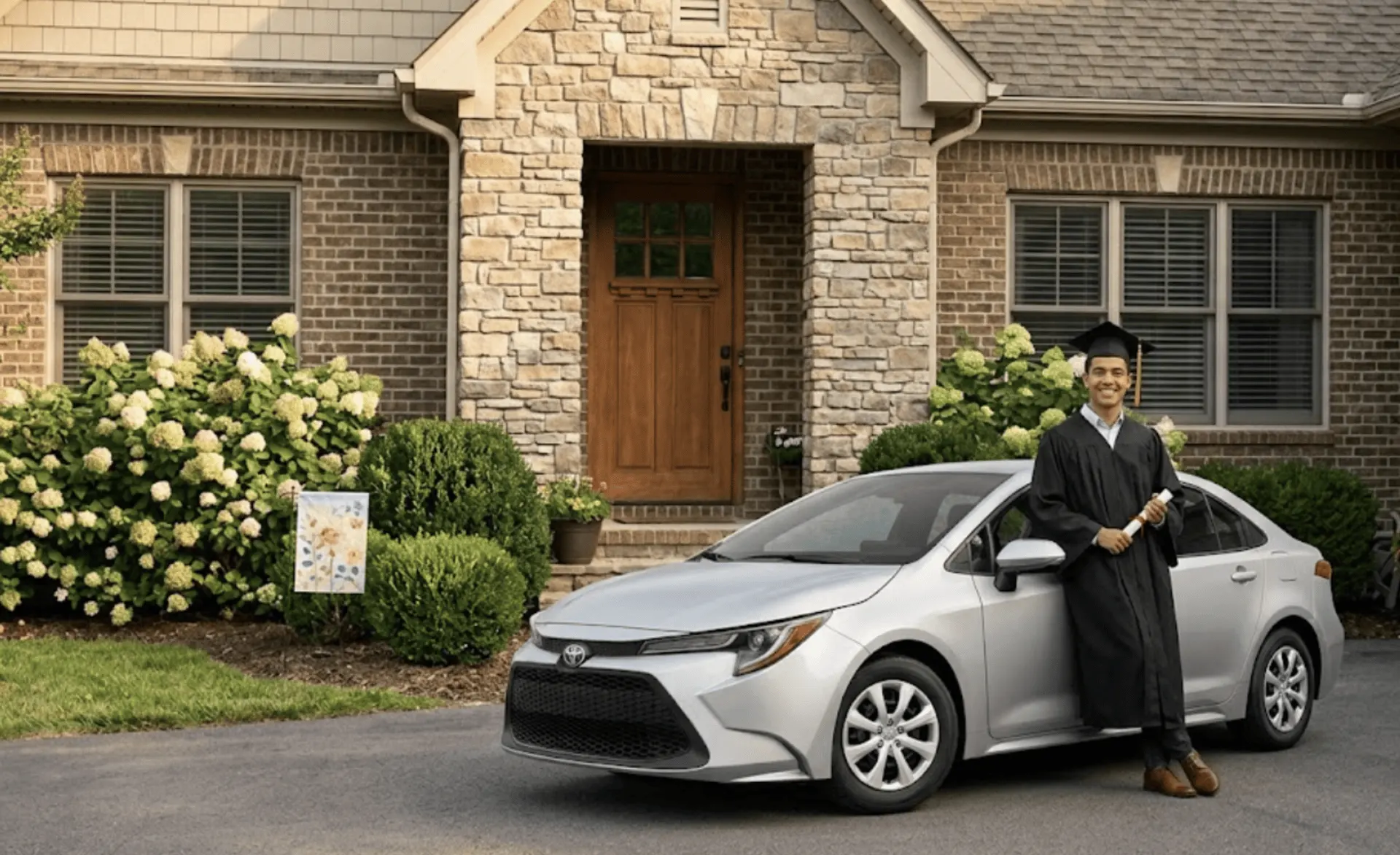
Toyota Car Buying Checklist for Triangle College Graduates

Toyota Car Buying Checklist for Triangle College Graduates

Triangle college graduates should bring proof of graduation or eligible enrollment, proof of current employment, proof of residence, driver’s license, insurance information, budget details, and any trade-in information before shopping for a Toyota. At Mark Jacobson Toyota, we recommend preparing those items before the first visit so our finance team can help you review vehicle options, available programs, and monthly-payment expectations with less guesswork. For a Duke graduate starting an RTP job, a Corolla Hybrid or Camry Hybrid can make daily commuting easier because both focus on fuel efficiency, Toyota Safety Sense, and low-stress ownership. Buying the first vehicle after graduation is not only about choosing a model. It is also about building a practical ownership plan around employment, credit approval, insurance, parking, commuting, and service timing. A UNC graduate moving to a Durham apartment may need a compact Toyota that parks easily. An NC State graduate commuting from Raleigh may care most about pre-approval and a predictable payment. A parent helping from Chapel Hill may want strong safety technology and a clear checklist before visiting. This guide walks through the documents we recommend bringing, how the Toyota College Graduate Rebate fits the buying process, which Toyota models make sense for first commutes and first budgets, and how graduates and parents can plan together without overbuying. View College Grad Program Definition: A Toyota college grad car buying guide is a checklist that helps recent graduates prepare documents, budget, financing questions, model choices, and rebate eligibility before visiting a dealership. For drivers in Durham, Raleigh, Chapel Hill, Cary, and Apex, it supports first-job commuting and early ownership planning. Table of Contents What Recent Graduates Should Bring to the Dealership Proof of Graduation, Employment, Residence, and Insurance Budget, Monthly Payment, Trade-In, and Down Payment Information Parent Co-Planning, Credit History, and First-Car Appointment Expectations How the Toyota College Graduate Rebate Fits the Buying Process College Graduate Rebate Eligibility and Buying-Step Comparison Duke, UNC, NC State, and Triangle-Area Scenarios Toyota Models That Fit First Commutes and First Budgets Corolla, Corolla Hybrid, Camry Hybrid, Prius, RAV4, and Corolla Cross Use Cases Ownership Cost Analysis: How to Build a First-Year Toyota Budget After Graduation Family and Lifestyle Fit: How Parents and Graduates Can Choose Together Without Overbuying Key Takeaways Toyota College Grad Car Buying Guide Triangle NC FAQ What Recent Graduates Should Bring to the Dealership Recent graduates have a smoother Toyota buying visit when they bring proof of school status, employment details, residence information, insurance planning, and a realistic budget before choosing a vehicle. Proof of Graduation, Employment, Residence, and Insurance We recommend recent graduates prepare the paperwork before falling in love with a vehicle. Toyota’s College Rebate guidance says qualified shoppers must present proof of graduation within the previous two years from purchase date or current enrollment in an eligible undergraduate or graduate program, plus proof of current employment. Program details can vary by region, finance source, and current offer, so we review eligibility with each shopper before applying any program expectation to the numbers. For a UNC graduate moving into a Durham apartment, we recommend bringing proof of residence, insurance information, driver’s license, and employment documentation to the appointment. That helps our finance team understand where the vehicle will be registered, how the ownership plan should be built, and whether the shopper is ready to move from browsing to numbers. It also gives parents a clearer role if they are helping compare payment, insurance, or down payment options. Graduates should also think about insurance before choosing a model. A Corolla, Corolla Hybrid, Prius, Camry Hybrid, RAV4, or Corolla Cross may each create a different insurance and payment picture. We can help compare the vehicle side of the decision, while the graduate confirms insurance details with their provider. Bring proof of graduation or eligible enrollment. Bring proof of current employment or accepted employment details when applicable. Bring driver’s license, residence information, and insurance planning details. Bring trade-in information if a current vehicle will be part of the purchase. Bring a monthly payment target and down payment comfort range. Item to Bring Why It Matters Example for Triangle Graduates Best For Proof of graduation or eligible enrollment Helps verify college program eligibility Duke, UNC, NC State, NCCU, or graduate-program documentation Recent graduates reviewing rebate basics Proof of employment Supports finance review and program requirements RTP job offer, current pay information, or employment confirmation Graduates starting first full-time jobs Proof of residence Helps with registration and ownership planning Durham apartment, Raleigh address, or Chapel Hill residence Graduates moving after school Insurance information Needed before completing vehicle ownership Policy quote or provider contact details First-time buyers and parent-assisted purchases Budget and down payment target Helps narrow the model and trim search Monthly payment range based on first-job income Graduates planning a sustainable purchase Trade-in details Can affect the final purchase structure Older student vehicle or family vehicle being replaced Shoppers lowering amount financed Based on Toyota official website. Start Finance Pre-Approval Budget, Monthly Payment, Trade-In, and Down Payment Information A recent graduate’s best Toyota choice is usually the one that fits the first year after school, not only the excitement of delivery day. We recommend setting a payment range before comparing trims. That number should account for insurance, fuel, parking, student loan timing, rent, moving costs, and the kind of commute the graduate will drive each week. For an NC State graduate commuting from Raleigh to a new job, pre-approval can make the conversation more productive because it helps define the purchase range before the shopper compares Corolla Hybrid, Camry Hybrid, Prius, or RAV4. A trade-in can also change the picture if the graduate is replacing an older car from school. We can help review trade value, but the buyer should bring the title or payoff information when available. Our finance team also helps graduates understand that credit approval, current offers, and program eligibility are connected but not identical. A rebate program may help the deal, but the full purchase still depends on lender approval, vehicle choice, term, down payment, and current finance conditions. Parent Co-Planning, Credit History, and First-Car Appointment Expectations Many graduate purchases include a parent or family member in the planning process. We welcome that because a first post-college vehicle should be clear, practical, and comfortable for everyone involved. A parent helping a Chapel Hill graduate may care about safety features, ToyotaCare, long-term reliability, and whether the monthly payment leaves enough room for rent and early-career expenses. We recommend graduates and parents agree on three items before visiting: budget range, vehicle size, and must-have features. Toyota Safety Sense can be an important part of that conversation because current Toyota models offer driver-assistance technology that supports busy commuting around Durham, Raleigh, Chapel Hill, Cary, and Apex. ToyotaCare can also help new owners start with scheduled maintenance support. For first-time buyers with limited credit history, we recommend starting the conversation early rather than guessing. Our team can review finance application steps, explain what information may be needed, and help compare new and used Toyota options without making the appointment feel rushed. Value a Graduate Trade-In How the Toyota College Graduate Rebate Fits the Buying Process The Toyota College Graduate Rebate can support a purchase or lease, but graduates should treat it as one part of a complete buying plan that includes eligibility, credit approval, model choice, and current offer review. College Graduate Rebate Eligibility and Buying-Step Comparison The Toyota College Graduate Rebate is helpful, but it should not be the only item driving the decision. Toyota’s official guidance says shoppers must present qualifying school documentation and proof of current employment. Regional program details, lender requirements, and offer timing can change, so we recommend confirming the current program with our finance team before choosing a Toyota based on a rebate assumption. We also recommend thinking about the rebate as a step in the buying process, not a shortcut around the rest of the process. Graduates still need to choose a model, review payment options, complete credit approval, prepare insurance, and understand ownership costs. That structure helps the appointment stay focused. Buying Step What the Graduate Prepares How We Help Best For Eligibility review Proof of graduation or eligible enrollment and employment We review current program basics and required documentation Graduates checking rebate fit Budget planning Payment target, down payment, insurance estimate, and living costs We help narrow the vehicle range First-job buyers building a realistic plan Model choice Commute, parking, passenger, and cargo needs We compare Corolla, Camry, Prius, RAV4, and Corolla Cross Duke, UNC, and NC State graduates Finance application Personal, employment, and residence information We support pre-approval and credit review steps Graduates with limited or new credit history Trade-in review Current vehicle details, title, payoff, and condition We can appraise the trade and explain how it affects the deal Graduates replacing a school vehicle Ideal Use Case Prepared graduate ready to compare numbers We connect eligibility, vehicle choice, and payment planning Triangle shoppers ready for a practical first Toyota Based on Toyota official website. The Toyota College Graduate Rebate fits best when the shopper already has documents, employment information, and a realistic model range ready. We recommend confirming eligibility first, then building the purchase around budget, credit approval, insurance, and the Toyota that fits the graduate’s commute. That order keeps the rebate helpful without letting it distract from the larger ownership decision. Review New Toyota Offers Duke, UNC, NC State, and Triangle-Area Scenarios Triangle graduates often have very different first-car needs. A Duke graduate starting an RTP job may want fuel efficiency and comfort. A UNC graduate moving to Durham may want easy parking and lower ownership complexity. An NC State graduate commuting from Raleigh may want pre-approval first because payment predictability matters before choosing a trim. If you are a Duke graduate starting an RTP job, we recommend Corolla Hybrid or Camry Hybrid because fuel economy and commute comfort matter every week. If you are a UNC graduate moving into a Durham apartment, we recommend Corolla, Prius, or Corolla Cross because parking ease and ownership simplicity can matter more than size. If you are an NC State graduate commuting from Raleigh, we recommend starting with finance pre-approval because a clear payment range makes model shopping easier. If you are a parent helping a Chapel Hill graduate, we recommend focusing on Toyota Safety Sense, ToyotaCare, insurance cost, and monthly budget before trim upgrades. For Triangle graduates, the best Toyota choice starts with the first real routine after college. We recommend matching the vehicle to job location, parking, fuel cost, insurance, and budget before choosing features. A Corolla Hybrid can be the right fit for a cost-conscious first commute, while Camry Hybrid can make sense for a graduate who wants more midsize comfort for daily RTP driving. Start the Graduate Buying Process With Us If you are a recent graduate or a parent helping one, we recommend starting with our finance pre-approval path at https://www.markjacobsontoyota.com/preapproved.aspx before narrowing the vehicle list too far. Our team can review current program basics, talk through the Toyota College Graduate Rebate, and help you compare payment expectations across new Toyota models. We can also help you check current vehicle availability, trade-in value, and active offers in one conversation. If you are coming from Duke, UNC, NC State, NCCU, Raleigh, Chapel Hill, Cary, or Apex, we can connect your route and budget to a practical Toyota recommendation. Call us at 919-493-5599 or visit our Durham showroom, and we will help you prepare the buying steps in the right order. Compare New Toyota Models Toyota Models That Fit First Commutes and First Budgets The best Toyota for a recent graduate depends on first-job commute length, parking situation, insurance comfort, cargo needs, and how much room the buyer wants to keep in the monthly budget. Corolla, Corolla Hybrid, Camry Hybrid, Prius, RAV4, and Corolla Cross Use Cases We recommend starting with the daily routine before choosing a model. A small sedan may be perfect for apartment parking and a short commute. A hybrid sedan may make more sense for an RTP job with repeated weekly mileage. A compact SUV may be better for a graduate who needs cargo room, weekend gear space, or a little more ride height. For a Cary graduate who wants lower fuel costs and easy ownership, Prius, Corolla Hybrid, and Camry Hybrid should be high on the list. For an Apex graduate carrying weekend gear, work equipment, or a dog, RAV4 or Corolla Cross may fit better. For a Durham graduate who simply wants an efficient, affordable first Toyota, Corolla remains one of the easiest starting points. Toyota Model Graduate Fit Local Use Case Best For Corolla Simple, efficient compact sedan Durham apartment parking and first-job commuting Graduates who want a straightforward first Toyota Corolla Hybrid Compact size plus hybrid fuel savings Duke graduate commuting to RTP Cost-conscious commuters Camry Hybrid Midsize comfort with strong MPG Raleigh to RTP highway driving Graduates wanting more space and comfort Prius High-efficiency hatchback practicality Cary buyer balancing fuel savings and cargo flexibility Hybrid-focused graduates RAV4 Compact SUV space and versatility Apex graduate with weekend gear or outdoor plans Drivers needing more cargo room Corolla Cross Small SUV shape with city-friendly size UNC graduate moving between Chapel Hill and Durham Graduates wanting SUV height without going too large Based on Toyota official website. For Triangle college graduates, Corolla and Corolla Hybrid are often the easiest first choices because they keep the ownership plan simple. Camry Hybrid is better when commute comfort matters. Prius is strong for fuel-focused shoppers who like hatchback flexibility. RAV4 and Corolla Cross make more sense when the graduate needs cargo room, ride height, or weekend versatility. Schedule a Graduate Test Drive Compare Toyota Models for Life After Graduation If you are still choosing between Corolla, Corolla Hybrid, Camry Hybrid, Prius, RAV4, and Corolla Cross, we recommend scheduling a test drive through https://www.markjacobsontoyota.com/testdrive.aspx so we can compare the models around your actual commute. Our team can help you check seating comfort, cargo space, visibility, Toyota Safety Sense features, and ToyotaCare support before you decide. We serve graduates and families from Durham, Raleigh, Chapel Hill, Cary, Apex, Duke, UNC, NC State, and nearby Triangle communities. Our Mark Says Yes! approach is especially helpful for first-time buyers because we focus on practical steps, not pressure. Call us at 919-493-5599 or visit us on Durham-Chapel Hill Blvd, and we will help you choose a Toyota that fits the first year after graduation. Ask About Graduate Options Ownership Cost Analysis: How to Build a First-Year Toyota Budget After Graduation A strong first-year Toyota budget should include payment, insurance, fuel, parking, service timing, registration, and a small emergency buffer before trim upgrades are added. We recommend graduates think beyond the monthly payment because the first year after college often includes moving costs, rent changes, work clothing, student loan timing, and new insurance responsibilities. A Toyota that fits the payment but strains everything else is not the right match. The better plan is to create a full ownership estimate before comparing trims. For a Cary graduate interested in lower fuel costs, Corolla Hybrid, Camry Hybrid, and Prius can help make the weekly commute more predictable. For a graduate who needs more space for weekend trips, RAV4 or Corolla Cross may be worth the extra budget if the cargo room will be used often. The key is making the upgrade serve a real routine. We recommend listing monthly costs in one place: payment, insurance, fuel, parking, maintenance, registration, and an emergency cushion. Then compare Toyota models within that range. That approach helps graduates choose a Toyota they can enjoy instead of one that feels too tight after the first few months. Family and Lifestyle Fit: How Parents and Graduates Can Choose Together Without Overbuying Parents and graduates make better Toyota decisions when they agree on safety, budget, commute needs, parking, and cargo use before adding premium features. Parent-assisted car shopping can work really well when everyone agrees on priorities early. We recommend starting with safety, budget, reliability, and commute fit. Toyota Safety Sense and ToyotaCare are useful discussion points because they help parents and graduates talk about driver assistance and early maintenance support in a practical way. The most common overbuying pattern we see is choosing more vehicle than the graduate actually needs. A larger SUV may feel appealing, but a Corolla Hybrid or Camry Hybrid may fit better if the weekly routine is commuting and apartment parking. On the other hand, an Apex graduate with a dog, outdoor gear, or weekend travel plans may genuinely use the extra flexibility of Corolla Cross or RAV4. If the graduate has a short city commute, we recommend Corolla or Prius for easy daily use. If the graduate has a longer RTP commute, we recommend Corolla Hybrid or Camry Hybrid for fuel savings. If the graduate needs cargo room, we recommend Corolla Cross or RAV4 because the space will be used often. If parents are helping, we recommend agreeing on insurance and payment comfort before choosing trim upgrades. For parents and graduates shopping together, the best Toyota is the one that fits the next two to three years, not only graduation week. A clear plan keeps the purchase practical, flexible, and easier to maintain. Key Takeaways Graduates should bring school, employment, residence, insurance, budget, and trade-in information. The Toyota College Graduate Rebate should be confirmed with current eligibility and finance details. Corolla and Corolla Hybrid are strong first Toyota options for simple commuting. Camry Hybrid fits graduates who want more comfort for RTP driving. RAV4 and Corolla Cross make sense when cargo flexibility matters. Toyota College Grad Car Buying Guide Triangle NC FAQ What documents should a recent graduate bring to buy a Toyota? We recommend bringing proof of graduation or eligible enrollment, proof of employment, driver’s license, proof of residence, insurance information, budget details, and trade-in information if a current vehicle is involved. Toyota’s College Rebate guidance includes school-status documentation and proof of current employment, and our finance team can review current program details with you. For a Duke, UNC, or NC State graduate starting a first job, arriving prepared helps us compare vehicles and numbers more clearly. How does the Toyota College Graduate Rebate work? The Toyota College Graduate Rebate can support eligible shoppers who meet current school-status, employment, finance, and program requirements. Toyota’s official guidance says shoppers must present proof of graduation within the previous two years from purchase date or eligible current enrollment, plus proof of current employment. We recommend confirming current eligibility with our finance team before building the purchase around the rebate because regional details, lender requirements, and offer timing can change. Which Toyota is best for a recent college graduate? The best Toyota for a recent college graduate depends on commute, budget, parking, insurance, and cargo needs. We recommend Corolla or Corolla Hybrid for simple first-job commuting, Camry Hybrid for longer RTP routes, Prius for high-efficiency hatchback flexibility, Corolla Cross for city-friendly SUV height, and RAV4 for graduates who need more cargo room. A Durham graduate with apartment parking may need a different Toyota than an Apex graduate with weekend gear. Can parents help with the buying process? Parents can absolutely help with planning, budgeting, model comparison, insurance conversations, and appointment preparation. We recommend parents and graduates agree on budget, safety features, commute needs, and must-have features before visiting. That makes the appointment more productive and helps our team compare practical Toyota choices without pushing the graduate into a vehicle that is larger or more expensive than the routine requires. Related Articles Keep reading more Toyota shopping guides, hybrid comparisons, and ownership tips from our Durham team. Hybrid Commute 2026 Toyota Camry Hybrid MPG and Commute Guide for RTP Drivers See how the all-hybrid Camry fits RTP commutes with MPG, comfort, AWD availability, Toyota Safety Sense, and ToyotaCare. Read More Graduate Guide The Best Toyota Cars for Graduates Compare Toyota models that fit the transition from college life to first jobs, new commutes, and early ownership planning. Read More Hybrid Guide 2026 Toyota Prius vs Prius Plug-in Hybrid: Which Saves You More in Durham? Compare Toyota hybrid and plug-in hybrid choices for charging access, MPG, commuter routine, and ownership fit. Read More Service Guide Toyota A/C Service & Repair Guide for Durham Summer Driving Understand weak cooling, odors, airflow concerns, cabin filter checks, and summer service timing for Toyota owners. Read More
Toyota A/C Service & Repair Guide for Durham Summer Driving

Toyota A/C Service & Repair Guide for Durham Summer Driving

Toyota A/C service in Durham should be scheduled when your vents blow warm air, cooling feels weak, airflow drops, odors appear, or your cabin struggles during hot RTP, NC-147, or I-40 commutes. At Mark Jacobson Toyota, we recommend service before a small comfort issue becomes a bigger summer repair concern. For an RTP commuter whose A/C cools on the highway but feels weak in afternoon traffic, our first step is a symptom-based inspection that checks airflow, cabin filter condition, compressor behavior, belt condition, and refrigerant concerns. North Carolina summer heat puts real pressure on an air conditioning system. The A/C may feel fine during a mild morning drive from Chapel Hill, then feel slow to cool after the vehicle sits in a sunny parking lot near Durham or Cary. Humidity adds another layer because musty odors, fogging, and poor cabin airflow often show up during rainy weeks or after short trips with the system cycling repeatedly. This guide explains how we think through weak cooling, odors, low airflow, cabin filter symptoms, routine A/C service, deeper A/C repair concerns, current service specials, and the best timing for Durham-area drivers. You will also see how our service team separates simple maintenance from a repair diagnosis so you can schedule confidently before the hottest part of summer. Definition: Toyota A/C service is an inspection and repair process for the air conditioning system, cabin air filter, refrigerant level, compressor operation, belts, and airflow concerns. It is designed to restore cabin comfort and identify cooling issues. For drivers in Durham, Raleigh, Chapel Hill, Cary, and Apex, it helps manage summer heat and humidity. Table of Contents Why North Carolina Heat Stresses Toyota A/C Systems Weak Cooling, Warm Air, and Airflow Changes in Summer Traffic Odors, Humidity, and Cabin Air Filter Symptoms Why A/C Symptoms Feel Worse on NC-147, I-40, and Short-Trip Driving A/C Repair vs Routine A/C Service Symptom-by-Symptom A/C Service Comparison Refrigerant, Compressor, Belt, Blower, and Cabin Filter Checks Toyota A/C Service Coupons and Service Specials How Durham Drivers Should Use Service Specials Without Guessing the Repair Service Expertise Detail: What Our Technicians Check First During A/C Diagnosis Ownership Cost Analysis: Why Early A/C Checks Can Protect Summer Comfort Key Takeaways Toyota A/C Service Coupons Durham NC FAQ Why North Carolina Heat Stresses Toyota A/C Systems North Carolina summer heat makes small A/C issues easier to feel because the system has to cool a hot cabin, manage humidity, and maintain steady airflow in stop-and-go traffic. Weak Cooling, Warm Air, and Airflow Changes in Summer Traffic Weak cooling is one of the most common summer concerns our service advisors hear from Toyota owners. A driver may notice that the A/C feels comfortable during a morning commute, then blows warmer air after the vehicle sits in the sun. That symptom can point to several possibilities, including low refrigerant, restricted airflow, a condenser concern, compressor operation, or a cabin filter that is limiting air movement. Our service team advises Durham drivers to pay attention to when the weak cooling happens. If the air gets colder at highway speed but feels weaker in traffic, the system may need a closer inspection under real operating conditions. If the vent temperature never gets cold, our technicians look at the system differently than they would for a vehicle that cools slowly but eventually reaches a comfortable cabin temperature. For an RTP commuter who drives from Durham to Research Triangle Park every weekday, we recommend an A/C performance check when cooling changes between morning and afternoon driving. That driver is asking the A/C system to recover from parked cabin heat, manage I-40 traffic, and keep airflow steady through repeated stop-and-go conditions. We use those details to decide whether the first check should focus on airflow, refrigerant behavior, or compressor response. If the A/C starts cold then turns warm, we recommend a full performance diagnosis. If airflow feels weak from every vent, we recommend checking the cabin air filter and blower operation. If only one vent feels different, we recommend checking vent direction and blend-door behavior. If the system smells musty, we recommend a cabin filter and odor-related inspection. A/C Symptom What the Driver Feels First Service Path Best For Weak cooling Air is cool but not cold enough during afternoon heat A/C performance check and vent temperature review RTP commuters in summer traffic Warm air from vents The system runs but does not cool the cabin Refrigerant, compressor, and system operation diagnosis Drivers whose A/C no longer cools at all Low airflow Fan sounds active but cabin airflow feels restricted Cabin air filter, blower, and vent airflow inspection Chapel Hill and Durham short-trip drivers Musty odor Cabin smells damp when A/C starts Cabin filter and moisture-related inspection Raleigh parents after humid rain Noise when A/C runs Clicking, rattling, or belt noise appears with A/C use Belt, compressor, fan, and related component review Current Toyota owners noticing new sounds Slow cabin cooling A/C works but needs too much time to cool the cabin Airflow and system performance check Apex families before summer trips Based on Toyota official website. Schedule A/C Service Odors, Humidity, and Cabin Air Filter Symptoms Odors are a different type of A/C complaint because the system may still cool while the cabin feels unpleasant. North Carolina humidity can make musty smells more noticeable, especially after rainy weeks, short errands, or long parking periods. Toyota owner guidance connects dirty filters and refrigerant leaks with common air conditioning issues, and we see cabin filter concerns become more obvious when summer humidity rises. For a Raleigh parent sitting in school pickup lines with kids in the back seat, a musty odor can turn into a daily comfort problem fast. We recommend checking the cabin air filter first because it is a direct airflow and cabin-quality item. If airflow is strong but the odor remains, our technicians can continue checking the system for moisture-related causes and other A/C concerns. Our parts and service team also reminds drivers that cabin air filter condition can affect perceived A/C performance. A restricted filter may make the system seem weaker because less air is moving through the vents. That is why a filter check can be part of a smart A/C visit even when the refrigerant system is not the main issue. Why A/C Symptoms Feel Worse on NC-147, I-40, and Short-Trip Driving A/C symptoms often feel worse during short trips because the cabin never has enough time to recover from parked heat. A Chapel Hill student driving short campus routes may feel poor airflow more than a driver spending thirty uninterrupted minutes at steady speed. Around Durham, NC-147 and I-40 commuting can add another pattern: the A/C works during steady movement, then struggles when traffic slows. What we see here in Durham is that many A/C concerns are not constant at first. They appear after the car has been parked in the sun, after a humid storm, or during the hottest hour of the commute. We recommend describing the exact pattern when you schedule because those details help our service advisors start with the right inspection path. For Cary drivers who use a Toyota for daily errands, work, and evening activities, we suggest scheduling before weak cooling becomes part of every trip. Summer heat rarely makes an A/C issue feel better on its own. A symptom that appears twice in one week is usually worth checking before a longer drive. See Toyota Service Options A/C Repair vs Routine A/C Service The fastest way to choose the right A/C service path is to start with the symptom, then separate airflow maintenance from deeper cooling system diagnosis. Symptom-by-Symptom A/C Service Comparison Not every A/C concern requires the same type of visit. Some symptoms point first to routine maintenance, such as a dirty cabin air filter or restricted airflow. Other symptoms may require repair diagnosis, especially when the vents blow warm air, cooling changes suddenly, or the A/C makes a new sound. We recommend a symptom-first conversation because it protects the customer from guessing. A driver who says “my A/C is broken” may actually have a restricted cabin air filter. Another driver who says “it just needs a recharge” may have a refrigerant leak or a component issue that needs diagnosis before refrigerant is added. Service Question Routine A/C Service Path A/C Repair Diagnosis Path Best For Main symptom Weak airflow, mild odor, slow cooling Warm air, no cooling, new noise, sudden change Drivers deciding how urgent the visit feels First check Cabin air filter and vent airflow System performance, compressor, refrigerant, and leak concerns Service advisors building the right inspection path Customer example Chapel Hill driver with reduced airflow Durham commuter with warm air during traffic Local drivers with different symptoms Parts that may be involved Cabin air filter or related airflow items Compressor, belt, refrigerant line, condenser, or blower concern Owners wanting to understand possible next steps Timing Best before peak heat or a road trip Best as soon as cooling changes noticeably Families planning summer travel Ideal Use Case Driver wants preventive comfort check Driver needs a specific cooling issue diagnosed Current Toyota owners choosing the right visit type Based on Toyota official website. The key difference between routine Toyota A/C service and A/C repair is the symptom pattern. If airflow is weak or the cabin smells musty, we usually start with cabin filter and airflow checks. If the vents blow warm air or cooling stops suddenly, we recommend repair diagnosis because refrigerant, compressor operation, belts, or other components may need closer testing. Visit Our Service Department Refrigerant, Compressor, Belt, Blower, and Cabin Filter Checks Our technicians do not treat every A/C concern as the same repair. We start with how the system behaves, then check the items most likely to match that symptom. For a Cary rideshare driver who needs consistent passenger comfort during long summer shifts, we recommend an appointment as soon as airflow or cooling changes because the cabin has to stay comfortable for every ride. If you drive daily from Durham to RTP and the A/C feels weak only in traffic, we recommend a performance check because the system needs to be tested under load. If you live in Raleigh and smell musty air after humid rain, we recommend a cabin filter and odor-related inspection because airflow quality may be the first concern. If you drive around Chapel Hill and airflow feels low on every fan setting, we recommend a filter, blower, and vent review because the cooling system may not be the only issue. If you use your Toyota for Cary rideshare shifts, we recommend checking current service specials and scheduling quickly because passenger comfort affects your workday. What most owners do not realize is that A/C diagnosis is both a comfort issue and a systems check. Refrigerant concerns, compressor behavior, belt condition, blower operation, and cabin filter condition can all create different versions of “my A/C is not working right.” We recommend letting our service team match the inspection to the symptom instead of replacing parts based on a guess. Dealership Visit Paragraph 1 If your Toyota A/C feels weak, smells musty, or blows warm air, we recommend scheduling a service visit through our online scheduler at https://www.markjacobsontoyota.com/schedule-service.html before the next hot commute makes the issue harder to ignore. Our service advisors can help you describe the symptom, note when it happens, and decide whether the visit should begin with airflow, cabin filter, or cooling performance checks. Our certified technicians handle Toyota maintenance and repair needs with equipment, service procedures, and Genuine Toyota Parts support built for your vehicle. We can also help you review current service specials before the appointment so you know what offers may apply at the time of your visit. Call us at 919-493-5599 or schedule online, and we will help you get the A/C concern checked in a clear, practical way. Check A/C Service Specials Toyota A/C Service Coupons and Service Specials Service specials are most useful when drivers know the symptom first, then let our service team confirm which A/C service path fits the vehicle. How Durham Drivers Should Use Service Specials Without Guessing the Repair We recommend checking Toyota service specials before scheduling, but we do not recommend assuming a coupon tells the whole repair story. A service special may apply to maintenance, inspection, parts, or seasonal service, while the actual A/C concern still needs to be diagnosed properly. For a Durham owner who wants to use an A/C service coupon but does not know whether the issue is routine service or repair, the best step is to describe the symptom first and let our advisors match the visit to the concern. Local driving patterns matter. Apex families planning an RDU airport run or a beach trip should check the A/C before the vehicle is packed. Raleigh parents dealing with school pickup heat should not wait until the cabin stops cooling completely. Cary drivers who park outside all day may notice slow cooling sooner than drivers with shaded parking. Chapel Hill students with older Toyota models may feel low airflow during short trips before they notice a bigger issue. Local Driver Summer A/C Scenario Recommended Service Action Ideal Use Case Durham commuter A/C struggles after work on NC-147 Schedule A/C performance check Daily driver needing reliable cooling RTP professional Cooling changes between morning and afternoon commute Describe timing and request A/C diagnosis Commuter with heat-related symptoms Raleigh parent Musty odor during humid pickup lines Cabin air filter and odor inspection Family vehicle used in summer humidity Chapel Hill student Weak airflow during short campus trips Cabin filter, blower, and vent check Older Toyota with airflow concern Cary rideshare driver Cabin comfort must stay steady for passengers Schedule service and review current specials High-use Toyota owner Apex road-trip family Needs cooling checked before a summer trip Pre-trip A/C and cabin filter inspection Family preparing for longer travel Based on Toyota official website. For Durham drivers, Toyota A/C service coupons work best as a starting point, not a diagnosis. We recommend reviewing current offers, then scheduling with enough symptom detail for our team to prepare properly. That approach helps us separate cabin filter, airflow, refrigerant, compressor, and belt-related concerns without turning the visit into guesswork. View Parts Specials Book Toyota A/C Repair Service Expertise Detail: What Our Technicians Check First During A/C Diagnosis Our A/C diagnosis starts with the customer’s symptom, then moves through airflow, cabin filter, visible component, vent temperature, and deeper system checks as needed. We start with the driver’s description because the pattern matters. A system that smells musty needs a different first look than a system that blows warm air from every vent. A system that cools at highway speed but feels weak in traffic gives our technicians a different clue than a system that never cools at all. Our first checks often include vent airflow, cabin air filter condition, fan operation, belt condition, visible A/C line concerns, and temperature behavior at the vents. If those early checks point to a deeper cooling concern, we can continue into refrigerant and component diagnosis. This step-by-step approach helps current Toyota owners avoid guessing and gives our service advisors clearer information to explain. For a Durham owner preparing for a July road trip, we recommend bringing the Toyota in before the trip if cooling feels slow, airflow drops, or odors appear. That driver does not need to know whether the concern is a filter, refrigerant, compressor, or belt. Our job is to start with the symptom and build the right inspection path from there. Ownership Cost Analysis: Why Early A/C Checks Can Protect Summer Comfort An early A/C check can help separate simple airflow or filter concerns from repair concerns before summer heat makes the problem more urgent. A/C service timing matters because cabin comfort issues rarely become easier to live with in July and August. If a Toyota owner waits until the system stops cooling completely, the visit may feel more urgent and less flexible. We recommend scheduling when symptoms first become repeatable because our team can evaluate the system before the driver is dealing with daily discomfort. Early checks are especially useful for owners who rely on one vehicle for commuting, school pickup, rideshare work, or family travel. A cabin air filter concern may be simple to address, while warm air or sudden cooling loss may need a deeper repair diagnosis. The value is knowing which path fits the vehicle. If your A/C odor appears after humid rain, we recommend checking the cabin air filter early. If airflow drops across every fan setting, we recommend scheduling before peak summer heat. If vents blow warm air, we recommend repair diagnosis instead of assuming the system needs only a recharge. If you have a summer road trip planned, we recommend checking A/C performance before the vehicle is packed. For Apex families driving to RDU or the coast, early A/C service protects the comfort part of the trip. For Cary rideshare drivers, it helps protect passenger comfort and workday consistency. For Durham commuters, it keeps daily driving from becoming a hot-cabin routine. Key Takeaways Weak cooling, warm air, low airflow, and odors are the main signs to schedule Toyota A/C service. Cabin air filter concerns can affect airflow and cabin comfort during humid Durham summers. Warm air from the vents usually deserves repair diagnosis, not a guess-based fix. RTP commuters should schedule service when cooling changes between morning and afternoon traffic. Current service specials can help, but the symptom should guide the appointment type. Toyota A/C Service Coupons Durham NC FAQ When should I schedule Toyota A/C service in Durham? We recommend scheduling Toyota A/C service when your vents blow warm air, cooling feels weak, airflow drops, or the cabin smells musty after humid weather. Based on what our service team sees in Durham, these symptoms often become more noticeable during NC-147, I-40, and RTP commutes because the system has to cool a hot cabin in heavy summer conditions. For a driver who parks outside all day, slow cooling after work is a strong reason to schedule an inspection. Why is my Toyota A/C blowing warm air? Warm air from a Toyota A/C system can be connected to refrigerant concerns, compressor operation, belt condition, condenser performance, or another cooling system issue. We do not recommend assuming the vehicle only needs refrigerant because a leak or component concern may need to be diagnosed first. If your Toyota blows warm air in Durham summer traffic, our technicians can check vent temperature, system operation, visible components, and related A/C behavior to identify the right service path. Can a cabin air filter affect A/C cooling? A cabin air filter can affect how strong the airflow feels from the vents, even when the A/C system itself is still capable of cooling. If the filter is restricted, the cabin may take longer to feel comfortable because less air is moving through the system. We recommend a cabin filter check for Raleigh parents, Chapel Hill students, and Cary commuters who notice weak airflow, musty odors, or slower cooling after humid weather. Where can I find Toyota A/C service coupons in Durham NC? We recommend checking our current Toyota Service Specials and Coupons before scheduling, then describing the A/C symptom when you book the appointment. Current offers can change, so the best approach is to review the service specials and let our advisors match the visit to your Toyota’s symptom. Durham, Raleigh, Chapel Hill, Cary, and Apex drivers can schedule online or call us at 919-493-5599. Related Articles Keep reading more Toyota service guides, maintenance tips, and ownership advice from our Durham team. New 2026 Toyota Highlander vs Grand Highlander: Which Toyota SUV Fits Your Family? Compare the 2026 Toyota Highlander vs Grand Highlander for space, MPG, trims, towing, and family fit at Mark Jacobson Toyota in Durham, NC. Read More Brake Service 2026 Toyota Sequoia: Power, Space, and Luxury for Durham Families See the 2026 Toyota Sequoia full-size SUV with i-FORCE MAX power, towing, trims, and family fit at Mark Jacobson Toyota in Durham, NC. Read More New 2026 Toyota Prius vs Prius Plug-in Hybrid: Which Saves You More in Durham? Compare the 2026 Toyota Prius vs Prius Plug-in Hybrid for MPG, charging, cost, and commuter fit at Mark Jacobson Toyota in Durham, NC Read More