



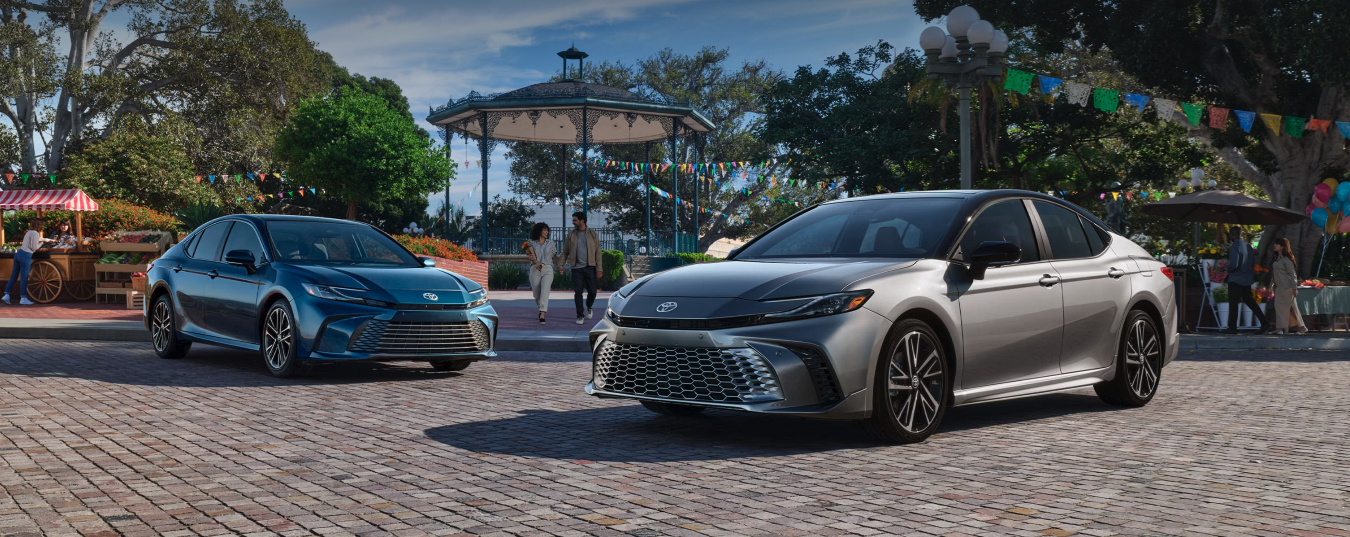
The 2026 Toyota Camry Hybrid is a strong fit for RTP commuters because it combines an all-hybrid powertrain, up to 51 combined EPA-estimated MPG, comfortable midsize sedan space, Toyota Safety Sense 3.0, and available Electronic On-Demand All-Wheel Drive for Triangle rain. At Mark Jacobson Toyota, we recommend it for Durham professionals who want fewer fuel stops on I-40, a quieter daily commute, and sedan comfort without moving into an SUV. For a driver commuting from Durham to Research Triangle Park five days a week, Camry Hybrid efficiency can make every workday feel easier.
The 2026 Camry is different from older Camry lineups because every trim now uses hybrid power. That matters for commuters because shoppers no longer need to choose between a gas Camry and a Camry Hybrid. Instead, the decision becomes which hybrid trim, drivetrain, and comfort level fits the route. LE gives the strongest efficiency focus, SE and Nightshade add sportier design, and XLE or XSE add more premium comfort for longer drive weeks.
We built this guide for RTP professionals, Raleigh commuters, Chapel Hill faculty, Cary hybrid shoppers, and Apex drivers who want a practical sedan that can handle work traffic, weekend errands, and long-term service planning. You will see how MPG, AWD, safety technology, ToyotaCare, trim choice, and commute mileage should shape the way you choose your next Camry.
View 2026 Camry DetailsDefinition: The 2026 Toyota Camry Hybrid is a midsize sedan with an all-hybrid powertrain, strong fuel economy, and available all-wheel drive. It is designed for drivers who want daily comfort and efficient commuting. For drivers in Durham, RTP, Raleigh, Chapel Hill, Cary, and Apex, it supports long weekday routes and Triangle traffic.
Table of Contents
- Why the 2026 Camry Hybrid Fits I-40 and RTP Commutes
- AWD Availability, Safety Tech, and Driver Assistance
- Ownership Support, ToyotaCare, and Service Planning
- Ownership Cost Analysis: How RTP Commute Patterns Change Camry Hybrid Value
- Local Driving Insight: When AWD Makes Sense for Triangle Rain
- Key Takeaways
- 2026 Toyota Camry Hybrid RTP Commute FAQ
Why the 2026 Camry Hybrid Fits I-40 and RTP Commutes
The 2026 Camry Hybrid fits RTP commuting because it turns every trim into a fuel-efficient sedan with daily comfort, useful power, and Toyota safety technology for long workweeks.
MPG, Fuel Stops, and Daily Driving Comfort
The biggest commuter advantage is fuel economy. Toyota lists the 2026 Camry with an all-hybrid powertrain and up to 51 combined EPA-estimated MPG, while FuelEconomy.gov lists 2026 Camry HEV configurations across front-wheel-drive and all-wheel-drive variants. That matters for RTP drivers because a weekly I-40 commute can quickly turn fuel stops into part of the work routine.
The 2026 Toyota Camry Hybrid delivers up to 51 combined EPA-estimated MPG, which makes it one of the strongest midsize sedan choices for RTP commuting. We recommend the Camry Hybrid LE for Durham professionals who want the highest efficiency focus and a calm daily drive. For shoppers who want more design personality while keeping hybrid efficiency, we recommend comparing SE and Nightshade next.
For a Durham professional driving to Research Triangle Park five days a week, fewer fuel stops are only one part of the value. The Camry also gives a lower seating position than most SUVs, smooth hybrid power delivery, and a cabin that feels right for longer workweeks. That mix is why many commuters still prefer a midsize sedan over a compact crossover.
- If your top priority is MPG, we recommend starting with Camry Hybrid LE.
- If you want sportier styling without giving up hybrid efficiency, we recommend Camry Hybrid SE or Nightshade.
- If you spend longer stretches on I-40, we recommend comparing XLE and XSE for added comfort features.
- If Triangle rain affects your confidence, we recommend checking available Electronic On-Demand AWD.
| Commute Factor | 2026 Toyota Camry Hybrid Benefit | Why It Matters for RTP Drivers | Best For |
|---|---|---|---|
| Fuel economy | Up to 51 combined EPA-estimated MPG | Helps reduce fuel-stop frequency during weekly commuting | Durham to RTP professionals |
| Powertrain | All-hybrid lineup | Every trim gives hybrid efficiency without a separate powertrain decision | Shoppers who want a simple Camry choice |
| Available power | Up to 232 net combined hp with available AWD | Supports confident merging and passing on I-40 | Commuters who want efficiency and response |
| Drivetrain choice | FWD or available Electronic On-Demand AWD | Lets drivers choose lower-complexity efficiency or added traction confidence | Triangle rain and suburban routes |
| Safety technology | Toyota Safety Sense 3.0 | Supports driver assistance during heavy commute traffic | RTP and Raleigh commuters |
| Ideal Use Case | Efficient midsize hybrid sedan | Balances comfort, MPG, and daily usability | Drivers with repeated weekday routes |
Based on Toyota official website.
Compare Available Camry ModelsHybrid Power Delivery, Regenerative Braking, and Traffic Flow
Hybrid driving feels especially useful in traffic because the system can blend gas and electric power smoothly while the vehicle moves through changing speeds. For Raleigh commuters who spend part of the morning in I-40 congestion, the Camry Hybrid powertrain supports a calmer driving feel than a traditional gas-only sedan. It is not just about the MPG number. It is also about how the vehicle manages low-speed movement, starts, stops, and acceleration.
Regenerative braking is another reason the Camry Hybrid feels natural in commute traffic. The system helps recover energy during deceleration, which pairs well with daily stop-and-go patterns around RTP, NC-147, and downtown Durham. Our sales team explains this during test drives because many shoppers feel the difference before they know the technical reason behind it.
For a Raleigh commuter who wants smoother behavior in traffic without switching to a plug-in vehicle, we recommend the Camry Hybrid because there is no charging routine. You drive, refuel, and let the hybrid system manage the power flow automatically. That simplicity is one of the strongest commuter advantages.
Sedan Size, Parking, Cabin Comfort, and Tech for Long Commute Weeks
The Camry Hybrid also works well because it gives commuters midsize comfort without the bulk of a larger SUV. A Chapel Hill faculty member driving US-15/501 and parking near campus may value the Camry’s lower profile, five-passenger cabin, and available technology because the car feels easy to place and comfortable enough for long weeks. For many Triangle drivers, that balance is more useful than maximum cargo height.
Available features such as a 12.3-inch digital gauge cluster, available Head-Up Display, and Toyota Audio Multimedia can make repeated routes feel more organized. These features matter most for drivers who spend enough time in the car to notice small comfort and information-display differences every day. We recommend XLE or XSE for shoppers who want a more premium commute experience.
What we see here in Durham is that Camry Hybrid shoppers often compare it with Corolla Hybrid, Prius, RAV4 Hybrid, and Crown. Camry sits in the middle as the commuter sedan with more room than compact options, easier daily handling than many SUVs, and a familiar midsize feel that works for both workdays and weekend errands.
AWD Availability, Safety Tech, and Driver Assistance
Available Electronic On-Demand AWD is most useful for Camry Hybrid drivers who want extra traction confidence in Triangle rain without moving away from sedan efficiency.
FWD vs Electronic On-Demand AWD Comparison
The Camry Hybrid decision often starts with front-wheel drive versus available Electronic On-Demand All-Wheel Drive. FWD gives the cleanest efficiency-focused setup for drivers who want maximum MPG and a simpler ownership path. AWD adds traction confidence by using an electric motor to help power the rear wheels when conditions call for it.
We recommend FWD for commuters who drive mostly predictable paved routes and want the highest efficiency focus. We recommend available AWD for Cary and Apex drivers who deal with wet neighborhood roads, early-morning Triangle rain, or hilly routes where added traction confidence feels worthwhile. The decision is not about one drivetrain being better for everyone. It is about matching the drivetrain to the commute.
| Comparison Point | Camry Hybrid FWD | Camry Hybrid Electronic On-Demand AWD | Best For |
|---|---|---|---|
| Primary advantage | Highest efficiency focus | Added traction confidence | Choose based on route and weather confidence |
| MPG priority | Best fit when MPG is the top goal | Still efficient, with some MPG tradeoff by trim | FWD for fuel-focused RTP commuters |
| Rain confidence | Good for normal paved commuting | Stronger fit for wet roads and traction concerns | AWD for Triangle rain and suburban hills |
| Power feel | Up to 225 net combined hp | Up to 232 net combined hp | AWD for shoppers wanting the stronger configuration |
| Ownership simplicity | Simpler drivetrain choice | More hardware and added traction capability | FWD for straightforward commuter value |
| Ideal Use Case | Durham to RTP daily commuter focused on MPG | Cary or Apex driver wanting wet-road confidence | Match drivetrain to daily roads and budget |
Based on Toyota official website.
The best drivetrain for a 2026 Toyota Camry Hybrid depends on how much you value efficiency versus traction confidence. We recommend FWD for RTP commuters who want the strongest MPG focus and mostly drive predictable routes. We recommend Electronic On-Demand AWD for Triangle drivers who want added confidence during rain, especially if they regularly drive through Cary, Apex, Chapel Hill hills, or early-morning wet roads.
Ask About Camry AWDLE, SE, Nightshade, XLE, and XSE Commuter Use Cases
Trim choice should follow the way the car will be used every week. Our customers who drive the Camry Hybrid for commuting often ask whether they should prioritize MPG, style, comfort, or tech. We recommend starting with your route, then matching the trim to what you will notice most often.
- If you are a Durham RTP professional driving I-40 daily, we recommend Camry Hybrid LE because it places efficiency and value first.
- If you are an Apex driver who wants a sportier look without losing hybrid commuting logic, we recommend Camry Hybrid SE or Nightshade because the design feels more expressive while staying practical.
- If you are a Chapel Hill faculty member spending long weeks between campus, Durham, and Raleigh, we recommend XLE because comfort and available tech become more noticeable over time.
- If you are a Cary shopper who wants sportier styling and available premium features, we recommend XSE because it gives the Camry a more upscale and energetic personality.
For most RTP commuters, the Camry Hybrid LE or SE is the strongest starting point because those trims keep the value and efficiency story clear. For drivers who spend more time in the cabin or want a more refined daily feel, XLE and XSE are worth comparing. Nightshade fits shoppers who want a distinctive look without turning the Camry decision into a luxury-sedan purchase.
Visit Us to Compare Camry Hybrid Trims
If you are comparing Camry Hybrid trims, we recommend visiting our Durham showroom so we can help you test drive the configurations that match your commute instead of choosing from specs alone. Our team can walk you through LE, SE, Nightshade, XLE, and XSE, then help you compare FWD and available Electronic On-Demand AWD based on your route, parking, and comfort priorities. We can also help you review current vehicle availability through https://www.markjacobsontoyota.com/searchnew.aspx and talk through payment options before you decide. If you commute to RTP, Raleigh, Chapel Hill, Cary, or Apex, we can help you connect each trim to the way you actually drive every week. Call us at 919-493-5599 or visit us on Durham-Chapel Hill Blvd so we can help you choose the Camry Hybrid that fits your routine.
Ownership Support, ToyotaCare, and Service Planning
RTP commuters should think about Camry Hybrid ownership as a weekly-mileage plan that includes ToyotaCare, tire rotations, inspections, and service timing.
Commute Mileage, Tire Rotations, Hybrid Maintenance, and Service Timing
An RTP commute can add miles quickly. A driver going from Durham to Research Triangle Park five days a week may not feel the mileage day by day, but the service schedule arrives faster than it does for a weekend-only vehicle. That is why we recommend thinking about the Camry Hybrid as both a fuel-saver and a vehicle that deserves consistent maintenance planning.
ToyotaCare gives new Toyota owners a strong starting point because it includes scheduled maintenance for a set time and mileage period, plus roadside assistance. For a high-mileage RTP commuter, that support is useful because tire rotations, inspections, and scheduled service can be planned around work routines instead of handled only when something feels wrong. Our service team helps Camry Hybrid owners keep that schedule clear.
For Durham and Raleigh drivers, service planning should also account for Triangle rain, potholes, I-40 construction zones, and heavy stop-and-go traffic. Tires, brakes, alignment, wiper blades, filters, and hybrid-system confidence all matter when the same route repeats every week. We recommend scheduling early when warning lights appear, ride feel changes, or tire wear starts to look uneven.
| Local Driver Profile | Commute or Ownership Need | Recommended Camry Hybrid Support | Ideal Use Case |
|---|---|---|---|
| Durham RTP commuter | High weekly mileage and fuel savings | Camry Hybrid LE or SE plus ToyotaCare planning | Efficient daily work route |
| Raleigh commuter | Stop-and-go traffic comfort | Hybrid powertrain, Toyota Safety Sense 3.0, scheduled inspections | Traffic-heavy weekday driving |
| Chapel Hill faculty member | Longer routes and campus parking | Camry Hybrid XLE or XSE with comfort and tech features | Premium-feeling commuter sedan |
| Cary hybrid shopper | Wet-road confidence and suburban routes | Available Electronic On-Demand AWD | Rainy Triangle mornings |
| Apex road-trip driver | Commute plus weekend travel | Camry Hybrid SE, XLE, or XSE with service planning | One sedan for workweeks and weekend miles |
| Ideal Use Case | Repeated weekly mileage | Hybrid efficiency plus consistent Toyota service | Drivers who want predictable ownership |
Based on Toyota official website.
For RTP commuters, the best Camry Hybrid ownership plan is to pair high MPG with consistent service timing. We recommend using ToyotaCare, tire rotations, multi-point inspections, and filter checks to keep the car ready for weekly mileage. That approach is especially useful for drivers who rely on one vehicle for work, errands, and weekend travel around the Triangle.
Schedule Camry ServicePlan Camry Hybrid Ownership With Our Team
If you already own a Camry Hybrid or are planning to buy one, we recommend building your service plan with our team from the start. Our service center can help you schedule maintenance through https://www.markjacobsontoyota.com/schedule-service.html, review ToyotaCare timing, and keep tire rotations, inspections, filters, and hybrid-related service questions organized around your commute. We also help shoppers compare Camry Hybrid with Corolla Hybrid, Prius, RAV4 Hybrid, and Crown if they are still deciding which Toyota fits their daily mileage best. Our Mark Says Yes! approach is built around practical guidance for Durham, Raleigh, Chapel Hill, Cary, and Apex drivers. Call us at 919-493-5599, visit our service center, or talk with our sales team so we can help you plan both the purchase and the ownership routine.
Ownership Cost Analysis: How RTP Commute Patterns Change Camry Hybrid Value
Camry Hybrid value becomes stronger when a driver repeats the same commute often enough for fuel savings, comfort, and service planning to matter every week.
A short test drive can show how the Camry Hybrid feels, but the real value appears during repeated weekday routes. An RTP professional who drives from Durham to work five days a week may care about fuel cost, seat comfort, tire wear, cabin quietness, and service timing more than a driver who only takes short weekend trips. That is why we recommend evaluating Camry Hybrid ownership by weekly mileage, not only by monthly payment.
The Camry Hybrid is also useful because it does not ask drivers to add charging to their schedule. Compared with Prius Plug-in Hybrid or other plug-in options, Camry Hybrid keeps the ownership routine simple. You refuel with regular gasoline, follow Toyota service timing, and let the hybrid system manage efficiency automatically.
For a high-mileage RTP commuter, we recommend comparing Camry Hybrid LE, SE, and XLE first because each trim solves a different cost question. LE makes the strongest efficiency case. SE adds a sportier daily feel. XLE adds comfort that can matter more when the car becomes your weekday office between meetings, errands, and family responsibilities.
Local Driving Insight: When AWD Makes Sense for Triangle Rain
AWD makes the most sense for Camry Hybrid drivers who value wet-road confidence more than the absolute highest MPG configuration.
Not every Triangle driver needs AWD, but some shoppers will appreciate the added confidence. Cary and Apex drivers who leave early on wet suburban roads may find available Electronic On-Demand AWD reassuring. Chapel Hill drivers who deal with hills, curves, and rainy mornings may also prefer the added traction support.
We recommend thinking of AWD as a confidence feature rather than a requirement. FWD is still the right choice for many Durham to RTP commuters because it keeps the efficiency story clean. AWD becomes more attractive when weather, road slope, neighborhood routes, or personal comfort make traction support worth the MPG tradeoff.
- If your route is mostly I-40 and paved main roads, we recommend starting with FWD for efficiency.
- If your neighborhood roads get slick during summer rain, we recommend comparing AWD during a test drive.
- If you drive between Chapel Hill and Durham during early mornings, we recommend considering AWD for added confidence.
- If your top priority is the strongest MPG number, we recommend keeping FWD high on the list.
For most RTP commuters, FWD is the clean commuter value. For Triangle drivers who place confidence in rain above maximum MPG, available AWD is worth a closer look.
Key Takeaways
- The 2026 Camry uses an all-hybrid powertrain across the lineup.
- Camry offers up to 51 combined EPA-estimated MPG for efficiency-focused commuters.
- Available Electronic On-Demand AWD adds confidence for Triangle rain and wet roads.
- LE is the cleanest commuter value, while XLE and XSE add more comfort and tech.
- RTP commuters should pair hybrid efficiency with ToyotaCare and consistent service timing.
2026 Toyota Camry Hybrid RTP Commute FAQ
Is the 2026 Toyota Camry Hybrid good for RTP commuting?
The 2026 Toyota Camry Hybrid is a strong fit for RTP commuting because every trim uses hybrid power and Toyota lists up to 51 combined EPA-estimated MPG. We recommend it for Durham professionals who want fewer fuel stops, midsize comfort, Toyota Safety Sense 3.0, and a simple no-charging ownership routine. For a driver using I-40 every weekday, the Camry Hybrid gives the right mix of efficiency, comfort, and familiar sedan handling.
What MPG does the 2026 Toyota Camry Hybrid get?
Toyota lists the 2026 Camry with up to 51 combined EPA-estimated MPG, depending on trim and drivetrain. FuelEconomy.gov also lists multiple 2026 Camry HEV front-wheel-drive and all-wheel-drive configurations, so the exact rating depends on the model selected. We recommend starting with LE if the highest MPG figure is your top priority. If you want sportier design or more comfort, SE, Nightshade, XLE, and XSE may be worth the MPG tradeoff.
Should I choose FWD or AWD for a Camry Hybrid in Durham?
We recommend FWD for most Durham to RTP commuters who want the strongest efficiency focus and mostly drive paved main routes. We recommend available Electronic On-Demand AWD for drivers who want extra traction confidence during Triangle rain, early-morning commutes, or wet neighborhood roads in Cary, Apex, or Chapel Hill. The right choice depends on whether you value maximum MPG or added weather confidence more in your daily routine.
Which Camry Hybrid trim is best for commuters?
We recommend Camry Hybrid LE for commuters who want the clearest fuel-efficiency value. We recommend SE or Nightshade for drivers who want sportier styling while keeping hybrid practicality. We recommend XLE for commuters who want a more comfort-focused cabin, and XSE for shoppers who want a more expressive premium feel. For RTP drivers, the best trim is the one that matches weekly mileage, comfort needs, and budget.
Related Articles
Keep reading more Toyota hybrid guides, commute advice, and ownership tips from our Durham team.
Hybrid Guide
2026 Toyota Prius vs Prius Plug-in Hybrid: Which Saves You More in Durham?
Compare Toyota hybrid and plug-in hybrid choices for charging access, MPG, commuter routine, and ownership fit.
SUV Comparison
2026 Toyota Highlander vs Grand Highlander: Which Toyota SUV Fits Your Family?
See how Toyota three-row SUVs compare for passenger space, cargo room, MPG, towing, and Triangle family routines.
Service Guide
Toyota A/C Service & Repair Guide for Durham Summer Driving
Understand weak cooling, odors, airflow concerns, cabin filter checks, and summer service timing for Toyota owners.
Connect with us


Recent Blog Entries
- Toyota Car Buying Checklist for Triangle College Graduates
- 2026 Toyota Camry Hybrid MPG and Commute Guide for RTP Drivers
- Toyota A/C Service & Repair Guide for Durham Summer Driving
- 2026 Toyota Prius vs Prius Plug-in Hybrid: Which Saves You More in Durham?
- 2026 Toyota Sequoia: Power, Space, and Luxury for Durham Families