



While Durham may not experience the arctic blizzards of the north, our winters bring their own set of challenges for vehicle owners. The fluctuating temperatures, freezing rain, and frosty mornings on Chapel Hill Blvd can take a significant toll on your Toyota’s health. The two components most susceptible to these seasonal shifts are your vehicle’s battery and tires. A sudden drop in temperature can turn a weak battery into a dead one overnight, and cold air can drastically affect tire pressure and traction. Protecting your investment and ensuring your safety starts with proactive maintenance. In this article, we cover the essential battery and tire checks every Durham driver should perform this January to ensure total reliability on the road.
The Science of Cold-Weather Battery Degradation and Power Management
The reason your Toyota might struggle to roar to life on a frosty January morning in Durham is rooted in the complex electrochemistry of the lead-acid battery. Inside your 12-volt battery, a chemical reaction between lead plates and an electrolyte solution produces the electrical energy required to engage the starter motor. However, as ambient temperatures drop toward the freezing point, these chemical reactions naturally decelerate. Scientific data indicates that at 32°F, a standard automotive battery loses approximately 35% of its cranking power, and if the temperature drops to 0°F, that efficiency can plummet by over 60%.
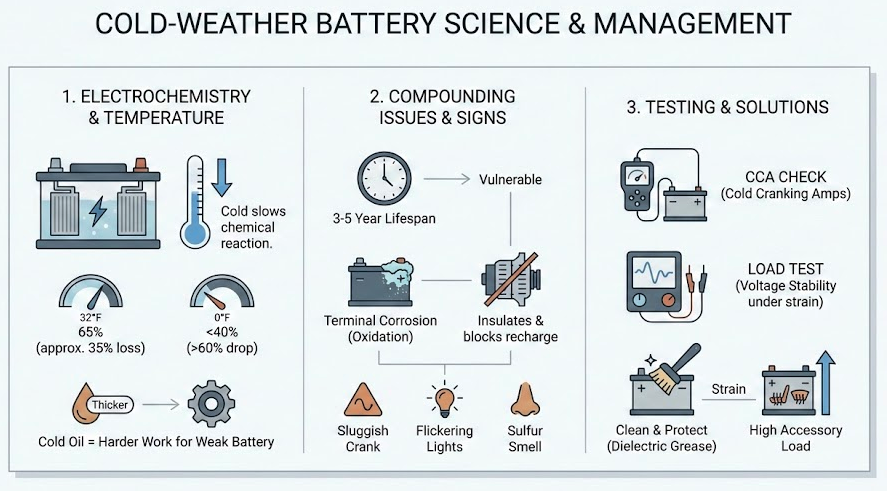
Compounding this issue is the fact that cold engine oil becomes thicker and more viscous, meaning the battery must actually work harder to turn the engine over precisely when it is at its weakest. If your battery is reaching the end of its typical three-to-five-year lifespan, this reduction in capacity becomes the primary cause of roadside breakdowns. Beyond the internal chemistry, winter air in North Carolina is often humid, which can accelerate the accumulation of oxidation on battery terminals.
This oxidation acts as an insulator, creating electrical resistance that prevents the alternator from effectively recharging the battery during your commute. Drivers should be vigilant for warning signs such as a “sluggish” engine crank, flickering dashboard lights during startup, or a strange sulfur-like smell under the hood. Ignoring these symptoms in milder weather might be a manageable risk, but the harsh reality of a Durham winter exposes these vulnerabilities without mercy.
By understanding that your battery is a living chemical component, you can appreciate why a seasonal health check is not just a suggestion but a necessity for modern vehicle reliability. At Mark Jacobson Toyota, we utilize advanced diagnostic equipment to measure the “Cold Cranking Amps” (CCA) currently available in your unit, providing a clear picture of whether your battery will survive the next cold snap or if a replacement is the only way to ensure you aren’t stranded.
Understanding Terminal Corrosion and Voltage Stability Under Load
Corrosion is the silent enemy of battery longevity, appearing as a crusty white or bluish-green powder around the metal terminals. This substance is a byproduct of hydrogen gas being released from the battery acid, which then reacts with the metal of the terminals. Even a small amount of buildup can significantly impede the flow of electricity, making it nearly impossible for the battery to deliver the high amperage required for a cold start.
Furthermore, voltage stability is often compromised during the winter months because drivers tend to use more high-draw accessories simultaneously, such as heated seats, window defrosters, and powerful heater fans. This increased electrical load places a massive strain on an already struggling battery. A professional load test is the only definitive way to measure health; it involves applying a controlled electrical draw to the battery to see how well it maintains its voltage over time.
If the voltage drops too low during this simulation, it indicates that the internal plates are likely sulfated or damaged. Cleaning the terminals with a specialized neutralizing solution and applying a protective dielectric grease can prevent future buildup, ensuring that every bit of power generated by the alternator successfully reaches the battery and the starter motor throughout the season.
Maximizing Tire Performance and Safety on Slick North Carolina Roadways
Tires represent the only physical point of contact between your Toyota and the pavement, making them the most critical safety feature of your vehicle during inclement weather. In Durham, the winter climate is characterized by rapid temperature swings, which directly impact the physics of tire inflation. For every 10-degree Fahrenheit drop in temperature, your tires will lose approximately one pound per square inch (PSI) of pressure.
While a 1-to-2 PSI drop might seem negligible, a sudden cold front can leave your tires significantly underinflated, which increases the tire’s “footprint” in a way that generates excessive heat and compromises structural integrity. Underinflated tires also suffer from reduced lateral stability, meaning your car may feel “mushy” or unresponsive when navigating the sharp curves of NC-147 or turning onto the Durham Freeway. Furthermore, tread depth is the deciding factor in whether your vehicle can successfully channel away water and slush to maintain a grip on the asphalt.
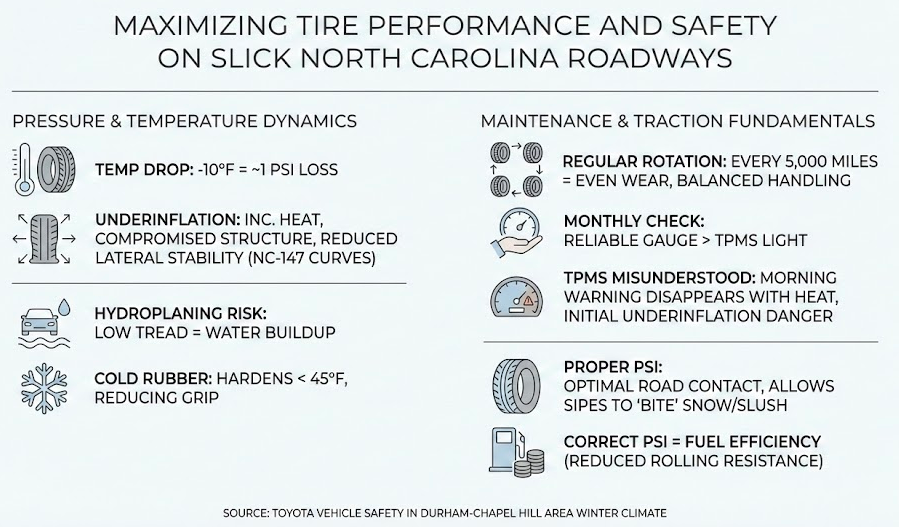
Without sufficient tread, a phenomenon known as hydroplaning occurs, where a thin layer of water builds up between the tire and the road, effectively turning your vehicle into a sled. In North Carolina, where freezing rain often creates a deceptive layer of “black ice,” having tires with deep, healthy grooves is the difference between stopping safely and sliding into an intersection. Beyond just pressure and tread, the rubber compound itself reacts to the cold; standard all-season tires begin to harden as temperatures dip below 45°F, which reduces their ability to “grip” the road surface.
Regular rotations are also paramount during this time of year. Because the front tires of most Toyota vehicles handle the majority of braking and steering forces, they wear at a much faster rate than the rears. By rotating your tires every 5,000 miles, you ensure that the tread wears evenly across all four corners, providing balanced handling and maximizing the return on your investment. Checking your tires once a month with a reliable gauge and not just relying on the dashboard warning light is a fundamental habit for any safety-conscious driver in the Durham-Chapel Hill area.
The Dynamics of Traction and the Critical Role of Proper PSI Maintenance
The Tire Pressure Monitoring System (TPMS) is a vital tool, but it is often misunderstood by drivers during the winter months. Many motorists notice their TPMS light illuminates in the morning only to disappear after twenty minutes of driving. This occurs because the friction of driving generates heat, which causes the air inside the tire to expand and the pressure to rise back above the warning threshold.
However, relying on this “warm-up” expansion is dangerous, as the tire remains dangerously underinflated during those initial, most critical minutes of your trip. Proper inflation ensures that the tire’s tread pattern makes optimal contact with the road, distributing the vehicle’s weight evenly and allowing the sipes (the small slits in the tread blocks) to open and close correctly to bite into the snow or slush.
Maintaining the manufacturer-recommended PSI which can be found on the placard inside the driver’s door jamb is also essential for fuel efficiency. Underinflated tires create more rolling resistance, forcing your engine to work harder and consume more gasoline. By keeping your tires at the correct pressure, you are not only ensuring your safety on potentially icy roads but also protecting your wallet from the increased fuel costs associated with winter driving conditions in the Triangle.
Why Professional Winter Inspections Outperform DIY Maintenance
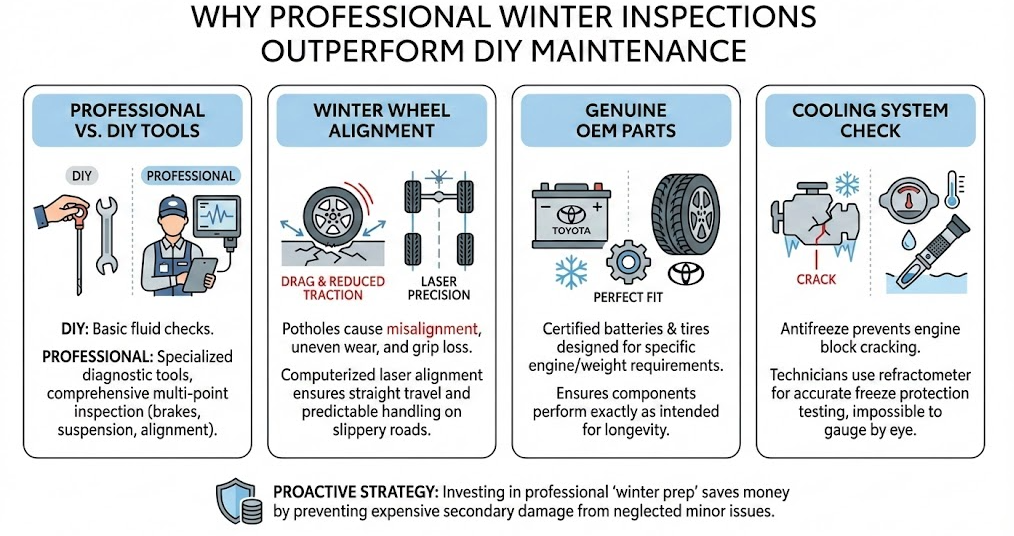
While many vehicle owners feel confident checking their oil or topping off fluids, the complexity of modern Toyota engineering means that professional intervention is often necessary to ensure total winter readiness. Visiting a certified service center like Mark Jacobson Toyota on Durham-Chapel Hill Blvd provides access to specialized diagnostic tools that the average consumer simply does not have in their garage.
For example, a certified technician doesn’t just look at your tires; they perform a comprehensive multi-point inspection that includes an evaluation of the brake system, suspension components, and the vehicle’s alignment. In Durham, the winter season often leads to the formation of aggressive potholes caused by the freeze-thaw cycle of water trapped beneath the asphalt. Hitting a single pothole can knock your wheels out of alignment, causing your tires to point in slightly different directions.
This “fight” between the wheels leads to rapid, uneven tread wear and can significantly reduce your traction on slick surfaces. A professional alignment check ensures that your vehicle travels straight and true, which is essential when you are trying to maintain control on a bridge or overpass covered in frost. Additionally, using Genuine Toyota Parts is a critical factor in vehicle longevity. Toyota-certified batteries are specifically designed to meet the high-amperage requirements of your specific engine, and Genuine Toyota tires are selected for their compatibility with your vehicle’s weight and suspension tuning.
Choosing an OEM (Original Equipment Manufacturer) part ensures that the component fits perfectly and performs exactly as the engineers intended. Furthermore, a professional inspection includes a check of the cooling system; “antifreeze” isn’t just for cooling the engine in summer, it prevents the engine block from cracking in freezing temperatures. A technician will test the concentration of your coolant to ensure it has the proper freezing point protection, a task that requires a refractometer for an accurate reading. Investing in a professional “winter prep” service is a proactive strategy that saves money by preventing the expensive secondary damage that often follows a neglected minor issue.
Precision Wheel Alignment and Its Impact on Winter Road Adhesion
Wheel alignment is perhaps the most overlooked aspect of winter safety, yet it plays a massive role in how your car interacts with slippery roads. When your wheels are out of alignment, the tires do not sit flat against the pavement, reducing the surface area available for grip. This lack of contact is particularly dangerous when trying to accelerate on a wet incline or when performing an emergency braking maneuver.
Furthermore, misalignment creates “drag,” which can cause the vehicle to pull toward the shoulder or the median, forcing the driver to constantly correct the steering. During the winter, this constant correction can lead to driver fatigue and increases the risk of a skid. By ensuring your alignment is within factory specifications, you are ensuring that all four tires are working in perfect harmony to provide the maximum possible traction.
This alignment process involves adjusting the camber, caster, and toe of the wheels measurements so precise they require computerized laser systems to calibrate. At Mark Jacobson Toyota, we prioritize this service during the winter months because we know that a well-aligned vehicle is a safer vehicle, providing the predictable handling necessary for navigating the unpredictable winter weather of Durham.
Advanced Preparedness: Visibility, Fluids, and Emergency Protocols
Beyond the primary systems of batteries and tires, a holistic approach to winter driving involves managing visibility and preparing for the unexpected. In Durham, morning frosts and freezing rain are common, making your windshield wipers and washer fluid your first line of defense. Standard wiper blades are made of a rubber compound that can become brittle and stiff in cold temperatures, leading to streaking and “chatter” across the glass.
Winter-specific wiper blades often feature a protective rubber boot that prevents ice buildup in the hinges, ensuring the blade remains flexible and maintains constant contact with the windshield. Equally important is the type of washer fluid you use; many “all-season” fluids will freeze solid in the reservoir or, worse, freeze instantly upon hitting a cold windshield, effectively blinding the driver. Winter-rated fluids contain a higher concentration of alcohol to lower the freezing point, allowing you to clear frost and road salt effectively even in sub-freezing conditions.
Visibility also extends to your vehicle’s lighting; winter days are shorter and often gloomier, so ensuring your headlights are clear of oxidation and that all bulbs are functioning is paramount. Furthermore, your braking system requires specific attention during the winter. Cold temperatures can affect the viscosity of brake fluid, and moisture can lead to surface rust on the rotors, which may cause a “pulsing” sensation or reduced stopping power. Finally, every Durham driver should carry a winter emergency kit. Despite our best efforts, accidents and mechanical failures can happen.
A well-stocked kit should include high-quality jumper cables or a portable jump starter, a heavy blanket, a flashlight with extra batteries, and basic non-perishable snacks. Having these items on hand provides peace of mind and essential safety if you are forced to wait for a tow truck on the side of a cold highway. By addressing these secondary systems, you transform your Toyota from a fair-weather commuter into a robust, winter-ready machine capable of handling whatever the North Carolina climate throws your way.
Optimizing Visibility Through Winter-Grade Chemical Solutions and Hardware
Maintaining visibility is not just about wiping away water; it is about chemically managing the ice and grime that accumulate on your glass. Winter-grade washer fluids are specifically formulated with de-icing agents that help melt thin layers of frost on contact, saving you time during those cold morning departures. Moreover, the salt and brine used by NCDOT to treat roads like I-40 can leave a stubborn, white film on your windshield that standard water or weak cleaning solutions cannot dissolve.
High-quality winter fluids contain surfactants designed to break down these mineral deposits, ensuring a streak-free view. On the hardware side, inspecting the “squeegee” edge of your wiper blades is vital; even a tiny nick in the rubber can leave a wide streak of water directly in your line of sight. Replacing these blades at the start of the season is a low-cost investment that significantly reduces the mental strain of driving in poor weather. By combining the right chemical solutions with fresh hardware, you ensure that your view of the road remains unobstructed, allowing you to spot hazards and react to the movements of other drivers with confidence.
The Impact of Winter Weather on Toyota Hybrid Battery Systems
For owners of Toyota hybrids like the Prius or RAV4 Hybrid, the winter months require a slightly different understanding of battery health. While the high-voltage traction battery is designed to handle a wide range of temperatures, the 12V auxiliary battery which powers the computer systems that “wake up” the hybrid drivetrain is just as susceptible to the cold as a traditional car battery. If this small 12V battery fails, your hybrid will not start, even if the large traction battery is fully charged.
Furthermore, cold temperatures can temporarily reduce the efficiency of the hybrid system, as the gasoline engine may need to run more frequently to generate heat for the cabin and to bring the battery up to its optimal operating temperature. Understanding this shift in behavior can help hybrid owners manage their expectations regarding fuel economy during the winter while emphasizing the importance of keeping that 12V auxiliary battery in peak condition.
Hydroplaning Prevention and Wet-Weather Driving Techniques
In the South, our “winter” weather is more often a cold, heavy rain than a light snow, which makes the risk of hydroplaning a constant threat for Durham commuters. To prevent this dangerous loss of control, drivers should avoid using cruise control on wet roads, as the system may attempt to accelerate if it detects a loss of traction, worsening a skid. Instead, maintain a steady foot on the accelerator and increase your following distance significantly. If you do feel the steering become “light” or the vehicle begin to slide, the best course of action is to stay calm, ease off the gas, and steer straight until the tires regain contact with the pavement. Ensuring your tires have at least 4/32″ of tread depth is the most effective mechanical way to prevent this, as it allows the tire to “pump” water out from under the tread blocks at a high rate.
The Strategic Advantage of Early Season Proactive Maintenance
Timing your service visit is just as important as the service itself. Many drivers wait until the first major freeze or the first notification of a “dead battery” before seeking help, which often leads to long wait times at service centers and the added stress of an unexpected breakdown. By scheduling your winter inspection in late December or very early January, you beat the “winter rush” and can address minor issues before they escalate into expensive repairs. For example, catching a small tear in a CV boot or a minor coolant leak during a routine check can prevent a catastrophic failure when you are miles away from home during a holiday trip. Being proactive is not just about vehicle health; it is about protecting your schedule, your budget, and your family’s safety by ensuring that your Toyota is always ready for the road ahead.
Visit Mark Jacobson Toyota for Your Professional Winter Inspection
We invite you to schedule your winter service appointment at Mark Jacobson Toyota today and experience the peace of mind that comes with expert care. Don’t wait for the first freeze of the year to find out your battery is weak or your tires are unsuited for the road. Our team of Toyota-certified technicians is ready to provide a thorough inspection, check your tire pressure and tread depth, and ensure all your vital fluids are topped off for the cold months ahead. We are conveniently located at 4516 Durham-Chapel Hill Blvd in Durham, NC, and we offer a comfortable waiting area with premium amenities while we get your vehicle winter-ready. Visit our website to book your appointment online or give us a call today. Let us help you drive with confidence and safety throughout the entire winter season.
Connect with us


Recent Blog Entries
- 2026 Toyota EV Lineup in Durham, NC: Which Model Fits Your Life Best?
- 2026 Toyota Camry Trims and Pricing: A Complete Buyer’s Guide
- 2026 Toyota RAV4 vs Corolla Cross: Which Crossover Fits Your Life in Durham?
- 2026 Toyota C-HR Electric SUV: What Durham Drivers Need to Know
- Best Toyota SUVs for Durham Dog Owners: The Ultimate Guide for Your Pack