


Blog / Durham New Toyota Cars

Blog

All Durham New Toyota Cars Durham Toyota Dealer Models New Toyota Local Area Durham Toyota Service Mark Jacobson Toyota Service Durham Used Cars
2026 toyota gr interior

2026 Toyota GR Corolla: Turbocharged Performance for Durham Drivers

2026 Toyota GR Corolla: Performance & Overview The 2026 Toyota GR Corolla is a turbocharged, all-wheel-drive performance hatchback built for drivers who want serious speed, grip, and everyday usability in one compact Toyota. At Mark Jacobson Toyota, we recommend it for Durham drivers who want a 300-horsepower car with GR-FOUR All-Wheel Drive, a choice between an 8-speed automatic and a 6-speed manual, and hatchback flexibility for daily life. For a young professional commuting on NC-147 who still wants a fun weekend car, the GR Corolla makes sense because it combines rally-inspired hardware with five-door practicality. This is not a regular Corolla with a sport appearance package. The 2026 GR Corolla uses a turbocharged 1.6-liter G16E-GTS three-cylinder engine that makes 300 horsepower and 295 lb.-ft. of torque. It also gives drivers selectable GR-FOUR torque distribution, available Michelin Pilot Sport 5 performance tires, high-performance brakes, circuit-tuned suspension, and available Premium Plus equipment such as a forged carbon-fiber roof and head-up display. Our goal in this guide is simple. We want to help Durham, Raleigh, Chapel Hill, Cary, and Apex shoppers understand the 2026 Toyota GR Corolla performance specs, trim differences, transmission choices, local driving fit, and ownership considerations before making a decision. We will also compare it with practical Toyota alternatives like Corolla Hatchback, Corolla Hybrid, and GR86 so buyers can decide whether they need maximum performance, maximum efficiency, or something between the two. Table of Contents Engine Specs, Horsepower, and GR-FOUR AWD Performance Turbocharged 1.6-liter engine, horsepower, and torque delivery GR-FOUR AWD, Torsen differentials, and cornering confidence Manual vs automatic: which transmission fits your driving style? 2026 GR Corolla Trims, Pricing, and Best-Fit Configurations GR Corolla vs GR Corolla Premium Plus comparison Which GR Corolla setup should Durham drivers choose? How the GR Corolla Fits Triangle Roads and Local Driving Durham rain, I-40 traffic, NC-147 curves, and weekend drives Technical Deep Dive: Why GR-FOUR AWD Matters Beyond Track Driving Ownership Cost Analysis: Tires, Brakes, Fuel, and Maintenance for a Performance Hatchback Key Takeaways 2026 Toyota GR Corolla FAQ for Durham Performance Shoppers The 2026 Toyota GR Corolla is a compact performance hatchback with a turbocharged engine, all-wheel drive, and track-inspired handling hardware. It is designed for drivers who want high-output performance in a practical five-seat body style. For drivers in Durham, Raleigh, Chapel Hill, Cary, and Apex, it provides year-round traction and daily usability. Engine Specs, Horsepower, and GR-FOUR AWD Performance The 2026 GR Corolla is defined by its 300-horsepower turbo engine, GR-FOUR AWD system, and driver-focused transmission choices rather than appearance upgrades alone. Turbocharged 1.6-liter engine, horsepower, and torque delivery The heart of the 2026 GR Corolla is its turbocharged 1.6-liter G16E-GTS three-cylinder engine. Toyota rates it at 300 horsepower and 295 lb.-ft. of torque, which gives this compact hatchback the kind of output many shoppers associate with larger performance cars. That output matters for Durham drivers because the GR Corolla can feel energetic in short passing zones, quick on highway ramps, and responsive during weekend drives without giving up the easy loading and rear-seat access of a hatchback body. The GR Corolla delivers 300 horsepower and 295 lb.-ft. of torque from a turbocharged 1.6-liter engine, which makes it one of the most performance-focused Toyota models available for compact-car shoppers. We recommend it for drivers who want a daily Toyota with real enthusiast hardware instead of a regular commuter car with sporty styling. For Raleigh commuters who want quick acceleration and a compact footprint, this engine is the reason the GR Corolla stands apart from Corolla Hatchback and Corolla Hybrid. Performance Spec 2026 Toyota GR Corolla Why It Matters Engine Turbocharged 1.6-liter 3-cylinder Compact engine with high output and quick response Horsepower 300 hp Strong acceleration for a compact hatchback Torque 295 lb.-ft. Useful pull for daily driving and spirited back-road use Drivetrain GR-FOUR All-Wheel Drive Traction advantage in rain, curves, and performance driving Transmission Choices 8-speed automatic or 6-speed manual Lets shoppers choose convenience or driver involvement EPA MPG Up to 21 city, 28 highway, 24 combined with manual Performance-focused economy, not hybrid-car efficiency Best For Performance hatchback shoppers Drivers who want speed, grip, and daily usability in one Toyota Based on current Toyota published specifications and FuelEconomy.gov. The GR Corolla is best for shoppers who prioritize performance over maximum fuel savings. The regular Corolla Hatchback is better for buyers who want lower ownership costs and simple daily transportation. The Corolla Hybrid is better for commuters who care more about MPG than turbocharged acceleration. The GR86 is better for drivers who want rear-wheel-drive sports-car balance instead of hatchback practicality. View 2026 GR Corolla Details GR-FOUR AWD, Torsen differentials, and cornering confidence The GR-FOUR All-Wheel Drive system is one of the main reasons we see performance shoppers take the GR Corolla seriously. Toyota says the system has selectable front-to-rear torque distribution settings of 60:40 for everyday driving, 50:50 for maximum stability, and 30:70 for a more rear-biased feel. That is useful because the car is not locked into one personality. A driver can use the calmer setting for weekday traffic and a more aggressive setting for a Saturday morning drive outside the city. For Chapel Hill drivers who deal with rain, changing pavement, and curving rural roads, GR-FOUR AWD is not just a track feature. It helps the GR Corolla feel planted in conditions where a front-wheel-drive compact can feel busy. The available front and rear Torsen limited-slip differentials also matter because they help manage power delivery when traction changes mid-corner. Our sales team walks customers through this system carefully because AWD performance is only meaningful when the buyer understands how it changes the drive. Manual vs automatic: which transmission fits your driving style? The transmission choice is where the GR Corolla becomes personal. The 6-speed manual is the enthusiast choice because it gives drivers more control, more interaction, and the traditional hot-hatch feeling many GR shoppers want. The 8-speed automatic is the easier everyday choice because it adds paddle shifters and removes clutch work from Durham traffic. Neither option is wrong. The right one depends on whether the driver values daily convenience or maximum involvement. For a Cary driver using the GR Corolla as a year-round commuter, we often recommend the 8-speed automatic because stop-and-go driving on I-40 can make a manual feel less relaxing over time. For a weekend performance driver who enjoys choosing every shift, we recommend the 6-speed manual because it gives the car a more connected feel. What we see here in Durham is that shoppers who test both transmissions usually know quickly which version fits their personality. 2026 GR Corolla Trims, Pricing, and Best-Fit Configurations The 2026 GR Corolla lineup is easiest to understand as a choice between essential performance value and Premium Plus equipment that adds more comfort, design, and track-inspired hardware. GR Corolla vs GR Corolla Premium Plus comparison The 2026 lineup includes the GR Corolla and GR Corolla Premium Plus grades in Toyota’s current model information. Toyota lists a starting MSRP of $40,120 for GR Corolla, with MSRP excluding delivery processing and handling. Mark Jacobson Toyota’s local model information shows a starting figure of $39,920, and pricing can vary based on equipment, transmission, region, fees, and market updates. For article accuracy, we recommend treating Toyota’s current published MSRP as the primary reference and local vehicle availability as the shopping reference. The Premium Plus grade is the better fit for drivers who want the GR Corolla to feel more special every day. It adds features shoppers often associate with a more complete enthusiast package, including available carbon-fiber roof design, enhanced interior details, head-up display availability, and appearance upgrades. The base GR Corolla is still the pure performance value because the main performance identity, turbo power, AWD, and transmission choice remain central to the car. Comparison Point 2026 GR Corolla 2026 GR Corolla Premium Plus Best For Starting MSRP $40,120, excluding delivery processing and handling Higher MSRP depending on configuration GR Corolla for value-focused performance shoppers Engine Output 300 hp and 295 lb.-ft. 300 hp and 295 lb.-ft. Both deliver the same core turbo output Drivetrain GR-FOUR AWD GR-FOUR AWD Both for all-weather performance traction Transmission Choice 8-speed automatic or 6-speed manual 8-speed automatic or 6-speed manual Both for drivers choosing convenience or engagement Premium Features Performance essentials More comfort, design, and specialty equipment Premium Plus for drivers who want a more complete package Ideal Use Case Daily driver with serious performance hardware Performance hatchback with added premium feel Choose based on budget and desired equipment Based on current Toyota published specifications. We recommend the standard GR Corolla for buyers who want the most direct route to 300 horsepower, GR-FOUR AWD, and a true performance hatchback experience. We recommend the GR Corolla Premium Plus for shoppers who want the same core performance but also care about a richer interior feel, available head-up display, and more distinctive exterior details. The key difference is not raw horsepower. The key difference is how complete you want the car to feel every day. Check GR Corolla Availability Which GR Corolla setup should Durham drivers choose? For Durham-area shoppers, the right GR Corolla setup depends on daily route, driving personality, and how often the car will be used in traffic. A buyer who wants maximum connection should start with the 6-speed manual. A buyer who wants performance but also deals with school traffic, RTP commuting, and frequent stoplights should consider the 8-speed automatic. Our customers who choose performance cars usually know the spec sheet matters, but the daily routine decides whether they enjoy the car long term. If you commute on NC-147 and want less fatigue in traffic, we recommend the 8-speed automatic because it keeps the car easier to live with every day. If you drive for fun on weekends and want full involvement, we recommend the 6-speed manual because it makes every shift part of the experience. If you are upgrading from Corolla Hatchback in Cary, we recommend the GR Corolla grade first because it gives you the main performance hardware without forcing every premium feature. If you want a special-feeling performance Toyota for both daily driving and weekend use, we recommend Premium Plus because the extra equipment makes the cabin and exterior feel more complete. For performance shoppers in Durham, the best 2026 GR Corolla setup is the one that matches how the car will be driven Monday through Friday, not just how it looks in a weekend scenario. We recommend the manual for drivers who want engagement first and the automatic for drivers who want speed with less effort in traffic. Premium Plus is the better choice when the buyer wants the GR Corolla to feel like a specialty vehicle every time they open the door. If you are serious about the GR Corolla, we recommend visiting our Durham showroom so we can compare transmission choices, available colors, and incoming vehicle options with you directly. Our team can help you decide whether the 6-speed manual or 8-speed automatic fits your route, your comfort level, and your long-term ownership plan. We can also help you compare GR Corolla with Corolla Hatchback, Corolla Hybrid, GR86, or another Toyota model if you are still deciding between performance and everyday economy. Drivers from Durham, Raleigh, Chapel Hill, Cary, and Apex can call us at 919-493-5599 or start with our 2026 GR Corolla information online before stopping by. We want the test-drive process to answer real questions about steering feel, seat comfort, visibility, ride firmness, and how the car fits your daily routine. Get Pre-Approved for GR Corolla How the GR Corolla Fits Triangle Roads and Local Driving The GR Corolla makes the most sense locally for drivers who want all-weather grip, compact size, and performance that still works in Durham traffic and Triangle rain. Durham rain, I-40 traffic, NC-147 curves, and weekend drives Durham-area driving gives the GR Corolla a real reason to exist beyond track-day fantasy. Triangle rain, summer heat, patched pavement, downtown Durham traffic, NC-147 commuting, and I-40 congestion all test whether a performance car is usable. The GR Corolla’s compact size helps in parking decks and city traffic, while GR-FOUR AWD helps the car feel secure when weather changes quickly. For Raleigh commuters who want more confidence during wet highway drives, AWD becomes part of the daily value. Based on our experience with Triangle drivers, the GR Corolla fits best when a shopper wants one compact car that can handle weekday responsibilities and still feel rewarding on weekend roads. For Chapel Hill drivers using US-15/501, the torque-rich engine and AWD system add confidence during merging and curving sections. For Apex or Cary buyers who want a fun Toyota without moving into a larger vehicle, the hatchback layout keeps the car more practical than a traditional two-door sports car. Local Driving Scenario Driver Need GR Corolla Feature Recommended Fit Durham downtown traffic Compact size and responsive power Hatchback footprint and turbo torque Good fit for performance-minded commuters Raleigh to RTP commute Rain confidence and highway stability GR-FOUR AWD and Toyota Safety Sense 3.0 Good fit for drivers who want grip and assistance features Chapel Hill back roads Cornering confidence Torsen limited-slip differentials and tuned suspension Strong fit for weekend driving Cary daily errands Usability and easy loading Five-door hatchback body Better fit than a two-door sports car Apex weekend trip Fun drive plus cargo flexibility Rear hatch and fold-down seating Good fit for light gear and overnight bags Ideal Use Case One car for weekday duty and weekend fun 300 hp, AWD, hatchback utility Best for drivers who value performance first Based on current Toyota published specifications. Value Your Trade Toward GR Corolla If you are comparing the GR Corolla with another Toyota or trying to decide whether a performance hatchback fits your budget, we can help you build the numbers around your real routine. Our team can review your trade value, discuss monthly payment options, and help you compare new Toyota models without turning the visit into a rushed decision. We work with drivers from Durham, Raleigh, Chapel Hill, Cary, and Apex every day, and our Mark Says Yes! approach is built around helping shoppers find a Toyota that fits their needs and their comfort level. If you already own a Corolla, Camry, RAV4, GR86, or another vehicle, we can help you understand how the GR Corolla changes the ownership picture. Call us at 919-493-5599 or visit us at 4516 Durham-Chapel Hill Blvd so we can walk through the performance, finance, and trade details together. Ask About GR Corolla Timing Technical Deep Dive: Why GR-FOUR AWD Matters Beyond Track Driving GR-FOUR AWD matters because it helps the GR Corolla put power down with more confidence in daily rain, tight corners, and spirited driving. Some shoppers hear AWD and think only about winter weather, but that misses the point of the GR Corolla. GR-FOUR AWD is a performance traction system, not just a bad-weather feature. The selectable 60:40, 50:50, and 30:70 torque distribution settings let the driver choose a feel that matches the road and the mood. That gives the GR Corolla more range than a typical front-wheel-drive hot hatch. For a Durham driver who wants one car for workdays and weekend fun, GR-FOUR AWD helps the GR Corolla feel more settled when the road surface changes. On rainy Triangle mornings, the system supports traction and stability. On a dry weekend drive, it helps the car feel more eager and balanced. We recommend paying attention to this system during a test drive because it is one of the clearest reasons to choose GR Corolla over a regular Corolla model. The Torsen limited-slip differentials also add value because they help distribute power more effectively when cornering. For a Chapel Hill driver who enjoys winding roads, this can make the car feel more precise. For a daily commuter, it supports a calmer sense of control. That mix of confidence and excitement is the GR Corolla’s technical advantage. Ownership Cost Analysis: Tires, Brakes, Fuel, and Maintenance for a Performance Hatchback The GR Corolla can work as a daily driver, but buyers should plan for performance-car fuel, tire, brake, and maintenance expectations rather than regular Corolla ownership costs. The GR Corolla is still a Toyota, but it is not built around the same ownership priorities as Corolla Hybrid or Corolla Hatchback. It uses premium gasoline, performance tires, high-output turbo hardware, and upgraded brakes. FuelEconomy.gov lists the 2026 GR Corolla manual at 24 combined MPG, with 21 city and 28 highway. That is reasonable for a 300-horsepower AWD performance hatchback, but it is not the right fit for shoppers whose main goal is fuel savings. Our service team advises GR Corolla shoppers to think about tires and brakes as part of the performance value. Sticky tires and stronger brakes are part of why the car feels sharp, but they may wear faster depending on driving style. If you drive aggressively, take frequent weekend drives, or spend a lot of time in stop-and-go traffic, inspections matter. ToyotaCare can help with scheduled maintenance during the covered period, and our certified technicians can help keep the vehicle aligned with factory expectations. If you want maximum MPG, we recommend Corolla Hybrid instead of GR Corolla because efficiency is its main strength. If you want practical daily driving with a lower cost profile, Corolla Hatchback may fit better than GR Corolla. If you want performance first, we recommend planning for premium fuel, tire inspections, brake checks, and regular service visits. If you drive in heavy Durham traffic, we recommend staying consistent with maintenance because heat, braking, and short trips can add wear. For an Apex weekend road tripper who wants a fun car with luggage space, the GR Corolla can still be practical. The key is to buy it for what it is. It is a compact performance hatchback with daily usability, not an economy hatchback with a few sporty touches. Schedule GR Corolla Service Key Takeaways The 2026 GR Corolla makes 300 horsepower and 295 lb.-ft. of torque from a turbocharged 1.6-liter engine. GR-FOUR AWD gives the car selectable torque distribution for daily driving, stability, and a more rear-biased feel. The 6-speed manual is best for driver involvement, while the 8-speed automatic fits daily traffic better. Premium Plus is the stronger fit for shoppers who want more comfort, design, and specialty equipment. For maximum MPG, Corolla Hybrid is the smarter Toyota choice. For performance with hatchback practicality, GR Corolla is the stronger enthusiast choice. 2026 Toyota GR Corolla FAQ for Durham Performance Shoppers How much horsepower does the 2026 Toyota GR Corolla have? The 2026 Toyota GR Corolla has 300 horsepower and 295 lb.-ft. of torque from a turbocharged 1.6-liter three-cylinder engine. We recommend it for shoppers who want a compact Toyota with true performance hardware, not just sport styling. For a Raleigh commuter who wants quick acceleration, AWD traction, and a car that still fits easily into parking decks and tight spaces, the GR Corolla offers a strong mix of power and practicality. Is the 2026 GR Corolla good for daily driving? The 2026 GR Corolla can be a good daily driver if you want performance first and are comfortable with performance-car ownership expectations. It has five doors, hatchback utility, available automatic transmission convenience, Toyota Safety Sense 3.0, and all-wheel drive. We recommend the 8-speed automatic for shoppers who spend a lot of time in Durham traffic, while the 6-speed manual is better for drivers who want a more involved experience every time they drive. Should I choose the manual or automatic GR Corolla? We recommend the 6-speed manual if you want the most connected GR Corolla driving experience and enjoy choosing every shift yourself. We recommend the 8-speed automatic if your routine includes I-40 traffic, daily commuting, or frequent city driving. Both versions keep the core GR Corolla performance identity, so the decision should come down to how much convenience you want during the week versus how much involvement you want on weekend drives. What is the difference between GR Corolla and Premium Plus? The standard GR Corolla gives shoppers the main performance pieces, including 300 horsepower, GR-FOUR AWD, and manual or automatic transmission choices. Premium Plus adds more premium equipment and a more specialty feel, making it better for buyers who want the GR Corolla to feel more complete every day. We recommend starting with the standard grade for value and moving to Premium Plus if comfort, design, and extra equipment matter as much as speed. We are here to help you choose the right performance Toyota at Mark Jacobson Toyota, 4516 Durham-Chapel Hill Blvd, Durham, NC 27707. Our team works with drivers from Durham, Raleigh, Chapel Hill, Cary, and Apex who want a car that fits real daily life while still feeling exciting on the right road. We can help you compare GR Corolla, GR86, Corolla Hatchback, Corolla Hybrid, and other Toyota models so the final choice matches your budget, route, and driving style. Our Mark Says Yes! approach and ToyotaCare support help make the shopping and ownership process clearer from the start. Call us at 919-493-5599, review the 2026 GR Corolla information online, or visit our Durham showroom so we can help you decide whether this turbocharged AWD hatchback is the right Toyota for you.

2026 toyota grand highlander suv

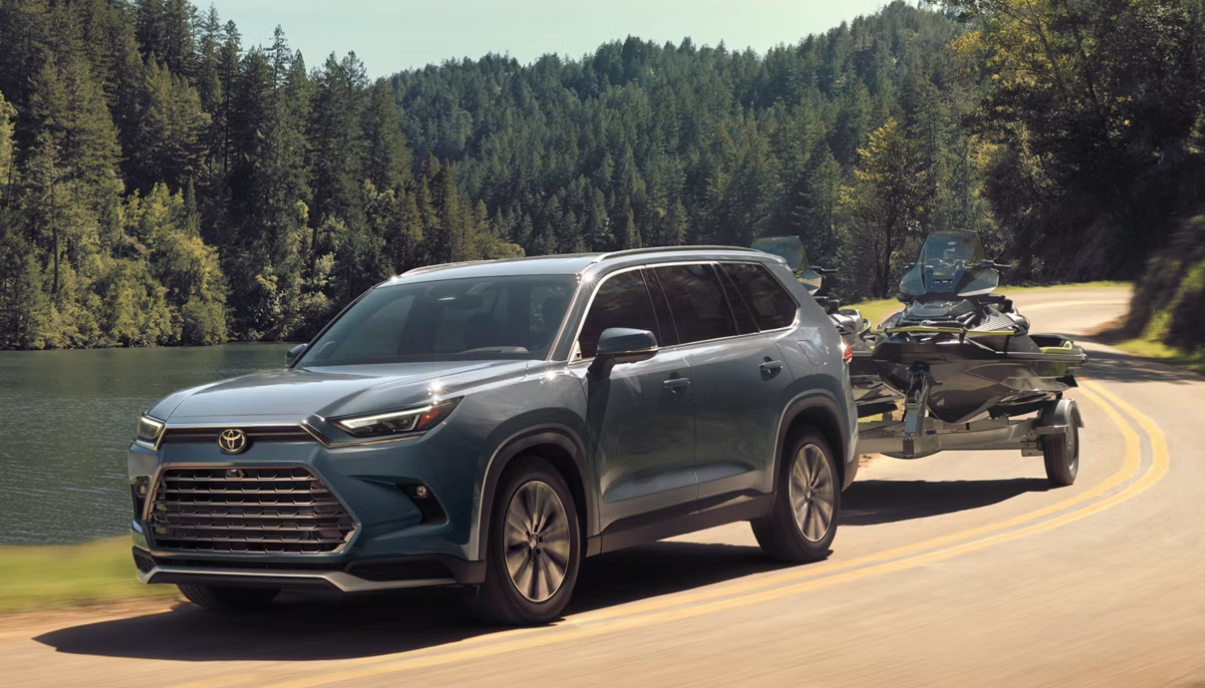
2026 Toyota Grand Highlander Hybrid: The Family SUV Durham Parents Love

If your family is choosing between the 2026 Toyota Highlander Hybrid and the 2026 Toyota Grand Highlander Hybrid, the short answer is simple. At Mark Jacobson Toyota, we recommend the Highlander Hybrid for families who want a more manageable three-row SUV with strong efficiency and standard all-wheel drive without stepping into a larger footprint. We recommend the Grand Highlander Hybrid for households that regularly use the third row and need more usable cargo space behind it. Both are strong family vehicles. The difference is how much space your family actually uses every week. The numbers explain why this distinction matters. Toyota says the 2026 Highlander Hybrid delivers a manufacturer-estimated 35 combined MPG, seats up to eight, and offers up to 84.3 cubic feet of cargo space with the seats folded. The Grand Highlander Hybrid reaches up to 36 combined MPG, adds 20.6 cubic feet of cargo behind the third row, opens up to 97.5 cubic feet of max cargo room, and gives the third row 33.5 inches of legroom. That means the Grand Highlander Hybrid is not simply a bigger Highlander. It is the better answer when your family-space problem is already real instead of theoretical. In this guide, we compare family space, hybrid MPG, towing, trim differences, daily-driver fit, and long-term value for Durham, Raleigh, Chapel Hill, Cary, and Apex households. We also give direct recommendations for commuters, parents with car seats, families of five, road-trip households, and buyers trying to decide when Highlander Hybrid is enough and when Grand Highlander Hybrid is worth the step up. Table of Contents Seating Capacity, Cargo Room, and Overall Family Space Third-row comfort, seating layouts, and who really fits best Cargo behind the third row, max cargo, and family loading scenarios Which SUV feels easier to live with around Durham Hybrid Powertrains and Fuel Economy Compared Highlander Hybrid vs Grand Highlander Hybrid on MPG, AWD, towing, and pricing position Which Toyota hybrid SUV is the smarter buy for your budget and routine? Pricing, Trims, and Feature Differences That Matter Highlander Hybrid grades vs Grand Highlander Hybrid grades, premium features, and Triangle family fit When Highlander Hybrid Is Enough and When Grand Highlander Hybrid Is Worth the Step Up Which Toyota Hybrid SUV Gives You the Better Long-Term Family Value? Key Takeaways 2026 Toyota Highlander Hybrid vs Grand Highlander Hybrid FAQ for Durham Families The 2026 Toyota Highlander Hybrid and 2026 Toyota Grand Highlander Hybrid are three-row hybrid SUVs built for different family needs. Highlander Hybrid prioritizes efficiency and easier daily maneuverability. Grand Highlander Hybrid prioritizes third-row comfort and cargo flexibility for larger households and longer trips. Seating Capacity, Cargo Room, and Overall Family Space The biggest real-world difference between Highlander Hybrid and Grand Highlander Hybrid is not fuel economy. It is how much usable family space you get when all the seats are actually in use. Third-row comfort, seating layouts, and who really fits best The Highlander Hybrid still works well for many families because it gives you three rows in a more manageable overall SUV size. Toyota says it seats up to eight and makes AWD standard across the 2026 Hybrid lineup. For a Durham family of four or five that only uses the third row occasionally, that can be enough. The Highlander Hybrid still gives parents a family-friendly Toyota SUV with better maneuverability and a slightly smaller footprint for parking decks, tighter retail lots, and daily commuting around RTP and Durham. The Grand Highlander Hybrid changes the conversation because its third row is more believable for regular use. Toyota says it also seats up to eight, but the key difference is the 33.5 inches of third-row legroom. That is why families with older kids, grandparents, or regular carpool duty understand the vehicle immediately. For a Chapel Hill road-trip family or an Apex household with more frequent full-cabin use, the Grand Highlander Hybrid feels less like a compromise and more like the right tool. Family Space Factor 2026 Highlander Hybrid 2026 Grand Highlander Hybrid Best Fit Passenger Capacity Up to 8 Up to 8 Both fit larger families on paper Third-Row Comfort More occasional-use oriented 33.5 inches of third-row legroom Grand Highlander Hybrid for regular third-row use Overall Footprint More manageable daily size Larger three-row body Highlander Hybrid for easier urban use Family Flexibility Strong for lighter family use Better for bigger households and trips Grand Highlander Hybrid for heavier family duty School-Run Practicality Easier to place and park More room when everyone rides together Depends on passenger count Best For Families who do not max out cabin space often Families who regularly use all three rows Different needs, not a simple winner Based on Toyota official website and Toyota USA Newsroom. Choose Highlander Hybrid if you want a three-row SUV that still feels easier to manage every day. Choose Grand Highlander Hybrid if your third row needs to be useful more than occasionally. Choose Grand Highlander Hybrid if your household often includes older kids, grandparents, or carpools. View 2026 Highlander Hybrid Cargo behind the third row, max cargo, and family loading scenarios Cargo is where the Grand Highlander Hybrid makes its strongest case. Toyota says the Highlander Hybrid offers up to 84.3 cubic feet of cargo space with the seats folded, while the Grand Highlander Hybrid reaches 97.5 cubic feet. More importantly for family life, the Grand Highlander Hybrid gives you 20.6 cubic feet behind the third row. That matters because families rarely drive around with every seat folded flat. They drive around with kids in the back, backpacks, groceries, sports gear, and maybe a stroller still needing a place to go. For Cary parents with car seats and strollers, the Grand Highlander Hybrid solves a more immediate problem because it keeps more useful cargo room even when the third row is occupied. The Highlander Hybrid can still work well for smaller households or families who rarely fill every row, but it starts to feel tighter faster. If your family is already doing the mental math of who rides, what gets packed, and whether something has to stay home, the Grand Highlander Hybrid usually starts making more sense. Which SUV feels easier to live with around Durham For everyday Durham driving, Highlander Hybrid feels easier to live with for many buyers. Its smaller size helps when parking at shopping centers, navigating older garages, or making repeated runs through tighter urban and suburban routes. For a Raleigh commuter parent or a Durham family that values easier maneuverability as much as family utility, that matters. Not every family wants the larger SUV if they do not truly need the extra room. Grand Highlander Hybrid feels easier to live with only if your family regularly uses what the extra size provides. If your third row is occupied often, if your cargo area fills up quickly, or if your road trips regularly expose the limitations of a smaller three-row, then the larger body stops feeling like a burden and starts feeling like the reason you bought it. That is the real comparison. We recommend shopping these SUVs based on how often you use the extra space, not just whether more space sounds good in theory. View 2026 Grand Highlander Hybrid Hybrid Powertrains and Fuel Economy Compared Both Toyota hybrid SUVs make a strong efficiency case, but the better value depends on whether your household benefits more from easier packaging or from the Grand Highlander’s added family space. Highlander Hybrid vs Grand Highlander Hybrid on MPG, AWD, towing, and pricing position The Highlander Hybrid holds one of the cleanest family-SUV efficiency stories in Toyota’s lineup. Toyota says the 2026 Highlander Hybrid earns a manufacturer-estimated 35 combined MPG and now comes with standard all-wheel drive across the lineup. It also offers up to 243 net combined horsepower and towing up to 3,500 pounds. For many Triangle families, that is enough capability wrapped in a more manageable body. The Grand Highlander Hybrid reaches up to 36 combined MPG in standard Hybrid form, which means it can actually edge out Highlander Hybrid on fuel economy while also giving you more cabin and cargo room. That is what makes this comparison more interesting than a normal bigger-SUV-equals-worse-MPG story. The Grand Highlander Hybrid gives you more room without meaningfully punishing you at the pump. The tradeoff is really about price position and footprint, not simply efficiency. Comparison Point 2026 Highlander Hybrid 2026 Grand Highlander Hybrid Best For Combined MPG 35 combined Up to 36 combined Near tie, slight edge to Grand Highlander Hybrid Drivetrain Standard AWD FWD or AWD depending on trim Highlander Hybrid for buyers who want AWD built in Horsepower 243 net combined hp Standard Hybrid focuses on efficiency; Hybrid MAX adds more power Depends on whether you want standard Hybrid or MAX logic Towing Up to 3,500 lbs Standard Hybrid up to 3,500 lbs; Hybrid MAX can go higher Comparable for standard hybrid family use Pricing Position Smaller three-row hybrid SUV Larger three-row hybrid SUV with more room Highlander Hybrid for easier value entry Overall Buy Logic Easier daily footprint More family space without a major MPG penalty Depends on household size and space needs Based on Toyota official website and Toyota USA Newsroom. MSRP varies by trim and dealer processing and handling are excluded. The verdict here is direct. If you want the more manageable SUV with strong efficiency and standard AWD, choose Highlander Hybrid. If you want more third-row and cargo utility without giving up the hybrid advantage, choose Grand Highlander Hybrid. The difference is not which one is the better hybrid. The difference is which one solves your family-space problem more efficiently. Which Toyota hybrid SUV is the smarter buy for your budget and routine? For most Durham-area families that do not regularly max out the cabin, Highlander Hybrid is the smarter buy. It gives you excellent MPG, standard AWD, and a more manageable everyday size. We recommend it first for commuter families, parents who mostly carry up to five people, and buyers who want three-row flexibility without always paying the size penalty of the larger SUV. If you commute in Durham and want a three-row hybrid that is easier to drive and park, choose Highlander Hybrid. If your family regularly uses the third row and still needs real cargo room, choose Grand Highlander Hybrid. If your daily routes are shorter and space matters more than footprint, Grand Highlander Hybrid is often worth it. If your main goals are standard AWD, strong MPG, and easier maneuverability, Highlander Hybrid is usually the cleaner value play. What most buyers do not realize is that the smarter SUV is often the one that stops you from solving the wrong problem. If your space needs are occasional, Highlander Hybrid usually wins. If your space needs are constant, Grand Highlander Hybrid usually justifies itself very quickly. If you are serious about choosing between Highlander Hybrid and Grand Highlander Hybrid, we recommend bringing your family to our Durham showroom and comparing the vehicles side by side. Test the third row, check the cargo area behind it, and look at how the second-row layout fits your real routine. Our team can help you compare trims, show you which versions are available in inventory, explain how the size difference affects daily life, and help you request a quote on the hybrid SUV that fits your household best. Buyers from Durham, Raleigh, Chapel Hill, Cary, and Apex can call us at 919-493-5599 or start online before visiting. We want this comparison to get clearer once you see the vehicles in person. Get Pre-Approved for a Toyota Hybrid SUV Pricing, Trims, and Feature Differences That Matter The trim walk matters because these two SUVs do not only differ in size. They also differ in how much premium comfort and family flexibility you can access at each price step. Highlander Hybrid grades vs Grand Highlander Hybrid grades, premium features, and Triangle family fit Toyota keeps the 2026 Highlander Hybrid lineup focused with XLE, Limited, and Platinum grades. That helps because it pushes the vehicle slightly more upscale and keeps the decision cleaner for buyers who already know they want the hybrid version. The Grand Highlander Hybrid offers a wider spread depending on standard Hybrid versus Hybrid MAX, which gives families more room to choose between value-oriented space and premium performance-oriented space. For Triangle family fit, the Highlander Hybrid XLE is a strong answer for buyers who want a well-equipped three-row without stepping into the larger vehicle. Grand Highlander Hybrid XLE and Limited make the strongest case for larger households because they pair the more usable cabin with the core family features most shoppers care about. Once you move toward Grand Highlander Hybrid MAX Limited or Platinum, the decision becomes more about premium family travel than just efficient family transportation. Family Profile Primary Need Recommended SUV Why It Fits Durham family of five Easy commuting and three-row flexibility Highlander Hybrid XLE Strong balance of space, MPG, and maneuverability Cary parents with car seats and strollers More cargo behind the third row Grand Highlander Hybrid XLE or Limited Extra size pays off in daily family loading Raleigh commuter parent Standard AWD and strong MPG Highlander Hybrid Cleaner daily-driver hybrid logic Chapel Hill road-trip family More passenger comfort and luggage room Grand Highlander Hybrid More believable full-family travel space Apex household with older kids or grandparents More usable third row Grand Highlander Hybrid Rear-passenger comfort becomes more important Triangle upsizer from a smaller crossover Need three rows but not necessarily maximum size Highlander Hybrid or Grand Highlander Hybrid depending row use Use frequency of third-row and cargo load to decide Based on Toyota official website and Toyota USA Newsroom. For Durham and Triangle families, the best way to choose is to ask whether you are buying flexibility or solving a daily space problem. Highlander Hybrid is usually the better flexibility buy. Grand Highlander Hybrid is usually the better space-problem buy. Schedule a Toyota Hybrid SUV Test Drive If you are comparing these hybrid SUVs based on monthly payment, trade value, or whether the larger Grand Highlander is really worth it, we can help you work through that with real numbers. Our team can review your current vehicle through our trade tools, help you compare finance paths, and show you where the size and trim jumps become meaningful in real family use. We serve Durham, Raleigh, Chapel Hill, Cary, and Apex drivers every day, and our Mark Says Yes! approach is built around helping families buy the SUV that fits their routine, not just the one with the biggest spec sheet. If you want to compare Highlander Hybrid and Grand Highlander Hybrid in one visit, call us at 919-493-5599 or stop by our showroom at 4516 Durham-Chapel Hill Blvd. We are here to make the family-SUV decision easier and more grounded in real life. Value Your Trade for a Toyota Hybrid SUV When Highlander Hybrid Is Enough and When Grand Highlander Hybrid Is Worth the Step Up Highlander Hybrid is enough for more families than they think, but Grand Highlander Hybrid becomes the better choice quickly once the third row and cargo area are regular parts of daily life. We recommend Highlander Hybrid when your family needs three rows as a flexible backup rather than a constant requirement. It is the better fit for families who want a larger SUV than a RAV4, but do not want to move into the bigger Grand Highlander footprint if they will only occasionally use the extra room. That is why it works so well for Durham commuters, Raleigh parents with lighter daily loads, and buyers who want standard AWD and hybrid efficiency in a more manageable package. We recommend Grand Highlander Hybrid when the extra size solves recurring problems. If your family regularly uses the third row, if you carry more gear behind it, or if your road trips keep reminding you that the smaller vehicle is working too hard, the Grand Highlander Hybrid becomes easier to justify. For a Chapel Hill family that travels often or an Apex household with older kids and grandparents, that difference is not subtle. It shows up in comfort, cargo, and how often the SUV actually feels relaxed doing its job. For lighter family use, Highlander Hybrid is usually enough. For regular full-cabin use, Grand Highlander Hybrid is usually worth it. That is the cleanest way to think about the step up. See Toyota Hybrid SUV Features Which Toyota Hybrid SUV Gives You the Better Long-Term Family Value? The better long-term value depends less on which SUV is cheaper up front and more on whether your family will outgrow the smaller one too quickly. We recommend thinking about value in three layers. First is purchase price. Second is fuel economy. Third is how often the vehicle’s size solves or creates family friction. Highlander Hybrid often wins the cleaner total-cost case because it gives you strong hybrid efficiency, standard AWD, and easier daily usability in a smaller package. For many families, that is the right long-term answer because it avoids overbuying size they will not actually use. Grand Highlander Hybrid wins the value case when it prevents the household from outgrowing the vehicle. If you regularly use the third row, carry more than light cargo, or know your family will continue needing that added room, the larger SUV becomes the better financial choice because it avoids the compromise and upgrade cycle. That is especially true when the efficiency difference between the two vehicles is so small. You are not paying a huge fuel penalty for the extra room. You are mainly deciding whether the added size will earn its keep. We also remind buyers that ToyotaCare and our service team support help both vehicles make a strong long-term ownership case. The smartest family SUV is the one that still feels right after the first year of school runs, grocery trips, and weekend packing, and that is where this comparison usually tells the truth. Choose Highlander Hybrid for the stronger total-cost case if your family space needs are lighter. Choose Grand Highlander Hybrid if you know the extra room will be used regularly. Choose Highlander Hybrid if daily maneuverability matters as much as three-row flexibility. Choose Grand Highlander Hybrid if you want to avoid outgrowing the SUV too quickly. Schedule Toyota Hybrid SUV Service Key Takeaways Highlander Hybrid is the better fit for families who want easier daily maneuverability and standard AWD. Grand Highlander Hybrid is the better fit for households that regularly use the third row and cargo space behind it. Highlander Hybrid delivers 35 combined MPG, while Grand Highlander Hybrid reaches up to 36 combined MPG. Grand Highlander Hybrid gives a much stronger family-space advantage behind the third row. If your space needs are occasional, Highlander Hybrid is often enough. If your space needs are constant, Grand Highlander Hybrid usually justifies the step up quickly. 2026 Toyota Highlander Hybrid vs Grand Highlander Hybrid FAQ for Durham Families Should I buy the Highlander Hybrid or Grand Highlander Hybrid? We recommend the Highlander Hybrid if your family wants a three-row hybrid SUV that is easier to drive and park every day, especially if the third row is more occasional than constant. We recommend the Grand Highlander Hybrid if your family regularly uses all three rows and needs more cargo space behind them. For many Durham-area buyers, the decision comes down to how often the extra room would actually be used, not whether more room sounds nice in theory. Which Toyota hybrid SUV has more cargo space? The Grand Highlander Hybrid has more cargo space, especially behind the third row. Toyota says it offers 20.6 cubic feet behind the third row and up to 97.5 cubic feet of max cargo space. The Highlander Hybrid reaches up to 84.3 cubic feet overall, but it gives up more usable room when all seats are occupied. That is why the Grand Highlander Hybrid makes more sense for families that regularly travel with passengers and luggage at the same time. Which one is better for Durham commuting? For most Durham commuting situations, we recommend the Highlander Hybrid. It is easier to place in traffic, easier to park, and still gives families three-row flexibility with strong hybrid efficiency and standard AWD. The Grand Highlander Hybrid can still commute well, but it makes the most sense when your family is using the added space often enough to justify driving the larger SUV every day. When is the Grand Highlander Hybrid worth the extra size? The Grand Highlander Hybrid is worth the extra size when your family regularly uses the third row, needs more real cargo room behind it, or has older kids and additional passengers who make the smaller third-row layout feel tight. If the extra room solves recurring family-space problems, it becomes easier to justify very quickly. If those situations are only occasional, Highlander Hybrid is often the smarter and easier vehicle to live with. We are here to help you choose the right Toyota hybrid SUV at Mark Jacobson Toyota, 4516 Durham-Chapel Hill Blvd, Durham, NC 27707. Our team works with families from Durham, Raleigh, Chapel Hill, Cary, and Apex every day, and we know how often the right SUV choice comes down to third-row use, cargo needs, and daily routine more than anything else. We can walk you through Highlander Hybrid and Grand Highlander Hybrid side by side, compare trims, review trade value and finance options, and help you test the SUV that actually fits your household. Our Mark Says Yes! approach is built around practical guidance and a shopping process that stays clear from start to finish. Call us at 919-493-5599, start online, or visit us in person so we can help you find the Toyota hybrid SUV that makes sense for the way your family moves.

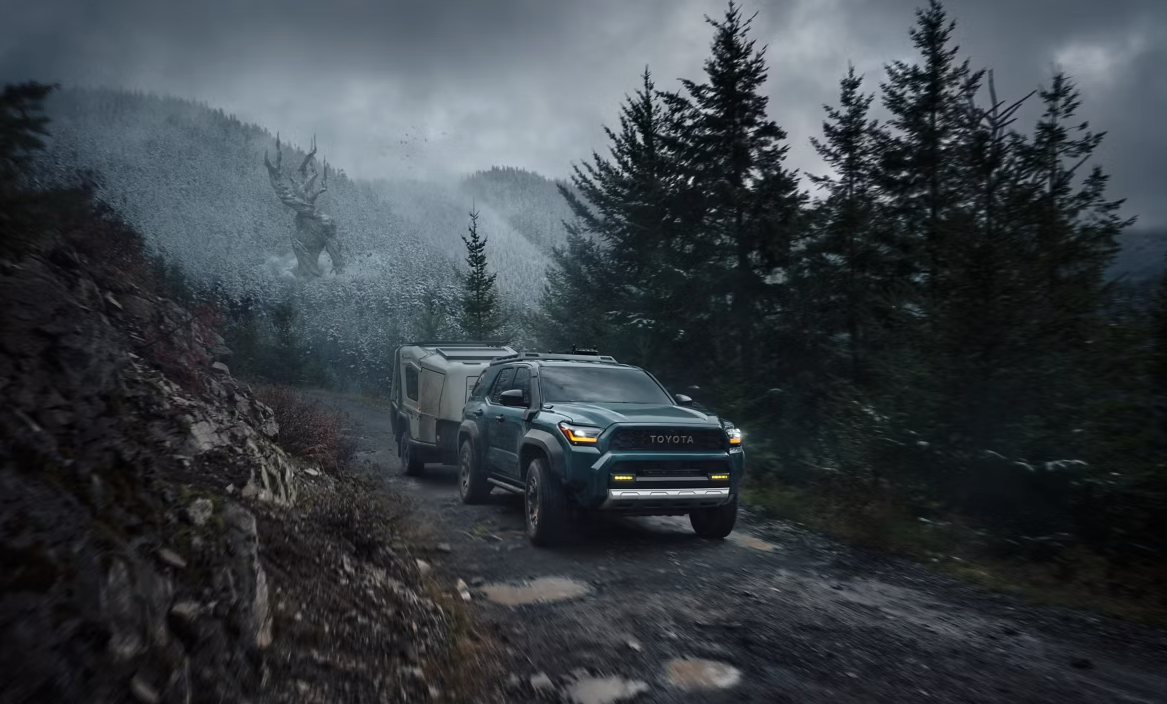
2026 4runner exterior

2026 Toyota 4Runner Trims: From SR5 to Platinum in Durham, NC

If you are shopping the 2026 Toyota 4Runner in Durham, the good news is that Toyota has made the trim walk easier to understand than many body-on-frame SUVs. The lineup now has a clearer split between everyday trims, off-road trims, and premium trims, which means buyers can choose by lifestyle and budget instead of just climbing a feature ladder at random. At Mark Jacobson Toyota, we think that matters because the 2026 4Runner now offers nine grades, and the differences between them are meaningful enough that the “best trim” depends less on which one costs more and more on how you actually use an SUV in Durham, Raleigh, Chapel Hill, Cary, and Apex. Toyota says the 2026 4Runner starts at $41,570, plus $1,450 for delivery processing and handling, and offers nine grades: SR5, TRD Sport, TRD Sport Premium, TRD Off-Road, TRD Off-Road Premium, Limited, Platinum, TRD Pro, and Trailhunter. Toyota also says the standard i-FORCE 2.4-liter turbo engine makes up to 278 horsepower and 317 lb-ft of torque, while the available i-FORCE MAX hybrid reaches up to 326 horsepower and 465 lb-ft. Toyota Safety Sense 3.0 is standard on all models, and the lineup now includes trims as different in personality as Platinum and Trailhunter. That makes this 4Runner guide less about memorizing names and more about finding the version that fits your daily life. In this article, we break down the trims from SR5 through Platinum, then into TRD Pro and Trailhunter, and explain which 4Runner makes the most sense for commuters, off-road buyers, family adventure shoppers, and premium-trim buyers in the Triangle. Table of Contents SR5, TRD Sport, and TRD Sport Premium: Everyday Value and Daily Driveability What SR5 gives you for the money in 2026 TRD Sport and TRD Sport Premium for buyers who want sharper street-focused personality Which everyday 4Runner trim fits commuters, families, and first-time 4Runner buyers best TRD Off-Road, TRD Off-Road Premium, TRD Pro, and Trailhunter: Built for the Trail Off-road trim ladder, i-FORCE MAX availability, suspension hardware, and trail tech Which 2026 off-road 4Runner trim is the smartest buy for your budget and use case? Limited and Platinum: Luxury, Technology, and Premium 4Runner Comfort Limited vs Platinum on comfort, full-time 4WD logic, premium tech, and Durham daily-driver fit Which 2026 4Runner Trim Matches the Way You Drive in the Triangle? When a Higher 4Runner Trim Is Worth It and When a Simpler Trim Delivers Better Long-Term Value Key Takeaways 2026 Toyota 4Runner Trims FAQ for Durham Drivers The 2026 Toyota 4Runner is a body-on-frame SUV available in nine trims that range from everyday-use SR5 models to premium Platinum and trail-focused TRD Pro and Trailhunter versions. For Durham-area drivers, the right trim depends on daily use, off-road interest, drivetrain needs, and budget. View 2026 Toyota 4Runner Inventory SR5, TRD Sport, and TRD Sport Premium: Everyday Value and Daily Driveability The lower and mid-level 4Runner trims matter because they will be the smartest choice for more buyers than the halo off-road grades or the top premium trim. What SR5 gives you for the money in 2026 The SR5 is still the trim that makes the most sense for buyers who want the 4Runner’s core identity without paying for hardware or luxury features they will rarely use. Toyota says SR5 comes standard with the 2.4-liter turbocharged i-FORCE engine, and it is available in rear-wheel drive or part-time four-wheel drive. Toyota also says SR5 includes an 8-inch multimedia screen, LED head and fog lights, Smart Key, a power rear liftgate window, and a 7-inch multi-information display. That is a strong baseline because it keeps the rugged 4Runner character intact while still giving buyers the features that matter most for daily use. For a Durham commuter replacing an older SUV or a first-time 4Runner buyer, SR5 often becomes the best answer quickly. It gives you the body-on-frame SUV identity, a manageable entry point into the lineup, and enough modern technology to avoid feeling stripped down. The local Mark Jacobson Toyota 4Runner page also supports SR5’s value positioning with projected EPA numbers of 20 city, 26 highway, and 22 combined MPG in RWD form, which helps it make a cleaner daily-driver case than many buyers expect from a rugged SUV. TRD Sport and TRD Sport Premium for buyers who want sharper street-focused personality TRD Sport and TRD Sport Premium make sense for buyers who like the 4Runner but want it to feel a little more tailored to daily on-road driving. Toyota says TRD Sport adds sport-tuned suspension, 20-inch alloy wheels, a gloss-black hood scoop, automatic climate control, a 12.3-inch digital gauge cluster, and Qi wireless charging. That gives it a stronger street personality than SR5 and makes it easier to recommend to buyers who want a 4Runner for Durham roads and Triangle commuting more than for deep trail work. TRD Sport Premium then adds the features many daily-use buyers actually care about: SofTex-trimmed power seats, a 14-inch touchscreen, JBL Premium Audio with JBL FLEX speaker, Panoramic View Monitor, heated steering wheel, and a hands-free power liftgate. That makes it the everyday 4Runner trim for buyers who want the model’s rugged identity but also want a noticeably more comfortable and tech-forward cabin. For Raleigh or Cary buyers who love the 4Runner look but spend far more time on pavement than on trails, TRD Sport Premium can be one of the most rational trims in the whole lineup. Everyday Trim Core Strength Drive and MPG Logic Best For SR5 Best value entry into 4Runner ownership RWD or part-time 4WD; projected up to 22 combined MPG in RWD Durham commuters and first-time 4Runner buyers TRD Sport Sharper street-focused styling and suspension feel RWD or 4WD; similar efficiency positioning to SR5 depending setup Buyers who want on-road personality TRD Sport Premium Best daily-driver comfort and tech in the non-premium walk RWD or 4WD; more comfort-focused cabin experience Raleigh and Cary buyers wanting rugged style plus comfort Standard Powertrain i-FORCE 2.4L turbo Up to 278 hp and 317 lb-ft Most everyday-use buyers Technology Step-Up 8-inch to available 14-inch touchscreen Higher trims add JBL, PVM, and convenience features Families and commuters wanting modern SUV usability Overall Buy Logic Choose by how much daily comfort you want All three keep the core 4Runner identity Broadest buyer group in the lineup Based on Toyota official website and Toyota USA Newsroom. Local projected MPG figures come from Mark Jacobson Toyota’s 2026 4Runner page. View 2026 Toyota 4Runner Inventory Which everyday 4Runner trim fits commuters, families, and first-time 4Runner buyers best For most Durham-area buyers, SR5 is the smartest starting point because it delivers the 4Runner’s basic promise without forcing you too far up the trim ladder. We recommend it first for buyers replacing an older SUV, for shoppers who want body-on-frame capability without making off-road hardware the center of the purchase, and for households that mostly want a durable, recognizable Toyota SUV for daily life and weekend flexibility. We recommend TRD Sport for buyers who want the 4Runner to feel more visually assertive and a bit more street-oriented. We recommend TRD Sport Premium for those who know they want the stronger cabin, larger screen, and added convenience features every day. The everyday trim verdict is straightforward. If value matters most, start with SR5. If comfort and daily polish matter more, work upward toward TRD Sport Premium. Choose SR5 for the cleanest value and ownership story. Choose TRD Sport if you want more street-focused style and suspension character. Choose TRD Sport Premium if daily comfort and tech matter enough to justify the jump. View 2026 Toyota 4Runner Inventory TRD Off-Road, TRD Off-Road Premium, TRD Pro, and Trailhunter: Built for the Trail The off-road side of the 4Runner lineup is where Toyota gives buyers the most personality, but the right choice depends on whether you want occasional trail confidence or a truly purpose-built adventure SUV. Off-road trim ladder, i-FORCE MAX availability, suspension hardware, and trail tech Toyota has built a very clear off-road ladder for the 2026 4Runner. TRD Off-Road is the entry point for buyers who want serious trail hardware without paying halo-trim money. Toyota says it includes underbody protection, 18-inch wheels, 33-inch all-terrain tires, Bilstein shocks, Multi-Terrain Select, Crawl Control, and an electronic locking rear differential. That makes it the trim we recommend first for buyers who actually plan to leave the pavement but do not need the most specialized version of the 4Runner. TRD Off-Road Premium builds on that with a more comfortable and better-equipped cabin, adding Multi-Terrain Monitor, SofTex power seats, the 14-inch touchscreen, JBL Premium Audio, a hands-free power liftgate, and a heated steering wheel. Toyota also notes that the i-FORCE MAX hybrid is available on TRD Off-Road and TRD Off-Road Premium, and that Stabilizer Disconnect is now optional on i-FORCE MAX TRD Off-Road Premium. That makes TRD Off-Road Premium one of the most interesting trims in the lineup because it blends real trail credibility with comfort you will appreciate on the drive home. Then the lineup splits into halo territory. Toyota says TRD Pro is exclusively powered by i-FORCE MAX and includes TRD-tuned FOX QS3 adjustable shocks, 33-inch Toyo tires, TRD performance intake and exhaust, and a much more overt off-road-performance identity. Trailhunter is also exclusively i-FORCE MAX and is positioned as the overlanding flagship, with Old Man Emu forged shocks, a high-mount air intake, onboard air compressor, ARB roof rack, RIGID fog lamps, and other expedition-focused equipment. The difference is important. TRD Pro is the higher-speed, performance-flavored off-road 4Runner. Trailhunter is the long-haul adventure and overlanding 4Runner. Off-Road Trim Powertrain and Hardware Trail Personality Best For TRD Off-Road i-FORCE standard; i-FORCE MAX available; Bilstein shocks, locker, Crawl Control Best trail-value entry point Cary and Durham buyers wanting real off-road capability TRD Off-Road Premium Adds premium cabin features; i-FORCE MAX available; optional SDM on i-FORCE MAX Best mix of trail hardware and comfort Buyers who off-road but also daily-drive the SUV TRD Pro Standard i-FORCE MAX; FOX QS3 shocks; 33-inch tires; performance intake and exhaust Performance-focused halo off-roader Drivers wanting the flagship TRD trail identity Trailhunter Standard i-FORCE MAX; Old Man Emu shocks; air compressor; high-mount intake; ARB rack Purpose-built overlanding trim Chapel Hill and Raleigh buyers wanting expedition-style gear Standard i-FORCE MAX Output 326 hp and 465 lb-ft More torque and stronger trail-driving feel Premium off-road buyers Overall Buy Logic Choose by how specialized your trail use really is Do not overbuy halo hardware if TRD Off-Road already fits Most 4Runner off-road shoppers Based on Toyota official website and Toyota USA Newsroom. Projected local MPG for i-FORCE MAX 4WD off-road-related trims is 23 city, 24 highway, and 23 combined according to Mark Jacobson Toyota. Which 2026 off-road 4Runner trim is the smartest buy for your budget and use case? For most Durham-area buyers who want a genuine off-road 4Runner, the smartest buy is TRD Off-Road or TRD Off-Road Premium. Those trims give you the equipment that matters most on trails without forcing you into a halo-trim budget. TRD Off-Road is the better answer if your priority is hardware and value. TRD Off-Road Premium is the better answer if you also want the SUV to feel more comfortable and well-equipped on normal days. Choose TRD Off-Road if you want the strongest trail-capability value. Choose TRD Off-Road Premium if you want trail hardware plus daily comfort. Choose TRD Pro if you want the highest-profile performance off-road trim. Choose Trailhunter if overlanding gear and expedition-style utility are central to the reason you want a 4Runner. What most buyers discover is that TRD Off-Road Premium is often the lineup sweet spot. It feels serious enough off-road, but still works well as a Durham-area daily driver. TRD Pro and Trailhunter are easier to justify when their specific identities are the point, not just because they sit at the top. If you are serious about buying a trail-ready 4Runner, we recommend comparing TRD Off-Road, TRD Off-Road Premium, TRD Pro, and Trailhunter side by side in person. Our team can walk you through the real hardware differences, explain where the comfort and tech upgrades show up, and help you decide whether i-FORCE MAX, SDM availability, or one of the halo off-road trims actually fits your use. Buyers from Durham, Raleigh, Chapel Hill, Cary, and Apex can call us at 919-493-5599 or start online before visiting. We can also help you request a quote on the 4Runner that fits your trail plans and daily use without pushing you into more trim than you need. Compare 2026 4Runner Off-Road Trims Limited and Platinum: Luxury, Technology, and Premium 4Runner Comfort The premium side of the 4Runner lineup matters because not every buyer wants the SUV mainly for trail hardware. Some want the 4Runner identity with better comfort, stronger tech, and a more refined daily-driving experience. Limited vs Platinum on comfort, full-time 4WD logic, premium tech, and Durham daily-driver fit Limited is the trim we recommend first for buyers who want the 4Runner to feel more refined without fully leaving the model’s rugged roots. Toyota says Limited adds heated and ventilated leather-trimmed front seats, a 14-inch touchscreen, JBL Premium Audio, an available digital rearview mirror, a power moonroof, and available power-extending running boards. Toyota also says Limited can be configured with the i-FORCE MAX hybrid, and that on i-FORCE MAX models it offers available full-time four-wheel drive with a center locking differential. That makes Limited the premium 4Runner for buyers who want more comfort and a more polished road-trip or daily-commute experience. Platinum sits above Limited and is where the 4Runner starts feeling explicitly premium. Toyota says Platinum includes standard i-FORCE MAX, full-time 4WD, premium leather seating, heated second-row outboard seats, a standard tow tech package, a head-up display, and rain-sensing wipers. The practical implication for Durham-area buyers is clear. Platinum is the best version of the 4Runner for shoppers who want the model’s rugged SUV identity but will use it mostly as a comfortable, feature-rich daily driver with occasional weekend capability. For Apex or RTP buyers who want a 4Runner because they love the model but do not need TRD Pro or Trailhunter hardware, Platinum can make much more sense than the off-road halo trims. Premium Trim Core Strength Drive and Feature Logic Best For Limited Best blend of comfort and traditional 4Runner capability Available i-FORCE MAX; available full-time 4WD on hybrid models Families and commuters wanting a refined 4Runner Platinum Most luxurious 4Runner in the lineup Standard i-FORCE MAX and standard full-time 4WD Premium SUV buyers who still want 4Runner identity Cabin and Comfort Leather, JBL, larger screen, moonroof, comfort features Platinum adds more second-row and premium-touch features Durham daily drivers and family-road-trip buyers Technology 14-inch touchscreen, JBL, digital rearview mirror availability Platinum adds HUD and standard tow tech package Buyers who prioritize feature depth Efficiency Position Local projected hybrid 4WD trims rated 23 combined in i-FORCE MAX form Premium trim does not erase the hybrid advantage Premium buyers wanting stronger efficiency logic Overall Buy Logic Limited for balanced refinement Platinum for the highest comfort and feature ceiling Different premium priorities Based on Toyota official website, Toyota USA Newsroom, and Mark Jacobson Toyota’s 2026 4Runner page. For Durham and Triangle buyers, Limited usually makes the most sense when you want the 4Runner to feel more comfortable and well-equipped without maximizing spend. Platinum is easier to justify when you know the premium features will be enjoyed every day and when full-time 4WD, stronger hybrid performance, and added comfort matter enough to define the purchase. See 2026 4Runner Premium Features If you are comparing Limited and Platinum based on payment, trade value, or whether the premium jump is actually worth it, we can help you work that through with real numbers. Our team can review your current vehicle through our trade tools, compare finance options, and show you where the feature and comfort differences become meaningful in real daily use. We serve Durham, Raleigh, Chapel Hill, Cary, and Apex drivers every day, and our Mark Says Yes! approach is built around helping buyers choose the right 4Runner for the way they actually drive. If you want to compare premium 4Runner trims in one visit, call us at 919-493-5599 or stop by our showroom at 4516 Durham-Chapel Hill Blvd. We are here to make the trim decision easier and more practical. Value Your Trade for a New 4Runner Which 2026 4Runner Trim Matches the Way You Drive in the Triangle? The smartest 4Runner trim is the one that matches how your SUV will actually be used in Durham and the Triangle, not the one with the biggest feature list or the loudest identity. We recommend SR5 for buyers who want the simplest path into 4Runner ownership and do not need specialized trail or premium hardware. We recommend TRD Sport and TRD Sport Premium for buyers who love the 4Runner image but spend most of their time on-road and want a better daily-driver feel. We recommend TRD Off-Road and TRD Off-Road Premium for buyers who genuinely plan to use the SUV’s off-road capability but still want it to work well around town. We recommend Trailhunter and TRD Pro only when their specialized hardware and identity are part of the reason you want the vehicle in the first place. For premium daily drivers, Limited and Platinum make the most sense. Limited is the stronger all-around premium value. Platinum is the better choice for buyers who want the most feature-rich, comfort-focused 4Runner possible. Once you think about the lineup through the lens of routine rather than status, the trim walk becomes much easier. For most Triangle buyers, the lineup sweet spots are SR5, TRD Sport Premium, TRD Off-Road Premium, and Limited. The halo trims are excellent, but they are easiest to justify when they solve a real lifestyle need instead of just looking exciting on the brochure. See Toyota SUV Features When a Higher 4Runner Trim Is Worth It and When a Simpler Trim Delivers Better Long-Term Value A higher 4Runner trim is worth it when its hardware, comfort, or hybrid setup will improve daily life often enough to justify the price. Otherwise, the simpler trim usually wins the long-term value case. We recommend thinking about 4Runner value in three layers. First is purchase price. Second is powertrain and fuel use. Third is whether the trim’s extra equipment will actually be used. SR5 often wins the cleanest long-term value argument because it gives you the core 4Runner experience without a lot of expensive extras. TRD Sport Premium and Limited become strong value plays when the comfort and technology upgrades show up every day in commuting, road trips, and family use. TRD Off-Road Premium becomes the smartest buy when you genuinely off-road but still want cabin comfort. TRD Pro, Trailhunter, and Platinum are easiest to justify when the buyer truly wants their specialized role. That means trail-focused performance for TRD Pro, overlanding equipment for Trailhunter, and premium comfort and feature depth for Platinum. The best 4Runner is not always the most expensive one. It is the one that still feels right after a year of driving, fueling, loading, and paying for the ownership experience. That is why we recommend the mid-line trims first for many buyers and the halo trims only when their identity is central to why you want a 4Runner at all. We also remind buyers that ToyotaCare and our service team support make a strong difference in the ownership story. The smartest trim is the one that feels like it solved the right problem, not the one that simply gave you the most features for one weekend. Choose SR5 for the cleanest entry-value case. Choose TRD Sport Premium or Limited for the strongest daily-driver value if comfort and tech matter. Choose TRD Off-Road Premium if you want real trail capability without jumping straight to halo pricing. Choose Platinum, TRD Pro, or Trailhunter only when their specialized role defines why you want the SUV. Schedule Toyota SUV Service Key Takeaways The 2026 Toyota 4Runner lineup includes nine trims from SR5 through Platinum, TRD Pro, and Trailhunter. SR5 is the best place to start for most value-focused buyers. TRD Sport Premium is a strong everyday 4Runner for buyers who want more comfort and technology. TRD Off-Road and TRD Off-Road Premium are the smartest trail-capability trims for most shoppers. Platinum is the premium 4Runner choice, while TRD Pro and Trailhunter are the specialized halo off-road trims. The right trim depends on whether your routine is commuter-focused, trail-focused, or premium-daily-driver focused. 2026 Toyota 4Runner Trims FAQ for Durham Drivers What are the 2026 Toyota 4Runner trim levels? The 2026 Toyota 4Runner comes in nine trims: SR5, TRD Sport, TRD Sport Premium, TRD Off-Road, TRD Off-Road Premium, Limited, Platinum, TRD Pro, and Trailhunter. Toyota has organized these trims into everyday, off-road, and premium personalities, which makes the lineup easier to shop based on lifestyle and budget. Which 2026 Toyota 4Runner trim is best? For many Durham-area buyers, the best 2026 Toyota 4Runner trim is SR5, TRD Sport Premium, TRD Off-Road Premium, or Limited depending on how the SUV will be used. SR5 is the strongest value trim. TRD Sport Premium is a smart daily-driver upgrade. TRD Off-Road Premium is the sweet spot for trail buyers. Limited is the best premium-value trim for comfort-focused shoppers. Is the 2026 Toyota 4Runner hybrid available on every trim? No. The i-FORCE MAX hybrid is available on TRD Off-Road, TRD Off-Road Premium, and Limited, and it comes standard on Platinum, TRD Pro, and Trailhunter. SR5, TRD Sport, and TRD Sport Premium use the standard i-FORCE turbo engine. That means hybrid availability starts in the middle of the lineup, not at the bottom. What is the difference between TRD Pro and Trailhunter? TRD Pro is the performance-focused halo off-road trim, built around FOX QS3 shocks, a TRD performance air intake and exhaust, and a more aggressive trail-driving identity. Trailhunter is the overlanding-focused halo trim, built around Old Man Emu shocks, an onboard air compressor, an ARB roof rack, and expedition-style equipment. Both use i-FORCE MAX, but they serve different kinds of off-road buyers. We are here to help you choose the right 2026 Toyota 4Runner at Mark Jacobson Toyota, 4516 Durham-Chapel Hill Blvd, Durham, NC 27707. Our team works with drivers from Durham, Raleigh, Chapel Hill, Cary, and Apex every day, and we know how often the right trim choice comes down to daily use, off-road goals, comfort priorities, and long-term ownership value more than anything else. We can walk you through the trims side by side, compare SR5, TRD, Limited, Platinum, TRD Pro, and Trailhunter, review trade value and finance options, and help you test the 4Runner that actually fits your life. Our Mark Says Yes! approach is built around practical guidance and a shopping process that stays clear from start to finish. Call us at 919-493-5599, start online, or visit us in person so we can help you find the 4Runner trim that makes sense for the way you drive.

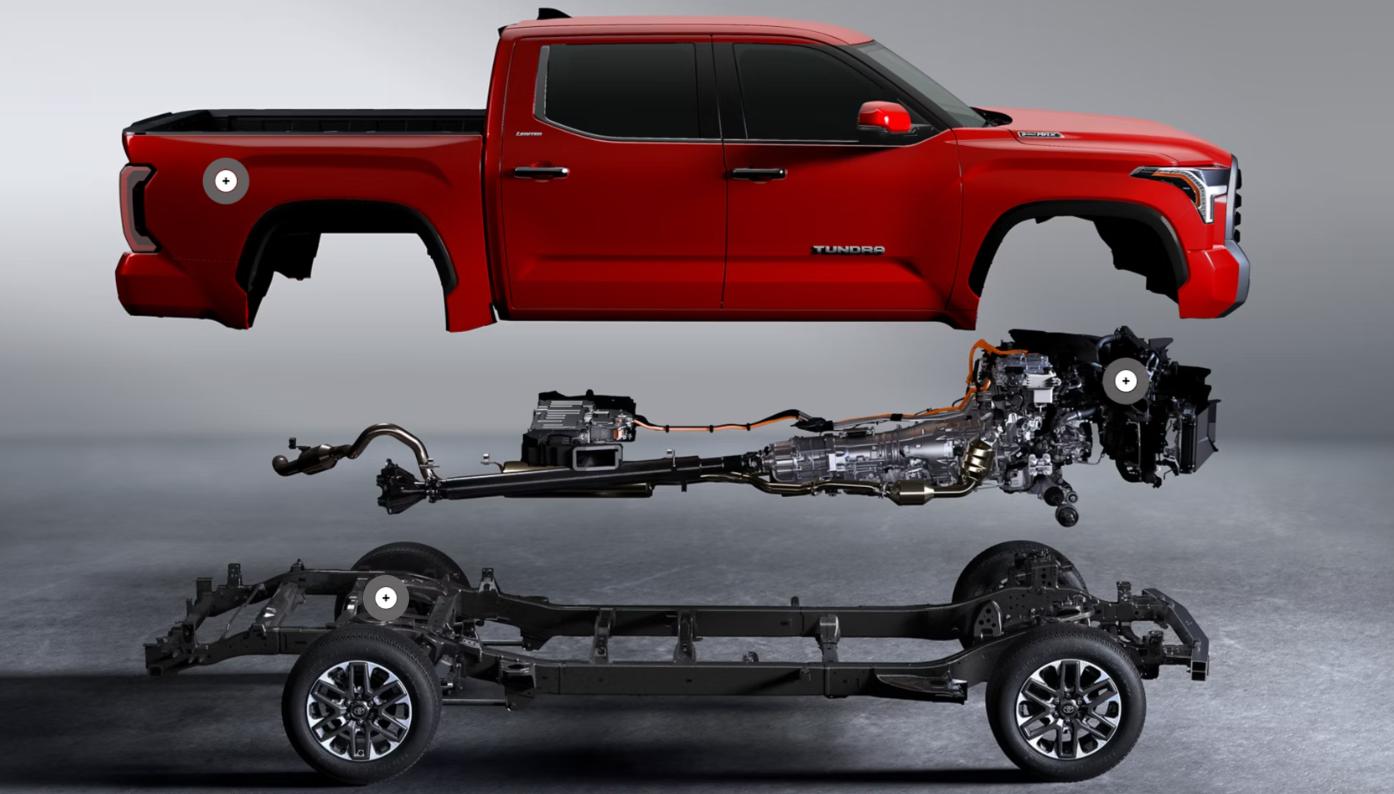
2026 toyota tundra how is built

2026 Toyota Tacoma vs Tundra: Which Truck Is Right for You in Durham?

If you are choosing between the 2026 Toyota Tacoma and the 2026 Toyota Tundra, the short answer is simple. We recommend Tacoma for Durham-area buyers who want a more manageable truck for commuting, weekend trail use, and moderate towing without stepping into full-size ownership cost or footprint. We recommend Tundra for buyers who genuinely need more cab space, more torque, and more towing confidence for work, heavier recreational loads, or full-size truck life. At Mark Jacobson Toyota, that is the clearest split because these trucks are not trying to solve the same problem. Tacoma is the midsize answer. Tundra is the full-size answer. The official 2026 facts make that easier to understand. Toyota says Tacoma offers a standard i-FORCE 2.4-liter turbo engine with up to 278 horsepower and 317 lb-ft of torque, or an available i-FORCE MAX hybrid powertrain with 326 horsepower and 465 lb-ft. Toyota also says Tacoma can tow up to 6,500 pounds in the right configuration. Tundra moves into a different category with a standard twin-turbo V6 making 389 horsepower and 479 lb-ft, or an available i-FORCE MAX hybrid powertrain delivering 437 net combined horsepower and 583 lb-ft of torque. Toyota also says Tundra can tow up to 12,000 pounds in the right setup. In this guide, we compare size, daily usability, towing, bed and cabin logic, i-FORCE MAX value, off-road identity, and long-term ownership fit for Durham, Raleigh, Chapel Hill, Cary, and Apex buyers. We also explain when Tacoma is enough, when Tundra is worth stepping up to, and which truck fits commuters, trail users, contractors, and families best. View 2026 Toyota Tacoma View 2026 Toyota Tundra Table of Contents Size, Bed Utility, and Everyday Driveability Tacoma midsize packaging vs Tundra full-size footprint and who each really fits Bed length, cabin size, parking ease, and which truck is easier to live with in Durham When Tacoma is enough and when Tundra starts making more sense Powertrains, Towing, and i-FORCE MAX Compared Tacoma i-FORCE and i-FORCE MAX vs Tundra i-FORCE and i-FORCE MAX on horsepower, torque, MPG position, and towing Which 2026 Toyota truck is the smartest buy for your budget and routine? Off-Road, Work Capability, and Trim Differences That Matter Tacoma Trailhunter and TRD Pro vs Tundra TRD Pro and work-focused trims, trail tech, and Durham-area buyer fit Which Toyota Truck Matches Durham Commuters, Outdoor Drivers, and Work Buyers Best? When Tundra Is Worth the Step Up and When Tacoma Delivers Better Long-Term Value Key Takeaways 2026 Toyota Tacoma vs Tundra FAQ for Durham Drivers The 2026 Toyota Tacoma and 2026 Toyota Tundra are Toyota trucks built for different buyer priorities. Tacoma is the midsize choice for drivers who want off-road flexibility, easier daily use, and lower overall size. Tundra is the full-size choice for drivers who need more towing, more torque, and more truck overall. Size, Bed Utility, and Everyday Driveability The biggest real-world difference between Tacoma and Tundra is not power. It is how much truck you actually want to live with every day in Durham traffic, parking lots, driveways, and weekly errands. Tacoma midsize packaging vs Tundra full-size footprint and who each really fits Tacoma is the better fit for buyers who want the utility and image of a pickup without immediately stepping into full-size size. That matters more than many shoppers expect. A midsize truck is easier to place in older garages, easier to park in retail lots, and easier to drive through the mixed urban and suburban routes common around Durham and the Triangle. For a buyer who mostly wants a truck for personal use, weekend gear hauling, occasional towing, or trail access, Tacoma often feels like the more natural fit because it delivers the truck experience without making daily life feel bigger or heavier than it needs to be. Tundra fits a different kind of life. It is the truck for buyers who want more cab room, more bed-and-cabin scale, and the presence and utility of a full-size pickup. For a Raleigh contractor, a Cary driver pulling heavier equipment, or a Chapel Hill family using the truck as a road-trip-capable tow vehicle, the larger footprint stops feeling like a drawback and starts feeling like the reason to buy the truck in the first place. That is the most important split to understand. Tacoma is not a smaller Tundra. It is the better daily-use truck when midsize packaging is enough. Daily-Use Factor 2026 Toyota Tacoma 2026 Toyota Tundra Best Fit Truck Class Midsize pickup Full-size pickup Tacoma for lighter everyday use Parking and Maneuverability Easier to place in daily driving Takes more room to live with Tacoma for Durham commuting Cabin Scale Good for personal use and lighter family use More cabin room and full-size feel Tundra for buyers needing more passenger space Road Presence More compact and trail-friendly Bigger and heavier-duty in character Depends on whether you want midsize or full-size truck identity Best Ownership Logic Truck for people who still want easy daily life Truck for people who truly need more truck Different priorities, not a simple winner Who It Fits Commuters, outdoor buyers, lighter towing users Work buyers, heavy tow users, full-size truck shoppers Buyer routine decides Based on Toyota official website and Toyota USA Newsroom positioning for the 2026 Tacoma and 2026 Tundra. View 2026 Toyota Tacoma View 2026 Toyota Tundra Bed length, cabin size, parking ease, and which truck is easier to live with in Durham For many Triangle buyers, Tacoma is easier to live with because it gives enough bed utility for most personal-use truck routines while staying easier to park, easier to turn, and less tiring to maneuver every day. A Durham commuter who wants a pickup for bikes, home-improvement runs, trail weekends, or occasional small trailers usually does not need the scale of a Tundra. That is exactly where Tacoma feels right. It gives you the benefit of a truck bed and real 4WD-capable truck hardware without forcing you into full-size truck compromises during the workweek. Tundra becomes easier to live with only when your routine actually rewards the added size. If you carry more people often, if the truck is also a road-trip family vehicle, or if the job really asks for a bigger cab and more full-size utility, then Tundra starts making more sense. The best way to frame the daily-use decision is simple: Tacoma is easier to own unless the reasons to own a bigger truck show up regularly enough to justify Tundra’s extra size. When Tacoma is enough and when Tundra starts making more sense Tacoma is enough for more buyers than they think. If your routine includes commuting, lighter towing, weekend adventure use, occasional work-truck duty, and a preference for easier maneuverability, Tacoma usually wins. We recommend it often for personal-use truck shoppers and for buyers who want the flexibility to go off-road or overland without committing to full-size truck ownership. Tundra starts making more sense when the truck has to do more than one heavy job well. If you tow larger boats or trailers, regularly need more cabin room, or know that full-size truck strength will be used constantly, Tundra becomes easier to justify. That is where the price jump and size jump start paying you back instead of simply making the truck harder to live with. Choose Tacoma if you want a truck that still feels manageable every day. Choose Tundra if your routine truly needs full-size truck scale and strength. Choose Tacoma if you want off-road and adventure flexibility without overbuying size. View 2026 Toyota Tacoma Powertrains, Towing, and i-FORCE MAX Compared The powertrain story matters because both trucks offer i-FORCE MAX, but the way Toyota uses that hybrid performance in Tacoma and Tundra is very different. Tacoma i-FORCE and i-FORCE MAX vs Tundra i-FORCE and i-FORCE MAX on horsepower, torque, MPG position, and towing Tacoma gives buyers two strong powertrain paths. Toyota says the standard i-FORCE turbocharged 2.4-liter engine makes up to 278 horsepower and 317 lb-ft of torque, while the available i-FORCE MAX hybrid setup increases output to 326 horsepower and 465 lb-ft. Toyota’s 2026 Tacoma launch story also says i-FORCE MAX is rated at an EPA-estimated 23 MPG combined. That makes Tacoma i-FORCE MAX a very attractive answer for buyers who want stronger torque, better off-road and hauling feel, and improved everyday punch without moving out of the midsize-truck class. Tundra is on a different level. Toyota says the standard twin-turbo V6 makes 389 horsepower and 479 lb-ft, while the available i-FORCE MAX hybrid raises output to 437 net combined horsepower and 583 lb-ft of torque. Toyota also says Tundra can tow up to 12,000 pounds, which is in a different ownership category from Tacoma’s 6,500-pound maximum. This is why the comparison should not be reduced to horsepower alone. Tacoma is the better fit when midsize capability is enough. Tundra is the better fit when full-size capability is the reason you are shopping a truck in the first place. Powertrain and Capability Factor 2026 Toyota Tacoma 2026 Toyota Tundra Best Fit Standard Engine i-FORCE up to 278 hp / 317 lb-ft i-FORCE 389 hp / 479 lb-ft Tundra for bigger baseline truck strength Hybrid Option i-FORCE MAX 326 hp / 465 lb-ft i-FORCE MAX 437 hp / 583 lb-ft Tundra for maximum power and torque Towing Capacity Up to 6,500 lbs Up to 12,000 lbs Tundra for heavier trailer and work use Efficiency Position i-FORCE MAX up to 23 MPG combined Full-size truck MPG tradeoff for more capability Tacoma for stronger day-to-day efficiency logic Ownership Role Midsize balance of strength and manageability Full-size truck muscle and capacity Depends on how much towing and torque you really need Best Overall Fit Personal-use and adventure truck buyers Heavy tow, work, and big-truck buyers Routine decides Based on Toyota official website and Toyota USA Newsroom. Towing and MPG vary by configuration. View 2026 Toyota Tacoma View 2026 Toyota Tundra The verdict is direct. If you want i-FORCE MAX in a truck that still feels manageable and adventure-ready, Tacoma is the better answer. If you want i-FORCE MAX because you actually need full-size truck torque and towing, Tundra earns the step up. The key is not chasing the bigger numbers blindly. The key is deciding which numbers you will actually use. Which 2026 Toyota truck is the smartest buy for your budget and routine? For many Durham-area buyers, the smartest truck is Tacoma because it delivers the most balanced mix of capability, cost control, and daily-drive ease. We recommend Tacoma first for commuters, outdoor-focused buyers, and drivers who want one truck for everyday life plus weekend utility. Tacoma SR5, TRD Sport, and TRD Off-Road usually make the broadest value case, while i-FORCE MAX becomes easier to justify once you know you want more torque or one of the premium off-road-oriented trims. If you want the cleanest all-around value story, start with Tacoma. If you need real full-size towing and truck muscle, start with Tundra. If your truck will commute most days and adventure on weekends, Tacoma is usually the cleaner fit. If your truck will tow heavy, carry more passengers, or serve work duty often, Tundra is easier to justify. What most buyers do not realize is that the smarter truck is often the one that feels like enough, not the one that feels biggest. Tacoma wins that argument for many people. Tundra wins it once the routine is big enough to need it. If you are serious about choosing between Tacoma and Tundra, we recommend seeing both trucks side by side and talking honestly about your towing, cargo, and daily-driving needs. Our team can help you compare midsize versus full-size dimensions, explain how i-FORCE MAX changes each truck, and show you where the towing and trim differences matter most in real use. Drivers from Durham, Raleigh, Chapel Hill, Cary, and Apex can call us at 919-493-5599 or start online before visiting. We can also help you request a quote on the truck that best fits your work, weekend, and budget priorities. Get Pre-Approved for a Toyota Truck Off-Road, Work Capability, and Trim Differences That Matter Trim choice matters because Tacoma and Tundra do not only separate by size. They also separate by the type of truck personality Toyota lets you build. Tacoma Trailhunter and TRD Pro vs Tundra TRD Pro and work-focused trims, trail tech, and Durham-area buyer fit Tacoma is the easier truck to recommend for off-road and adventure buyers because Toyota builds the midsize platform around that identity extremely well. The Tacoma lineup supports trims like TRD Off-Road, Trailhunter, and TRD Pro, and Toyota’s 2026 materials continue to frame Tacoma as a truck with trail-conquering features and more specialized off-road personality. That matters for Cary or Chapel Hill buyers who want a truck for camping, trail access, backroad exploration, or overlanding-style weekends. Tacoma feels like the truck designed with that life in mind from the start. Tundra can absolutely go off-road in TRD Pro form, but the bigger story for many buyers is work and full-size capability. Tundra is the easier recommendation for buyers who need a larger cabin, more towing headroom, and a truck that feels better suited to heavier work or long-distance towing. A Raleigh contractor or an Apex buyer towing regularly is usually better served by the Tundra lineup, especially when truck size is being used as a tool rather than just as a preference. That is the local fit difference. Tacoma wins when trail and everyday flexibility matter more. Tundra wins when work, towing, and full-size presence matter more. Buyer Profile Primary Need Recommended Truck Why It Fits Durham commuter with occasional truck needs Easier parking and lower overall footprint Tacoma SR5 or TRD Sport Midsize size fits daily life better Cary outdoor buyer Trail capability and overlanding fit Tacoma Trailhunter or TRD Pro Stronger midsize off-road personality RTP driver towing a boat or heavier trailer More torque and towing confidence Tundra Limited or i-FORCE MAX Full-size towing headroom matters here Raleigh contractor or work buyer Bigger cab and heavier-duty utility Tundra Full-size truck scale is the cleaner answer Chapel Hill buyer wanting one truck for daily life and weekend play Balance, not overkill Tacoma Usually the better all-around personal-use truck Apex buyer debating size step-up Needs to know when extra cost is justified Tundra only if towing, cabin size, or work demands are regular Prevents overbuying full-size truck Based on Toyota official website, Toyota USA Newsroom, and Mark Jacobson Toyota model pages. For Durham-area buyers, the best way to shop these trucks is to start with your real use case. If trail and lifestyle flexibility are at the top, Tacoma will usually surface fast. If towing, work, and cabin scale are at the top, Tundra will usually surface just as quickly. That is how Toyota has separated these trucks, and it is the cleanest way to compare them. View 2026 Toyota Tundra Inventory If you are comparing Tacoma and Tundra based on monthly payment, trade value, or whether the step up to a full-size truck is really worth it, we can help you work through that with real numbers. Our team can review your current vehicle through our trade tools, help you compare finance options, and show you where the differences in towing, trim, and overall truck size start to matter in real daily use. We serve Durham, Raleigh, Chapel Hill, Cary, and Apex drivers every day, and our Mark Says Yes! approach is built around helping people buy the Toyota truck that fits their actual routine. If you want to compare Tacoma and Tundra in one visit, call us at 919-493-5599 or stop by our showroom at 4516 Durham-Chapel Hill Blvd. We are here to make the truck decision easier and more practical. Value Your Trade for a Toyota Truck Which Toyota Truck Matches Durham Commuters, Outdoor Drivers, and Work Buyers Best? The smartest truck is the one that matches the way you actually live, not the one with the biggest spec headline. We recommend Tacoma for most personal-use truck buyers because it covers the broadest range of lifestyles well. It works for commuting, camping, home projects, weekend adventures, and light-to-moderate towing without constantly reminding the driver that they bought a full-size pickup. That is why Tacoma fits so well for Durham commuters, Chapel Hill outdoor buyers, and drivers who want one truck for weekdays plus weekend play. We recommend Tundra for buyers whose lifestyle or work really asks for more truck. If you tow heavier loads, need a bigger cab regularly, or use the truck as a serious work tool, then Tundra becomes the better answer quickly. For that kind of buyer, the extra size is not waste. It is the feature that keeps the truck from feeling underbuilt for the job. For mixed personal use, Tacoma usually wins. For heavy towing, bigger-family truck use, or more serious work duty, Tundra usually earns the step up. That is the cleanest way to think about the comparison. See Toyota Truck Features When Tundra Is Worth the Step Up and When Tacoma Delivers Better Long-Term Value Tundra is worth the step up when its extra truck capability solves real problems regularly. Tacoma delivers better long-term value when full-size strength would go underused. We recommend thinking about value in three layers. First is purchase price. Second is fuel or day-to-day operating reality. Third is whether the truck’s extra size and capability are being used often enough to justify them. Tacoma often wins the cleaner total-cost case because it is easier to live with, easier to use daily, and still highly capable for many personal-use buyers. For a lot of households, that makes it the better long-term truck because it avoids overbuying size and towing capacity that never become part of the routine. Tundra wins the long-term value argument when its full-size capability gets used consistently. If the truck will tow heavier trailers, carry more passengers more often, or serve work-truck duty with real regularity, then the bigger purchase can make more financial sense because it prevents compromise and under-capacity. In other words, Tacoma is the better value when less truck is enough. Tundra is the better value when buying less truck would force a second decision later. We also remind buyers that ToyotaCare and our service team support help strengthen the ownership case for both trucks. The smartest truck is the one that still feels like the right tool after months of commuting, parking, loading, towing, and weekend use, not just the one that looked strongest on the first test drive. Choose Tacoma for the strongest all-around personal-use truck value case. Choose Tacoma i-FORCE MAX if you want more torque without moving to full-size. Choose Tundra only when full-size towing, cabin size, or work-truck needs are regular. Choose Tundra i-FORCE MAX when big torque and full-size capability are part of the reason you are shopping. Schedule Toyota Truck Service Key Takeaways Tacoma is the better fit for buyers who want a midsize truck with easier daily usability. Tundra is the better fit for buyers who truly need full-size towing, torque, and cabin scale. Tacoma i-FORCE MAX delivers 326 hp and 465 lb-ft, while Tundra i-FORCE MAX delivers 437 hp and 583 lb-ft. Tacoma tows up to 6,500 pounds, while Tundra can tow up to 12,000 pounds. For commuters and outdoor buyers, Tacoma is often the smarter long-term value. For heavy towing and work-truck use, Tundra is usually worth the step up. 2026 Toyota Tacoma vs Tundra FAQ for Durham Drivers Should I buy the 2026 Tacoma or Tundra? We recommend the 2026 Tacoma if you want a truck that is easier to drive and park every day, especially if your use includes commuting, weekend trails, home projects, and moderate towing. We recommend the 2026 Tundra if you need more cab room, more torque, and significantly more towing capability. For many Durham-area buyers, the right answer comes down to whether midsize capability is enough or whether full-size truck needs are already part of everyday life. Is Tacoma or Tundra better for towing? Tundra is better for towing because Toyota says it can tow up to 12,000 pounds in the right configuration, compared with up to 6,500 pounds for Tacoma. That puts Tundra in a different capability category for larger boats, trailers, and work-related hauling. Tacoma is still a strong tow vehicle for lighter needs, but Tundra is the better answer once the loads get meaningfully heavier. Which Toyota truck is better for commuting in Durham? For most Durham commuting situations, Tacoma is the better fit. Its midsize footprint makes it easier to park, easier to place in traffic, and easier to live with day to day. Tundra can still commute well, but it makes the most sense when the added size and capability are being used often enough to justify full-size truck ownership every day. Is Tundra worth the extra size and price over Tacoma? Tundra is worth the extra size and price when you regularly need more towing, more torque, more cabin room, or heavier-duty truck capability. If those needs are only occasional, Tacoma is often the smarter and easier truck to live with long term. The step up to Tundra is easiest to justify when the extra truck is solving a real recurring problem instead of just sounding better on paper. We are here to help you choose the right Toyota truck at Mark Jacobson Toyota, 4516 Durham-Chapel Hill Blvd, Durham, NC 27707. Our team works with drivers from Durham, Raleigh, Chapel Hill, Cary, and Apex every day, and we know how often the right truck choice comes down to towing needs, daily-use size, off-road priorities, and long-term ownership value more than anything else. We can walk you through Tacoma and Tundra side by side, compare trims, review trade value and finance options, and help you test the truck that actually fits the way you drive. Our Mark Says Yes! approach is built around practical guidance and a shopping process that stays clear from start to finish. Call us at 919-493-5599, start online, or visit us in person so we can help you find the Toyota truck that makes sense for your life in the Triangle.

2026 toyota rav4

The 2026 Toyota RAV4 Redesign: Everything Durham Drivers Need to Know

If you are researching the 2026 Toyota RAV4 redesign, the most important thing to know is that this is not a mild refresh. Toyota has fully redesigned the RAV4 for its sixth generation, and the changes go far beyond the front fascia. The 2026 RAV4 gets an all-new exterior look, a stronger interior-technology package, an updated safety suite, a new software platform, and a complete shift to an electrified-only lineup. At Mark Jacobson Toyota, that matters because many Durham-area shoppers are not only asking what changed. They are asking whether those changes are meaningful enough to justify waiting, upgrading, or trading up from an older RAV4 or a smaller crossover. Toyota says the 2026 RAV4 is available only as a Hybrid Electric Vehicle or Plug-in Hybrid Electric Vehicle. Toyota also says the redesign is organized around three distinct exterior themes: Core, Rugged, and Sport. That means the new RAV4 is not just bigger tech inside the same old body. It is a more deliberate product, with clearer visual identities depending on trim. The redesign also adds Toyota Safety Sense 4.0, launches the new Arene software platform, and gives every model a standard 12.3-inch digital gauge cluster, while an available 12.9-inch touchscreen moves the cabin further upscale. For buyers in Durham, Raleigh, Chapel Hill, Cary, Apex, and RTP, those are not minor details. They change how the RAV4 looks, feels, and fits into everyday life. In this guide, we break down the redesign by styling, powertrain, technology, and buyer fit. We also explain what Durham drivers will notice first, which trims make the most sense for different routines, and when the 2026 RAV4 is worth the step up over an older RAV4 or a smaller Toyota SUV. Explore the 2026 Toyota RAV4 Shop New Toyota SUVs Table of Contents What Is New in the 2026 RAV4 Design and Platform Exterior redesign, hammerhead front end, body shape, and Core vs Rugged vs Sport styling Sixth-generation platform logic, packaging, and what Durham drivers will notice first in daily use Which 2026 RAV4 design theme fits Durham commuters, families, and sport-minded buyers best Standard Hybrid Powertrains, Plug-in Hybrid Upgrades, and Fuel Economy Gains Hybrid-only lineup, HEV vs PHEV, horsepower, EV range, AWD logic, and why Toyota made the change Which 2026 RAV4 trim or powertrain is the smartest buy for your budget and routine? Interior Technology, Safety, and Comfort Upgrades 12.9-inch touchscreen, 12.3-inch gauge cluster, TSS 4.0, Arene software, and Triangle commuter fit Which 2026 RAV4 Version Matches the Way You Drive in Durham? When the 2026 RAV4 Redesign Is Worth the Step Up Over an Older RAV4 or Smaller Toyota SUV Key Takeaways 2026 Toyota RAV4 Redesign FAQ for Durham Drivers The 2026 Toyota RAV4 is a fully redesigned compact SUV available only with hybrid or plug-in hybrid powertrains. It is designed for drivers who want modern technology, stronger efficiency, and more distinct trim identities. For Durham-area buyers, the redesign matters most in styling, cabin tech, and daily-driver refinement. What Is New in the 2026 RAV4 Design and Platform The biggest visual change is that the 2026 RAV4 no longer looks like a lightly updated version of the outgoing model. Toyota has clearly reset the vehicle’s identity, and buyers will feel that before they even start talking about MPG or trim pricing. Exterior redesign, hammerhead front end, body shape, and Core vs Rugged vs Sport styling Toyota says the 2026 RAV4’s new exterior design highlights the SUV’s proportions with large tires, an elevated ride height, and an upright rear cargo area. Toyota also says the redesign adopts the Toyota hammerhead front end, a contoured hood, and more angular fenders to create a stronger and more modern stance. That matters because the new RAV4 looks more intentional from every angle. It no longer reads as one universal body with minor trim-level accessories layered on top. Instead, Toyota has built clearer visual families into the lineup from the start. Those families are Core, Rugged, and Sport. Toyota says Core design applies to LE, XLE Premium, and Limited grades. The Rugged design centers on the Woodland grade. The Sport family includes SE, XSE, and the first-ever GR SPORT model. That split gives the redesign more personality and makes the trim walk easier to understand visually. A Durham commuter does not have to look at Woodland and wonder whether it is just a package. A sport-oriented buyer does not have to guess whether XSE will actually look different enough from the rest of the lineup. Toyota has made the styling themes much more obvious, which is one of the redesign’s biggest strengths. See 2026 RAV4 Design Highlights Design Theme Key Visual Cues Included Grades Best Fit Core Cleanest mainstream RAV4 look with updated hammerhead face and broad SUV appeal LE, XLE Premium, Limited Commuters, families, and broad-use buyers Rugged More utility-driven front-end treatment, outdoor-focused detailing, all-terrain character Woodland Drivers wanting more adventure-ready identity Sport Sharper visual attitude and stronger performance-oriented styling cues SE, XSE, GR SPORT Buyers who want the boldest redesign expression Front-End Identity Toyota hammerhead front end with stronger stance All grades All RAV4 shoppers Body Character More sculpted hood and angular fenders All grades Drivers wanting a more modern SUV design Overall Buy Logic Choose based on visual role as much as equipment Varies by trim family Style and lifestyle should guide the choice Based on Toyota USA Newsroom and Toyota official RAV4 model pages. Sixth-generation platform logic, packaging, and what Durham drivers will notice first in daily use The redesign is not only cosmetic. Toyota says the sixth-generation RAV4 benefits from more rigid front and rear suspension mounting points and other structural changes intended to improve comfort, handling, and cabin quietness. Toyota also points to changes that reduce wind noise and help make the cabin feel calmer at speed. For Durham drivers, that means the redesign is likely to feel more polished in real use, not just more stylish in photos. A better daily driver is not only about new screens. It is also about how the vehicle settles into traffic, road noise, and the little moments that add up on I-40 or around RTP. What Durham-area buyers will probably notice first is a combination of visual confidence and easier daily refinement. The new design feels more upscale, the lineup segmentation is easier to read, and the vehicle itself is positioned more clearly. For current Corolla Cross owners considering a step up, the RAV4 will likely feel like the more substantial redesign they hoped for. For current RAV4 owners, the biggest first impression may be that the 2026 model feels like a genuine new generation rather than a carryover with a new grille. Which 2026 RAV4 design theme fits Durham commuters, families, and sport-minded buyers best For many Durham-area buyers, the Core family remains the easiest place to start. It gives you the redesigned RAV4 without forcing the vehicle into a stronger niche identity. That makes it ideal for commuter households, small families, and buyers who want the new generation mainly for technology, efficiency, and a clean all-around crossover profile. We recommend Core trims first for buyers who want the redesign without overcomplicating the purchase. Choose Core if you want the broadest-fit redesigned RAV4 for commuting, family use, and everyday SUV duty. Choose Rugged if you want the redesign plus a more utility-oriented look and outdoor-ready attitude. Choose Sport if visual edge and a sharper driving identity are central to why you want the new RAV4. The redesign works because Toyota has made these themes feel meaningfully different. That means the right design family depends less on which one is newest and more on which one matches how you actually want your RAV4 to feel in daily life. View 2026 Toyota RAV4 Inventory Compare Toyota SUV Features Standard Hybrid Powertrains, Plug-in Hybrid Upgrades, and Fuel Economy Gains The second big redesign story is underneath the sheet metal. Toyota has removed the gas-only option and made electrification the default logic for every 2026 RAV4 buyer. Hybrid-only lineup, HEV vs PHEV, horsepower, EV range, AWD logic, and why Toyota made the change Toyota says every 2026 RAV4 is now either a Hybrid Electric Vehicle or a Plug-in Hybrid Electric Vehicle. For the standard hybrid line, Toyota says front-wheel-drive models make 226 net combined horsepower and all-wheel-drive models make 236 net combined horsepower. Toyota also says hybrid fuel economy improves to as much as a manufacturer-estimated 44 MPG combined on FWD models. That is a meaningful shift because the new RAV4 no longer asks shoppers whether they want the budget gas version or the better hybrid. The hybrid is now simply the mainstream answer. The plug-in hybrid story is stronger too. Toyota says the new sixth-generation PHEV system raises output to 324 net combined horsepower and increases all-electric driving range to up to 52 miles on SE and XSE grades, with Woodland PHEV reaching 49 miles and GR SPORT PHEV reaching 48 miles. Toyota also says PHEV models use a 7-kW onboard AC charger and maintain AWD. That makes the redesign important not only because the RAV4 is more efficient, but because the lineup is now clearer. Hybrid is the broad mainstream choice. Plug-in Hybrid is the stronger answer when you want more power, some meaningful EV range, and a more premium electrified ownership story. Compare RAV4 Hybrid and Plug-in Hybrid Powertrain Choice 2026 RAV4 Hybrid 2026 RAV4 Plug-in Hybrid Best Fit Lineup Role Mainstream electrified RAV4 choice Higher-output electrified RAV4 choice Depends on budget and charging setup Horsepower 226 hp FWD / 236 hp AWD 324 net combined hp PHEV for buyers wanting stronger performance Fuel Economy Up to 44 MPG combined on FWD models Up to 41 MPG combined plus EV range Hybrid for pure MPG; PHEV for mixed electric-plus-gas logic EV Range Not applicable Up to 52 miles on SE and XSE PHEV for buyers with charging access AWD Logic Available FWD or AWD depending on grade AWD standard PHEV for buyers wanting built-in traction Overall Buy Logic Best for most shoppers Best when added power and plug-in range will be used often Choose by routine, not only by headline specs Based on Toyota USA Newsroom and Toyota official RAV4 model pages. Which 2026 RAV4 trim or powertrain is the smartest buy for your budget and routine? For most Durham-area shoppers, the smartest 2026 RAV4 is still a mainstream Hybrid grade because it delivers the redesign, the efficiency gains, and the broadest everyday crossover value without requiring a plug-in routine. We recommend Hybrid LE, XLE Premium, or Limited first for buyers who want the new generation mainly for better tech, stronger efficiency, and cleaner long-term ownership value. In most cases, that will be the better choice than immediately moving up to plug-in pricing. Choose Hybrid if you want the cleanest redesign value and do not want to depend on home charging. Choose Plug-in Hybrid if you have dependable charging and want stronger power plus meaningful EV-only driving range. Choose Woodland if utility and rugged identity are part of why you want the new RAV4. Choose Sport trims if the redesign matters to you as much for style as for electrification. What makes the 2026 RAV4 easier to shop is that Toyota has simplified the logic. The real decision is no longer gas versus hybrid. It is broad-use hybrid versus higher-upside plug-in hybrid, then design family after that. If you are serious about the 2026 RAV4, we recommend seeing the redesign in person and talking through both trim availability and powertrain fit before deciding. Our team can walk you through the new Core, Rugged, and Sport families, explain how Hybrid and Plug-in Hybrid differ in real life, and help you request a quote on the version that makes the most sense for your commute, budget, and ownership goals. Buyers from Durham, Raleigh, Chapel Hill, Cary, Apex, and RTP can call us at 919-493-5599 or start online before visiting. We want the redesign to make more sense once you can compare the trims side by side. Get Pre-Approved for a Toyota RAV4 Shop New RAV4 Models Interior Technology, Safety, and Comfort Upgrades For many buyers, the redesign will feel most obvious from the driver’s seat. The 2026 RAV4 is not only more modern outside. It is more modern where drivers spend their time. 12.9-inch touchscreen, 12.3-inch gauge cluster, TSS 4.0, Arene software, and Triangle commuter fit Toyota says every 2026 RAV4 comes with a standard 12.3-inch digital gauge cluster, and available models can add a 12.9-inch Toyota Audio Multimedia touchscreen. That is a major change because the new cabin feels much more current from the start, even before buyers move into upper trims. Toyota also says the redesigned RAV4 gets Toyota Safety Sense 4.0 standard across the lineup. That gives the new model a stronger active-safety story than the outgoing generation and is one of the most meaningful redesign updates for buyers who care about the vehicle they will actually drive every day, not just the vehicle they will admire in the driveway. Another major change is the new Arene software platform. Toyota says Arene is the company’s first step toward fully software-defined vehicles and will serve as the foundation for the RAV4’s most advanced safety, security, and connectivity technologies. That matters because the redesign is not only about hardware. It is also about how the RAV4 handles connected features and future software-driven refinement. For Triangle commuting, that makes the vehicle feel more up to date in a practical way. The redesign does not just look modern. It behaves more like a new-generation product. See 2026 RAV4 Technology Features Driver Profile Primary Need Recommended 2026 RAV4 Version Why It Fits Durham commuter replacing an older compact SUV Modern tech and broad-use hybrid efficiency RAV4 Hybrid LE or XLE Premium Best mainstream redesign value Cary family moving up from Corolla Cross Needs more room and stronger tech RAV4 Hybrid XLE Premium or Limited Better family crossover with upgraded cabin RTP driver with longer daily mileage Wants the most practical electrified RAV4 logic RAV4 Hybrid FWD Best simple efficiency fit Chapel Hill buyer wanting premium performance and EV range Wants the strongest redesign plus plug-in capability RAV4 Plug-in Hybrid XSE or GR SPORT More power, EV range, and stronger visual identity Raleigh commuter focused on tech and safety Wants screens, software, and TSS 4.0 Any 2026 RAV4 with preferred trim level Redesign benefits apply across the lineup Apex household debating a trade-in Needs to know if the redesign is worth paying for 2026 RAV4 only if electrification, software, and packaging upgrades will be used often Helps avoid paying only for “new” without real ownership benefit Based on Toyota USA Newsroom, Toyota official RAV4 page, and local dealer route support. For Durham daily driving, the redesign is strongest when buyers care about more than appearance. If your commute, tech expectations, and long-term ownership horizon all matter, the 2026 RAV4’s cabin and software changes become much easier to justify. Schedule a 2026 RAV4 Test Drive If you are comparing the redesigned RAV4 against your current SUV or trying to decide whether the 2026 updates are worth the move, we can help you work through that with real numbers. Our team can review your current vehicle through our trade tools, compare finance options, and show you where the redesign changes become meaningful in everyday ownership. We serve Durham, Raleigh, Chapel Hill, Cary, Apex, and RTP drivers every day, and our Mark Says Yes! approach is built around helping buyers choose the Toyota that fits the way they actually live. If you want to compare multiple RAV4 trims or compare RAV4 against another Toyota SUV in one visit, call us at 919-493-5599 or stop by our showroom at 4516 Durham-Chapel Hill Blvd. We are here to make the redesign easier to evaluate in practical terms. Value Your Trade for a Toyota RAV4 Apply for RAV4 Financing Which 2026 RAV4 Version Matches the Way You Drive in Durham? The redesigned RAV4 works because buyers can now choose a version that better matches not only their budget, but also how they want the SUV to look, feel, and function every day. We recommend Core-family hybrid trims for most Durham-area shoppers because they offer the broadest redesign value. They are the best fit for commuters, small families, and buyers moving out of an older compact SUV who mainly want the new generation for efficiency, comfort, and tech. Those trims feel like the default answer for good reason. They are the easiest to justify broadly and the least likely to overcomplicate the purchase. We recommend Woodland when the buyer’s life regularly asks for more cargo utility, stronger AWD personality, and outdoor-oriented design. We recommend Sport-family trims for buyers who want the redesign to feel more emotional and visually sharper. That includes drivers who want a RAV4 that feels more distinct in the parking lot and more driver-focused in identity, not just more efficient on paper. The redesign succeeds because Toyota has made these roles easier to see and easier to shop. For broad family use, start with Core. For utility use, look at Woodland. For style and a more performance-minded attitude, look at Sport. That is the clearest way to match the redesign to the way you drive in the Triangle. See Toyota SUV Features Browse Toyota Crossovers When the 2026 RAV4 Redesign Is Worth the Step Up Over an Older RAV4 or Smaller Toyota SUV The redesign is worth the step up when the buyer will actually use its three biggest advantages: electrification, better technology, and clearer trim identity tied to real lifestyle needs. We recommend thinking about redesign value in three layers. First is whether the new powertrain logic matters to you. Second is whether the cabin and safety upgrades will improve your daily ownership experience. Third is whether your current vehicle is already starting to feel limited. If you are in an older RAV4 or a smaller Toyota SUV and you want more modern tech, stronger efficiency, and a more up-to-date small-SUV feel, the 2026 redesign becomes easier to justify quickly. The changes are significant enough that the new vehicle will feel meaningfully newer, not just cosmetically newer. The redesign becomes harder to justify only when the buyer is paying mostly for novelty. If your current RAV4 still fits your life well and you do not care much about the electrified-only shift, TSS 4.0, Arene, or the new design families, the case is weaker. But for many Triangle buyers, the redesigned RAV4 will feel like the moment the vehicle matured into a more complete next-generation hybrid crossover. That is what makes it a real shopping event instead of just a routine model-year update. We also remind buyers that ToyotaCare and our service team support help strengthen the long-term ownership story. The smartest redesign upgrade is the one that still feels worthwhile after months of commuting, loading, parking, and living with the new vehicle every day. Choose the 2026 RAV4 if electrification, better tech, and newer packaging all matter in your daily life. Choose a mainstream Hybrid trim if you want the cleanest redesign value. Choose a Plug-in Hybrid trim if you have charging access and want the strongest powertrain upgrade story. Keep your current vehicle longer if the redesign does not solve a meaningful ownership problem for you. Schedule Toyota Hybrid SUV Service Get Your RAV4 Trade Value Key Takeaways The 2026 RAV4 is a full redesign, not a light refresh. Toyota has moved the lineup to Hybrid and Plug-in Hybrid only. The redesign introduces Core, Rugged, and Sport styling families. Every 2026 RAV4 gets a standard 12.3-inch digital gauge cluster and Toyota Safety Sense 4.0. Available upgrades include a 12.9-inch touchscreen and the new Arene software platform. The best redesigned RAV4 depends on whether your priority is broad-use value, utility, or stronger design identity. Find Your 2026 Toyota RAV4 2026 Toyota RAV4 Redesign FAQ for Durham Drivers What is new in the 2026 Toyota RAV4 redesign? The 2026 Toyota RAV4 gets a full redesign for its sixth generation. Toyota says the new model adds fresh exterior styling with a hammerhead front end, a lineup split into Core, Rugged, and Sport families, new hybrid and plug-in hybrid powertrain logic, Toyota Safety Sense 4.0, a standard 12.3-inch digital gauge cluster, and the new Arene software platform. That makes the 2026 model much more than a cosmetic update. Is the 2026 Toyota RAV4 hybrid only? Yes. Toyota says every 2026 RAV4 is either a Hybrid Electric Vehicle or a Plug-in Hybrid Electric Vehicle. That means buyers no longer have a gas-only RAV4 option in the 2026 lineup. For many shoppers, that makes the model easier to shop because the electrified powertrain is now the default, not a premium step-up choice. Does the 2026 RAV4 have Toyota Safety Sense 4.0? Yes. Toyota says every 2026 RAV4 comes standard with Toyota Safety Sense 4.0. The redesign also adds a standard 12.3-inch digital gauge cluster and available 12.9-inch touchscreen, which helps the cabin and tech story feel meaningfully more modern. For buyers who care about daily safety and software improvements, that is one of the redesign’s biggest reasons to pay attention. Which 2026 RAV4 trim is best? For many buyers, the best 2026 RAV4 trim is a mainstream Hybrid Core-family grade because it gives the redesign’s biggest benefits without requiring the highest budget or a plug-in routine. Woodland is the better fit for buyers wanting more utility and rugged identity, while Sport trims fit buyers who care more about sharper design and stronger personality. The best RAV4 depends on whether your priority is broad-use value, utility, or style. Start Your RAV4 Purchase Search Available Toyota SUVs We are here to help you choose the right 2026 Toyota RAV4 at Mark Jacobson Toyota, 4516 Durham-Chapel Hill Blvd, Durham, NC 27707. Our team works with buyers from Durham, Raleigh, Chapel Hill, Cary, Apex, and RTP every day, and we know how often the right crossover choice comes down to real daily fit, not just headline redesign news. We can walk you through the new RAV4 design families, compare Hybrid and Plug-in Hybrid versions, review trade value and finance options, and help you test the version that actually makes sense for the way you drive. Our Mark Says Yes! approach is built around practical guidance and a shopping process that stays clear from start to finish. Call us at 919-493-5599, start online, or visit us in person so we can help you decide whether the redesigned RAV4 is the right next Toyota for your life in the Triangle.

2026 toyota bz exterior

2026 Toyota EV Lineup in Durham, NC: Which Model Fits Your Life Best?

If you are shopping Toyota EVs in Durham, the 2026 lineup is finally clear enough to shop as a real family of vehicles instead of a single one-off model. Toyota now gives buyers three distinct battery electric SUVs with three different missions. The 2026 Toyota bZ is the mainstream everyday EV SUV for buyers who want strong range, easier pricing, and broad daily usability. The 2026 Toyota bZ Woodland is the more rugged, more outdoor-oriented EV for buyers who want all-wheel drive utility, more power, and towing confidence. The all-new 2026 Toyota C-HR is the smaller, sportier EV choice for drivers who want a compact footprint, strong acceleration, and bold design without leaving Toyota practicality behind. The numbers make those roles easier to understand. Toyota says the 2026 bZ can deliver up to 314 miles of EPA-estimated range in XLE FWD Plus form and starts at $34,900. Toyota says the bZ Woodland delivers 375 horsepower, around 260 miles of range, and up to 3,500 pounds of towing with standard all-wheel drive, while the all-new C-HR delivers 338 horsepower, standard all-wheel drive, and up to 287 miles of range in SE or 273 miles in XSE. That means the lineup is not just three versions of the same EV. It is three answers to three different ownership needs. In this guide, we break down range, charging, trim logic, daily practicality, and the ownership reality for Durham, Raleigh, Chapel Hill, Cary, and Apex drivers. We also explain which Toyota EV fits commuters best, which one makes sense for more active households, and when a Toyota hybrid may still be the smarter move if charging access or routine does not line up well with full EV ownership. Shop Toyota EV Inventory Get Pre-Approved for a Toyota EV Table of Contents 2026 Toyota bZ and bZ Woodland: Range, Features, and Pricing bZ trim logic, range, charging upgrades, and who it fits best bZ Woodland power, towing, cargo, and why it matters for active North Carolina drivers Which Durham-area buyers should choose bZ over bZ Woodland 2026 Toyota C-HR: A Bold New Electric Crossover C-HR SE vs XSE on range, power, AWD, pricing position, and buyer fit Which 2026 Toyota EV is the smartest buy for your budget and routine? Charging Options and EV Incentive Reality in North Carolina NACS, DC fast charging, home charging, Durham apartment vs garage ownership, and what incentives still matter in 2026 Which Toyota EV Matches Durham Commuters, Weekend Travelers, and Outdoor Buyers Best? When a Toyota EV Makes More Sense Than a Toyota Hybrid in the Triangle Key Takeaways 2026 Toyota EV Lineup FAQ for Durham Drivers The 2026 Toyota electric vehicle lineup includes the bZ, bZ Woodland, and C-HR. These battery electric SUVs are built for different needs, from mainstream daily commuting to rugged outdoor use and compact urban driving. For Durham-area shoppers, the right fit depends on range, charging access, size, and budget. 2026 Toyota bZ and bZ Woodland: Range, Features, and Pricing The bZ and bZ Woodland are the easiest place to start because they show how Toyota now separates mainstream EV ownership from more rugged electric-SUV utility. bZ trim logic, range, charging upgrades, and who it fits best The 2026 Toyota bZ is the lineup’s most broadly appealing EV because it is built to be the mainstream daily-driver choice. Toyota says the bZ can reach up to 314 miles of EPA-estimated range in XLE FWD Plus form, which gives it the strongest range story in Toyota’s current EV lineup. Toyota also says the bZ starts at $34,900, which matters because it keeps the vehicle positioned as the easiest entry point into Toyota battery-electric ownership. For a Durham commuter with a garage charger or an RTP driver who wants an all-electric SUV without stepping too far into premium pricing, that is a strong starting proposition. The ownership story is also better for 2026 because Toyota has improved the charging experience around the bZ. Toyota says the 2026 model adds charging-convenience upgrades including NACS compatibility and broader public fast-charging access, which helps reduce one of the biggest barriers first-time EV shoppers usually worry about. That matters for Triangle buyers because the best EV is not just the one with the best spec sheet. It is the one that feels easiest to live with every Monday through Friday. For many households, the bZ is the cleanest all-around answer because it balances range, price, and everyday usability better than the more specialized models do. Explore 2026 Toyota bZ Find a Toyota EV Near Durham bZ Woodland power, towing, cargo, and why it matters for active North Carolina drivers The bZ Woodland exists for buyers who want their Toyota EV to feel more adventure-ready and more capable. Toyota says it delivers 375 horsepower, standard all-wheel drive, about 260 miles of range, and up to 3,500 pounds of towing. That immediately changes the buyer profile. This is not just a bZ with a styling package. It is the EV for buyers who want more utility, more traction confidence, and more outdoor-gear credibility without leaving the Toyota EV lineup. That matters for North Carolina buyers who spend weekends carrying bikes, kayaks, camping gear, or smaller trailers. A Cary homeowner who wants an EV but still needs room for active-family weekends may find the Woodland much easier to justify than the standard bZ. The tradeoff, of course, is that the Woodland’s stronger utility story comes with a higher starting MSRP and a shorter range rating. That makes it less of a pure commuter EV and more of a lifestyle EV. For the right buyer, that is exactly the point. Lineup Factor 2026 Toyota bZ 2026 Toyota bZ Woodland Best Fit Starting MSRP Starts at $34,900 Starts at $45,300 bZ for mainstream EV value EPA-Estimated Range Up to 314 miles About 260 miles bZ for range-first commuters Horsepower Mainstream EV SUV performance 375 hp Woodland for stronger performance and utility Drivetrain FWD or AWD depending on trim Standard AWD Woodland for default traction confidence Towing Mainstream daily-driver positioning Up to 3,500 lbs Woodland for active households and light trailer use Overall Buy Logic Best everyday EV SUV balance Best rugged EV SUV fit in the lineup Different priorities, not a simple winner Based on Toyota official website and Toyota USA Newsroom. Which Durham-area buyers should choose bZ over bZ Woodland For most Durham-area drivers, the standard bZ is the smarter choice. We recommend it first for commuters, families with predictable routines, and buyers who want the strongest range-to-price story in Toyota’s EV lineup. The bZ Woodland makes more sense when your household will actually use the extra power, standard AWD identity, and towing capability often enough to justify the jump in price and the shorter range. That is the best way to think about the split. Choose bZ when you want a cleaner mainstream EV ownership experience. Choose bZ Woodland when your weekend life and utility needs really ask for more than a commuter-focused electric SUV. Choose bZ if you want the best range-value story in Toyota’s EV lineup. Choose bZ Woodland if outdoor gear, all-wheel drive confidence, and towing matter often. Choose bZ first if your routine is mostly commuting, errands, and predictable local driving. View 2026 Toyota bZ Inventory Apply for Toyota EV Financing 2026 Toyota C-HR: A Bold New Electric Crossover The new C-HR changes the lineup because it gives Toyota an EV for buyers who want something smaller, quicker, and more style-driven than the mainstream bZ. C-HR SE vs XSE on range, power, AWD, pricing position, and buyer fit The all-new 2026 C-HR is the lineup’s compact performance-leaning EV. Toyota says it delivers 338 horsepower, standard all-wheel drive, and an EPA-estimated 287 miles of range in SE or 273 miles in XSE. That makes it one of the easiest Toyota EVs to explain. It is the smaller, sportier answer for buyers who want a more city-friendly footprint without giving up real power or usable range. For a Raleigh buyer who wants strong acceleration and an EV that feels more expressive than a basic commuter crossover, the C-HR makes a strong first impression. Between the two trims, SE is the smarter starting point for most shoppers because it keeps the better range number and lower price while still delivering the same 338-horsepower all-wheel-drive setup. XSE matters when the buyer wants the more premium look and feel badly enough to accept a small range tradeoff. That makes the C-HR trim decision very clean. This is not a lower trim missing the point of the vehicle. It is more a question of whether range discipline or upper-trim presence matters more to the buyer. Explore 2026 Toyota C-HR Compact EV Factor 2026 Toyota C-HR SE 2026 Toyota C-HR XSE Best Fit Starting MSRP Starts at $37,000 Higher trim position SE for value-focused EV buyers EPA-Estimated Range 287 miles 273 miles SE for maximum C-HR range Horsepower 338 hp 338 hp Both deliver the same strong power story Drivetrain Standard AWD Standard AWD Both suit all-weather Triangle driving Trim Personality Best range-value balance More premium and style-forward XSE for buyers prioritizing upper-trim feel Overall Buy Logic Best mainstream C-HR value Best for buyers who want the more complete trim feel Depends on budget and taste Based on Toyota official website, Toyota USA Newsroom, and Mark Jacobson Toyota model page. The broader lineup context matters here. C-HR is usually the best fit for buyers who want the compact-size advantage and stronger style character over the bZ’s more mainstream feel. bZ is still easier to justify if range and price-value sit at the top of the decision. Woodland is the answer if the buyer’s routine is more active and utility-driven. In other words, C-HR wins when a smaller, sportier EV footprint is part of the reason you are shopping Toyota’s lineup in the first place. Which 2026 Toyota EV is the smartest buy for your budget and routine? For most Durham-area shoppers, the smartest buy is still the standard bZ because it balances price, range, and daily-driver practicality more cleanly than the other two. We recommend bZ first for mainstream EV SUV buyers and first-time Toyota EV shoppers. We recommend C-HR for buyers who know they want a smaller EV with more personality and are comfortable with the compact-crossover tradeoffs. We recommend bZ Woodland for buyers who actually need the more rugged, higher-utility version of Toyota EV ownership. If you want the strongest all-around Toyota EV value, start with bZ. If you want the most compact and expressive EV in the lineup, start with C-HR SE. If you want towing, more utility, and outdoor-ready personality, start with bZ Woodland. If your main concern is range and easiest daily use, bZ is usually the safest first recommendation. What most buyers discover is that the smartest Toyota EV is the one that best fits how they charge, how much they drive, and how much vehicle they really need. The lineup is easier to navigate once you start there rather than chasing the highest horsepower or newest design. If you are serious about switching to a Toyota EV, we recommend seeing the lineup side by side and talking through your commute and charging setup honestly. Our team can help you compare bZ, bZ Woodland, and C-HR in person, explain where the range and trim differences matter most, and help you request a quote on the EV that fits your routine best. Drivers from Durham, Raleigh, Chapel Hill, Cary, and Apex can call us at 919-493-5599 or start online before visiting. We want the Toyota EV choice to feel clearer once you match the lineup to your actual life. View 2026 Toyota C-HR Inventory Get Pre-Approved for a Toyota EV Charging Options and EV Incentive Reality in North Carolina The real EV decision in Durham is not only about range. It is about charging access, local routine, and whether the remaining 2026 incentive landscape actually helps your ownership plan. NACS, DC fast charging, home charging, Durham apartment vs garage ownership, and what incentives still matter in 2026 Toyota’s 2026 EV lineup is easier to live with than earlier EV shoppers may expect because the charging story is stronger now. Toyota says the 2026 bZ family and C-HR move into a North American Charging System world, which broadens charging-network compatibility and helps public charging feel more practical. Toyota also supports DC fast charging and home charging options across the lineup, which means the ownership question becomes more personal than technical. For a Cary homeowner with a garage or a Raleigh buyer with dependable workplace charging, a Toyota EV can fit very naturally. For a Durham apartment renter with inconsistent access, the same vehicle can become much harder to live with smoothly. The incentive story also needs to be framed accurately for 2026. The old federal new clean vehicle purchase credit is no longer available for EVs acquired after September 30, 2025, so buyers should not shop these vehicles assuming that benefit still applies. At the same time, qualifying federal charging-property credits can still matter for certain home charging installations placed in service through June 30, 2026. North Carolina also continues to have active charger infrastructure and EV support context through statewide and utility-related programs, but buyers should verify current details for their address and provider. The cleanest way to present this in Durham is simple: the purchase-credit landscape is tighter than it used to be, but charging support and infrastructure still matter, and the practical value of an EV still depends heavily on how and where you charge. Ownership Profile Charging Situation Best Toyota Path Why It Fits Durham homeowner with garage charging Reliable daily home charging Toyota bZ or C-HR Best low-friction EV ownership setup RTP commuter with workplace charging Can charge during the workweek Toyota bZ Strong mainstream EV commuting fit Cary active family with gear and weekend travel Home charging plus higher utility needs Toyota bZ Woodland Utility and AWD advantages matter more here Chapel Hill apartment renter Inconsistent or shared charging access Toyota hybrid may fit better EV ownership friction may stay too high Apex first-time EV buyer Unsure about charging and incentives Toyota bZ or hybrid depending setup Need to decide charging fit before committing Triangle budget-focused shopper Can charge but wants strongest value Toyota bZ or a Toyota hybrid alternative Depends on mileage and install costs Charging convenience and incentive reality should always be verified against current federal guidance, local utility programs, and your actual home or apartment setup. For Durham and the Triangle, the best way to shop the lineup is to start with charging access first, then daily mileage, then budget. That order usually gets buyers to the right answer faster than comparing horsepower or trim badges at the start. Shop Toyota EV Inventory in Durham Compare Toyota EVs and Hybrids Visit Mark Jacobson If you are comparing a Toyota EV against a Toyota hybrid, or trying to decide whether your current parking and charging setup makes EV ownership realistic, we can help you work through that with real numbers. Our team can review your current vehicle through our trade tools, help you compare finance options, and talk honestly about which lineup path matches the way you drive. We serve Durham, Raleigh, Chapel Hill, Cary, and Apex drivers every day, and our Mark Says Yes! approach is built around helping buyers choose the right Toyota for their real routine. If you want to compare Toyota EVs and Toyota hybrids in one visit, call us at 919-493-5599 or stop by our showroom at 4516 Durham-Chapel Hill Blvd. We are here to make the electrified-vehicle decision easier and more practical. Value Your Trade for a Toyota EV Apply for Toyota EV Financing Which Toyota EV Matches Durham Commuters, Weekend Travelers, and Outdoor Buyers Best? The best Toyota EV is the one that matches the way your household really moves, not the one with the most dramatic spec-sheet headline. We recommend the bZ for most mainstream Durham-area EV buyers because it covers the broadest range of daily life. It is the best fit for commuters, small families, and drivers who want an electric SUV that feels balanced rather than specialized. We recommend C-HR when a smaller footprint, stronger style, and quicker-feeling compact character matter more than maximum range or utility. We recommend bZ Woodland when the household needs a more rugged EV with standard AWD identity, light towing, and more outdoor-ready capability. In buyer-profile terms, bZ is usually the cleanest “one EV for everything” answer. C-HR is the city-friendlier, sportier answer. Woodland is the active-lifestyle answer. Once you frame the lineup that way, the decision gets much clearer for most Triangle shoppers. If charging access is inconsistent, though, a Toyota hybrid may still be the smartest overall move. That is especially true for apartment renters, shared-parking situations, and buyers who do not want to build daily life around charging logistics. See Toyota EV and Hybrid Features Explore Toyota bZ Features When a Toyota EV Makes More Sense Than a Toyota Hybrid in the Triangle A Toyota EV makes the most financial sense when your charging setup and commute pattern let you use electric ownership advantages consistently enough to justify the switch. We recommend thinking about the EV versus hybrid decision in three layers. First is purchase price. Second is your energy-cost reality. Third is how much friction your charging setup introduces or removes. For buyers with dependable garage or workplace charging, a Toyota EV can make very strong long-term sense because it reduces fuel use, simplifies routine maintenance, and can turn daily commuting into a much lower-friction operating-cost story. That is where bZ often wins the broadest value argument and where C-HR can become a compelling choice for smaller-household commuters. For buyers with inconsistent charging or highly variable daily driving, Toyota hybrids may keep the better long-term value story. That is not because the EVs are weak. It is because the best EV ownership math depends on actually being able to charge regularly and conveniently. The Woodland, in particular, needs an owner who will use its extra utility and power enough to justify the higher price. The bZ usually remains the easiest EV to defend financially. C-HR makes strong sense when compact size and style are part of why you are shopping. Woodland makes sense when the activity level and utility demands are real, not hypothetical. We also remind buyers that ToyotaCare and our service team support help make both EV and hybrid ownership easier. The smartest electrified Toyota is the one that still feels right after months of commuting, charging, errands, and weekend travel, not just in the first week after delivery. Choose bZ for the strongest all-around Toyota EV value case. Choose C-HR when compact size and stronger style matter every day. Choose bZ Woodland only when the extra utility, AWD identity, and towing advantages will be used often. Choose a Toyota hybrid if your charging access is inconsistent enough to make full EV ownership stressful. Schedule Toyota EV or Hybrid Service Get Your Trade-In Value Key Takeaways Toyota’s 2026 EV lineup includes the bZ, bZ Woodland, and all-new C-HR. The bZ is the best mainstream EV SUV choice for most Durham-area buyers. The bZ Woodland is the rugged utility choice with more power and towing capability. The C-HR is the compact, quicker, style-forward EV in the lineup. Charging access matters as much as range when deciding whether a Toyota EV fits your life. For buyers without dependable charging, a Toyota hybrid may still be the smarter electrified path. Browse Toyota EVs in Durham 2026 Toyota EV Lineup FAQ for Durham Drivers What electric vehicles does Toyota have for 2026? Toyota’s 2026 battery electric lineup includes the Toyota bZ, Toyota bZ Woodland, and the all-new Toyota C-HR. These three EV SUVs are built for different needs. The bZ is the mainstream range-and-value choice, the bZ Woodland is the more rugged and utility-focused choice, and the C-HR is the compact, sportier EV in the lineup. Which 2026 Toyota EV is best for commuting in Durham? For many Durham-area commuters, the best Toyota EV is the standard bZ because it offers the strongest all-around balance of range, price, and daily usability. The C-HR is also a strong commuter choice if you want a smaller footprint and stronger style. The right answer depends on your charging access, commute length, and whether you want compact size or the more mainstream SUV feel of the bZ. What is the difference between the bZ, bZ Woodland, and C-HR? The bZ is Toyota’s mainstream EV SUV with the strongest range-value story. The bZ Woodland adds more power, standard AWD identity, and towing-ready utility for more active households. The C-HR is the smaller, quicker, more style-focused EV crossover. All three are battery electric, but they fit very different owner profiles. Are there still EV incentives in North Carolina in 2026? The old federal new clean vehicle purchase credit is no longer available for EVs acquired after September 30, 2025, so buyers should not assume a purchase credit still applies in 2026. There may still be value through qualifying federal charging-property credits for some home charging installations and through local infrastructure or utility-related programs, but those details should be verified based on your address, provider, and installation plan. Start Your Toyota EV Purchase Find Your Toyota EV We are here to help you choose the right Toyota EV at Mark Jacobson Toyota, 4516 Durham-Chapel Hill Blvd, Durham, NC 27707. Our team works with drivers from Durham, Raleigh, Chapel Hill, Cary, and Apex every day, and we know how often the right electrified-vehicle choice comes down to charging access, commute length, trim value, and daily practicality more than anything else. We can walk you through bZ, bZ Woodland, and C-HR side by side, compare Toyota EVs and Toyota hybrids, review trade value and finance options, and help you test the vehicle that actually fits the way you drive. Our Mark Says Yes! approach is built around practical guidance and a shopping process that stays clear from start to finish. Call us at 919-493-5599, start online, or visit us in person so we can help you find the Toyota EV that makes sense for your life in the Triangle.

2026 toyota camry hybrid exterior

2026 Toyota Camry Trims and Pricing: A Complete Buyer's Guide

If you are shopping the 2026 Toyota Camry in Durham, the good news is that Toyota has made the lineup easier to understand. Every 2026 Camry is now a hybrid, which means shoppers no longer have to start by deciding whether the powertrain itself is worth stepping up to. Instead, the real question is where you want to land on the trim ladder. At Mark Jacobson Toyota, that is what makes the 2026 Camry such a strong midsize sedan for comparison-shopping buyers. The difference between trims is now less about whether you are getting the “good” powertrain and more about whether you want the cleanest commuter value, stronger design cues, or a more premium daily-driver experience. Toyota says the 2026 Camry comes in five trims: LE, SE, Nightshade, XLE, and XSE. Toyota also says the lineup starts at $29,100 MSRP before dealer processing and handling, offers front-wheel drive or Electronic On-Demand All-Wheel Drive depending on trim and configuration, and delivers up to 51 combined MPG in its most efficient form. Across the lineup, Camry makes either 225 net combined horsepower in FWD or 232 net combined horsepower in AWD. That means every trim already gives you a solid hybrid sedan foundation. The decision is really about which version best fits your commute, your budget, and how much design or comfort you want to pay for every day. In this guide, we break down 2026 Camry trims and pricing, compare LE, SE, Nightshade, XLE, and XSE, and explain which trim makes the most sense for Durham commuters, first-time midsize sedan buyers, premium-sedan shoppers, and households looking for the strongest long-term value in the Triangle. View 2026 Toyota Camry Inventory Table of Contents 2026 Camry LE, SE, and Nightshade: Smart Value With Hybrid Efficiency LE pricing, MPG, and why it is the cleanest commuter value trim SE and Nightshade for buyers who want more style without jumping to premium pricing Which Camry value trim fits Durham commuters, first-time buyers, and budget-focused shoppers best 2026 Camry XLE and XSE: Premium Features, Sport Styling, and the Real Step-Up Decision XLE vs XSE on price, comfort, design, AWD availability, and why the differences matter Which 2026 Camry trim is the smartest buy for your budget and routine? Standard Hybrid Powertrain Across All Trims: MPG, AWD, and Durham Daily Driving All-hybrid logic, 225 hp FWD vs 232 hp AWD, Toyota Safety Sense 3.0, and local commuter fit When a Value Camry Trim Is Enough and When a Higher Trim Is Worth It Which 2026 Camry Trim Gives You the Best Long-Term Value in Durham? Key Takeaways 2026 Toyota Camry Trims and Pricing FAQ for Durham Drivers The 2026 Toyota Camry is a midsize sedan available only with a hybrid powertrain. It is designed for drivers who want high fuel efficiency, modern technology, and a trim range that spans value, sport styling, and premium comfort. For Durham-area buyers, trim choice depends on budget, commute, and feature priorities. 2026 Camry LE, SE, and Nightshade: Smart Value With Hybrid Efficiency The lower half of the Camry lineup matters because these are the trims most shoppers should evaluate first. Toyota gives all of them the same basic hybrid logic, so the decision becomes one of design, features, and value instead of sacrificing efficiency for price. LE pricing, MPG, and why it is the cleanest commuter value trim The Camry LE is the smartest place to start because it gives you the core value proposition of the 2026 Camry without asking you to spend extra for style or comfort upgrades that may not matter in your daily routine. Toyota lists LE at $29,100 MSRP before dealer processing and handling, which makes it the lowest-cost point into the all-hybrid Camry lineup. It is also the efficiency leader. Toyota’s official Camry site shows LE at up to 51 combined MPG in front-wheel-drive form, which gives it one of the strongest pure commuter cases in the midsize-sedan market. For a Durham commuter or a first-time midsize sedan buyer, that matters because LE solves the biggest needs very cleanly. It gives you hybrid efficiency, modern Toyota tech, and the easier ownership logic of a sedan that is already well-equipped where it counts. You do not have to upgrade trims to get the core reason most people are shopping Camry in 2026. That reason is already here in LE: strong MPG, a comfortable daily-driver footprint, and the kind of straightforward value that is easy to defend over time. SE and Nightshade for buyers who want more style without jumping to premium pricing SE is the trim we recommend when buyers want the Camry to feel more expressive without fully moving into premium pricing. Toyota lists SE at $31,600 MSRP, and it becomes the bridge between pure value and more visual personality. Buyers who want a sportier look, more assertive wheel and trim presentation, and a little more emotional pull than LE usually land here first. That makes SE a very good answer for Raleigh buyers or younger midsize-sedan shoppers who still want pricing discipline but do not want the car to feel too basic. Nightshade takes that idea a step further. Toyota says the new 2026 Nightshade Edition is built off SE and adds Midnight Black Metallic styling details throughout, including the grille, trim accents, mirrors, spoiler, and diffuser. Toyota lists Nightshade at $32,600 MSRP, which makes it a middle-ladder style play rather than a luxury or performance jump. For Cary buyers who want the strongest blackout-style Camry without paying XSE money, Nightshade is the trim that makes the most sense. It gives you distinct visual identity while staying closer to the value side of the trim walk. Value Trim Starting MSRP Core Strength Best Fit LE $29,100 Best hybrid value and strongest MPG path Durham commuters and budget-focused sedan buyers SE $31,600 Sportier styling and stronger everyday visual appeal Drivers wanting more design presence without premium pricing Nightshade $32,600 Blackout styling and most distinctive mid-line look Buyers who want style-first Camry value Efficiency Logic All hybrid No trim loses the hybrid story All value-trim shoppers Drive Layout FWD or available AWD depending on trim and setup Lets buyers layer in traction without abandoning efficiency Triangle daily drivers Overall Buy Logic Choose based on how much design matters LE for value, SE for sport look, Nightshade for distinct style Different priorities, not a simple winner Based on Toyota official Camry pricing and specifications. Which Camry value trim fits Durham commuters, first-time buyers, and budget-focused shoppers best For many Durham-area buyers, the best value-trim Camry is still LE because it gives the strongest hybrid efficiency and the cleanest price story. We recommend it first for longer-distance commuters, households that want to minimize fuel spend, and buyers who care more about ownership value than visual differentiation. It is the trim that most clearly answers the question, “What is the least expensive way to get the best part of the 2026 Camry?” Choose LE if you want the strongest value and the best efficiency logic. Choose SE if you want better style and a more assertive look without moving too far up the ladder. Choose Nightshade if visual identity is a big part of why you want the Camry and you do not need XSE pricing. What most buyers discover is that LE is the rational choice, while SE and Nightshade are the trims that make more sense when the way the car looks and feels from the outside matters enough to justify spending more every day. That is a clean, healthy trim walk, and it makes the Camry easier to shop well. View 2026 Toyota Camry Inventory 2026 Camry XLE and XSE: Premium Features, Sport Styling, and the Real Step-Up Decision The upper Camry trims matter because this is where buyers decide whether the sedan is just a smart hybrid commuter or a more premium, more rewarding daily driver that justifies the extra spend every week. XLE vs XSE on price, comfort, design, AWD availability, and why the differences matter Toyota lists XLE at $34,300 MSRP and XSE at $35,500 MSRP before dealer processing and handling. That is close enough in price that buyers should not treat them as completely different classes of Camry. Instead, they should think of them as two answers to the same upper-trim question. XLE is the comfort-first answer. XSE is the sport-style answer. If you want the Camry to feel more refined, more polished, and more premium in daily use, XLE makes more sense. If you want the Camry to feel more visually aggressive and more driver-oriented in design, XSE is the better fit. That matters around Durham because many midsize sedan buyers are not stepping into Camry purely for low fuel cost anymore. They are also shopping for a car that feels good enough to keep for years. XLE is easier to justify for RTP commuters or longer-distance drivers who will appreciate comfort and upscale features every day. XSE is easier to justify for Chapel Hill buyers or drivers who want the Camry to feel sharper and more expressive. Both keep the same hybrid foundation. The difference is what kind of daily satisfaction you are paying for on top of it. Premium Trim Starting MSRP Core Strength Best Fit XLE $34,300 Comfort-forward premium trim Long-distance commuters and buyers wanting a more refined Camry XSE $35,500 Sportier design and stronger visual edge Drivers who want the most expressive mainstream Camry trim Price Gap Relatively small Makes the decision more about personality than budget stretch Upper-trim shoppers Powertrain Logic Same hybrid foundation, FWD or available AWD depending configuration No trim loses the hybrid advantage All Camry premium buyers Comfort vs Style XLE leans comfort XSE leans sport styling Depends on buyer personality Overall Buy Logic Choose based on what you feel every day XLE for comfort, XSE for design and attitude Different kinds of premium Based on Toyota official Camry pricing and trim positioning. Which 2026 Camry trim is the smartest buy for your budget and routine? For many Durham-area buyers, the smartest 2026 Camry trim is still LE or SE because the price ladder gets steeper once you move into the upper trims. But once you know you want more than a value trim, the smartest premium Camry often becomes XLE. We recommend it first for buyers who want the everyday payoff of a better-appointed cabin, stronger comfort, and a more premium-feeling sedan but do not need the extra visual aggression of XSE. Choose XLE if your top priority is premium comfort and stronger everyday refinement. Choose XSE if you care more about sporty design and stronger visual presence. Choose LE or SE instead if you want the best value and do not expect to use the upper-trim features often. Choose AWD only if your traction priorities justify the added complexity and price. What most buyers should avoid is moving into XLE or XSE simply because they are “higher.” The better move is to ask whether the extra trim content will change your ownership experience meaningfully every week. If the answer is yes, XLE or XSE can be worth it. If not, the lower trims remain the stronger long-term value play. If you are serious about the 2026 Camry, we recommend seeing multiple trims in person before deciding where to land on the ladder. Our team can walk you through LE, SE, Nightshade, XLE, and XSE side by side, explain which trims are easier to find, and help you understand where the feature and price jumps become meaningful in real daily use. Buyers from Durham, Raleigh, Chapel Hill, Cary, Apex, and RTP can call us at 919-493-5599 or start online before visiting. We can also help you request a quote on the Camry trim that best fits your commute, budget, and ownership priorities. Get Pre-Approved for a Toyota Camry View 2026 Toyota Camry Inventory Standard Hybrid Powertrain Across All Trims: MPG, AWD, and Durham Daily Driving The biggest reason the 2026 Camry is easy to recommend is that every trim already comes with the core benefit most midsize sedan shoppers want: hybrid efficiency without compromise. All-hybrid logic, 225 hp FWD vs 232 hp AWD, Toyota Safety Sense 3.0, and local commuter fit Toyota says every 2026 Camry uses a hybrid powertrain. Front-wheel-drive trims make 225 net combined horsepower, while AWD versions make 232 net combined horsepower. That means the Camry does not ask buyers to sacrifice usable performance just to get the efficiency story. Toyota also includes Toyota Safety Sense 3.0 across the lineup, which keeps the sedan current from a daily-driver standpoint even in lower trims. For Durham and Triangle commuting, that matters because buyers are looking for a car that feels efficient, modern, and easy to live with in traffic, not just cheap to fuel. The all-hybrid logic also changes how you should think about trim shopping. Since no trim loses the powertrain advantage, you can choose trim level based much more cleanly on budget, design, and comfort. That is a big strength. For local commuting, LE remains the easiest efficiency answer. For buyers who want a stronger daily feel and are willing to spend more, SE, XLE, and XSE all keep the same hybrid identity intact. That makes the 2026 Camry one of Toyota’s easiest sedans to recommend to Durham-area drivers who want one car that covers commuting, errands, and occasional longer drives without making the trim choice overly complicated. Driver Profile Primary Need Recommended Camry Trim Why It Fits Durham commuter Lowest-friction hybrid sedan with strongest MPG path Camry LE Best value and efficiency logic Raleigh first-time midsize sedan buyer Better style without overpaying Camry SE Good visual upgrade without jumping to premium trims Cary buyer wanting blackout styling Most distinct mid-line look Camry Nightshade Style-first answer below XSE pricing RTP commuter with longer highway miles Hybrid efficiency plus more comfort Camry XLE Premium commuter fit Chapel Hill driver valuing sport design Wants the most expressive mainstream Camry Camry XSE Best sport-style premium fit Apex household with multiple drivers Needs to know when a higher trim is worth it XLE or XSE only if comfort and premium features will be used often Helps avoid overbuying trim Based on Toyota official Camry powertrain and feature information plus local dealer Camry route support. For Durham daily driving, the 2026 Camry is strong across the board because every trim keeps the hybrid advantage. The better local fit depends on whether you care most about price, styling, or comfort once that advantage is already built in. Schedule a Toyota Camry Test Drive Visit Mark Jacobson If you are comparing Camry trims based on monthly payment, trade value, or whether a higher trim is really worth it, we can help you work through that with real numbers. Our team can review your current vehicle through our trade tools, compare finance options, and show you where the trim and AWD differences become meaningful in everyday ownership. We serve Durham, Raleigh, Chapel Hill, Cary, Apex, and RTP drivers every day, and our Mark Says Yes! approach is built around helping buyers choose the Toyota that fits the way they actually live. If you want to compare multiple 2026 Camry trims in one visit, call us at 919-493-5599 or stop by our showroom at 4516 Durham-Chapel Hill Blvd. We are here to make the sedan decision easier and more practical. Value Your Trade for a Toyota Camry When a Value Camry Trim Is Enough and When a Higher Trim Is Worth It A value Camry trim is enough for more drivers than they think, but the higher trims start making sense once the buyer knows the car will be used heavily enough to reward the extra comfort or design every week. We recommend LE and SE for most Durham-area buyers because these trims preserve the strongest value case of the Camry. They work especially well for commuters, budget-conscious households, and buyers who want the benefits of an all-hybrid midsize sedan without paying for features they will not use often. That is why LE is usually the best answer for a commuter, while SE is often the best answer for someone who still wants the car to feel a little more personal and expressive. We recommend XLE or XSE only when the added features and trim identity are central to the ownership experience. If you drive a lot, if comfort matters every day, or if you know you care strongly about the way the car looks and feels, then the extra spend can make sense. But for a large share of buyers, the smartest Camry remains in the lower half of the lineup. That is a sign of a healthy trim walk, not a weakness. For everyday value, stay lower. For premium comfort or stronger styling that you know you will appreciate constantly, move up. That is the clearest way to shop the 2026 Camry well. See Toyota Sedan Features Which 2026 Camry Trim Gives You the Best Long-Term Value in Durham? The best long-term value is usually the Camry trim that gives you the hybrid benefits you wanted in the first place without charging you extra for features that do not change your weekly life. We recommend thinking about Camry value in three layers. First is purchase price. Second is fuel economy. Third is how often you will genuinely enjoy the trim-specific upgrades. LE usually wins the strongest total-cost argument because it combines the lowest price with the strongest MPG path. For many buyers, that makes it the best long-term value in the entire lineup. You are getting the key 2026 Camry benefit without paying extra for appearance or premium comfort that may not materially improve your routine. SE becomes the better long-term value when the style improvements matter enough to make the car more satisfying every day without pushing too high up the pricing ladder. XLE and XSE become stronger long-term choices only when the extra trim content is actually central to why you want the Camry. If not, those trims can become harder to justify financially because they do not improve the core hybrid ownership case as dramatically as the lower-trim price jump might suggest. We also remind buyers that ToyotaCare and our service team support help strengthen the ownership story across the lineup. The smartest Camry is the one that still feels like the right trim after a year of commuting, fueling, and living with it, not just the one that looked best in a showroom comparison. Choose LE for the strongest overall long-term value in the lineup. Choose SE if better design matters enough to improve the ownership experience without pushing too far upmarket. Choose XLE or XSE only if premium comfort or stronger style is part of the reason you want the Camry at all. Choose AWD only if your traction priorities justify the additional spend and complexity. Schedule Toyota Hybrid Sedan Service Key Takeaways The 2026 Toyota Camry comes in five trims: LE, SE, Nightshade, XLE, and XSE. Every 2026 Camry is a hybrid, so no trim loses the core efficiency story. LE is usually the best value and efficiency trim for most buyers. SE and Nightshade are stronger style-focused choices below premium pricing. XLE is the comfort-first premium trim, while XSE is the sport-style premium trim. The best Camry trim depends on whether your priority is price, design, or everyday refinement. 2026 Toyota Camry Trims and Pricing FAQ for Durham Drivers What are the 2026 Toyota Camry trim levels? The 2026 Toyota Camry comes in five trims: LE, SE, Nightshade, XLE, and XSE. Every trim uses a hybrid powertrain, which means buyers can choose based on price, styling, comfort, and available features instead of having to decide whether hybrid is worth stepping up to. That makes the 2026 Camry easier to shop than many midsize sedans. How much does the 2026 Toyota Camry cost? Toyota lists the 2026 Camry LE at $29,100 MSRP, SE at $31,600, Nightshade at $32,600, XLE at $34,300, and XSE at $35,500 before dealer processing and handling. Those prices give the lineup a clean ladder from value-focused hybrid sedan to more premium or sport-styled daily driver. The right price point depends on how much design and comfort matter in your routine. Is every 2026 Toyota Camry a hybrid? Yes. Every 2026 Toyota Camry uses a hybrid powertrain. Toyota says the lineup makes 225 net combined horsepower in front-wheel drive or 232 net combined horsepower in AWD form depending on trim and configuration. That means every Camry shopper gets the same basic efficiency-first foundation, no matter where they land in the trim walk. Which 2026 Camry trim is best? For many buyers, the best 2026 Camry trim is LE because it gives the strongest combination of price and fuel efficiency. SE is the better answer if you want more style without going too far up the ladder. XLE is the best comfort-focused premium trim, while XSE is the best sport-style premium trim. The best Camry depends on whether your priority is value, design, or everyday refinement. We are here to help you choose the right 2026 Toyota Camry at Mark Jacobson Toyota, 4516 Durham-Chapel Hill Blvd, Durham, NC 27707. Our team works with drivers from Durham, Raleigh, Chapel Hill, Cary, Apex, and RTP every day, and we know how often the right sedan choice comes down to trim fit, budget, commute, and long-term value more than anything else. We can walk you through Camry trims side by side, compare LE, SE, Nightshade, XLE, and XSE, review trade value and finance options, and help you test the Camry that actually fits the way you drive. Our Mark Says Yes! approach is built around practical guidance and a shopping process that stays clear from start to finish. Call us at 919-493-5599, start online, or visit us in person so we can help you find the Camry that makes sense for your life in the Triangle.

2026 toyota rav4 exterior

2026 Toyota RAV4 vs Corolla Cross: Which Crossover Fits Your Life in Durham?

If you are choosing between the 2026 Toyota RAV4 and the 2026 Toyota Corolla Cross, the short answer is not simply that one is bigger and one is cheaper. We recommend the Corolla Cross for buyers who want the lowest entry price, a smaller footprint, and an easier everyday crossover for commuting, errands, and lighter household duty. We recommend the RAV4 for buyers who want more room, more overall flexibility, and a crossover lineup that has moved fully into electrified territory for 2026. At Mark Jacobson Toyota, that is the cleanest way to separate them because they are not trying to serve the exact same buyer anymore. The 2026 updates make that even clearer. Toyota says the all-new sixth-generation RAV4 is now 100 percent electrified, offered only in Hybrid or Plug-in Hybrid form, with Hybrid models making 226 horsepower in front-wheel drive and 236 horsepower in all-wheel drive. Toyota also says the Hybrid line starts at $31,900 before dealer processing and handling and reaches up to 44 combined MPG in FWD form. Corolla Cross, by contrast, still plays the lower-entry compact SUV role. Toyota says gas models start at $24,635, hybrid models start at $28,995, gas versions make 169 horsepower and reach up to 32 combined MPG in FWD form, while Corolla Cross Hybrid makes 196 net combined horsepower and reaches 42 combined MPG with standard AWD. In this guide, we compare size, cargo, MPG, pricing logic, trim differences, and long-term ownership value for Durham, Raleigh, Chapel Hill, Cary, Apex, and RTP buyers. We also explain when Corolla Cross is enough, when RAV4 is worth stepping up to, and which crossover is likely to fit your daily life more naturally. Table of Contents Size, Cargo Space, and Passenger Comfort Which crossover feels roomier for families, road trips, and daily life Cargo flexibility, rear-seat comfort, and when a smaller crossover is enough Which Toyota crossover feels easier to live with around Durham Hybrid Powertrains and Fuel Economy Compared RAV4 hybrid-only 2026 lineup vs Corolla Cross gas and hybrid options on MPG, horsepower, AWD, and value logic Which 2026 crossover is the smartest buy for your budget and routine? Pricing and Trim Level Breakdown RAV4 grades vs Corolla Cross grades, technology, Toyota Safety Sense, and local commuter fit Visit Mark Jacobson When Corolla Cross Is Enough and When RAV4 Is Worth the Step Up Which Toyota Crossover Gives You the Better Long-Term Value in Durham? Key Takeaways 2026 Toyota RAV4 vs Corolla Cross FAQ for Durham Drivers Toyota RAV4 vs Corolla Cross The 2026 Toyota RAV4 and 2026 Toyota Corolla Cross are Toyota crossovers built for different priorities. RAV4 is the larger, more versatile crossover with an electrified-only 2026 lineup. Corolla Cross is the smaller, lower-cost crossover built for buyers who want easier packaging and a simpler value case. Size, Cargo Space, and Passenger Comfort The biggest real-world difference between RAV4 and Corolla Cross is not horsepower or safety technology. It is how much crossover you actually want to live with every day in Durham parking lots, garages, commute routes, and family routines. Which crossover feels roomier for families, road trips, and daily life The RAV4 is the better fit for buyers who want a crossover that feels more substantial inside and more ready for road trips, family duty, and larger weekly cargo needs. Toyota positions it as the larger compact SUV, and that shows up in the way the vehicle carries itself as an all-around family crossover. For Cary or Chapel Hill buyers who want the Toyota small-SUV formula but know they will use the extra room regularly, RAV4 makes sense quickly because it feels like the more complete vehicle for multi-purpose use. Corolla Cross fits a different kind of life. It is the smaller crossover for buyers who do not necessarily need more cargo room or a larger back seat every week. That matters because a lot of crossover shoppers are paying for space they do not fully use. For a Durham commuter or a Raleigh buyer who wants a higher seating position, flexible cargo room, and easier parking without jumping to a larger footprint, Corolla Cross often feels like the more rational choice. It still gives you SUV shape and utility, but without asking you to manage more vehicle than your daily routine actually needs. Everyday Space Factor 2026 Toyota RAV4 2026 Toyota Corolla Cross Best Fit Overall Footprint Larger compact crossover Smaller compact crossover Corolla Cross for easier daily maneuverability Passenger Room Better for buyers who want a more spacious overall cabin feel Strong for lighter daily use, but less roomy overall RAV4 for families or more frequent passenger use Cargo Logic More flexible for larger weekly cargo needs Still practical, but better for lighter use cases RAV4 for road trips and family loading Road-Trip Fit Stronger all-around crossover for longer travel Better for buyers who travel lighter RAV4 Parking Ease Still manageable, but larger to place Easier in tight garages and urban lots Corolla Cross for Durham commuting Best Use Case Family flexibility and broader crossover duty Simple daily-driver SUV value Depends on space needs Based on Toyota official model positioning, Toyota USA Newsroom, and Mark Jacobson Toyota model pages. Cargo flexibility, rear-seat comfort, and when a smaller crossover is enough RAV4’s extra room matters most when buyers are regularly carrying adults in the rear seat, loading larger grocery runs, bringing sports gear, or using the crossover for more than one job every week. It becomes easier to recommend when the vehicle is doing family errands, work commuting, airport runs, and weekend travel all in the same household. That is exactly when a little more crossover starts paying you back in comfort and convenience. Corolla Cross is enough for more buyers than they think. If your life is mostly commuting, shopping, light weekend activity, and occasional passenger use, the smaller body can feel like a smarter match. For Apex buyers or RTP commuters who want a Toyota SUV without the added price or size of a RAV4, Corolla Cross offers a cleaner daily-use answer. The question is not whether RAV4 has more room. It does. The question is whether you will use that room often enough to justify paying for it and living with it every day. Which Toyota crossover feels easier to live with around Durham For downtown errands, parking decks, and regular commuter life around Durham, Corolla Cross usually feels easier to live with. It is easier to place, easier to park, and less likely to feel like overkill when the job is simply getting through a normal weekday efficiently. That is why we recommend it first for buyers whose SUV is mostly a daily tool rather than a multi-purpose family hauler. RAV4 feels easier to live with only if the added room and flexibility are being used often enough to matter. If your household routinely carries more gear, more people, or simply wants a larger compact SUV that feels ready for broader use, RAV4 becomes easier to justify. That is the real choice. Corolla Cross is easier by size. RAV4 is easier by versatility once your life needs it. Choose Corolla Cross if your priority is a smaller, easier everyday crossover. Choose RAV4 if your household needs more room and broader crossover flexibility every week. Choose Corolla Cross if you want SUV utility without paying for more size than you use. View 2026 Corolla Cross Inventory Hybrid Powertrains and Fuel Economy Compared The 2026 powertrain story is where these two crossovers separate most clearly because RAV4 has moved upscale into an all-electrified lineup while Corolla Cross still gives shoppers a lower-cost gas or hybrid choice. RAV4 hybrid-only 2026 lineup vs Corolla Cross gas and hybrid options on MPG, horsepower, AWD, and value logic Toyota says the 2026 RAV4 lineup is now 100 percent electrified, offered only as Hybrid Electric Vehicle or Plug-in Hybrid Electric Vehicle. For the mainstream Hybrid line, Toyota says front-wheel-drive models make 226 horsepower and all-wheel-drive models make 236 horsepower, with up to 44 combined MPG on Hybrid FWD versions. That is a strong efficiency-and-performance story because it means the new RAV4 is no longer asking buyers to choose between a lower-cost gas powertrain and the better hybrid. The hybrid is simply the default logic now. Corolla Cross keeps the lower-entry choice set open. Toyota says gas models make 169 horsepower and reach up to 32 combined MPG in FWD form, while Corolla Cross Hybrid makes 196 net combined horsepower and reaches 42 combined MPG with standard AWD across all hybrid grades. That makes Corolla Cross more flexible from a pricing standpoint, but it also means the model’s strongest efficiency path still tops out below what the RAV4 Hybrid can offer. The comparison, then, is not only about MPG. It is about what kind of crossover buyer you are. If you want the more advanced electrified story by default, RAV4 is stronger. If you want the option to stay lower in price and simpler in mission, Corolla Cross still has an advantage. Powertrain and Value Factor 2026 Toyota RAV4 2026 Toyota Corolla Cross Best Fit 2026 Lineup Logic 100% electrified, Hybrid or Plug-in Hybrid only Gas or Hybrid RAV4 for buyers wanting electrification built in; Corolla Cross for more pricing flexibility Mainstream Horsepower 226 hp FWD Hybrid / 236 hp AWD Hybrid 169 hp gas / 196 hp Hybrid RAV4 for stronger mainstream output Best MPG Path Up to 44 combined MPG in Hybrid FWD Up to 42 combined MPG in Hybrid AWD; up to 32 combined MPG in gas FWD RAV4 Hybrid for maximum efficiency AWD Logic FWD or AWD depending on hybrid grade Gas FWD or AWD; Hybrid AWD standard Corolla Cross Hybrid for standard AWD at the hybrid level Starting Price Position Hybrid starts at $31,900 Gas starts at $24,635; Hybrid starts at $28,995 Corolla Cross for lower entry Overall Buy Logic More advanced, more versatile, more expensive crossover Smaller, simpler, lower-cost crossover Routine and budget decide Based on Toyota USA Newsroom and Toyota official pricing information. Dealer processing and handling is excluded. The verdict is clear. If you want the best Toyota crossover efficiency story without leaving the SUV format, RAV4 Hybrid is the stronger answer. If you want the more affordable crossover and are comfortable with either a gas or slightly lower-efficiency hybrid path, Corolla Cross is easier to justify. The smarter choice depends on whether electrification is part of your requirement or just an optional bonus. Which 2026 crossover is the smartest buy for your budget and routine? For many Durham-area buyers, Corolla Cross is the smarter buy because it solves the compact-SUV need at a lower entry point and with less overall cost pressure. We recommend it first for commuters, budget-focused buyers, and drivers who do not need a larger back seat or cargo area every week. Corolla Cross gas is the cleanest price-first answer, while Corolla Cross Hybrid is the better fit if you want efficiency and standard AWD without stepping up to RAV4 money. Choose Corolla Cross gas if you want the lowest entry price and a simple small-SUV answer. Choose Corolla Cross Hybrid if you want stronger MPG and standard AWD while staying below RAV4 pricing. Choose RAV4 Hybrid if you want a more advanced electrified crossover with more room and better overall efficiency. Choose RAV4 only if the added space and electrified depth will actually be used often enough to matter. What most buyers discover is that Corolla Cross is often the smarter value answer, while RAV4 is the smarter versatility answer. That is why the question should not be “which one is better?” It should be “which one solves my daily life more cleanly?” If you are serious about choosing between the RAV4 and Corolla Cross, we recommend seeing them side by side and talking honestly about your daily use before focusing on trim names or marketing language. Our team can help you compare footprint, rear-seat room, hybrid value, gas versus hybrid logic, and pricing position in one visit. Buyers from Durham, Raleigh, Chapel Hill, Cary, Apex, and RTP can call us at 919-493-5599 or start online before visiting. We can also help you request a quote on the crossover that fits your routine best, whether that means the simpler Corolla Cross path or the more advanced RAV4 route. Get Pre-Approved for a Toyota Crossover Pricing and Trim Level Breakdown The trim walk matters because RAV4 and Corolla Cross do not only separate by size. They also separate by how much technology, safety progression, and feature depth you can access as you move up the ladder. RAV4 grades vs Corolla Cross grades, technology, Toyota Safety Sense, and local commuter fit Toyota says the 2026 RAV4 lineup is organized across Hybrid and Plug-in Hybrid styles, with Hybrid grades such as LE, XLE Premium, SE, XSE, Limited, and Woodland. That gives buyers a broader feature walk and also makes room for Toyota’s latest safety and software story. Toyota says every 2026 RAV4 comes standard with Toyota Safety Sense 4.0, which is the newest version of the system and one of the model’s biggest technology advantages. For buyers who want the more advanced Toyota crossover and expect to keep it for years, that matters. Corolla Cross keeps a simpler, more value-oriented trim structure. Toyota says gas grades are L, LE, and XLE, while hybrid grades are S, SE, and XSE. Toyota also says all 2026 Corolla Cross grades come standard with Toyota Safety Sense 3.0, and upper trims now bring features like an available 10.5-inch touchscreen. That makes Corolla Cross less flashy on paper than the new RAV4, but still very competitive for the buyer whose priority is a lower-cost crossover that does the job well. For Durham commuting and lighter family use, that is often enough. Buyer Profile Primary Need Recommended Model Why It Fits Durham commuter with lighter daily needs Smaller size and lower entry price Corolla Cross L or LE Simple daily-driver SUV value Cary family wanting more rear-seat and cargo flexibility Needs the more substantial crossover RAV4 LE or XLE Premium Hybrid More room and more versatile daily use RTP driver wanting strong hybrid MPG in an SUV Wants the more advanced electrified path RAV4 Hybrid FWD Best crossover efficiency path in this comparison Raleigh budget-focused buyer Cleanest entry crossover value Corolla Cross gas FWD Lowest-cost point of entry Chapel Hill buyer wanting more premium tech and safety progression Wants the bigger, more advanced crossover RAV4 XSE or Limited TSS 4.0 and broader trim walk Apex household unsure whether they need the larger crossover Needs to know when RAV4 is worth stepping up to RAV4 only if room, electrification, and family flexibility will be used regularly Prevents overbuying crossover size and price Based on Toyota USA Newsroom, Toyota official model pages, and Mark Jacobson Toyota model pages. For Durham-area buyers, the best way to shop these trim walks is to decide whether you want a value-focused crossover first or a more advanced crossover first. Corolla Cross usually wins the value-first logic. RAV4 usually wins the more advanced and more versatile logic. View 2026 RAV4 Inventory Visit Mark Jacobson If you are comparing these crossovers based on monthly payment, trade value, or whether the step up to RAV4 is really worth it, we can help you work through that with real numbers. Our team can review your current vehicle through our trade tools, compare finance paths, and walk you through where the size, hybrid logic, and feature differences become meaningful in real daily use. We serve Durham, Raleigh, Chapel Hill, Cary, Apex, and RTP drivers every day, and our Mark Says Yes! approach is built around helping buyers match the right Toyota to the way they actually live. If you want to compare RAV4 and Corolla Cross in one visit, call us at 919-493-5599 or stop by our showroom at 4516 Durham-Chapel Hill Blvd. We are here to make the crossover decision easier and more practical. Value Your Trade for a Toyota Crossover When Corolla Cross Is Enough and When RAV4 Is Worth the Step Up Corolla Cross is enough for more people than they think, but RAV4 becomes the better answer quickly once space, electrification, and flexibility all matter at the same time. We recommend Corolla Cross for buyers who mainly want a small SUV for commuting, errands, and lighter household use. It is the better fit for solo drivers, couples, and smaller households that still want cargo flexibility and a higher driving position without stepping into a larger, more expensive crossover. It also works especially well for Durham commuting because the smaller body is simply easier to place every day. We recommend RAV4 when the crossover is doing more jobs at once. If your household needs more room, if you want the stronger electrified lineup by default, or if your family use keeps pushing a smaller crossover toward its limits, then RAV4 becomes easier to justify. That is especially true for Cary and Chapel Hill buyers who want one vehicle to cover commuting, road trips, family errands, and broader weekly utility without feeling like they bought the smaller option just to save money. For lighter everyday use, Corolla Cross is usually enough. For broader family flexibility and the stronger electrified story, RAV4 is usually worth it. That is the cleanest way to think about the step up. See Toyota Crossover Features Which Toyota Crossover Gives You the Better Long-Term Value in Durham? The better long-term value depends on whether you are paying for capability you will actually use or whether you are better served by the simpler crossover that fits your life without extra expense. We recommend thinking about crossover value in three layers. First is purchase price. Second is fuel economy. Third is how much vehicle the household really needs. Corolla Cross often wins the cleaner total-cost case because it offers a lower entry price and enough SUV capability for many daily routines. For a lot of buyers, that makes it the stronger long-term value simply because it avoids overbuying size, powertrain complexity, and monthly cost. RAV4 wins the long-term value argument when the owner regularly uses the advantages that justify the higher price. That includes more room, a broader electrified lineup, stronger MPG in its best hybrid forms, and a more advanced safety and software story for 2026. If those things matter every week, RAV4 is easier to defend financially because it is solving more of the buyer’s real needs. If they do not, Corolla Cross is usually the cleaner answer and the one more likely to feel smart over time. We also remind buyers that ToyotaCare and our service team support help both vehicles make a strong ownership case. The smartest crossover is the one that still feels right after months of commuting, loading, fueling, and living with it, not just the one that looked best in the first comparison chart. Choose Corolla Cross for the strongest simple-value case if your space needs are lighter. Choose Corolla Cross Hybrid if you want better efficiency and standard AWD while staying below RAV4 pricing. Choose RAV4 when its extra space and electrified depth will be used often enough to matter. Choose RAV4 only if it is solving real weekly needs, not just sounding better on paper. Schedule Toyota Crossover Service Key Takeaways Corolla Cross is the better fit for buyers who want a smaller, lower-cost crossover for daily use. RAV4 is the better fit for buyers who want more room and a more advanced electrified lineup. RAV4 is now 100 percent electrified for 2026, while Corolla Cross still offers gas and hybrid versions. RAV4 Hybrid reaches up to 44 combined MPG, while Corolla Cross Hybrid reaches 42 combined MPG and Corolla Cross gas reaches up to 32 combined MPG. Corolla Cross is usually the stronger value play. RAV4 is usually the stronger versatility play when the extra size and electrification will actually be used. 2026 Toyota RAV4 vs Corolla Cross FAQ for Durham Drivers Should I buy the 2026 Toyota RAV4 or Corolla Cross? We recommend the 2026 Corolla Cross if you want a smaller, easier, lower-cost crossover for commuting and lighter daily use. We recommend the 2026 RAV4 if you want more room, more overall flexibility, and a crossover lineup that is now fully electrified for 2026. For many Durham-area buyers, the right answer comes down to whether you need the extra size and electrified depth often enough to justify paying for it. Which Toyota crossover gets better MPG? In their best 2026 configurations, the RAV4 Hybrid gets better MPG, reaching up to 44 combined MPG in FWD form. Corolla Cross Hybrid reaches 42 combined MPG with standard AWD, while Corolla Cross gas reaches up to 32 combined MPG in FWD form. That means RAV4 is the stronger efficiency leader overall, but Corolla Cross still makes a strong value case because of its lower entry price. Is the 2026 RAV4 bigger than the Corolla Cross? Yes. The 2026 RAV4 is the larger compact crossover and generally feels roomier for passengers, cargo, and broader family use. Corolla Cross is the smaller crossover and usually feels easier to drive and park around Durham. That size difference is one of the biggest reasons buyers end up preferring one over the other. Is the 2026 RAV4 worth the extra money over the Corolla Cross? The 2026 RAV4 is worth the extra money when you regularly use the added room, want the stronger electrified lineup, or need a more versatile crossover for family and road-trip duty. If your daily needs are lighter and you mainly want a small SUV for commuting and errands, Corolla Cross is often the smarter and easier value choice. The step up to RAV4 is easiest to justify when it is solving real recurring needs instead of just offering a bigger spec sheet. We are here to help you choose the right 2026 Toyota crossover at Mark Jacobson Toyota, 4516 Durham-Chapel Hill Blvd, Durham, NC 27707. Our team works with buyers from Durham, Raleigh, Chapel Hill, Cary, Apex, and RTP every day, and we know how often the right crossover choice comes down to size, pricing logic, electrification, and daily routine more than anything else. We can walk you through RAV4 and Corolla Cross side by side, compare trims, review trade value and finance options, and help you test the crossover that actually fits the way you live. Our Mark Says Yes! approach is built around practical guidance and a shopping process that stays clear from start to finish. Call us at 919-493-5599, start online, or visit us in person so we can help you find the Toyota crossover that makes sense for your life in the Triangle. 2026 RAV4 vs Corolla Cross | Mark Jacobson Toyota

2026 c-hr toyota

2026 Toyota C-HR Electric SUV: What Durham Drivers Need to Know

If you are shopping electric SUVs in Durham, the 2026 Toyota C-HR deserves attention because it is not simply a revived nameplate. It returns to the United States as an all-new battery electric vehicle built for drivers who want a smaller footprint, sharper styling, and more personality than a typical compact crossover. At Mark Jacobson Toyota, that is the clearest way to understand it. The 2026 C-HR is the Toyota EV for buyers who want something more expressive and more performance-minded than a basic commuter appliance, but still practical enough to use every day in the Triangle. Toyota’s official 2026 specs give the model a strong first impression. Toyota says the C-HR comes standard with dual-motor all-wheel drive, delivers 338 net combined horsepower, and offers up to 287 miles of EPA-estimated range in SE trim and 273 miles in XSE. Toyota also says it uses a North American Charging Standard port and can charge from 10 percent to 80 percent in around 30 minutes under ideal DC fast-charging conditions. Starting MSRP is listed at $37,000 before dealer processing and handling. That combination makes the C-HR more than an urban-style EV. It positions the vehicle as a sporty small electric SUV that still has real driving range and all-weather confidence. In this guide, we break down range, charging, AWD performance, trim differences, and daily-driver practicality for Durham, Raleigh, Chapel Hill, Cary, Apex, and RTP buyers. We also explain which version of the C-HR fits your commute best, when the compact size is a benefit, and when you should move up to a larger SUV instead. Table of Contents Definition Range, Charging, and Everyday EV Practicality 287-mile SE range vs 273-mile XSE range and what that means in real Triangle driving NACS, DC fast charging, home charging, and apartment-charging reality in Durham Which Durham drivers will find the C-HR easiest to live with Performance, AWD, and Why the C-HR Feels Different From a Basic EV 338 hp, standard AWD, 0-60 pace, regenerative braking, and sporty compact-EV positioning Which 2026 Toyota C-HR trim is the smartest buy for your budget and routine? SE vs XSE: Features, Interior, and Daily-Driver Fit 14-inch touchscreen, premium cabin feel, cargo usability, and which trim fits Durham commuters best Visit Mark Jacobson When the C-HR Is the Right EV and When You Need More SUV When the 2026 C-HR Makes More Sense Than a Gas or Hybrid Crossover Key Takeaways 2026 Toyota C-HR FAQ for Durham Drivers 2026 Toyoya C-HR Definition: The 2026 Toyota C-HR is a compact battery electric SUV designed for drivers who want sporty styling, standard all-wheel drive, and real EV range in a smaller footprint. For Durham-area buyers, it fits best as a daily commuter EV with more personality than a typical small crossover. Range, Charging, and Everyday EV Practicality The first question most buyers should ask is not whether the C-HR is interesting. It is whether its range and charging story make sense for the way they actually drive around Durham and the Triangle. 287-mile SE range vs 273-mile XSE range and what that means in real Triangle driving Toyota says the 2026 C-HR reaches up to 287 miles of EPA-estimated range in SE trim and 273 miles in XSE. Those numbers matter because they place the C-HR in a very workable zone for commuting, errands, and normal Triangle life without making daily range anxiety the center of ownership. For a Durham commuter driving to RTP, or for a Raleigh buyer using the vehicle for weekday errands and regional travel, that range is enough to make the C-HR feel like a normal daily vehicle rather than something that constantly demands planning. The trim split also matters more than it first appears. SE is the stronger efficiency and range trim, which makes it the cleanest value answer for drivers who want the most miles between charges. XSE gives up some range, but it does so in exchange for a richer equipment level and a more premium everyday feel. That means the choice is not simply “which one has the biggest number.” It is “which trim gives the better balance between daily EV practicality and the features or look you care about most.” Range and Charging Factor 2026 C-HR SE 2026 C-HR XSE Best Fit EPA-Estimated Range Up to 287 miles Up to 273 miles SE for buyers prioritizing maximum range Charging Port Standard NACS Standard NACS Both trims support modern public-charging access DC Fast Charging 10% to 80% in about 30 minutes under ideal conditions 10% to 80% in about 30 minutes under ideal conditions Both support reasonable road-trip stop logic Wheel / Equipment Logic Best efficiency-focused trim path More premium-oriented trim path Depends on whether range or features matter more Commuter Fit Best for longer weekday miles Best for buyers comfortable trading a little range for richer trim feel Routine decides Overall Buy Logic Range-first value trim Feature-first premium trim Different priorities, not a simple winner Based on Toyota USA Newsroom and Mark Jacobson Toyota’s 2026 C-HR page. NACS, DC fast charging, home charging, and apartment-charging reality in Durham The C-HR’s charging story is stronger than many buyers will expect because Toyota says the vehicle uses a North American Charging Standard charge port. That matters for buyers in Durham and the Triangle because it improves access to an increasingly relevant charging ecosystem without forcing the car into a niche charging experience. Toyota also says the vehicle supports DC fast charging from 10 percent to 80 percent in around 30 minutes under ideal conditions, which helps the C-HR make more sense beyond purely local use. But the real ownership question is still home charging. For a Durham buyer with a garage or dependable home setup, the C-HR becomes very easy to live with because the vehicle can be topped off at home and used like a normal commuter SUV. For an apartment renter in Raleigh or Cary who depends on public charging alone, the decision is more conditional. The C-HR can still work, but only if the charging plan is consistent enough that EV ownership does not start to feel like extra logistics. That is the line buyers should take seriously. The C-HR’s tech is ready. Your parking and charging reality still has to be ready too. Which Durham drivers will find the C-HR easiest to live with We recommend the C-HR first for commuters with reliable charging and a routine that stays comfortably inside its real-world range envelope. That includes RTP commuters, Durham professionals with home charging, and buyers who want an EV for daily life but do not need the size of a larger family crossover. The C-HR is especially attractive when your driving pattern is predictable and your parking setup makes overnight charging easy. We recommend more caution for buyers who do not control their charging situation or who are trying to make the C-HR do too many family-SUV tasks. The vehicle works best when it is used as a compact daily-driver EV with style and performance appeal. It is less compelling if the whole household expects it to replace a larger cargo-friendly family vehicle without compromise. Choose C-HR if you have dependable charging and want a compact EV for regular daily use. Choose SE if your commute is longer and range matters more than trim upgrades. Be more cubic if you rely fully on inconsistent public charging or need frequent larger-family cargo flexibility. View 2026 Toyota C-HR Inventory Performance, AWD, and Why the C-HR Feels Different From a Basic EV The 2026 C-HR is not interesting only because it is electric. It is interesting because Toyota has given it enough power and traction to feel notably more serious than a bare-minimum compact EV. 338 hp, standard AWD, 0-60 pace, regenerative braking, and sporty compact-EV positioning Toyota says the C-HR delivers 338 net combined horsepower from its dual-motor electric setup and includes standard all-wheel drive. Toyota also estimates a 0-60 mph time of about 4.9 seconds. Those figures immediately put the C-HR in a different conversation than a value-first compact EV. This is part of why the model’s positioning works so well. The C-HR is not only an efficiency play. It is also a compact electric SUV with enough pace to feel genuinely entertaining, especially for buyers who want something more responsive than the average commuter crossover. That also matters in Triangle driving. Standard AWD makes the C-HR easier to justify for buyers who want extra traction in wet weather and more composure during everyday driving, while the power output makes highway merging, passing, and stoplight response feel less compromised than many buyers expect from a compact electric SUV. Toyota also says the vehicle uses paddle-activated regenerative braking control, which adds a more interactive layer to EV driving. For Durham-area buyers, that helps the C-HR feel like more than just a practical box. It feels like an EV with some real enthusiast-adjacent intent behind it. Performance Factor 2026 Toyota C-HR Why It Matters Best Fit Power Output 338 net combined hp Makes the C-HR feel quick and more premium than a basic commuter EV Drivers who want EV performance without moving up in size Drivetrain Standard dual-motor AWD Adds traction and all-weather confidence Durham and Triangle daily driving 0-60 Estimate About 4.9 seconds Confirms the sporty side of the C-HR’s positioning Buyers wanting stronger EV response Drive Feel Compact EV with more punch than a basic crossover Helps differentiate the C-HR from ordinary small SUVs Style- and performance-minded buyers Regen Control Paddle-controlled regenerative braking Adds adjustability and EV-driving engagement Drivers who want a more involved EV experience Starting MSRP $37,000 before dealer processing and handling Puts the C-HR in a more premium small-EV position Buyers balancing price with EV features and performance Based on Toyota USA Newsroom and Mark Jacobson Toyota’s 2026 C-HR page. Which 2026 Toyota C-HR trim is the smartest buy for your budget and routine? For many Durham-area buyers, the smartest 2026 C-HR is SE because it gives you the strongest range figure and the cleanest value path into the lineup while still preserving the car’s standard AWD and 338-horsepower identity. That is a compelling combination because Toyota did not strip the base trim of the core powertrain story. The SE is not the “good enough” trim. It is the most rational trim for buyers who want the C-HR’s main strengths without paying more for a richer equipment layer. Choose SE if you want the strongest range and the cleanest overall value case. Choose XSE if you want the more premium equipment and are comfortable with the smaller range number. Choose C-HR in general if you want a compact EV that feels more performance-forward than utility-first. Choose a larger SUV instead if your main goal is maximum family space rather than compact EV personality. If you are serious about the 2026 C-HR, we recommend seeing SE and XSE side by side and talking through range, charging, and trim priorities before you decide. Our team can help you compare the range tradeoff, explain how the AWD and performance story stays strong in both trims, and show you where the premium feature differences become meaningful in daily use. Buyers from Durham, Raleigh, Chapel Hill, Cary, Apex, and RTP can call us at 919-493-5599 or start online before visiting. We can also help you request a quote on the C-HR trim that fits your commute, charging plan, and budget best. Get Pre-Approved for a Toyota C-HR SE vs XSE: Features, Interior, and Daily-Driver Fit The trim walk matters because the C-HR is not only selling range and power. It is also selling style, technology, and a more upscale small-EV experience than many buyers expect. 14-inch touchscreen, premium cabin feel, cargo usability, and which trim fits Durham commuters best Toyota says every 2026 C-HR gets a 14-inch touchscreen and Toyota Safety Sense 3.0, which is a strong baseline for a compact EV. That matters because it means the SE already arrives with one of the most visible premium-tech features in the cabin. The design itself also helps the C-HR feel less like a stripped entry EV and more like a vehicle that was meant to make a statement. The XSE becomes the better fit when you want the more premium expression of the C-HR. Toyota positions it as the richer trim and backs that up with the slightly shorter range number that comes with the more feature- and style-focused setup. Driver Profile Primary Need Recommended C-HR Version Why It Fits Durham commuter with home charging Compact EV with sporty feel and strong range C-HR SE Best range and value mix RTP commuter with longer daily route Wants to protect the highest range figure C-HR SE 287-mile trim logic makes more sense Cary buyer wanting richer cabin feel Prefers more premium trim character C-HR XSE Stronger upper-trim appeal Raleigh apartment EV shopper Needs clear charging plan before buying C-HR only if charging access is dependable Ownership fit matters more than trim at that point Schedule a Toyota C-HR Test Drive Visit Mark Jacobson If you are comparing the C-HR against a hybrid crossover or trying to decide whether SE or XSE makes more sense, we can help you work through that with real numbers. Our team can review your current vehicle through our trade tools, compare finance options, and walk you through where the trim and charging differences become meaningful in daily use. Call us at 919-493-5599 or stop by our showroom at 4516 Durham-Chapel Hill Blvd. Value Your Trade for a Toyota EV When the C-HR Is the Right EV and When You Need More SUV The 2026 C-HR is the right EV when your routine values compact size, charging convenience, and style. It is the wrong EV when you are really shopping for larger-family utility first. We recommend the C-HR for solo drivers, couples, and smaller households that want a compact EV with more energy and visual personality than a typical small crossover. It is especially attractive for commuters who want all-wheel drive and do not need the extra bulk of a larger SUV. That is why the C-HR makes so much sense as a Durham or RTP daily driver. Its size is part of the appeal, not a compromise, when the routine fits it. We recommend more SUV for households that are trying to combine frequent family duty, bigger cargo demands, or regular multi-passenger travel into the same vehicle. The C-HR can still function as a practical daily EV, but it is not designed to be the answer to every family-space problem. It is better to think of it as a sporty compact EV that happens to be useful than as a utility-first family crossover. See Toyota EV and SUV Features When the 2026 C-HR Makes More Sense Than a Gas or Hybrid Crossover The C-HR makes the strongest financial and lifestyle case when its EV advantages are easy for the owner to use and when a larger crossover’s extra space would mostly go unused. We recommend thinking about C-HR value in three layers. First is purchase price. Second is fueling or charging cost. Third is whether the owner’s routine actually matches a compact EV. The C-HR starts at $37,000 before dealer processing and handling, which means it is not pretending to be the cheapest vehicle in the segment. Its value case comes from pairing EV operation with standard AWD, strong power, and a more interesting small-SUV identity. Schedule Toyota EV Service Key Takeaways The 2026 Toyota C-HR is a fully electric compact SUV, not the old gas C-HR. Every 2026 C-HR gets standard dual-motor AWD and 338 net combined horsepower. SE offers up to 287 miles of EPA-estimated range, while XSE offers up to 273 miles. NACS and about 30-minute ideal-condition DC fast charging help its everyday EV case. 2026 Toyota C-HR FAQ for Durham Drivers Is the 2026 Toyota C-HR fully electric? Yes. The 2026 Toyota C-HR returns to the U.S. as a battery electric vehicle, not as the old gas compact crossover. Toyota says it uses a dual-motor electric setup, includes standard all-wheel drive, and is built as an EV from the start. That makes it a very different product than the previous C-HR many shoppers may remember. How many miles of range does the 2026 Toyota C-HR get? Toyota says the 2026 C-HR offers up to 287 miles of EPA-estimated range in SE trim and up to 273 miles in XSE trim. That gives buyers a useful range split to shop around depending on whether they prioritize maximum distance or a more premium equipment level. For many Triangle commuters, either number is workable for daily life when charging access is strong. Does the 2026 Toyota C-HR have AWD? Yes. Every 2026 Toyota C-HR comes with standard dual-motor all-wheel drive. Toyota also says the EV produces 338 net combined horsepower, which gives the vehicle stronger acceleration and all-weather confidence than many buyers expect from a compact electric SUV. That standard AWD setup is one of the model’s biggest selling points. Which 2026 Toyota C-HR trim is best? For many buyers, the best 2026 Toyota C-HR trim is SE because it gives the strongest range figure and the cleanest overall value story while keeping the same 338-horsepower AWD powertrain. XSE is the better answer if you want the richer trim experience and are comfortable with the smaller range number. The right trim depends on whether you prioritize range-first logic or feature-first daily satisfaction. We are here to help you choose the right 2026 Toyota C-HR at Mark Jacobson Toyota, 4516 Durham-Chapel Hill Blvd, Durham, NC 27707. Our team works with drivers from Durham, Raleigh, Chapel Hill, Cary, Apex, and RTP every day, and we know how often the right EV choice comes down to charging reality, trim fit, range, and daily lifestyle more than anything else. Call us at 919-493-5599, start online, or visit us in person so we can help you find the EV that makes sense for your life in the Triangle.

Corolla Hybrid vs Elantra: Best for Durham?

Choosing the right compact sedan for your daily drive along I-40 or the commute down NC-147 can feel overwhelming with so many competitive options available. Two of the most popular contenders in the Triangle area are the reliable Toyota Corolla Hybrid and the Hyundai Elantra. While both offer impressive fuel economy and modern styling, the details regarding long-term value, resale potential, and standard safety features often reveal a clear winner for North Carolina drivers. In this guide, we break down the critical differences between these two fuel-sippers to help you make an educated decision before you visit the dealership. The Economics of Long-Term Ownership and Resale Value in North Carolina When evaluating the Corolla Hybrid against the Hyundai Elantra, the conversation must begin with the financial trajectory of the vehicle long after you drive it off the lot in Durham. The Toyota Corolla Hybrid is built upon a foundation of legendary reliability that has been refined over decades, specifically leveraging the sophisticated hybrid powertrain technology pioneered by the Prius. This heritage is not merely a marketing point; it translates into tangible financial security for the owner. In the North Carolina automotive market, depreciation is a silent cost that often outweighs the initial purchase price. Toyota consistently dominates industry rankings for retained value, meaning that when the time comes to upgrade at a local dealership, a Corolla Hybrid typically commands a significantly higher trade-in price than a comparable Hyundai Elantra. This gap in resale value is a critical component of the total cost of ownership. For a Durham professional or a student at Duke University, the Corolla acts more like a stable asset than a rapidly depreciating expense. Furthermore, the longevity of Toyota’s components means that as the odometer climbs past the 100,000-mile mark a common milestone for Triangle commuters the Corolla Hybrid tends to require fewer catastrophic repairs. While the Elantra offers an attractive initial price point and a flashy exterior, the underlying mechanical architecture often shows its age more rapidly. By choosing the Corolla Hybrid, you are essentially pre-paying for peace of mind, knowing that the secondary market recognizes the superior build quality of Toyota. This leads to lower lease payments, better equity positions, and a more favorable financial outcome when you decide to transition to your next vehicle. In a fast-growing economy like Durham's, where smart investments are prioritized, the Corolla Hybrid represents the pragmatic choice for those who view their vehicle as a long-term partner in their daily mobility. The ability to drive a vehicle for five or ten years and still find a line of eager buyers ready to pay a premium is a benefit the Elantra struggles to match. Consequently, the fiscal argument for the Corolla Hybrid extends far beyond the gas pump, encompassing the entire lifecycle of the vehicle from the first mile on the Durham Freeway to the eventual day of resale. Maximizing Value Through ToyotaCare and Routine Maintenance A significant contributor to the Corolla Hybrid's superior value proposition is the inclusion of ToyotaCare. This factory-scheduled maintenance plan covers normal service for two years or 25,000 miles, whichever comes first, at no additional cost to the buyer. For residents of Durham and Chapel Hill, this means your oil changes, tire rotations, and multi-point inspections are handled by factory-trained technicians without dipping into your monthly budget. While Hyundai provides a long powertrain warranty, it does not always offer the same level of inclusive, front-end maintenance that ensures the vehicle remains in peak condition during those critical early years. Regular maintenance is the key to preserving a hybrid's efficiency, and by removing the cost barrier, Toyota encourages owners to stay on top of their vehicle's health. This proactive approach to service not only keeps the car running smoothly on the streets of the Triangle but also creates a documented service history that further bolsters the vehicle's resale value when it eventually hits the used car market. Performance Engineering and Efficiency for the Modern Durham Commute Navigating the stop-and-go traffic of the Research Triangle Park requires a powertrain that is both responsive and incredibly efficient. The Toyota Corolla Hybrid utilizes the latest generation of Toyota’s Hybrid System, which has been perfected to provide a seamless transition between electric and gasoline power. This is particularly noticeable when idling at long traffic lights near Southpoint or creeping through congestion on 15-501. The Corolla’s electric motor provides instant torque, allowing for brisk acceleration from a standstill, which is essential for merging into the fast-paced flow of I-40. While the Hyundai Elantra Hybrid also offers competitive fuel economy figures, many drivers find the power delivery in the Toyota to be more refined and less intrusive. The regenerative braking system in the Corolla a common point of contention in hybrid vehicles has been engineered to feel natural and progressive, avoiding the "grabby" sensation often found in competitors like the Elantra. This refinement reduces driver fatigue during long afternoon commutes. Furthermore, the Corolla Hybrid’s fuel efficiency is legendary, consistently delivering real-world MPG that helps Durham drivers bypass the gas station for weeks at a time. The synergy between the 1.8-liter four-cylinder engine and the electric motors is managed by a sophisticated planetary gear transmission that avoids the "rubber band" feel of some CVTs. When you factor in the aerodynamic design that minimizes wind noise at highway speeds, the Corolla Hybrid emerges as a more polished commuter tool. The Elantra, while stylish, often relies on a dual-clutch transmission in its hybrid variant, which can occasionally feel hesitant in low-speed crawling traffic a scenario all too common for those working in downtown Durham. By prioritizing smoothness and consistent efficiency, Toyota has created a vehicle that handles the specific rigors of North Carolina geography and traffic patterns with effortless grace. It is a car designed not just for the test track, but for the actual reality of navigating a growing metropolitan area where time and fuel are precious commodities. Choosing the Corolla Hybrid means opting for a powertrain that has been stress-tested across millions of miles, ensuring that your daily drive remains as efficient on day one thousand as it was on day one. The Advantage of Electronic On-Demand All-Wheel Drive One of the most compelling reasons for Durham drivers to choose the Corolla Hybrid over the Elantra is the availability of Electronic On-Demand All-Wheel Drive (AWD). In the compact hybrid sedan segment, this feature is a rarity, yet it provides an immense safety and performance advantage during North Carolina's unpredictable weather cycles. Whether you are dealing with a sudden summer downpour that creates slick surfaces on the Durham Freeway or the occasional winter sleet that can paralyze the Triangle, the Corolla’s AWD system automatically directs power to the rear wheels to maintain traction. This system operates without the need for heavy mechanical driveshafts, preserving the vehicle's high fuel efficiency while adding a layer of capability that the front-wheel-drive-only Elantra Hybrid cannot match. For many local drivers, this extra grip provides the confidence needed to commute year-round regardless of the forecast. Superior Safety Suites and Driver Assistance for Urban Navigation Safety is a paramount concern for anyone navigating the busy intersections and high-speed corridors of the Triangle. The Toyota Corolla Hybrid comes standard with Toyota Safety Sense 3.0 (TSS 3.0), one of the most advanced and comprehensive suites of active safety features available in any compact car. This system includes a Pre-Collision System with Pedestrian Detection, Lane Departure Alert with Steering Assist, and Full-Speed Range Dynamic Radar Cruise Control. While the Hyundai Elantra features its own "SmartSense" suite, Toyota’s implementation is often cited by automotive experts and local drivers alike for its high level of refinement and lack of "false positives." For instance, the Lane Tracing Assist in the Corolla Hybrid feels more like a gentle guide than an intrusive correction, making it much more comfortable to use during a long drive to the coast or the mountains. Additionally, the Corolla Hybrid features Proactive Driving Assist, which can provide gentle braking into curves or steering support to help maintain distance between a preceding vehicle, pedestrian, or bicyclist. This level of technological intervention is specifically tuned to handle the complexities of urban driving in cities like Durham. Visibility is another area where the Corolla outshines the Elantra; the Toyota is designed with slim A-pillars and strategically placed side mirrors that drastically reduce blind spots when merging onto I-885. In contrast, the Elantra’s aggressive, sloping roofline and sharper interior angles can sometimes compromise the driver's outward view, making lane changes in heavy traffic more stressful. Furthermore, Toyota’s Road Sign Assist uses an intelligent camera to detect speed limit signs and stop signs, displaying them clearly on the multi-information display a lifesaver when driving through unfamiliar residential zones or changing speed limits near Durham schools. When you consider that these features are standard across the Corolla Hybrid lineup, the value becomes undeniable. Safety shouldn't be a luxury reserved for the highest trim levels, and Toyota’s commitment to making these technologies accessible ensures that every driver in the Triangle is protected by the best engineering the industry has to offer. This comprehensive approach to safety not only protects passengers but also helps in maintaining lower insurance premiums over the life of the vehicle. Intuitive Infotainment and Seamless Connectivity Modern life in Durham requires a vehicle that acts as an extension of your digital world. The Corolla Hybrid excels here with its latest Toyota Multimedia system, featuring an 8-inch touchscreen that is standard across all models. This system supports wireless Apple CarPlay and Android Auto, allowing you to access navigation, music, and messages without the clutter of cables. The interface is designed to be fast and responsive, minimizing the time your eyes are off the road. While the Elantra offers larger screens in its premium trims, many users find the Toyota system more intuitive for daily use, with physical volume knobs and clear icons that are easy to tap while driving. This focus on "glance-able" information ensures that technology serves the driver’s needs without becoming a distraction during the morning rush. Interior Craftsmanship and Ergonomic Comfort for Long-Term Durability The interior of a vehicle is where you spend the vast majority of your time, and the Toyota Corolla Hybrid is designed with a focus on ergonomics and material longevity that surpasses the Hyundai Elantra. While the Elantra often attempts to wow buyers with a futuristic dashboard layout and ambient lighting, a closer inspection reveals that many of the surfaces are composed of hard plastics that may be prone to scratching or rattling over time. In contrast, the Corolla Hybrid utilizes high-quality, soft-touch materials and available SofTex-trimmed seats that are designed to withstand the heat and humidity of a North Carolina summer. The seats themselves are engineered with supportive bolstering to reduce driver fatigue, which is a major benefit for those who spend hours each week commuting between Durham, Raleigh, and Cary. The layout of the controls is logical and passenger-centric, ensuring that everything from the climate control to the drive mode selector is within easy reach. Furthermore, the Corolla’s cabin is remarkably quiet; Toyota has invested heavily in sound-dampening materials that isolate the interior from road noise and the hum of the hybrid powertrain. This creates a serene environment that allows for clear hands-free calls or a peaceful commute after a long day at the office. Rear seat passengers are also treated with respect, as the Corolla offers ample legroom and comfortable seating positions that don't feel cramped, even on longer trips. The build quality is evident in the "thunk" of the doors and the lack of interior squeaks, even after years of use. For the Durham driver who plans to keep their car for several years, this durability is essential. The interior of the Corolla doesn't just look good on the showroom floor; it is built to endure the daily wear and tear of a busy lifestyle. Whether you are hauling groceries from the local market or taking a group of friends to a game at the Durham Bulls Athletic Park, the Corolla’s cabin remains a comfortable and resilient space. This dedication to quality is why Toyota owners are among the most loyal in the industry; they know that their vehicle's interior will look and feel premium long after the competitor's flashy designs have begun to fade. Hybrid Battery Reliability and Industry-Leading Warranty A primary concern for first-time hybrid buyers is the longevity of the battery. Toyota addresses this head-on with an exceptional hybrid battery warranty that covers 10 years or 150,000 miles. This is a testament to the confidence Toyota has in its nickel-metal hydride and lithium-ion technologies. While the Elantra also offers a strong warranty, Toyota's decades of real-world data in the hybrid space suggest that their batteries are among the most durable in the world. Knowing that the most expensive component of your powertrain is protected for a decade provides unparalleled financial security for Durham residents who are looking for a car that will last through multiple life stages, from college to career and beyond. Additional Insights for Durham Drivers The driving dynamics of the Corolla Hybrid are specifically tuned for a balance of comfort and agility. Its low center of gravity, thanks to the strategic placement of the hybrid battery, allows it to handle the winding backroads of Durham County with surprising poise. Unlike some compact cars that feel jittery over uneven pavement, the Corolla’s suspension absorbs bumps smoothly, providing a "big car" ride in a compact footprint. Furthermore, the environmental impact of choosing a Corolla Hybrid resonates with the eco-conscious community in the Triangle. By significantly reducing tailpipe emissions compared to a standard gasoline-only vehicle, Corolla Hybrid owners contribute to better air quality in our growing urban areas. This blend of personal financial savings and broader community benefit makes the Toyota a socially responsible choice for the modern North Carolinian. Finally, the availability of various trims like the Nightshade Edition allows buyers to express their personality without sacrificing efficiency. These special editions bring blacked-out accents and unique wheels that give the Corolla a custom look straight from the factory. Whether you prefer the understated elegance of the XLE or the aggressive styling of the SE, there is a Corolla Hybrid that fits your aesthetic while maintaining the core values of reliability and thrift. Visit Mark Jacobson Toyota Today We invite you to visit Mark Jacobson Toyota today to experience the difference for yourself. Our team is dedicated to transparency and helping you find the perfect vehicle for your lifestyle. Walking our lot allows you to see the vibrant color options and sit inside the cabin to feel the quality firsthand. We can arrange a side-by-side comparison of the features that matter most to you and help you browse our Corolla Hybrid inventory to find your perfect match. Visit us at 14516 Durham-Chapel Hill Blvd in Durham, NC, or browse our website to check current financing options and get started on your journey toward a better commute.

2025-toyota-camry-hybrid

Ring in 2026 with the 2025 Toyota Camry Hybrid: Smarter, Sleeker, and More Efficient

The start of a new year is the perfect time to upgrade your daily drive, especially when you can do it with a fuel saving hybrid that still feels fun and refined. The 2025 Toyota Camry Hybrid brings an all hybrid powertrain to one of America’s favorite sedans, and drivers in Durham, NC, are perfectly positioned to enjoy its blend of efficiency, comfort, and technology. With an EPA estimated rating of up to 51 miles per gallon combined in select trims, the latest Camry Hybrid helps you spend more time on I Forty and Highway Fifteen Five Oh One and less time at the gas pump. You also get a modern cabin, confident performance, and advanced safety systems that give peace of mind on every route between Durham, Raleigh, Chapel Hill, and Cary. At Mark Jacobson Toyota, the 2025 Camry Hybrid is more than a spec sheet, it is a smart way to step into 2026 with a sedan that works hard for your budget and your lifestyle. 2025 Toyota Camry Hybrid MPG and Performance in Durham The 2025 Toyota Camry Hybrid is built for drivers who want real world efficiency without giving up a responsive feel on the road around Durham. Every 2025 Camry now uses a hybrid powertrain, pairing a two point five liter four cylinder engine with electric motors so you get strong acceleration and smooth power delivery. In front wheel drive models, the system delivers a combined output of about two hundred twenty five horsepower, which is more than enough for confident highway passing and on ramp merges when you are heading toward Raleigh or Chapel Hill. When you choose available electronic all wheel drive, a dedicated rear motor increases total output to about two hundred thirty two horsepower while still keeping efficiency in mind. Even with this extra traction, the Camry Hybrid is engineered so you do not pay a big penalty at the pump, which is ideal for wet winter mornings or stormy summer drives on local roads. Real world efficiency for Durham and Raleigh drivers Beyond the impressive numbers on paper, the 2025 Toyota Camry Hybrid was designed to feel easy and natural in everyday driving around Durham and the greater Triangle. The hybrid system can pull away smoothly from stoplights using mostly electric assistance in light throttle situations, which helps reduce engine noise in neighborhood traffic and stop and go conditions on streets like Roxboro Road or Chapel Hill Road. When you press the accelerator harder to merge onto the freeway or pass slower traffic on Interstate Eighty Five, the gas engine and electric motors work together so the car feels composed and willing. Regenerative braking captures energy that would normally be lost during braking and feeds it back into the battery, which supports your efficiency without any extra effort from you. Drivers in Raleigh and Chapel Hill who are used to traditional gas sedans will also appreciate that the Camry Hybrid behaves in a familiar way, with predictable steering and a stable ride over imperfect pavement. The tuning of the suspension keeps the car comfortable over expansion joints and city potholes while still feeling secure in curves. Available sport oriented trims can add a more engaging feel for those who enjoy spirited drives through the North Carolina countryside. For rideshare drivers, busy parents, and professionals who cover a lot of ground between Durham and nearby communities, the real appeal of the 2025 Camry Hybrid is how easily it blends this quiet efficiency and dependable performance into a sedan that feels ready every time you start it. Design and Technology that Elevate Every Drive in Durham, NC The 2025 Toyota Camry Hybrid does more than save fuel, it also brings a fresh look and a technology rich cabin that helps every trip around Durham feel more enjoyable. Outside, the latest Camry wears a sleeker front end with a bold grille and slim headlights that echo newer Toyota designs, which gives the sedan a more confident stance in the dealership lot and on city streets. Sculpted body lines, available larger alloy wheels, and a refined rear design help it stand out in traffic near downtown Durham and around popular spots in Chapel Hill. Inside, the focus shifts to comfort and smart layout, with supportive seats, quality materials, and a dash design that keeps important controls close at hand. Many trims of the 2025 Camry Hybrid offer a large center touchscreen and a digital instrument cluster that make it easy to see your hybrid system information, navigation guidance, and media at a glance. Wireless Apple CarPlay and Android Auto integration let you bring your favorite apps, playlists, and podcasts on the road without dealing with cables, which is convenient when you are juggling errands between Durham, Cary, and Raleigh. Toyota’s connected services can provide available features such as remote start and vehicle status through a smartphone app, depending on the package, which adds an extra layer of convenience when the weather is especially hot or cold. Standard advanced driver assistance features are a key part of the Camry Hybrid as well, with Toyota Safety Sense technologies that typically include systems such as a pre collision warning with automatic braking support, lane keeping assistance, and adaptive cruise control. These systems are engineered to help watch the road with you, especially on long drives on Interstate Forty between Durham and Raleigh where traffic patterns can change quickly. When you combine this tech with thoughtful touches like plenty of small storage spaces, available heated seats, and an available premium audio system, the Camry Hybrid feels ready to support both daily commutes and weekend getaways. Comfort, connectivity, and safety features you will use every day When you slide into the driver’s seat of the 2025 Toyota Camry Hybrid at Mark Jacobson Toyota, you notice right away how the cabin design supports comfort for drivers and passengers. The front seats are shaped to reduce fatigue on longer trips, which makes a big difference if you regularly drive between Durham and Raleigh for work or school. Available dual zone climate control allows the driver and front passenger to choose their own temperature preferences, so everyone stays more relaxed even when the North Carolina weather shifts quickly. Rear passengers benefit from generous legroom and a comfortable seating position, which makes the Camry Hybrid a smart choice for small families or for drivers who often travel with coworkers. On the technology side, the infotainment system is intuitive, with clearly labeled icons and quick responses to touch inputs. Integrating your smartphone through Apple CarPlay or Android Auto lets you use familiar navigation apps to find restaurants in Durham, parks in Hillsborough, or shopping in Cary while listening to your preferred streaming service. Safety features add another layer of confidence. Systems such as available blind spot monitoring, rear cross traffic alert, and parking assistance are designed to help you manage tight lots around Ninth Street or Southpoint with less stress. The overall result is a sedan that does not just look modern but also feels tuned to the everyday realities of life in the Triangle, providing comfort, connectivity, and reassurance on every drive. Incentives and Trim Options for the 2025 Toyota Camry Hybrid For many shoppers in Durham, NC, the most important questions about the 2025 Toyota Camry Hybrid revolve around which trim to choose and how to fit this efficient sedan into a household budget. The Camry Hybrid lineup typically includes multiple trim levels, such as well equipped value oriented models and more premium trims with additional comfort and technology features. Entry trims are designed to provide strong value with the core hybrid powertrain, Toyota Safety Sense driver assistance features, and convenient connectivity. As you move up the trim walk you can usually find additions like larger wheels, upgraded interior materials, more advanced audio systems, and larger digital displays that give the cabin an upscale feel. Sport oriented trims may add styling cues and suspension tuning that create a more dynamic appearance and driving character, which appeals to drivers who want their efficient sedan to look and feel a little more aggressive on the streets of Durham and Raleigh. At Mark Jacobson Toyota, the team can walk you through the latest pricing and available offers on the 2025 Camry Hybrid, helping you compare purchase and lease options in a transparent and straightforward way. Toyota frequently provides regional incentives, such as special financing rates, lease programs, or bonus cash on select models, and these programs can change throughout the year, especially around holidays and seasonal events. Because of that, it is important to talk with the dealership about current promotions rather than relying on older advertisements or out of date online information. The finance experts at Mark Jacobson Toyota can help you explore whether a traditional purchase, a lease, or another option makes the most sense for your driving habits and goals. If you are trading in a current vehicle, they can also evaluate its value and explain how it can help lower your out of pocket cost. This personalized guidance is especially helpful for hybrid intenders who may be choosing their first electrified vehicle and want to understand total cost of ownership, potential fuel savings, and how the Camry Hybrid compares to other models on their shopping list. Choosing the right 2025 Camry Hybrid trim for your budget Selecting a trim level for the 2025 Toyota Camry Hybrid is easier when you start by thinking about how you actually drive in and around Durham. If your mileage is mainly city commuting between neighborhoods like Hope Valley and downtown, a well equipped base or mid level trim can offer all the efficiency benefits plus key safety and connectivity features at a very approachable price point. Drivers who regularly travel longer distances on Interstate Forty or Interstate Eighty Five may appreciate an upgraded trim with enhanced audio, additional driver assistance options, and more supportive seats for extended time behind the wheel. If you value a bolder appearance, you might lean toward a sport themed trim with unique exterior accents and wheels, which let the Camry Hybrid stand out in parking lots around Raleigh and Chapel Hill. It can also help to think about which available packages deliver the best value for you. For example, a package that bundles a larger touchscreen, premium audio, and a few advanced safety technologies might cost less than adding similar equipment individually on another model. Talking through these choices with a product expert at Mark Jacobson Toyota ensures you are not paying for features you will not use. They can also show you how different trims feel in person, which can be very different from simply comparing spec lists online. Sitting in the driver’s seat, testing the infotainment system, and taking a test drive on local Durham roads gives you a clear picture of which 2025 Camry Hybrid trim feels like the right fit for your lifestyle and budget. One of the advantages of choosing a 2025 Toyota Camry Hybrid in Durham is how well it suits the varied driving conditions around the Triangle. Morning commutes can include slow moving traffic, quick highway stretches, sudden weather changes, and busy parking lots near schools or offices. The Camry Hybrid’s combination of smooth hybrid power, thoughtful suspension tuning, and responsive steering helps it feel composed in each of these scenarios. Families who spend weekends visiting parks in Hillsborough or making day trips to Raleigh will appreciate the sedan’s roomy trunk for strollers, sports equipment, or shopping bags. The trunk and rear seat layout make it easy to fit luggage for longer road trips as well, which turns the Camry Hybrid into a smart all around vehicle rather than a car used only for short commuting. Another benefit of the 2025 Camry Hybrid is that it supports long term ownership, which matters to many Durham drivers who prefer to keep their vehicles for many years. Toyota has a strong reputation for reliability, and its hybrid systems have earned trust over multiple generations, which provides extra reassurance for first time hybrid shoppers. The hybrid battery and related components are designed to work seamlessly with the gas engine and electric motors, so owners can simply drive and follow the recommended maintenance schedule. When service is needed, Mark Jacobson Toyota offers a full service department with technicians who know Toyota vehicles and hybrid systems very well. This combination of reliable engineering and convenient local support makes the Camry Hybrid appealing to drivers who want predictable costs and minimal surprises over the life of the vehicle. For shoppers comparing the 2025 Toyota Camry Hybrid to other midsize sedans or small crossovers in Durham, there are a few key points to keep in mind. The Camry Hybrid provides sedan like handling and ride comfort, which many drivers still prefer over taller, heavier sport utility vehicles. Its hybrid only lineup for this model year underscores Toyota’s commitment to efficiency and reduced fuel consumption while still maintaining familiar driving dynamics. When you factor in the generous standard safety equipment, the thoughtful interior design, and the broad range of trims, the Camry Hybrid often delivers a compelling mix of value and features. Shoppers who visit Mark Jacobson Toyota can compare the Camry Hybrid to other new and pre owned vehicles on site, which makes it easier to see how this sedan fits into their specific needs and budget. If you are ready to experience the 2025 Toyota Camry Hybrid in person, visit Mark Jacobson Toyota in Durham, NC, and explore this efficient sedan up close. Our team can walk you through the latest trims, features, and current offers, so you have a clear understanding of your options. You can schedule a test drive that follows the same routes you use in your daily life, which helps you see exactly how the Camry Hybrid will perform for you. While you are here, you can also compare the Camry Hybrid to other Toyota models, including crossovers and SUVs, to be sure you are choosing the best fit. Start your journey toward a smarter, sleeker, and more efficient commute by visiting our website or stopping by our dealership today. The 2025 Toyota Camry Hybrid gives Durham drivers a practical and refined way to enter the new year with better fuel economy, modern technology, and the confidence of advanced safety systems. Its hybrid only lineup, strong real world mileage, and range of trims help it appeal to commuters, families, and hybrid first timers across Durham, Raleigh, Chapel Hill, and nearby communities. When you combine these strengths with the customer focused experience at Mark Jacobson Toyota, it becomes easy to see why this sedan deserves a top spot on your test drive list.

Explore the 2025 Toyota 4Runner i-FORCE MAX: Power and Efficiency Combined

The 2025 Toyota 4Runner i-FORCE MAX brings serious hybrid strength to a name that already means adventure for many Triangle drivers. Built on Toyota’s tough TNGA F body on frame truck platform, the newest 4Runner pairs modern engineering with classic durability, so it feels just as ready for gravel forest roads as it does for commute traffic on Durham Chapel Hill Boulevard. The available i-FORCE MAX 2.4 liter turbocharged hybrid powertrain delivers up to 326 net combined horsepower and 465 pound feet of torque, making this the most powerful 4Runner yet while still targeting strong efficiency and towing capability of up to six thousand pounds when properly equipped. For shoppers in Durham, NC and nearby communities who want one SUV that can haul gear, explore muddy trailheads and carry the family in comfort, the hybrid 4Runner deserves a close look. At Mark Jacobson Toyota, the team is already helping drivers compare trims and plan how the i-FORCE MAX can fit into daily life around the Triangle. Hybrid performance of the 2025 Toyota 4Runner i-FORCE MAX The heart of the 2025 Toyota 4Runner i-FORCE MAX is its turbocharged 2.4 liter hybrid powertrain, which combines a gasoline engine and an electric motor to create the kind of torque Durham drivers feel every time they pull away from a light or merge onto Interstate 40. The system delivers up to 326 net combined horsepower and 465 pound feet of torque through an eight speed automatic transmission, so acceleration feels strong even with passengers and camping gear on board. The hybrid hardware is designed to balance muscle and efficiency, with Toyota estimating up to twenty four miles per gallon on the highway on certain configurations, which means fewer fuel stops on weekend trips to the mountains or the coast. With an available maximum towing capacity of up to six thousand pounds when properly equipped, the 4Runner i-FORCE MAX is ready to pull small campers, utility trailers or a pair of personal watercraft out toward Falls Lake or Jordan Lake. For many shoppers, this mix of power and control is what makes the hybrid 4Runner feel like a step up from older V6 models and from many crossovers that simply cannot match this level of capability. 2025 4Runner i-FORCE MAX grades for Triangle shoppers The 2025 4Runner lineup gives adventure SUV buyers several ways to enjoy the i-FORCE MAX hybrid system, which helps you match your trim to your lifestyle around Durham and the broader Triangle. Toyota makes the hybrid standard on the Trailhunter, TRD Pro and Platinum grades, which are aimed at drivers who want the most capability or the most luxury in their 4Runner. It is also available on select TRD Off Road, TRD Off Road Premium and Limited models, which is ideal if you like the idea of a rugged SUV with a more understated appearance or a more comfort focused cabin. That variety is helpful if your days range from school runs and downtown meetings to off pavement exploring near Uwharrie National Forest or the Blue Ridge Mountains. When you visit Mark Jacobson Toyota in Durham, product specialists can show you how each i-FORCE MAX grade differs in suspension tuning, appearance, wheel and tire packages and interior features, then help you decide which combination of performance, comfort and budget fits your plans best. 2025 Toyota 4Runner i-FORCE MAX off road capability around Durham The 2025 Toyota 4Runner i-FORCE MAX lives up to its reputation as an adventure ready SUV, thanks in large part to its TNGA F platform that is shared with other body on frame Toyota trucks and SUVs. This robust ladder frame supports generous ground clearance and the kind of suspension travel drivers appreciate on rutted gravel roads outside Hillsborough or when approaching a rocky campsite. Available four wheel drive systems can include an electronically controlled two speed transfer case and an electronic locking rear differential, which help maintain traction when one wheel loses grip on mud, loose dirt or wet rocks. Multi Terrain Select gives you specific settings for surfaces such as mud, dirt and sand, and Crawl Control can help manage very low speed progress so you can focus on steering rather than constant throttle adjustments on challenging terrain. On grades like Trailhunter and TRD Pro, purpose built components such as off road tuned shocks, all terrain tires and added skid plate protection help the 4Runner handle deep ruts, steep descents and uneven surfaces that would challenge a typical crossover. Trail focused features for North Carolina terrain Beyond headline power figures, Toyota gives the 2025 4Runner i-FORCE MAX a long list of trail friendly details that matter when you are exploring back roads and forest service routes in North Carolina. Many off road oriented trims can be equipped with a stabilizer disconnect function, which improves wheel articulation so the suspension can keep the tires in better contact with uneven surfaces, something you feel when you drive across washouts or over rocks. Available skid plates help protect the front end, transfer case and other components when your route demands careful line choice over exposed rock or deep ruts. On select Trailhunter models, Toyota includes hardware such as Old Man Emu shocks, all terrain tires and underbody protection that are tuned for serious overlanding, so you can leave Durham with confidence that your suspension and armor are ready for rougher trails. Helpful technology, including available multi view camera systems, lets you see obstacles near the wheels or below the bumper while you creep through tight spots, which can be reassuring for drivers who are building off road experience and want an SUV that helps them grow their skills over time. 2025 Toyota 4Runner i-FORCE MAX interior and technology Inside the 2025 Toyota 4Runner i-FORCE MAX, the cabin feels like a multipurpose space for commuting, errands and weekend trips that start in Durham and stretch across the Carolinas. Many trims offer a large Toyota Audio Multimedia touchscreen with a display of up to fourteen inches, which makes it easy to view navigation, audio and off road information at a glance. Wireless Apple CarPlay and Android Auto compatibility let you bring in your favorite apps and playlists without extra cables cluttering the front of the cabin. Higher trims can deliver features such as a digital instrument cluster, premium audio, heated and ventilated front seats and higher quality interior materials, creating a space that feels comfortable for both date nights downtown and long highway drives. Toyota Safety Sense 3.0 comes standard on every 2025 4Runner and is designed to support your awareness in many driving situations, with technology such as a Pre Collision System with Pedestrian Detection, Lane Departure Alert with Steering Assist and Dynamic Radar Cruise Control, depending on model and equipment. For busy Triangle families, the combination of advanced driver assistance, strong visibility and a practical cabin layout makes the hybrid 4Runner a smart alternative to many crossovers. Everyday practicality for Triangle families and weekend warriors The 2025 Toyota 4Runner i-FORCE MAX is designed to be just as useful on a Tuesday morning commute as it is on a Saturday trail drive. Two row models provide generous headroom and legroom in both rows, so adults can ride comfortably in back on drives between Durham and Raleigh or out to Chapel Hill for a game. The rear cargo area is wide and tall, which makes it simple to load coolers, folding chairs and sports equipment or to stack camping gear for a long weekend in the mountains. Split folding rear seats help you mix passenger seating and cargo space, and some models include power outlets in the cargo hold so you can charge devices, run a small air compressor or power accessories at a campsite or tailgate. The hybrid powertrain’s smooth low speed response is helpful in parking lots and drive through lanes around Southpoint or Downtown Durham, while the elevated seating position gives you a clear view of traffic, pedestrians and cyclists. When winter brings occasional ice or snow to the Triangle, available all terrain tires and selectable drive modes can further support your confidence on slushy or slick roads. Durham weather can shift quickly between humid summer afternoons, heavy rain and crisp fall mornings, and the 2025 4Runner i-FORCE MAX is ready to handle that range of conditions. The sturdy suspension and available all wheel drive hardware create a planted feel when you cross standing water or travel over patched pavement. Powerful brakes and stability control systems are tuned to work together with the hybrid powertrain, which delivers torque smoothly instead of in sudden surges, so you feel in control even when the cabin is full of passengers and cargo. On longer drives to the beach or to the foothills along Interstate 85, the combination of ride comfort, sound insulation and supportive seats helps reduce fatigue. Many drivers appreciate how the 4Runner feels like a confident truck based SUV without being overwhelming to maneuver in narrow city streets or tight parking garages. For drivers who enjoy longer road trips beyond North Carolina, the 2025 Toyota 4Runner i-FORCE MAX offers a reassuring blend of durability and technology. The hybrid system’s strong torque makes passing slower traffic on rural highways easier, especially when the SUV is loaded with luggage and roof mounted gear. Available navigation and connected services can help you plan routes around traffic delays, locate fuel stops and identify points of interest in unfamiliar cities, which is helpful when you travel with family or friends. The spacious cargo area has room for suitcases, coolers and outdoor equipment, while the rear seats can fold to accommodate larger items when needed. Inside the cabin, multiple USB ports and available wireless charging can keep devices powered so passengers stay entertained with podcasts, audiobooks or streaming music during longer stretches on the road. Ownership experience is an important part of any SUV decision, and choosing a 2025 4Runner i-FORCE MAX in Durham connects you with Toyota’s long track record of hybrid technology and reliability. The hybrid hardware is based on systems that Toyota has refined over many years across different models, and it is supported by a network of technicians trained specifically to care for this powertrain. At Mark Jacobson Toyota, the service team has access to factory approved diagnostic tools, service information and genuine Toyota parts, which helps maintain both performance and warranty coverage. Routine maintenance visits such as oil changes, tire rotations and brake inspections can be scheduled online, which is convenient for drivers with busy work and family schedules. Over time, that combination of a durable platform, proven hybrid technology and dealership support can add up to years of confident driving across Durham, Chapel Hill, Cary and beyond. Visit Mark Jacobson Toyota online for the 2025 Toyota 4Runner i-FORCE MAX If you are ready to take the next step in your research, visit the Mark Jacobson Toyota website to explore the 2025 Toyota 4Runner i-FORCE MAX in more detail, view current inventory and review available specials for drivers in Durham, NC. The online showroom makes it easy to compare i-FORCE MAX grades, exterior colors and feature packages, and you can start a trade in appraisal or finance application from home at any time. You can also send questions directly to the sales team, request a personalized walkaround video or schedule a test drive for a specific model that catches your eye. Starting your search online helps you arrive at the dealership with a clear picture of which 4Runner configurations fit your needs so your in person visit can focus on driving impressions and final details. The 2025 Toyota 4Runner i-FORCE MAX stands out as a powerful and versatile choice for Durham, NC drivers who want a hybrid SUV that is just as confident off pavement as it is in everyday traffic. Its i-FORCE MAX hybrid powertrain delivers class leading torque and strong towing capability while targeting impressive efficiency, so it suits families, outdoor enthusiasts and commuters alike. The TNGA F platform, advanced traction systems and available Trailhunter and TRD Pro hardware make this 4Runner feel like a true partner on trails and forest roads. Inside, modern technology, Toyota Safety Sense 3.0 and thoughtful storage solutions support daily life in the Triangle, whether you are heading to work, to school or out of town for a weekend adventure. When you combine all of that with the customer focused, one stop shop approach at Mark Jacobson Toyota, the 2025 Toyota 4Runner i-FORCE MAX becomes a compelling option for anyone shopping for an adventure ready hybrid SUV in the area.

Contact Us

Fill out this form below and we'll contact you shortly
*Required Fields