




Blog / Durham New Toyota Cars

Toyota Tacoma TRD Off-Road vs. TRD Pro: Durham Buyer's Guide

tacoma 2027

Toyota Ownership & Buying Guide • Durham, NC

i-FORCE vs. i-FORCE MAX Hybrid: What Powers These Off-Road Beasts?

Choosing between the 2026 Toyota Tacoma TRD Off-Road and TRD Pro comes down to what you actually do with your truck. Both have serious trail equipment, but the Off-Road starts at $43,915 in the 4WD automatic Double Cab configuration, while the TRD Pro starts at $64,750. The Pro adds standard hybrid power, specialized FOX suspension, and extra hardware for demanding terrain. For many Durham drivers, the less expensive Off-Road already does what they need. Here is how to decide without paying for capability you may rarely use.

This guide compares Toyota’s published 2026 Tacoma specifications. Do not assume the same equipment, pricing, or availability for a future model year. Check Toyota USA announcements or ask Mark Jacobson Toyota about the latest officially released Tacoma model-year information.

Definition: The Toyota Tacoma TRD Off-Road and TRD Pro are off-road-focused grades of Toyota's midsize pickup. The TRD Off-Road adds a locking rear differential, Multi-Terrain Select, and Crawl Control to the Tacoma, while the TRD Pro adds specialized FOX suspension, a hybrid i-FORCE MAX powertrain, and additional underbody protection. For drivers in Durham, Chapel Hill, Raleigh, and the Triangle, both trims support trail and mountain trips beyond what street-focused grades provide.

Suspension, Ground Clearance, and Off-Road Hardware

Both trucks use an independent double-wishbone front suspension and a coil-spring multi-link rear suspension. But they do not share the same shock absorbers. The TRD Off-Road has Bilstein monotube shocks with piggyback reservoirs, while the TRD Pro steps up to adjustable FOX QS3 internal bypass shocks. That difference matters more than appearance packages if you repeatedly drive rough terrain.

The TRD Off-Road is not a basic street truck dressed up with all-terrain tires. Toyota equips it with Bilstein monotube shocks with piggyback reservoirs, an electronically controlled locking rear differential, part-time 4WDemand four-wheel drive with a two-speed transfer case, Multi-Terrain Select, and Crawl Control. Those are substantive upgrades for uneven forest roads and trail obstacles. They make the TRD Off-Road an appealing choice if you use your truck on pavement during the week and explore rougher roads on weekends. The TRD Pro is built to take sustained rough-surface driving further, but its extra cost is not a prerequisite for getting genuine off-road equipment.

The TRD Pro is a different level of investment. Toyota equips it with TRD Pro off-road suspension that uses FOX QS3 adjustable internal bypass shocks with rear piggyback reservoirs, along with 1 inch of front lift and 0.5 inch of rear lift. Internal bypass shocks firm up as the suspension compresses deeper into its travel, which helps control big impacts while keeping smaller bumps comfortable, and the QS3 design lets the driver adjust damping. Toyota also makes the Stabilizer Disconnect Mechanism standard on the TRD Pro, so the driver can disconnect the front stabilizer bar for more wheel articulation on uneven ground.

Off-Road Hardware: TRD Off-Road vs TRD Pro (2026 Double Cab 4WD)

Equipment TRD Off-Road TRD Pro
Shocks and lift Bilstein monotube shocks with piggyback reservoirs; no TRD Pro FOX QS3 setup FOX QS3 internal bypass shocks, rear piggyback reservoirs, 1-in. front and 0.5-in. rear lift
Stabilizer Disconnect Mechanism Available as part of an option package Standard
Locking rear differential Standard Standard
Multi-Terrain Select, Crawl Control, Downhill Assist Control Standard Standard
Underbody protection Composite front skid plate with transfer case and fuel tank protection Aluminum TRD Pro front skid plate with transfer case and fuel tank protection, reinforced rocker protection
Tires and wheels 265/70R17 all-terrain tires, 17-in. TRD Off-Road alloy wheels Goodyear Territory 265/70R18 R/T tires, 18-in. TRD Pro black alloy wheels
Running clearance 11.0 in. (8-speed automatic) 11.5 in.
Bumpers and recovery points Front driver and passenger recovery points; color-keyed rear bumper High-clearance front bumper, ARB steel rear bumper, front and rear dual recovery points
Overall width 77.9 in. 79.9 in.

Source: Toyota.com 2026 Tacoma specifications, for Double Cab 5-ft. bed 4WD configurations. Equipment can vary by package and configuration, so confirm the window sticker on any specific truck.

Look closely at running clearance. The gap between the two trims is half an inch on Toyota's spec sheet, which is real but smaller than many shoppers expect. Much of the TRD Pro's advantage on rough terrain comes from how the suspension controls movement, the added articulation from the disconnecting stabilizer bar, and the protection underneath, rather than from raw ground clearance alone.

Multi-Terrain Select and Crawl Control by Trim

Multi-Terrain Select and Crawl Control come standard on both trims, which surprises shoppers who assume the TRD Pro gets all the electronics. Multi-Terrain Select adjusts traction and throttle behavior for surfaces such as mud, sand, or rock, so the truck manages wheelspin differently than it would on pavement. Crawl Control works like low-speed off-road cruise control: in 4WD low range, it manages throttle and braking at a set crawling speed so the driver can focus on steering through rocky or steep sections. Downhill Assist Control helps hold a steady, slow speed on steep descents.

Pair those systems with the locking rear differential, which forces both rear wheels to turn together when one lifts or loses grip, and the TRD Off-Road already has the tools that get most drivers through a muddy forest service road or a rutted access road to a trailhead. The TRD Pro uses the same electronic aids; its upgrades are mechanical. Toyota's TRD Pro equipment is aimed at drivers who carry speed over rough ground, crawl through larger rocks, or simply want that hardware without adding aftermarket parts.

Powertrain and Towing Differences

Powertrain is the second big separator. The TRD Off-Road starts with the i-FORCE 2.4-liter turbocharged four-cylinder and offers the i-FORCE MAX hybrid as an option. The TRD Pro comes only with i-FORCE MAX, paired with an 8-speed automatic transmission.

Tacoma TRD Off-Road vs TRD Pro: Power, Efficiency, Payload, and Towing

2026 Configuration (Double Cab, 5-ft. bed, 4WD) Base MSRP* Horsepower / Torque EPA MPG (City/Hwy/Comb.) Max Payload Max Towing**
TRD Off-Road, i-FORCE, 6-speed manual $42,815 270 hp / 310 lb-ft 18/23/20 1,525 lb 6,400 lb
TRD Off-Road, i-FORCE, 8-speed automatic $43,915 278 hp / 317 lb-ft 19/23/21 1,610 lb 6,300 lb
TRD Off-Road, i-FORCE MAX hybrid $47,635 326 hp / 465 lb-ft 22/24/23 1,705 lb 6,000 lb
TRD Pro, i-FORCE MAX hybrid $64,750 326 hp / 465 lb-ft 22/24/23 1,680 lb 6,000 lb

*Base MSRP excludes delivery, processing, and handling fee, taxes, title, registration, options, and dealer-installed accessories. **Towing ratings apply when properly equipped. Source: Toyota.com 2026 Tacoma specifications. Contact us for current pricing and availability.

A few things stand out. First, the TRD Off-Road with i-FORCE MAX matches the TRD Pro's 326 horsepower and 465 lb-ft of torque for about $17,000 less in base MSRP, so you can get the stronger hybrid powertrain without stepping up to the TRD Pro's suspension and armor. Second, the hybrid's low-end torque arrives at just 1,700 rpm, which helps when crawling uphill or merging onto I-40 with a loaded bed. Third, the highest tow rating in this group belongs to the manual TRD Off-Road at 6,400 pounds, not the TRD Pro.

Towing numbers deserve a careful read. Toyota lists maximum tongue weight at 640 pounds for these configurations, and everything you put in the cab and bed counts against payload. A camper that looks fine on paper based on its dry weight can push a midsize truck past its limits once water, gear, and passengers are added. Weigh your loaded trailer and confirm the exact rating for the truck you are buying.

The i-FORCE MAX also changes long-term coverage. Toyota lists a hybrid battery warranty of 10 years or 150,000 miles and a hybrid system warranty of 8 years or 100,000 miles on i-FORCE MAX Tacomas, in addition to the standard powertrain coverage.

Interior Technology and Everyday Comfort

Inside, the trims start farther apart than the exterior suggests. A TRD Off-Road with standard equipment uses an 8-inch Toyota Audio Multimedia touchscreen with wireless Apple CarPlay and Android Auto, a 12.3-inch digital gauge cluster, fabric-trimmed seats, and automatic climate control. Toyota offers TRD Off-Road Upgrade and Premium packages that add features such as heated seats, JBL audio, the 14-inch touchscreen, a moonroof, and Digital Key capability, depending on the package and configuration.

The TRD Pro includes much of that as standard. Toyota lists TRD Pro IsoDynamic Performance seats, which Toyota designed to help keep occupants more settled on rough terrain, with heated and ventilated front seats. It also comes with the 14-inch touchscreen with a 10-speaker JBL system, a moonroof, a digital rearview mirror, dual-zone automatic climate control, and a 2,400-watt, 120V bed-mounted power supply that can run tools or campsite equipment.

Both trims come with Toyota Safety Sense 3.0, which includes the Pre-Collision System with Pedestrian Detection, Lane Departure Alert with Steering Assist, Lane Tracing Assist, Dynamic Radar Cruise Control, Road Sign Assist, and Automatic High Beams. Some features, such as Full-Speed Range Dynamic Radar Cruise Control and Proactive Driving Assist, depend on the transmission. These systems support an attentive driver; they do not replace one.

Which Trim Fits Weekend Blue Ridge Trips vs Daily Durham Driving

Most Tacoma owners in the Triangle split their time between commuting and occasional adventure, so the right trim depends on where that balance falls for you. The scenarios below are hypothetical examples, not profiles of actual customers.

Ownership Scenario Better Fit Why
Daily commute on I-40 or NC-147, occasional gravel roads TRD Off-Road (automatic) Locking differential and low range at a lower price; standard width is easier in Durham parking decks
Weekend trips to national forest roads and campgrounds with a loaded bed TRD Off-Road with i-FORCE MAX 465 lb-ft of torque, 1,705-lb payload, and better EPA-rated efficiency for long highway drives
Regular technical trails, rocky ascents, or off-road parks TRD Pro FOX QS3 bypass shocks, standard Stabilizer Disconnect Mechanism, aluminum skid plate, and R/T tires
Towing a small camper or boat to Jordan Lake or Falls Lake TRD Off-Road (configuration-dependent) Higher max towing ratings on i-FORCE configurations; verify payload and tongue weight for your trailer
Driver who enjoys shifting a manual transmission TRD Off-Road 6-speed manual Toyota offers the iMT manual on the TRD Off-Road with the i-FORCE engine

For most Durham drivers whose off-road use means gravel forest roads, campground access, and occasional muddy trails, the TRD Off-Road delivers the decisive traction hardware, a locking rear differential, low range, Multi-Terrain Select, and Crawl Control, for roughly $17,000 to $22,000 less than the TRD Pro in base MSRP. The TRD Pro makes more sense when you regularly drive rough, technical terrain at speed or over large obstacles, where its FOX bypass shocks, standard stabilizer disconnect, and heavier underbody protection provide capability the TRD Off-Road would need aftermarket parts to match. If you want the hybrid's torque and efficiency without the TRD Pro's price, the TRD Off-Road with i-FORCE MAX sits in the middle of that decision.

Daily livability matters too. The TRD Pro is 2 inches wider and about 1.2 inches longer overall than the TRD Off-Road, which can make tight downtown garages and narrow parking spaces a little more demanding. Its rated combined fuel economy is better than the gas TRD Off-Road automatic, 23 MPG versus 21 MPG, because of the hybrid powertrain, but the TRD Off-Road i-FORCE MAX matches that rating as well. If you want to compare both on the same day, our sales team can help you check our current Tacoma inventory and set up back-to-back test drives on roads you actually use.

ToyotaCare and Warranty Coverage

Both trims carry the same factory warranty structure. Toyota.com lists a basic warranty of 3 years or 36,000 miles, powertrain coverage of 5 years or 60,000 miles, and corrosion perforation coverage of 5 years with unlimited miles. As noted earlier, i-FORCE MAX models add hybrid battery coverage of 10 years or 150,000 miles and hybrid system coverage of 8 years or 100,000 miles.

For 2026 vehicles, Toyota’s model-year-specific ToyotaCare program brochure lists no-cost normal factory-scheduled maintenance for two years or 25,000 miles, whichever comes first. Some current Toyota.com vehicle pages use a shorter general program banner; the model-year-specific document is the clearer reference for a 2026 truck. Roadside assistance and eligibility are subject to the applicable ToyotaCare terms. Ask our team to review the coverage document for the exact VIN before purchase rather than relying on a generic website banner.

Off-road driving also shapes maintenance. Toyota's maintenance guidance includes more frequent inspections for vehicles driven on dirt, mud, or rough roads, and trail use can call for extra attention to tires, alignment, underbody components, and air filters. When it is time, our Toyota service center in Durham can inspect your truck using Genuine Toyota parts and Toyota diagnostic equipment.

Key Takeaways

  • The 2026 Tacoma TRD Off-Road starts at $43,915 (automatic Double Cab 4WD), while the TRD Pro starts at $64,750, both before fees.
  • Both trims include a locking rear differential, Multi-Terrain Select, Crawl Control, and Downhill Assist Control.
  • The TRD Pro adds FOX QS3 internal bypass shocks with a lift, a standard Stabilizer Disconnect Mechanism, an aluminum skid plate, and R/T tires.
  • The TRD Off-Road can be ordered with the same 326-hp, 465 lb-ft i-FORCE MAX hybrid as the TRD Pro for about $17,000 less in base MSRP.
  • Maximum towing in this comparison ranges from 6,000 to 6,400 pounds when properly equipped, with the TRD Pro at 6,000 pounds.
  • Toyota USA had not released complete 2027 Tacoma specifications, so confirm model-year details with our team.

Frequently Asked Questions

Is the Tacoma TRD Pro worth the extra cost over the TRD Off-Road?

It depends on how you use the truck. The TRD Pro's FOX QS3 bypass shocks, standard Stabilizer Disconnect Mechanism, heavier armor, and standard premium interior add real capability and comfort on rough terrain. If your off-road driving is mostly gravel roads and campground access, the TRD Off-Road already includes the locking rear differential, low range, Multi-Terrain Select, and Crawl Control at a much lower price.

Does the Tacoma TRD Off-Road come with the i-FORCE MAX hybrid?

Yes, Toyota offers the i-FORCE MAX hybrid on the 2026 TRD Off-Road. It produces 326 horsepower and 465 lb-ft of torque, matching the TRD Pro, with EPA-estimated fuel economy of 22/24/23 MPG. Toyota lists a base MSRP of $47,635 for the TRD Off-Road i-FORCE MAX Double Cab 5-foot bed, before fees. We can help you compare it directly with the gas TRD Off-Road and the TRD Pro.

Which Tacoma off-road trim tows more?

In Toyota's 2026 specifications for Double Cab 5-foot bed 4WD trucks, the TRD Off-Road with the i-FORCE engine and manual transmission is rated up to 6,400 pounds, the automatic up to 6,300 pounds, and the i-FORCE MAX versions, including the TRD Pro, up to 6,000 pounds when properly equipped. Always check loaded trailer weight, tongue weight, and payload for your exact truck.

Is there a 2027 Toyota Tacoma TRD Pro yet?

This guide compares Toyota’s published 2026 Tacoma specifications. Do not assume the same equipment, pricing, or availability for a future model year. Check Toyota USA announcements or ask Mark Jacobson Toyota about the latest officially released Tacoma model-year information.

The best way to settle TRD Off-Road versus TRD Pro is to drive both and talk through how you will really use the truck. Visit us at 4516 Durham-Chapel Hill Blvd, Durham, NC 27707, or call our sales team at 919-493-5599 during our sales hours, Monday through Friday from 9:00 AM to 8:00 PM and Saturday from 9:00 AM to 7:00 PM. You can review our Tacoma i-FORCE MAX research page before you come in, and our finance team can walk through current Toyota Financial Services options, subject to credit approval.

Schedule a Test Drive Call Our Durham Team
Posted in:

Related Posts

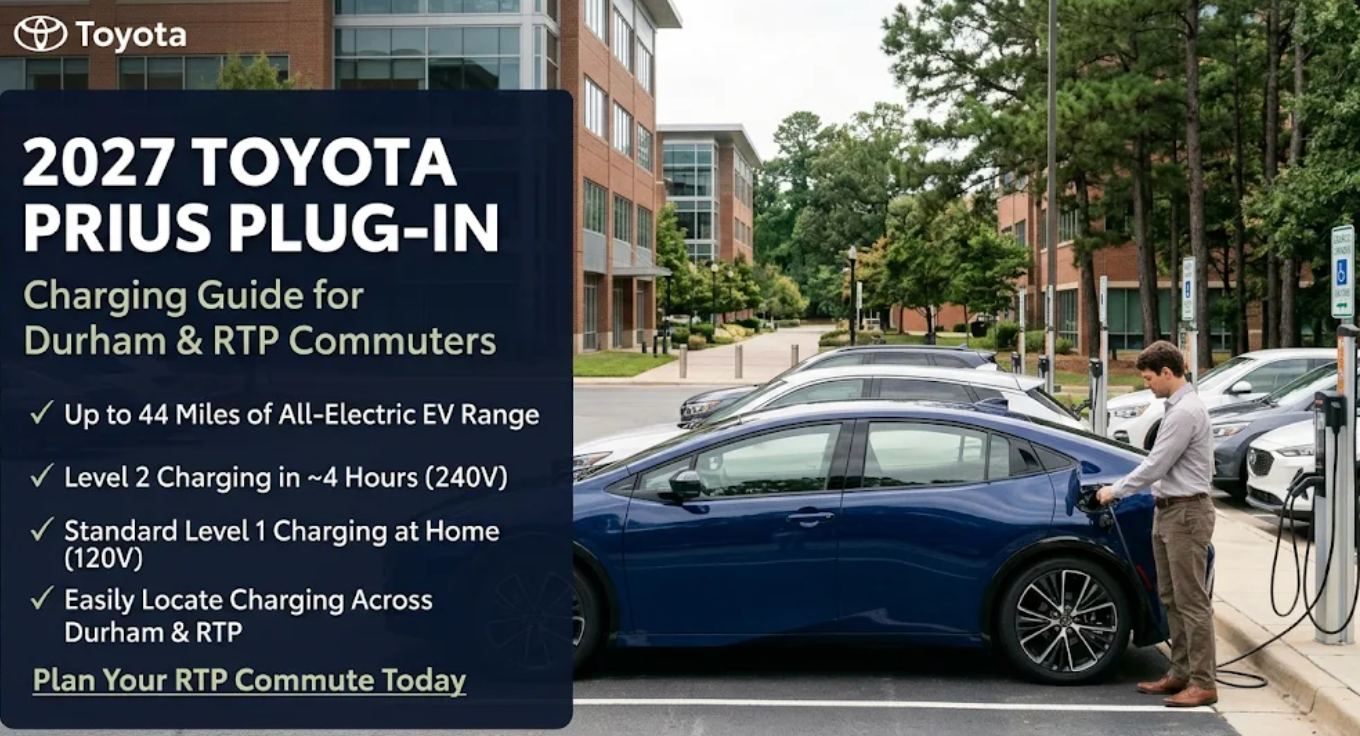
See how 2027 Toyota Prius Plug-in Hybrid charging and electric range work for Durham and RTP commuters, including home and public charging options.

2027 Toyota Prius Plug-in Hybrid Charging RTP Guide

Toyota Ownership & Buying Guide • Durham, NC Why the Prius Plug-in Hybrid is the Perfect Commuter Vehicle for the Triangle Area The 2027 Toyota Prius Plug-in Hybrid can cover many Durham-to-RTP round trips on electricity alone, because Toyota lists an EPA-estimated all-electric range of up to 44 miles on the SE grade and up to 39 miles on the XSE, Nightshade, and XSE Premium grades. Toyota estimates a full charge takes about 11 hours on a standard 120V household outlet and about 4 hours on a 240V Level 2 charger under ideal conditions. When the battery runs low, the hybrid system takes over automatically, so an empty battery does not leave you stranded the way it could in a battery-electric vehicle. That combination is why the plug-in Prius keeps coming up for Triangle commuters who are curious about electric driving but not ready to depend on public chargers. Here at Mark Jacobson Toyota, we wrote this guide for drivers who want the practical side of ownership: how far the battery really goes on a weekday, what a home charging setup involves, where public charging fits around Durham and Research Triangle Park, and whether the plug actually saves money compared with the regular Prius hybrid. We use Toyota's published figures for the 2027 model year, current North Carolina energy prices, and clearly labeled assumptions so you can swap in your own commute. Definition: A plug-in hybrid electric vehicle (PHEV) pairs a gasoline engine with a larger battery that can be recharged from an outlet, allowing a limited distance of all-electric driving before it operates as a conventional hybrid. The 2027 Toyota Prius Plug-in Hybrid uses a 13.6-kWh lithium-ion battery and a 2.0-liter engine. For commuters across Durham, Chapel Hill, Raleigh, and Research Triangle Park, it allows many daily trips on electricity without depending on public charging. Toyota Research Guide 2027 Prius Plug-in Hybrid Charging: Find Your Answer Powertrain and Electric-Only Range Realistic Electric Range for RTP Commuting Home Charging Setup and Charge Times Public Charging Near Durham and RTP Fuel Savings vs the Standard Prius Hybrid ToyotaCare and Battery Coverage Key Takeaways Prius Plug-in Hybrid Charging FAQ Plug-in Hybrid Powertrain and Electric-Only Range The 2027 Prius Plug-in Hybrid uses Toyota's fifth-generation hybrid system with a 2.0-liter four-cylinder engine and two motor-generators. Toyota rates the combined system at 220 net horsepower, with an EPA-estimated 0-60 mph time of 6.6 seconds, and the car is front-wheel drive with an electronically controlled continuously variable transmission. The traction battery is a 13.6-kWh lithium-ion pack, and Toyota lists only 120V and 240V charging times for it, which tells you how this car is meant to be used: plug in at home or at work, and let the gas engine handle the long trips. A standard hybrid recharges its small battery through braking and the engine, and you never plug it in. The plug-in version stores enough energy to drive dozens of miles with the engine off, then shifts into hybrid operation on its own once the usable charge is spent. For 2027, Toyota added dual-zone automatic climate control so the driver and front passenger can set separate temperatures, plus a new Inked exterior color. The core hardware, including the battery capacity and system output, carries over. That matters if you are comparing a 2027 against a remaining 2026 unit, a point we come back to in the ToyotaCare section. 2027 Prius Plug-in Hybrid Grades: Price, Electric Range, and Efficiency Grade Base MSRP* EPA-Est. Electric Range EPA-Est. MPGe Hybrid Mode MPG (City/Hwy/Comb.) SE $33,980 Up to 44 miles 128 55/46/51 XSE $37,230 Up to 39 miles 114 50/43/47 Nightshade $38,000 Up to 39 miles 114 50/43/47 XSE Premium $40,675 Up to 39 miles Confirm with our team Confirm with our team *Base MSRP excludes Toyota's $1,295 delivery, processing, and handling fee, taxes, title, registration, and dealer-installed options. Figures from Toyota.com The SE's longer electric range comes mostly from its smaller wheels and lighter curb weight. Toyota lists the SE at 3,461 pounds and the XSE at 3,516 pounds, and the SE also carries a lower drag figure. If maximum electric miles are your main goal, the SE is the efficiency choice. If you want the larger feature set on the XSE grades, you give up roughly five miles of rated electric range. Realistic All-Electric Range for RTP Commuting There is no single "typical" RTP commute, so here is a worked example you can adjust. Assume a driver who lives near our dealership on Durham-Chapel Hill Boulevard and works in Research Triangle Park, about 12 miles each way, for a 24-mile round trip. Five commuting days a week for 48 weeks comes to about 5,760 commuting miles per year. With a full overnight charge, that daily round trip sits comfortably inside the SE's 44-mile EPA estimate and the XSE's 39-mile estimate, which leaves a cushion for a lunch errand or a stop on the way home. Now stretch the example. A Chapel Hill driver heading to the far side of RTP, or a Durham driver commuting to downtown Raleigh, can easily exceed 40 miles round trip. In that case the car simply uses its electric range first and then finishes the drive as a hybrid. You still benefit from the electric miles; you just do not complete the whole day without gas. A few conditions can shorten electric range in everyday use: Sustained highway speeds on I-40 or NC-147 use more energy per mile than stop-and-go surface streets. Heavy use of climate control during a humid Triangle summer or a cold January morning draws on the same battery. Cold temperatures generally reduce how much usable energy a lithium-ion battery delivers. Extra passengers and cargo add weight. Treat the EPA number as a planning figure, not a promise. If your round trip is well under the rated range, most weekday driving can happen on electricity with regular overnight charging; if it is well above, the gap between the plug-in and a regular hybrid narrows. Home Charging Setup and Charge Times Regular access to an outlet is what makes this Prius different from a standard hybrid. Toyota confirms that a dual-voltage charging cable is supplied with the 2027 Prius Plug-in Hybrid. You can charge from a suitable 120-volt household outlet, or use compatible 240-volt Level 2 equipment for a faster refill. Have a licensed electrician evaluate an outlet or circuit if you are unsure about its condition or capacity; do not assume an extension cord or an aging garage outlet is safe for continuous charging. Prius Plug-in Hybrid Charging Options at a Glance Charging Method Typical Location Toyota-Estimated Time to Full Best Fit Level 1 (120V) Standard household outlet, ideally on a dedicated circuit About 11 hours Overnight charging when you park from early evening to morning Level 2 (240V) Home wall-mounted equipment, workplaces, public parking decks About 4 hours Shorter overnight windows, two daily trips, or topping up at work DC fast charging Highway fast-charging sites Not listed by Toyota for this model Plan on Level 1 or Level 2; use hybrid mode on road trips Charge times are Toyota estimates under ideal conditions and can vary with temperature, battery state, and the electrical supply. Confirm the charge port type and any adapter needs on a specific vehicle with our team before buying charging equipment. In practice, Level 1 charging works well if you are home from about 7 p.m. to 6 a.m. That 11-hour window matches Toyota's estimate for a full charge from a depleted battery, and most nights you will start with some charge already in the pack. Level 2 makes more sense if your household parks late and leaves early, if two drivers share the car, or if you want to recharge between a morning commute and an evening trip. A few planning steps before you install anything: Have a licensed electrician check whether your garage outlet is on a circuit shared with freezers, power tools, or other heavy loads. Ask about permits, since Durham, Wake, and Orange County jurisdictions may require one for new 240V circuits. Check with your electric utility, such as Duke Energy, about any current EV charging programs or time-of-use rates, because program terms change. Renters and condo owners should confirm parking-space access to an outlet before relying on home charging. The cost side is simple to estimate. The U.S. Energy Information Administration reported an average North Carolina residential electricity price of 14.95 cents per kilowatt-hour for August 2026. Using the SE's EPA rating of 128 MPGe, which works out to roughly 26.3 kWh per 100 miles, electric driving costs about 3.9 cents per mile at that average rate. Your utility bill, rate plan, and charging losses will move that number up or down. Public Charging Options Near Durham and RTP Public charging is a convenience for a plug-in hybrid, not a requirement. If a public station is occupied or out of service, you simply drive on as a hybrid. At a compatible Level 2 station, a multi-hour parking stop can restore a useful portion of the battery. But availability, parking rules, and fees vary by location. Check the station’s current connector, access requirements, and operating status before making charging part of your day. Unlike a battery-electric vehicle, this Prius can continue in hybrid mode if there is no available charger. The most reliable way to find current stations is a live map rather than a printed list, since locations, pricing, and access rules change often. Good options include: The U.S. Department of Energy's Alternative Fuels Data Center station locator, which lets you filter by Level 2 and connector type. Charging network apps and community maps that show real-time availability and user check-ins. The Toyota app, which can help locate charging and, with the right Connected Services trial or subscription, show charge status. Check whether a station bills by the hour, the kilowatt-hour, or the session. An hourly rate can make a slow public session cost more per mile than charging at home. Fuel Savings and Ownership Cost vs the Standard Prius Hybrid This is where we want to be careful, because the plug-in does not automatically save money over the regular Prius. The standard 2027 Prius LE is rated at an EPA-estimated 59/50/55 MPG with a base MSRP of $28,755, while the Prius Plug-in Hybrid SE starts at $33,980. North Carolina gasoline was also relatively inexpensive at the end of October 2026, with AAA reporting a statewide average of about $3.43 per gallon for regular on October 29. Estimated Annual Energy Cost: 12,000 Miles in North Carolina Scenario (12,000 miles per year) Cost per Mile Estimated Annual Energy Cost Prius Plug-in Hybrid SE, 100% electric miles About 3.9 cents About $472 Prius Plug-in Hybrid SE, 60% electric and 40% hybrid miles About 5.0 cents (blended) About $606 2027 Prius LE hybrid (55 MPG combined) About 6.2 cents About $748 Older vehicle averaging 30 MPG About 11.4 cents About $1,371 Assumptions: 14.95 cents per kWh (EIA North Carolina residential average, August 2026), $3.43 per gallon (AAA North Carolina average, October 2026), EPA ratings of 128 MPGe and 51 MPG for the SE, and 55 MPG for the Prius LE. Estimates exclude maintenance, insurance, taxes, and fees and are for comparison only. The table shows a pattern that surprises some shoppers. For a driver replacing an older 30 MPG car, either Prius cuts energy spending sharply. Between the two Priuses, the gap is much smaller, roughly $140 to $280 per year in these scenarios. North Carolina also charges an additional annual registration fee for plug-in hybrids, listed by the U.S. Department of Energy's Alternative Fuels Data Center at $107.25, which offsets part of that difference. The federal new clean vehicle tax credit is also not available for vehicles acquired after September 30, 2025, according to the IRS, so it should not be part of a 2027 purchase calculation. For RTP commuters with home charging, the 2027 Prius Plug-in Hybrid makes the most sense when the value of driving most weekday miles on electricity, plus its 220 horsepower and quieter electric operation, matters more to you than the lowest purchase price. If your priority is the lowest total cost and you cannot charge reliably at home, the standard Prius hybrid is likely the better financial fit because it delivers similar efficiency without the higher MSRP or the plug-in registration fee. Either way, comparing current pricing, incentives, and financing on both models side by side gives you a clearer answer than fuel math alone. A short way to decide: Lean toward the Plug-in Hybrid if you can charge at home or work, your round trip is under about 35 to 40 miles, and you value electric driving and stronger acceleration. Lean toward the standard Prius if you park on the street without an outlet, drive long highway distances daily, or want the lowest upfront price. Consider AWD needs too. Toyota offers the standard Prius with available all-wheel drive on several grades, while the Plug-in Hybrid is front-wheel drive. ToyotaCare and Plug-in Hybrid Battery Coverage The 2027 Prius Plug-in Hybrid comes with ToyotaCare normal factory-scheduled maintenance for one year or 10,000 miles, whichever comes first. Toyota’s model-year-specific program literature states that 2026 and earlier Toyota vehicles generally received two years or 25,000 miles under the previous terms. If you compare a 2027 car against a remaining 2026, check both model years’ actual coverage; the difference may affect your first two years of routine service planning. Toyota’s model-year-2027 ToyotaCare brochure describes three years of roadside assistance with unlimited mileage for Prius and PHEV models, while Toyota’s July 2026 Prius Plug-in Hybrid announcement describes two years. That mismatch should not be presented as settled coverage. Before buying, request the current VIN-specific ToyotaCare and roadside-assistance terms from Mark Jacobson Toyota and keep a copy with the purchase documents. The battery coverage is strong. Toyota.com lists these 2027 warranty terms for the Prius Plug-in Hybrid: Hybrid battery warranty: 10 years or 150,000 miles Hybrid system warranty: 8 years or 100,000 miles Basic warranty: 3 years or 36,000 miles Powertrain warranty: 5 years or 60,000 miles Connected Services matter for a plug-in too. Toyota lists a 5-year trial for Remote Connect, Safety Connect, and Service Connect on the 2027 model, which supports features such as remote climate control and vehicle status in the Toyota app. Trials end, and continued use requires a subscription after the trial period. After ToyotaCare ends, our Toyota service team in Durham can follow the same factory maintenance schedule with Genuine Toyota parts. Key Takeaways The 2027 Prius Plug-in Hybrid offers EPA-estimated electric range of up to 44 miles on the SE and up to 39 miles on the XSE, Nightshade, and XSE Premium. Toyota estimates about 11 hours to charge on a 120V outlet and about 4 hours on 240V Level 2, so many owners only need overnight home charging. At August 2026 North Carolina electricity prices, electric driving in the SE costs roughly 3.9 cents per mile before charging losses and rate differences. Savings over the standard Prius hybrid are modest in North Carolina, so the plug-in makes the most sense for drivers who can charge at home and value electric driving. MY2027 ToyotaCare covers scheduled maintenance for 1 year or 10,000 miles, compared with 2 years or 25,000 miles on 2026 and earlier models. The hybrid battery is covered for 10 years or 150,000 miles under Toyota's 2027 warranty terms. Frequently Asked Questions How long does it take to charge a 2027 Toyota Prius Plug-in Hybrid? Toyota estimates about 11 hours for a full charge on a standard 120V household outlet and about 4 hours on a 240V Level 2 charger under ideal conditions. Toyota does not list DC fast charging for this model. Most owners plug in overnight at home, and if the battery runs out during the day, the car continues as a hybrid using gasoline. Starting with a partial charge shortens the time. Can I use the Prius Plug-in Hybrid without ever charging it? Yes, the car operates as a regular hybrid when the battery is depleted, and Toyota rates the SE at 51 MPG combined in hybrid mode. However, you would be paying for a larger battery you are not using. If you cannot charge at home or work, we suggest comparing the standard Prius, which has a lower MSRP and similar hybrid efficiency, before deciding. Is 44 miles of electric range enough for an RTP commute? For many drivers it is. A 24-mile round trip between central Durham and RTP fits within the SE's EPA-estimated 44 miles with room to spare, assuming a full overnight charge. Longer commutes, highway speeds, extreme heat or cold, and heavy climate control use reduce real-world range. Beyond that point the car switches to hybrid operation automatically, so you never have to stop to charge. Does the 2027 Prius Plug-in Hybrid qualify for a federal tax credit? According to the IRS, the new clean vehicle credit is not available for vehicles acquired after September 30, 2025, so a 2027 Prius Plug-in Hybrid purchased today does not qualify for it. Utility programs and manufacturer offers can change, so ask our team about current Toyota offers and any local programs. This is general information, not tax advice; please consult a tax professional for your situation. The best next step is to compare your actual round-trip distance and charging access with a standard Prius. Mark Jacobson Toyota is at 4516 Durham-Chapel Hill Blvd, Durham, NC 27707. Call 919-493-5599 or explore available vehicles before you visit. Schedule a Test Drive Call Our Durham Team Related Toyota Insights & Ownership Guides Hybrid Comparison 2026 Toyota Prius vs Prius Plug-in Hybrid: Which Saves You More in Durham? Compare the regular Prius and the plug-in version side by side for Durham driving, efficiency, and everyday ownership. Read More → Electrified Ownership Toyota Hybrids vs. Toyota EVs: Choosing the Right Option for You See how hybrids, plug-in hybrids, and battery-electric Toyotas differ in charging, range, and daily routines. Read More → RTP Commute Guide 2026 Toyota Camry Hybrid MPG and Commute Guide for RTP Drivers Compare how a hybrid sedan handles Research Triangle Park commuting if you would rather skip the plug entirely. Read More → Plug-in Hybrid Lifestyle RAV4 Prime Spring Getaway Guide Near Durham See how a Toyota plug-in hybrid SUV fits weekend trips around the Triangle when you need more cargo room than a Prius. Read More →
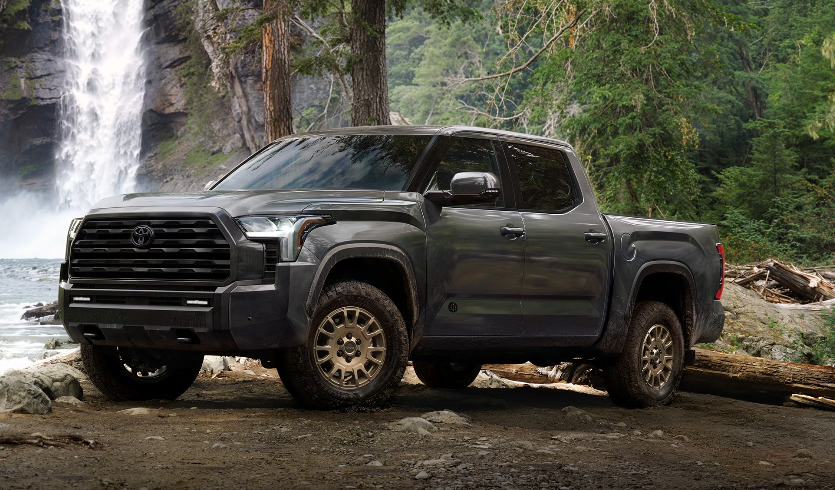
2027 Toyota Tundra i-FORCE MAX Trim Guide for Durham Drivers

2027 Toyota Tundra i-FORCE MAX Trim Guide for Durham Drivers

Toyota Tundra Hybrid Guide • Durham, NC Comparing Hybrid Power, Towing Capability, and Trims for Triangle Drivers The 2027 Toyota Tundra i-FORCE MAX pairs a twin-turbo V6 with a hybrid electric motor to deliver strong torque for towing and hauling while keeping fuel economy more competitive than a traditional large V8 truck. Here at Mark Jacobson Toyota, we work with a lot of Durham, Cary, and Apex buyers who need a truck that can genuinely handle towing a boat to Jordan Lake or hauling equipment for work during the week, and the i-FORCE MAX is usually the powertrain we steer those conversations toward. The Tundra lineup spans work-focused grades through the luxury-oriented Capstone, and the right configuration depends heavily on whether you are buying primarily for towing capacity, off-road capability, or daily comfort. Toyota USA has not yet published the complete 2027 i-FORCE MAX availability by grade, so contact Mark Jacobson Toyota for the latest hybrid trim information rather than assuming an SR5 hybrid configuration is available. This guide walks through the powertrain itself, how the trims differ, and how to think about bed configuration and equipment based on how you actually plan to use the truck. Definition: The Toyota i-FORCE MAX is a hybrid powertrain available on the Tundra, combining a twin-turbo V6 engine with an electric motor integrated into the transmission to add torque and improve efficiency. It is commonly chosen by buyers who need strong towing and payload capacity along with better fuel economy than a comparable non-hybrid full-size truck. For drivers across Durham, Cary, Apex, and the Research Triangle, it provides the torque needed for towing boats, trailers, and equipment while reducing fuel stops on longer work days or weekend trips. Tundra Hybrid Research Guide 2027 Tundra i-FORCE MAX Guide: Trims, Towing, Bed Options, and Ownership Hybrid Powertrain, Torque, and Towing Trim Differences From SR5 Through Capstone Bed Configurations and Work-Ready Features TRD Off-Road and TRD Pro Technology Interior Technology and Everyday Comfort Safety Technology and Trailer Features ToyotaCare and Ownership Support What to Ask Before Towing Near Capacity Key Takeaways Tundra i-FORCE MAX Frequently Asked Questions i-FORCE MAX Hybrid Powertrain, Torque, and Towing Capacity The i-FORCE MAX powertrain pairs Toyota's twin-turbo V6 with an electric motor positioned between the engine and transmission, which means the electric motor adds torque right when you need it most, during initial acceleration and under load. For anyone who has tried to get a loaded trailer moving from a dead stop, that immediate torque delivery is the practical difference between the hybrid and the standard i-FORCE gas-only engine, rather than just a fuel economy talking point. Toyota USA has not yet published the complete 2027 horsepower, torque, towing, and payload specifications by configuration. Contact Mark Jacobson Toyota for the latest information on the specific truck you are considering. As a general pattern across recent Tundra i-FORCE MAX model years, the hybrid powertrain has offered higher torque than the standard V6, which is why we recommend discussing it with our team if you tow regularly rather than only occasionally. Payload and Trailering Numbers by Configuration Payload and towing capacity shift depending on the truck's cab, bed length, drivetrain, equipment, and powertrain. Not every Tundra configuration is available with i-FORCE MAX. We walk every serious towing customer through the specific truck's payload label and Toyota's applicable towing specifications before they buy, since published maximum figures may not match the exact truck on our lot. 2027 Tundra Trim Priorities and Capacity Planning Trim Tier Focus Towing Capacity Payload Capacity Best Fit SR5 Work-focused value; 2027 hybrid availability not yet confirmed Contact our team for configuration-specific specifications Contact our team for the vehicle's payload label Contractors, fleet buyers, budget-conscious towing Limited Balanced comfort and capability Contact our team for configuration-specific specifications Contact our team for the vehicle's payload label Families who tow occasionally and want daily comfort TRD Pro Off-road performance Contact our team for configuration-specific specifications Contact our team for the vehicle's payload label Weekend off-roaders and Blue Ridge trips 1794 Edition / Capstone Luxury and top-tier equipment Contact our team for configuration-specific specifications Contact our team for the vehicle's payload label Buyers prioritizing comfort and premium features alongside capability Exact towing and payload figures vary by configuration. Use the vehicle's loading and certification labels together with Toyota's applicable towing specifications and Owner's Manual; the payload label alone does not establish maximum trailer weight. Discuss Your Towing Needs Trim Differences From SR5 Through Capstone The Tundra's trim walk covers a wide range of buyers. SR5 is the practical starting point, built for buyers who want strong capability without paying for features they will not use. Limited adds comfort and technology upgrades aimed at families and buyers who want a more refined daily truck. The TRD Off-Road package and TRD Pro grade shift the focus toward off-road hardware, including upgraded suspension, all-terrain tires, and Toyota's off-road driving aids. 1794 Edition and Capstone sit at the top of the lineup, emphasizing premium interior materials, additional technology, and a more upscale overall presentation. Contact Mark Jacobson Toyota for the complete 2027 i-FORCE MAX grade and package combinations as Toyota releases them. Which Trim Fits Contractor Use vs Family Towing If you are buying primarily as a work truck, the SR5 is worth comparing for strong capability without paying for premium comfort features you may not need at a job site. Fleet buyers and contractors in Durham, Cary, and Apex tend to consider this part of the lineup because the value proposition is straightforward: strong capability, lower upfront cost, and enough durability to handle daily work use. If you specifically want i-FORCE MAX, our team can explain the confirmed 2027 hybrid configurations as they become available. If towing is more occasional, such as pulling a boat to Jordan Lake on weekends or hauling a camper for family trips, the Limited trim's added comfort features make the truck more pleasant to live with day to day. For buyers who want both serious capability and a more refined interior, the 1794 Edition or Capstone deliver that combination, though at a noticeably higher price point that is worth cross-shopping against your actual towing needs rather than just the equipment list. Bed Configurations and Work-Ready Features Bed length is one of the more overlooked decisions in a Tundra purchase, and it has real consequences for what the truck can actually carry. A shorter bed improves maneuverability in tighter spaces, which matters for anyone navigating downtown Durham or a tight job site, while a longer bed adds cargo length for hauling lumber, equipment, or larger loads without needing a trailer for every job. Toyota's available bed features, including a durable bed liner, tie-down points, and available power outlets, matter more to contractors and outdoor enthusiasts than they might seem on paper. We recommend thinking through your actual typical cargo, not just your occasional largest load, when choosing bed length, since most owners use their truck bed for routine hauling far more often than for the rare maximum-capacity job. i-FORCE vs i-FORCE MAX Powertrain Comparison Feature i-FORCE (Standard V6) i-FORCE MAX (Hybrid) Engine Twin-turbo V6 Twin-turbo V6 with integrated electric motor Torque delivery Strong, traditional turbo response Added torque from electric motor under load Fuel economy Complete 2027 ratings not yet published by Toyota USA Complete 2027 ratings not yet published by Toyota USA Best for Buyers prioritizing lower upfront cost Buyers who tow or haul regularly and want added torque Availability Gas powertrain offered within the Tundra lineup Contact our team for confirmed 2027 hybrid grade availability Contact Mark Jacobson Toyota for the latest 2027 fuel economy ratings and pricing differences between the two powertrains as Toyota releases the complete specifications. Off-Road Technology on TRD Off-Road and TRD Pro For Tundra buyers planning regular trips off paved roads, whether that means a gravel forest service road in the mountains or a muddy job site, the TRD Off-Road package and TRD Pro grade add hardware beyond a standard work-focused configuration. Multi-Terrain Select adjusts throttle response and traction control for specific surfaces like mud, sand, or rock, which takes some of the guesswork out of driving in conditions most daily commuters never encounter. Crawl Control functions similarly to low-speed cruise control for technical terrain, letting the truck manage throttle and braking at a slow, controlled pace while the driver focuses on steering. Availability depends on the specific grade, package, and drivetrain. TRD Pro adds Toyota's upgraded off-road suspension, all-terrain tires, and additional underbody protection, which noticeably changes how the truck handles rutted or uneven terrain compared to a standard suspension setup. For a buyer whose primary use is towing and highway driving with only occasional off-pavement trips, this hardware may be more capability than you need day to day. For someone regularly hauling gear into the Blue Ridge backcountry or navigating unpaved job sites, it is a genuinely useful upgrade rather than a styling package. Interior Technology and Everyday Comfort Even a work-focused truck spends most of its time on ordinary drives, not hauling maximum loads, so interior comfort and technology matter more than buyers sometimes expect going in. The 2027 Tundra's standard 14-inch Toyota Audio Multimedia touchscreen, wireless smartphone integration, and available JBL premium audio system make daily commuting between Durham and RTP, or a long highway drive out to a job site, considerably more comfortable than older-generation trucks. Higher trims add more advanced driver information displays and additional convenience features, but even the SR5 comes equipped with the core technology most buyers actually use daily. Safety Technology and Trailer Features Every 2027 Tundra comes with Toyota Safety Sense 4.0 as standard equipment. Features like available blind spot monitoring become especially useful when towing a trailer that extends your effective length and blocks portions of your rear visibility, and trailer sway control and available trailer-specific technology add a meaningful layer of confidence when hauling a boat or camper on I-40 or through mountain grades heading toward the Blue Ridge. Driver-assistance features do not replace correct loading, suitable towing equipment, or attentive driving. ToyotaCare and Ownership Support for Durham Truck Owners Toyota's current program materials indicate that MY2027 vehicles generally carry a ToyotaCare window covering the first year or 10,000 miles of factory-scheduled maintenance. For a work truck that racks up miles quickly, hitting that mileage threshold faster than a typical commuter vehicle is a real possibility, so we recommend reviewing the exact ToyotaCare terms and when scheduled maintenance becomes an owner-paid expense for your specific Tundra. The end of ToyotaCare maintenance coverage does not mean the vehicle's warranty has ended. Our Toyota-certified technicians are equipped to service both the i-FORCE and i-FORCE MAX powertrains using Toyota-specific diagnostic equipment and Genuine Toyota parts, which matters for a hybrid work truck where the electric motor and battery components benefit from manufacturer-trained service rather than a generalist shop. ToyotaCare and Warranty Snapshot Coverage Area 2027 Tundra i-FORCE MAX ToyotaCare maintenance window 1 year / 10,000 miles, whichever comes first, under current program terms Hybrid components Serviced by Toyota-certified technicians using Toyota diagnostic equipment Safety suite Toyota Safety Sense 4.0 standard Trailer technology Trailer sway control and available trailer-specific features Financing Toyota Financial Services available through our finance team, subject to credit approval Schedule Toyota Service Field Operations: What to Ask Before You Tow at Maximum Capacity We do not claim to have observed every towing scenario our customers encounter, but we can walk through the practical questions worth asking before you tow anywhere near a Tundra's maximum rated capacity. First, confirm the exact payload and towing figures for your specific VIN, not the trim's advertised maximum, since options and configuration change the real number. Second, factor in passengers, cargo, aftermarket accessories, and trailer tongue weight, all of which count against your payload capacity and can add up faster than expected. Third, discuss Toyota's requirements for a weight-distributing hitch, trailer brakes, and a compatible brake controller with our team before towing, since towing at or near capacity puts more demand on brakes, cooling, and suspension components over time. For buyers planning regular trips toward the Blue Ridge Mountains, the added elevation and sustained grades change how a loaded truck behaves compared to flat Piedmont driving, and the i-FORCE MAX's added torque genuinely helps on long uphill pulls compared to the standard powertrain, which is one of the more practical reasons we point mountain-trip-focused buyers toward the hybrid option. Our sales team can walk you through current Tundra i-FORCE MAX availability, trim-specific towing and payload information, and financing options built around how you actually plan to use the truck. Visit us at 4516 Durham-Chapel Hill Blvd in Durham, call 919-493-5599 during our current published sales hours, or browse current inventory at https://www.markjacobsontoyota.com/. If you are buying for contractor or fleet use, ask our finance team about current commercial financing options through Toyota Financial Services. Talk With Our Truck Team Key Takeaways The i-FORCE MAX pairs a twin-turbo V6 with a hybrid electric motor, adding torque under load. Toyota USA has not yet published complete 2027 hybrid availability by grade; contact Mark Jacobson Toyota for current information. Exact towing and payload capacity vary by configuration. Review the vehicle's loading labels and Toyota's applicable towing specifications. SR5 fits contractor and fleet buyers focused on value and capability; Limited, 1794 Edition, and Capstone add comfort and premium equipment. Standard Toyota Safety Sense 4.0 and available trailer-specific technology support daily driving and towing. Review current ToyotaCare terms, since a work truck can reach the mileage threshold faster than a typical commuter vehicle. Frequently Asked Questions How much can the 2027 Tundra i-FORCE MAX tow? Toyota USA has not yet published the complete 2027 configuration-specific towing specifications. Contact Mark Jacobson Toyota for the latest rating information for the truck you are considering. Our team can review the vehicle's payload label, Toyota's applicable towing specifications, and what those limits mean for your boat, camper, or work trailer. What is the difference between i-FORCE and i-FORCE MAX? i-FORCE is Toyota's standard twin-turbo V6 gas engine, while i-FORCE MAX adds a hybrid electric motor integrated into the transmission. The hybrid version delivers additional torque under load, which makes it worth comparing for buyers who tow or haul regularly. The standard i-FORCE can still be a reasonable option for buyers prioritizing a lower upfront cost with lighter-duty use. Compare the published fuel economy ratings for the specific configurations once Toyota releases the complete 2027 figures. Which Tundra trim is best for a contractor or work truck? For most contractor and fleet buyers, the SR5 is worth considering for capability and value without premium comfort features. If daily comfort for a long workday matters more to you, the Limited trim adds a more refined interior. If you specifically want i-FORCE MAX, contact our team for confirmed 2027 hybrid availability rather than assuming an SR5 hybrid is offered. We can walk through SR5 and Limited options side by side based on your specific work needs. Does the Tundra i-FORCE MAX need different maintenance than the standard gas engine? The hybrid components benefit from service by Toyota-certified technicians using Toyota-specific diagnostic equipment, though routine maintenance like tire rotations, brake service, and fluid checks follow a similar schedule to the standard i-FORCE engine. Our service department can walk you through the specific maintenance schedule for your Tundra, and we recommend confirming current ToyotaCare coverage for your model year before your first scheduled service. Whether you need the 2027 Tundra i-FORCE MAX for daily contractor work, weekend towing to Jordan Lake, or family trips into the Blue Ridge Mountains, we want to make sure you leave our dealership with the trim and configuration that actually matches how you use a truck. Visit our team at 4516 Durham-Chapel Hill Blvd, Durham, NC 27707, or call 919-493-5599 during our current published sales hours to discuss current i-FORCE MAX availability and trim-specific towing information. You can also start browsing at https://www.markjacobsontoyota.com/ before you come in. As an authorized Toyota dealer, we can walk you through financing, current incentives, and how SR5 compares to Limited, TRD Pro, or Capstone for your specific towing and daily driving needs. Call Mark Jacobson Toyota Request a Test Drive Related Toyota Insights & Ownership Guides Toyota Truck Comparison 2026 Toyota Tacoma vs Tundra: Which Truck Is Right for You in Durham? Compare Toyota midsize and full-size trucks for daily driving, towing needs, and everyday utility around Durham. Read More → Toyota Ownership Coverage ToyotaCare vs ToyotaCare Plus vs Extended Warranty: What Durham Owners Should Know Understand the differences between scheduled maintenance plans and repair protection when planning long-term truck ownership. Read More →

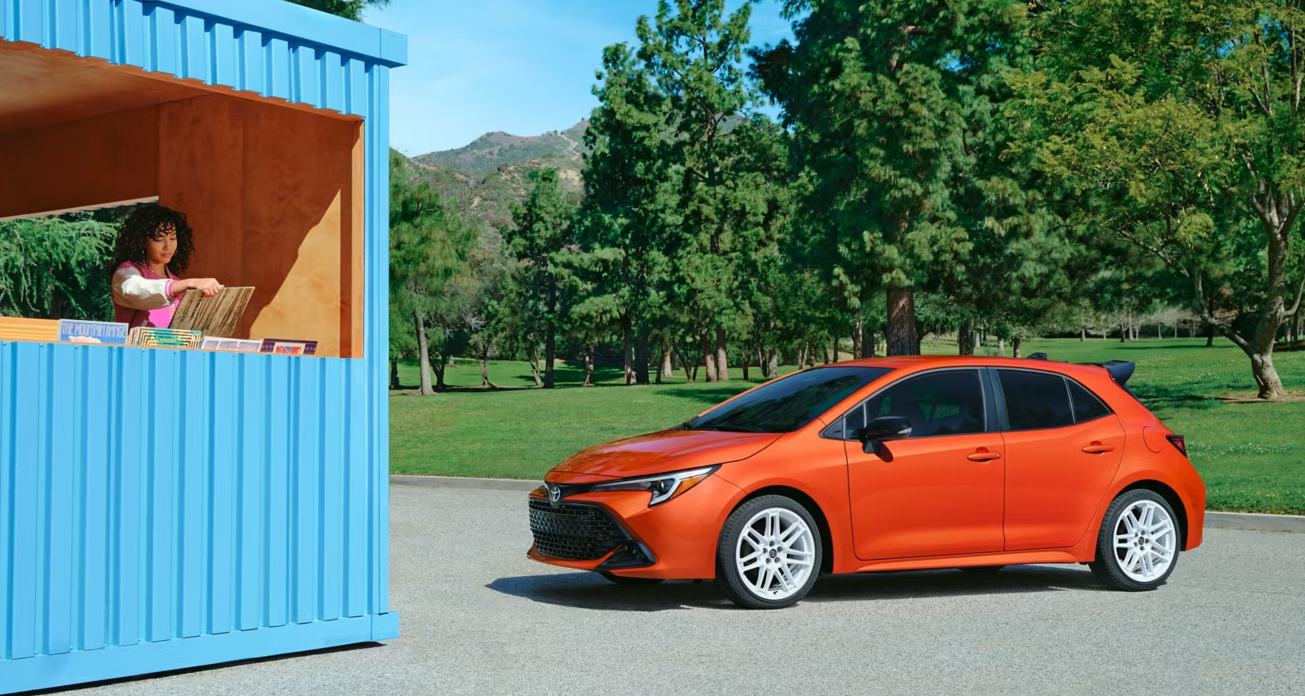
2026 corolla hatchback

2027 Toyota Corolla Hatchback Trim Guide for Durham Drivers

Toyota Corolla Hatchback Guide • Durham, NC Comparing SE, Nightshade, and XSE Trims for Triangle Commuters The 2027 Toyota Corolla Hatchback gives Durham drivers Corolla reliability and efficiency in a more versatile body style than the sedan, with a rear hatch that opens up genuinely useful cargo space for students, young professionals, and anyone who wants a smaller footprint without sacrificing practicality. Here at Mark Jacobson Toyota, we see a lot of interest in the Hatchback from Duke, UNC, and NC State students and their families, along with RTP commuters who want a fuel-efficient daily driver that can still handle a Target run or a dorm move-in without folding down half the seats. The 2027 Corolla Hatchback is available in SE and XSE trims, each built around Toyota's Dynamic Force engine and standard Toyota Safety Sense technology. Where the two trims really differ is in equipment level, wheel size, and a handful of comfort and technology features, rather than in the core mechanical experience. For a Durham or RTP buyer trying to decide between the two, or trying to decide whether the Hatchback makes more sense than the Corolla sedan, this guide walks through the specifics you actually need before you visit us. Definition: The 2027 Toyota Corolla Hatchback is a compact, fuel-efficient hatchback variant of the Corolla built on Toyota's TNGA-C platform, offered in SE and XSE trims. It is commonly chosen by first-time buyers, students, and commuters who want Corolla reliability with added cargo flexibility. For drivers across Durham, Chapel Hill, Raleigh, Cary, and the Research Triangle, it provides an efficient daily commuter with standard safety technology and a rear hatch configuration suited to everyday hauling needs. Corolla Hatchback Research Guide 2027 Corolla Hatchback Guide: SE vs XSE, MPG, Cargo, and Ownership Fuel Economy and SE vs XSE Trim Differences Toyota Safety Sense and Standard Technology Cargo Space and Hatchback Practicality ToyotaCare and Ownership Cost Corolla Hatchback vs Corolla Cross Duke, UNC, NC State, and RTP Driving Cargo Shape and Everyday Loading Key Takeaways Corolla Hatchback Frequently Asked Questions Fuel Economy and Everyday Commuter Value The Corolla Hatchback is built around Toyota's Dynamic Force engine, the same efficiency-focused powertrain family found across much of the current Corolla lineup. For Triangle commuters driving between Durham, RTP, Chapel Hill, and Raleigh on a regular basis, that efficiency translates directly into fewer fill-ups and lower fuel costs over a typical work week, particularly for anyone spending real time in stop-and-go traffic on I-40 or NC-147 during peak commuting hours. Beyond the headline fuel economy number, the Corolla Hatchback's continuously variable transmission is tuned to keep the engine operating in its most efficient range during typical commuting speeds, rather than simply being about a single EPA rating. That matters in practice because the Triangle's mix of highway commuting and stop-and-go college-town traffic is exactly the kind of driving where a well-tuned CVT shows its value compared to a traditional automatic that shifts through more gears than it needs to. SE vs XSE Trim Differences The SE trim is the practical, well-equipped starting point for most Corolla Hatchback shoppers. It includes the full Toyota Safety Sense suite, a touchscreen infotainment system with wireless Apple CarPlay and Android Auto, and 16-inch alloy wheels. The XSE trim builds on that foundation with upgraded interior materials, a standard 10.5-inch touchscreen, additional convenience features like heated front seats, 18-inch graphite-colored alloy wheels, and a sportier exterior appearance. For a student or first-time buyer focused primarily on reliability and low running costs, the SE trim generally covers everything that matters day to day. For a buyer who wants a bit more comfort and technology without stepping up to a different model entirely, the XSE closes most of that gap while staying within the Corolla family's efficient, low-maintenance reputation. Table 1: 2027 Corolla Hatchback SE vs XSE Feature SE XSE Engine Dynamic Force 4-cylinder Dynamic Force 4-cylinder Transmission CVT CVT Toyota Safety Sense Toyota Safety Sense 3.0 standard Toyota Safety Sense 3.0 standard Wheels 16-inch alloy wheels 18-inch graphite-colored alloy wheels Infotainment Standard touchscreen, wireless Apple CarPlay/Android Auto; 10.5-inch touchscreen available with SE Premium Package Standard 10.5-inch touchscreen, wireless Apple CarPlay/Android Auto Seating comfort Cloth upholstery SofTex-trimmed heated front seats with sport fabric inserts Best fit Budget-focused first-time buyers and commuters Buyers who want added comfort and styling within the Corolla lineup Confirm current MSRP for each trim with our sales team, since pricing can shift with equipment packages and current incentives. Compare SE and XSE Trims Toyota Safety Sense and Standard Technology Every 2027 Corolla Hatchback comes with Toyota Safety Sense 3.0 as standard equipment, not as an option reserved for higher trims. That includes a Pre-Collision System with Pedestrian Detection, Lane Departure Alert with Steering Assist, Automatic High Beams, and Full-Speed Range Dynamic Radar Cruise Control. For a Duke or UNC student driving unfamiliar roads for the first time, or a parent handing their student their first car, having that safety suite standard rather than optional is one of the more reassuring parts of the Corolla Hatchback's value proposition. Wireless Apple CarPlay and Android Auto come standard as well, which means no cables tangled in the center console and a simpler way to keep navigation, music, and calls connected during the daily commute between Durham and RTP or a longer drive back to campus after a break. Cargo Space and Hatchback Practicality This is where the Hatchback earns its place in the Corolla lineup rather than simply being a styling alternative to the sedan. With the rear seats up, the hatch opens to a cargo area that handles grocery runs, luggage, and typical daily hauling without much thought. Fold the 60/40 split rear seats down, and the space expands significantly, enough for a dorm move, a bike with the front wheel removed, or a larger Target or Costco haul that would not fit in a sedan's trunk. The hatch's low liftover height also makes loading heavier items easier than lifting them into a raised SUV cargo area, which is a small but real convenience for anyone hauling groceries solo on a weeknight. We tell shoppers that cargo height and the shape of the opening often matter more in daily use than the total published cargo volume number, since a wide, low opening can be more genuinely useful than a taller space that is awkward to load. Which Trim Fits a Student or First-Time Buyer For students commuting between Durham, Chapel Hill, and campus, or driving home to Raleigh or Cary for the weekend, the SE trim's combination of standard safety technology, strong fuel economy, and lower price point tends to be the practical choice. It keeps monthly payments manageable while still delivering everything that matters for daily reliability. For a young professional in RTP who wants a slightly more comfortable daily commuter, or a family buying a Hatchback as a second car with a bit more equipment, the XSE's added comfort features and styling upgrades can be worth the price difference, particularly if you plan to keep the vehicle for several years and want the interior to feel a little more finished during that time. Table 2: Fuel Economy and Cargo Space by Trim Metric SE XSE Published estimated MPG, city/highway 32 city / 41 highway 30 city / 38 highway Cargo space, seats up Standard Hatchback cargo area Standard Hatchback cargo area Cargo space, seats folded Significantly expanded with 60/40 split-fold seats Significantly expanded with 60/40 split-fold seats Typical use case Daily commuting, grocery runs, light hauling Same daily use, plus added comfort for longer drives Weekly fuel cost impact for Triangle commuting Depends on weekly mileage, fuel prices, and the vehicle being compared Depends on weekly mileage, fuel prices, and the vehicle being compared Fuel economy estimates are published by Toyota for the 2027 Corolla Hatchback. Actual mileage varies with driving conditions, vehicle condition, and driving habits. ToyotaCare and Ownership Cost for First-Time Buyers Ownership cost matters as much as the sticker price for most Corolla Hatchback buyers, particularly students and first-time buyers working with a tighter budget. Toyota's current program materials indicate that MY2027 vehicles generally carry a ToyotaCare window covering the first year or 10,000 miles of factory-scheduled maintenance, which is shorter than the 2-year/25,000-mile structure that applied to many earlier Corolla model years. We recommend confirming the exact ToyotaCare terms for your specific 2027 Hatchback before you buy, since knowing what is and is not covered early on makes it easier to budget for maintenance after that initial window closes. Beyond scheduled maintenance, the Corolla Hatchback's reputation for low long-term repair costs is one of the more practical reasons students and first-time buyers gravitate toward it. Our Toyota-certified technicians use Genuine Toyota parts for everything from routine oil changes to brake service, which matters for resale value down the road, since a documented maintenance history with Toyota parts tends to reassure a future buyer more than a mix of aftermarket components. Table 3: ToyotaCare and Safety Technology Snapshot Coverage Area 2027 Corolla Hatchback ToyotaCare maintenance window 1 year / 10,000 miles, whichever comes first, under current program terms Standard safety suite Toyota Safety Sense 3.0 across SE and XSE Standard tech Wireless Apple CarPlay and Android Auto Recommended seasonal service Cabin air filter check each spring for pollen season Service support Available through our Toyota-certified service department using Genuine Toyota parts Schedule Toyota Service Corolla Hatchback vs Corolla Cross: Two Different Kinds of Practical Some shoppers come in comparing the Corolla Hatchback to the Corolla Cross, and it is worth addressing that directly since both wear the Corolla name but serve different needs. The Corolla Cross is a small SUV with a higher ride height, more ground clearance, and available all-wheel drive, which makes it a better fit for anyone who wants a slightly more commanding driving position or occasional light off-pavement driving toward the mountains. The Corolla Hatchback sits lower, drives more like the efficient commuter car it is built to be, and generally costs less to buy and maintain over time. For a Durham or RTP commuter whose driving is almost entirely on paved roads and highways, the Hatchback's lower stance and efficiency usually make more sense financially. For a family that wants a bit more cargo height, a higher seating position, or the option of all-wheel drive for occasional winter weather, the Corolla Cross is worth a look before you decide. We are happy to show both side by side so you can see the practical differences rather than just comparing spec sheets. Duke, UNC, NC State, and RTP: Where the Hatchback Makes Sense We see three distinct groups gravitate toward the Corolla Hatchback in our market, and each has a slightly different reason. Students at Duke, UNC, and NC State like the combination of low running costs, easy parking in tight campus and downtown Durham spaces, and a hatch that handles move-in and move-out days without renting a larger vehicle. RTP commuters driving daily between Durham, Morrisville, and the Park appreciate the fuel economy on repetitive highway and surface-street driving, especially with gas prices that can swing throughout the year. Families looking for a reliable, affordable second vehicle often land on the Hatchback specifically because the cargo flexibility makes it more useful than a sedan for weekend errands, even though it is not a full SUV. Spring pollen season is also worth mentioning here, since it affects every vehicle in our market regardless of body style. A clogged cabin air filter during oak and pine pollen season can reduce airflow and cabin air quality noticeably, and it is one of the simpler, lower-cost maintenance items we recommend checking each spring for any Corolla Hatchback used for regular Triangle commuting. Our sales team can help you compare the SE and XSE trims in person and talk through current pricing, lease options, and whether the Corolla sedan or Hatchback body style fits your actual daily routine better. Visit us at 4516 Durham-Chapel Hill Blvd in Durham, call 919-493-5599 during our current published sales hours, or browse current inventory at https://www.markjacobsontoyota.com/. If you are a recent or upcoming graduate from one of the Triangle's universities, ask our finance team about current Toyota Financial Services and college graduate program terms, since eligibility and amounts can vary by region and are worth confirming directly with us. Schedule a Corolla Test Drive Forgotten Specs: Why Cargo Shape Matters More Than the Number on the Spec Sheet Most Hatchback comparisons lead with a single cargo volume figure, and that number genuinely undersells how the Corolla Hatchback works in real life. Two vehicles with similar published cargo volume can feel completely different to load depending on the shape of the opening, the height of the liftover, and how flat the cargo floor sits once the rear seats are folded. The Corolla Hatchback's rear hatch opens to a wide, low opening that makes sliding in a duffel bag, a case of water, or a stack of moving boxes easier than lifting them over a high SUV bumper. When the 60/40 split rear seats fold, the resulting floor sits close to flat, which matters if you are sliding in a bike, a folded table, or flat-packed furniture from a dorm move rather than stacking irregular items. We encourage shoppers to physically load something into the cargo area during a test drive rather than relying on the published cubic-foot number alone, since that is the only way to know whether a specific vehicle's cargo space actually fits your typical hauling needs. Key Takeaways The 2027 Corolla Hatchback comes in SE and XSE trims, both built on the Dynamic Force engine with standard Toyota Safety Sense technology. SE covers the practical needs of most students and first-time buyers; XSE adds comfort and styling upgrades for buyers who want more equipment. The Hatchback's low, wide cargo opening and 60/40 split-folding rear seats make it more versatile for hauling than the Corolla sedan. Standard Toyota Safety Sense technology applies across both trims, not reserved for higher-equipped versions. Confirm current MSRP, EPA MPG ratings, and ToyotaCare terms for the specific 2027 unit you are considering before purchase. Spring cabin air filter replacement is a simple, worthwhile maintenance item for any Corolla Hatchback used for regular Triangle commuting. Frequently Asked Questions What is the difference between the Corolla Hatchback and the Corolla sedan? The Hatchback and sedan share the same efficient Dynamic Force engine and core safety technology, but the Hatchback's rear hatch and folding seats give it more cargo flexibility for hauling larger or bulkier items. The sedan offers a traditional trunk with more enclosed storage. The right choice usually comes down to whether cargo versatility or a more traditional sedan layout matters more for your daily routine. Our sales team can show you both back to back. Is the 2027 Corolla Hatchback a good car for a college student in Durham or Chapel Hill? Yes, for most students it is a strong fit. It combines low fuel costs, standard safety technology, and enough cargo flexibility to handle move-in and move-out days, all while remaining easy to park around campus and downtown Durham. We recommend the SE trim for students focused on keeping costs down, with the XSE as an option for those who want a bit more comfort and technology. Does the Corolla Hatchback come with all-wheel drive? No. The 2027 Corolla Hatchback SE and XSE use front-wheel drive. If all-wheel drive is a priority, our sales team can help you compare other Corolla-family options, including appropriately equipped Corolla Hybrid sedan and Corolla Cross models. How often should I replace the cabin air filter during North Carolina pollen season? We generally recommend checking the cabin air filter each spring given how heavy oak and pine pollen can get across the Triangle, though your exact interval depends on your driving environment and Toyota's maintenance guide for your specific vehicle. Our service department can check it during a routine visit and let you know if it needs replacing. Whether you are a student at Duke, UNC, or NC State, a first-time buyer, or an RTP commuter looking for an efficient daily driver with real cargo flexibility, we want to help you figure out whether the 2027 Corolla Hatchback is the right fit before you commit to anything. Visit our team at 4516 Durham-Chapel Hill Blvd, Durham, NC 27707, or call us at 919-493-5599 during our current published sales hours to see current SE and XSE inventory. You can also start browsing at https://www.markjacobsontoyota.com/ before you come in. As an authorized Toyota dealer, we can walk you through financing, current incentives, and how the Hatchback compares to the Corolla sedan for your specific daily driving, so you leave with the version of the Corolla that actually fits your life. Schedule Your Test Drive Call Mark Jacobson Toyota Related Toyota Insights & Ownership Guides Toyota Graduate Guide The Best Toyota Cars for Graduates Explore Toyota options for life after graduation, from efficient compact cars to versatile vehicles for new commutes and changing routines. Read More → Toyota Ownership Coverage ToyotaCare vs ToyotaCare Plus vs Extended Warranty: What Durham Owners Should Know Understand the differences between scheduled maintenance plans and repair protection when budgeting for Toyota ownership. Read More →