



2026 Toyota Sienna AWD Guide for Durham Families
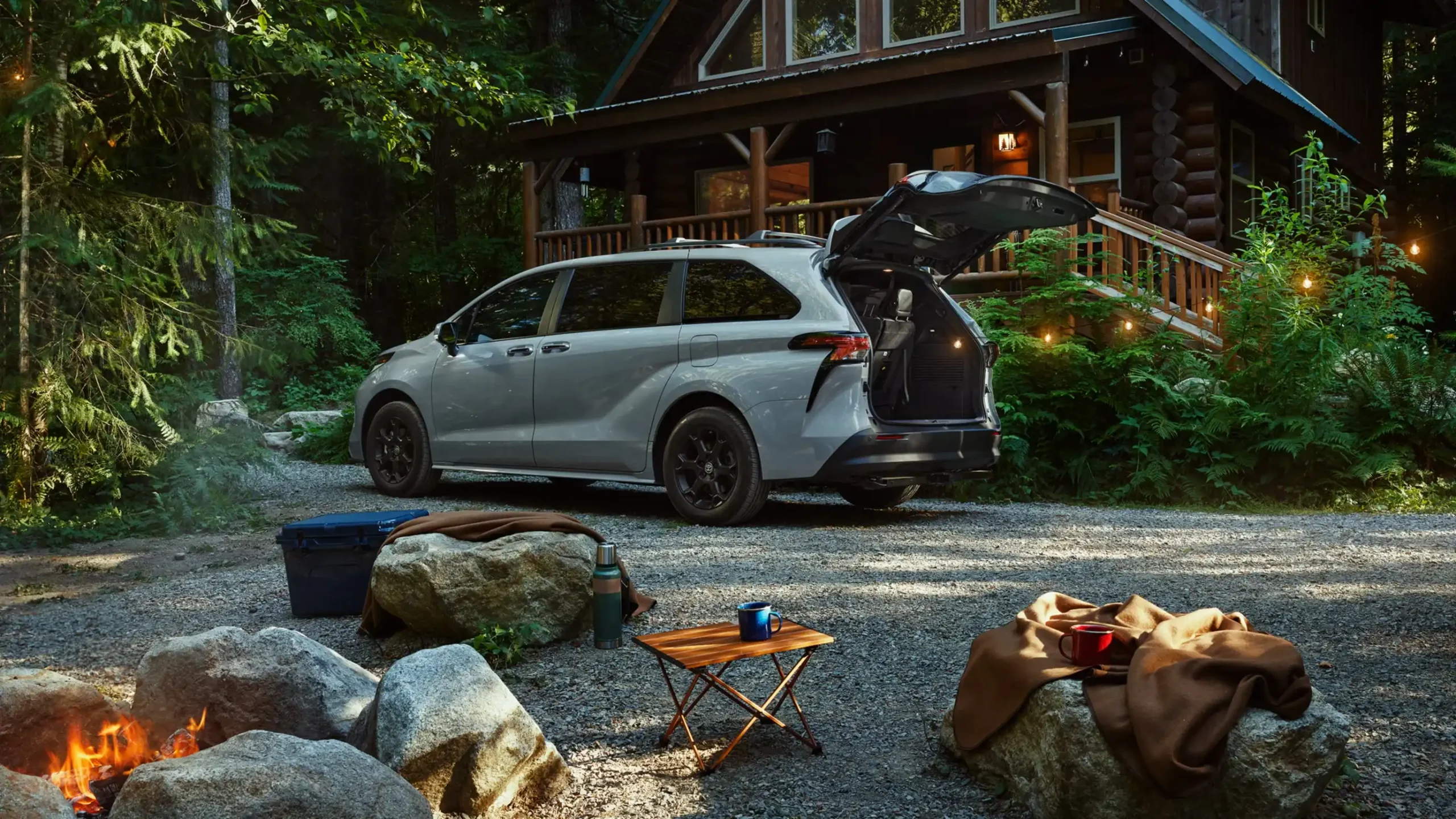
The 2026 Toyota Sienna AWD is a strong family choice for Durham because it combines a hybrid-only powertrain, available all-wheel drive, up to 36 combined EPA-estimated MPG, sliding doors, three rows, flexible cargo space, and family-friendly convenience. At Mark Jacobson Toyota, we recommend it for families who want SUV-like confidence with minivan access and hybrid efficiency. For a Cary family with two kids, sports bags, a stroller, and regular RDU airport trips, Sienna XLE AWD can make daily loading, passenger access, and fuel planning easier.
Sienna is different from many family vehicles because every 2026 model uses hybrid power. That means families do not need to choose between a gas minivan and a hybrid minivan. The choice becomes which trim, seating setup, and drivetrain fit the household. Available AWD adds confidence for rainy Triangle mornings, while sliding doors and a flexible cabin make school pickup, child-seat loading, grandparent access, and road-trip packing feel more natural.
This guide explains hybrid power, MPG, available AWD, seating, cargo, sliding doors, local family use cases, trim recommendations, and ownership support. We will also compare Sienna with three-row SUVs so Durham, Raleigh, Chapel Hill, Cary, and Apex families can decide whether a hybrid minivan or SUV-shaped family vehicle fits better.
View Toyota Sienna DetailsDefinition: The 2026 Toyota Sienna AWD is a hybrid minivan with available all-wheel drive, three-row seating, sliding doors, and flexible cargo space. It is designed for families that need efficient daily transportation and easier passenger access. For drivers in Durham, Raleigh, Chapel Hill, Cary, and Apex, it supports school runs, road trips, and family travel.
Table of Contents
- Hybrid-Only Powertrain, MPG, and AWD Confidence
- Seating, Cargo, Sliding Doors, and Daily Convenience
- Sienna Trims We Recommend for Triangle Families
- Family and Lifestyle Fit: Why Sienna Can Beat an SUV for Daily Family Life
- Local Driving Insight: How Sienna Fits RDU Trips, College Move-In, and Triangle Weekends
- Key Takeaways
- 2026 Toyota Sienna AWD Durham Family FAQ
Hybrid-Only Powertrain, MPG, and AWD Confidence
The 2026 Sienna gives families hybrid efficiency as standard, available AWD confidence, and enough power for daily family driving without requiring a plug-in routine.
245 Net Combined Horsepower, Hybrid MPG, and Why Every Sienna Is Electrified
The 2026 Sienna uses a hybrid system that Toyota rates at 245 net combined horsepower. Toyota also lists an EPA-estimated combined rating of up to 36 MPG, which is a major reason families compare Sienna before choosing a three-row SUV. For Durham parents who drive school routes, work commutes, grocery runs, and weekend activities, that efficiency can matter every week.
The 2026 Toyota Sienna combines 245 net combined horsepower with up to 36 combined EPA-estimated MPG, making it a practical hybrid minivan for families that need three rows and lower fuel use. We recommend it for Durham parents who want family space without switching to a plug-in vehicle. For a parent commuting around Durham with kids, bags, and daily errands, Sienna makes hybrid efficiency part of the normal routine.
Hybrid-only also simplifies the lineup. Families do not have to ask whether the hybrid version is worth it because every Sienna uses the hybrid system. That lets shoppers focus on trim, AWD, seating, technology, and budget. We like that structure because it makes the family decision clearer.
- If your family wants strong MPG without charging, we recommend starting with Sienna.
- If you need three rows and easier child-seat access, we recommend comparing Sienna before a three-row SUV.
- If you drive rainy Triangle roads often, we recommend considering available AWD.
- If road trips are part of your routine, we recommend comparing XLE, Limited, and Platinum comfort features.
| Family Value Factor | 2026 Toyota Sienna | Why It Matters | Best For |
|---|---|---|---|
| Powertrain | Hybrid system standard | No need to choose between gas and hybrid versions | Families wanting simple hybrid shopping |
| Horsepower | 245 net combined hp | Supports daily family driving and highway merging | Durham and Raleigh family commuters |
| Fuel economy | Up to 36 combined EPA-estimated MPG | Helps reduce fuel stops for school, work, and weekend routes | Families with repeated weekly mileage |
| AWD availability | Available all-wheel drive | Adds confidence for rain and loaded family travel | Cary and Apex households |
| Charging need | No plug-in charging required | Hybrid savings fit a normal family routine | Busy parents who do not want a charging schedule |
| Ideal Use Case | Hybrid family minivan | Combines efficiency, access, seating, and cargo flexibility | Families comparing minivans and SUVs |
Based on Toyota official website.
Check Sienna AvailabilityAvailable AWD for Triangle Rain, Hills, and Loaded Family Travel
Available AWD is one of Sienna’s biggest advantages for Triangle families. Durham, Cary, Apex, Raleigh, and Chapel Hill drivers know that heavy rain can change a normal commute quickly. AWD can be especially useful when the vehicle is loaded with passengers, backpacks, sports equipment, strollers, luggage, or weekend gear.
For an Apex family that drives in rainy conditions and often carries extra cargo, we recommend comparing Sienna AWD configurations because the added traction confidence can be worth the step up. For families that stay mostly on flat paved roads and want the simplest efficiency setup, front-wheel drive may still be the right choice. The decision should follow the roads, parking, and travel patterns your family uses most.
Our sales team walks families through this during test drives because AWD is not only a spec. It is a confidence feature. When a family regularly drives to RDU, Chapel Hill, school events, and weekend activities, that confidence can matter more than it looks on paper.
Why Sienna Works for Family Fuel Savings Without Plug-In Charging
Sienna works for many families because it brings hybrid efficiency without asking anyone to plug in. Parents already manage school schedules, work, groceries, sports, appointments, and family travel. Adding a charging routine may not fit every household. Sienna avoids that issue because the hybrid system works automatically.
For a Durham parent commuter, that makes the ownership experience simple. The vehicle uses regular refueling habits, while the hybrid system helps with fuel economy in daily driving. Compared with a plug-in hybrid, Sienna does not depend on home charging access, apartment parking, or public charging availability.
What we see here in Durham is that many family shoppers want electrified efficiency but do not want the planning that can come with a plug-in vehicle. Sienna fills that space well. It gives families the access and room of a minivan with hybrid efficiency built into every trim.
Ask About Sienna AWDSeating, Cargo, Sliding Doors, and Daily Convenience
Sienna’s biggest family advantage is not only fuel economy; it is how sliding doors, three-row seating, and flexible cargo space make daily loading easier.
Minivan Practicality vs Three-Row SUV Family-Use Comparison
Many families start by comparing minivans and three-row SUVs. SUVs can be great choices, especially Grand Highlander, Highlander, Sequoia, and RAV4 for different household needs. Sienna is different because it is built around passenger access. Sliding doors, a wide cabin path, and easy loading can matter more than SUV styling when a parent is handling car seats, grocery bags, sports gear, and crowded parking lots.
We recommend Sienna for families that load people and gear every day. We recommend Grand Highlander or Highlander when a family wants SUV shape, available towing, or a more traditional crossover driving feel. For child-seat use, school pickup, and grandparent access, Sienna often feels easier because the doors and cabin layout are doing more of the work.
| Family Need | 2026 Toyota Sienna | Three-Row Toyota SUV | Best For |
|---|---|---|---|
| Child-seat loading | Sliding doors and lower step-in access | Swing-out doors and SUV ride height | Sienna for frequent car-seat use |
| School pickup | Easy passenger entry in tight lanes | Strong visibility and SUV feel | Sienna for busy pickup lines |
| Cargo flexibility | Family-focused cargo loading and Split & Stow 3rd Row | Varies by SUV size and seating position | Sienna for strollers and gear |
| Fuel efficiency | Hybrid power standard | Hybrid availability varies by model | Sienna for standard hybrid efficiency |
| Weather confidence | Available AWD | Available AWD or 4WD depending on model | Both can fit Triangle rain needs |
| Ideal Use Case | Family with kids, strollers, sports bags, and frequent passenger loading | Family wanting SUV style, ride height, or model-specific capability | Choose based on access versus SUV personality |
Based on Toyota official website.
The key difference between Sienna and a three-row SUV is daily access. We recommend Sienna for families who regularly load kids, grandparents, car seats, strollers, sports bags, and luggage because the sliding doors and minivan cabin reduce everyday friction. We recommend an SUV when the family values SUV stance, towing choices, or a more rugged shape more than loading ease.
Schedule a Sienna Test DriveCary, Apex, RDU, and College Move-In Use Cases
Sienna makes the most sense when a family’s daily routine is busy and repetitive. Our customers with children often tell us that convenience matters more over time than they expected. Sliding doors, easy access to the second row, flexible third-row use, and cargo loading all become part of the ownership experience.
- If you are a Cary family with two kids, sports bags, and regular RDU trips, we recommend Sienna XLE AWD because it balances access, comfort, and traction confidence.
- If you are an Apex weekend family carrying coolers, folding chairs, and sports gear, we recommend Sienna Woodland Edition or another AWD configuration because extra confidence and cargo flexibility matter.
- If you are a Chapel Hill family with grandparents riding often, we recommend Limited or Platinum because second-row comfort and convenience features become more important.
- If you are moving a student into Duke, UNC, or NC State, we recommend checking Sienna cargo flexibility because the cabin can handle people and packed gear more easily than many shoppers expect.
For families asking which Toyota works best for RDU trips, school activities, and college move-in, Sienna is one of our strongest recommendations. It keeps the loading process easier, gives passengers real three-row comfort, and uses hybrid power to support repeated family mileage. The more often your family loads people and cargo together, the more Sienna’s design makes sense.
Visit Us to Compare Sienna and Toyota SUVs
If you are deciding between Sienna and a Toyota SUV, we recommend visiting our Durham showroom so we can test the daily-family details with you in person. Bring the car seats, stroller, sports bags, or luggage you use most often so we can help you compare sliding-door access, second-row comfort, third-row use, and cargo loading. Our team can also help you review Sienna AWD availability, current vehicle options, and trim differences through https://www.markjacobsontoyota.com/searchnew.aspx before you choose. Families from Durham, Raleigh, Chapel Hill, Cary, and Apex can call us at 919-493-5599 or schedule a visit around school, work, or weekend timing. We want the test drive to answer the practical questions that matter after the first week of ownership.
Sienna Trims We Recommend for Triangle Families
The right Sienna trim depends on how often your family uses AWD, how much comfort you want, and whether daily access or premium travel features matter more.
LE, XLE, Woodland Edition, Limited, and Platinum Family Recommendations
Sienna trims each solve a different family need. LE is the practical starting point for families that want the Sienna concept without moving into higher equipment levels. XLE is often the trim we recommend first because it adds comfort and convenience while keeping the family value clear. Woodland Edition is a strong fit for drivers who want a more adventure-oriented Sienna with standard AWD. Limited and Platinum are better for families that want premium comfort, technology, and long-distance convenience.
For Durham and Raleigh families, the best trim often depends on daily loading and trip frequency. For Cary parents with school, sports, and RDU airport runs, XLE AWD is a very strong place to start. For Apex families that drive on rainy roads and head out for weekend activities, Woodland Edition deserves a close look. For Chapel Hill families carrying grandparents or college students on longer trips, Limited and Platinum can make the cabin feel more comfortable.
| Sienna Trim | Family Personality | Local Use Case | Best For |
|---|---|---|---|
| LE | Practical family starting point | Durham family entering minivan ownership | Families wanting core Sienna value |
| XLE | Comfort and convenience balance | Cary family with school, sports, and errands | Many daily family routines |
| Woodland Edition | Adventure-minded Sienna with standard AWD | Apex family with weekend travel and rainy-road needs | Families wanting AWD confidence and outdoor personality |
| Limited | Premium comfort family trim | Chapel Hill family carrying grandparents or older kids | Longer drives and comfort-focused households |
| Platinum | Top comfort and technology expression | Raleigh or Durham family wanting maximum Sienna features | Premium minivan shoppers |
| Ideal Use Case | Trim matched to daily family routine | Triangle household comparing access, comfort, AWD, and budget | Families choosing by real weekly needs |
Based on Toyota official website.
For Triangle families, we recommend starting with XLE if you want the strongest everyday balance. We recommend Woodland Edition if standard AWD and adventure-friendly character matter. We recommend Limited or Platinum if your family takes longer trips, carries adults often, or wants a more premium cabin. The best Sienna trim is the one that fits your loading routine, not just the longest feature list.
Get Pre-Approved for SiennaCompare Sienna Trims With Our Team
If you are ready to compare Sienna trims, we can help you look at current vehicle availability, trade value, finance options, and ToyotaCare support in one visit. Our team works with families from Durham, Raleigh, Chapel Hill, Cary, and Apex who want clear answers about seating, sliding doors, cargo space, AWD, and hybrid ownership. We can also help you compare Sienna with Highlander, Grand Highlander, RAV4, and Sequoia if you are still choosing between a minivan and SUV. Our Mark Says Yes! approach keeps the conversation practical, friendly, and focused on your family’s actual routine. Call us at 919-493-5599 or visit https://www.markjacobsontoyota.com/contactus.aspx so we can help you choose the Sienna configuration that fits your household.
Family and Lifestyle Fit: Why Sienna Can Beat an SUV for Daily Family Life
Sienna can beat an SUV for daily family life when access, child-seat loading, passenger comfort, and cargo practicality matter more than SUV styling.
The reason families keep coming back to Sienna is simple: it makes daily access easier. A Raleigh parent loading a child seat in a tight pickup lane may feel the difference immediately. Sliding doors reduce door-swing stress, and the lower step-in height can help kids, grandparents, and parents moving quickly through busy routines.
SUVs still make sense for many households, but we recommend Sienna when the family’s most repeated task is moving people in and out of the vehicle. A three-row SUV may look more rugged, but a minivan often wins the practical test when the family deals with backpacks, car seats, strollers, sports bags, groceries, and grandparents.
For a Chapel Hill family with grandparents riding often, Limited or Platinum can make passenger comfort a major advantage. For a Durham parent with two young kids, XLE may make the biggest difference because the doors, seating, and cabin layout reduce everyday effort. That practical ease is the reason Sienna remains one of the smartest family vehicles we recommend.
Local Driving Insight: How Sienna Fits RDU Trips, College Move-In, and Triangle Weekends
Sienna fits Triangle family life because it can handle daily school runs, RDU luggage, college move-in gear, and weekend mileage without asking families to give up hybrid efficiency.
Triangle families rarely use a vehicle for just one job. A single week can include school pickup in Durham, work in Raleigh, groceries in Cary, soccer in Apex, and a weekend airport run to RDU. Sienna is built for that kind of mixed routine because the cabin can carry people and gear while the hybrid system keeps fuel use reasonable for the size.
College move-in is another Sienna strength. Families helping a student move into Duke, UNC, or NC State often need seats and cargo flexibility in the same trip. Sienna’s Split & Stow 3rd Row and wide family-focused cabin help make that kind of packing more manageable.
- If your family makes regular RDU trips, we recommend Sienna for luggage access and passenger comfort.
- If you help with Duke, UNC, or NC State move-in, we recommend checking Sienna cargo flexibility before choosing an SUV.
- If weekends include sports, coolers, chairs, or pets, we recommend XLE or Woodland Edition based on AWD needs.
- If road trips are frequent, we recommend comparing Limited and Platinum for added cabin comfort.
For families that use one vehicle for school, travel, errands, and weekend plans, Sienna gives the kind of flexibility that becomes more valuable over time.
Key Takeaways
- The 2026 Sienna uses a standard hybrid powertrain with 245 net combined horsepower.
- Sienna offers available AWD and up to 36 combined EPA-estimated MPG.
- XLE is a strong everyday family trim for many Durham and Cary households.
- Woodland Edition fits families that want standard AWD and weekend versatility.
- Sienna is strongest when sliding doors, access, and cargo loading matter every day.
2026 Toyota Sienna AWD Durham Family FAQ
Is the 2026 Toyota Sienna AWD good for Durham families?
The 2026 Toyota Sienna AWD is a strong choice for Durham families because it combines hybrid efficiency, available all-wheel drive, three-row seating, sliding doors, and flexible cargo space. We recommend it for parents who need easier child-seat loading, school pickup convenience, and family-trip comfort. For a Cary family with kids, strollers, sports bags, and RDU airport runs, Sienna XLE AWD can make daily access and travel planning easier than many SUV-shaped alternatives.
What MPG does the 2026 Toyota Sienna get?
Toyota lists the 2026 Sienna with an EPA-estimated combined rating of up to 36 MPG. That rating matters because every Sienna uses a hybrid powertrain, so families get electrified efficiency without plugging in. We recommend Sienna for Durham and Raleigh parents who want three-row practicality and fewer fuel stops during school, work, grocery, and weekend routines. Exact MPG can vary by trim, drivetrain, driving conditions, and how the vehicle is loaded.
Which 2026 Sienna trim is best for families?
We recommend Sienna XLE for many families because it balances comfort, convenience, and value well. We recommend Woodland Edition for Apex or Cary families that want standard AWD and a more adventure-minded personality. Limited and Platinum are better for families that want more premium comfort for longer trips, grandparents, or older kids. LE is a good starting point when the main goal is core Sienna practicality at a lower trim level.
Is Sienna better than a three-row SUV for family use?
Sienna can be better than a three-row SUV when sliding doors, child-seat loading, lower step-in access, and cargo flexibility matter most. We recommend Sienna for families that regularly load kids, grandparents, strollers, sports gear, and luggage. We recommend Highlander or Grand Highlander when a family wants SUV shape, ride height, or different capability priorities. The better choice depends on whether daily access or SUV personality matters more.
Related Articles
Keep reading more Toyota family guides, hybrid comparisons, and ownership tips from our Durham team.
SUV Comparison
2026 Toyota Highlander vs Grand Highlander: Which Toyota SUV Fits Your Family?
Compare space, MPG, trims, towing, and family fit for two Toyota three-row SUVs at Mark Jacobson Toyota.
Hybrid Commute
2026 Toyota Camry Hybrid MPG and Commute Guide for RTP Drivers
See how the all-hybrid Camry fits RTP commutes with MPG, comfort, AWD availability, Toyota Safety Sense, and ToyotaCare.
Buying Guide
Toyota Car Buying Checklist for Triangle College Graduates
Prepare documents, budget, rebate basics, model choices, and finance steps before buying a first Toyota after graduation.
Service Guide
Toyota A/C Service & Repair Guide for Durham Summer Driving
Understand weak cooling, odors, airflow concerns, cabin filter checks, and summer service timing for Toyota owners.
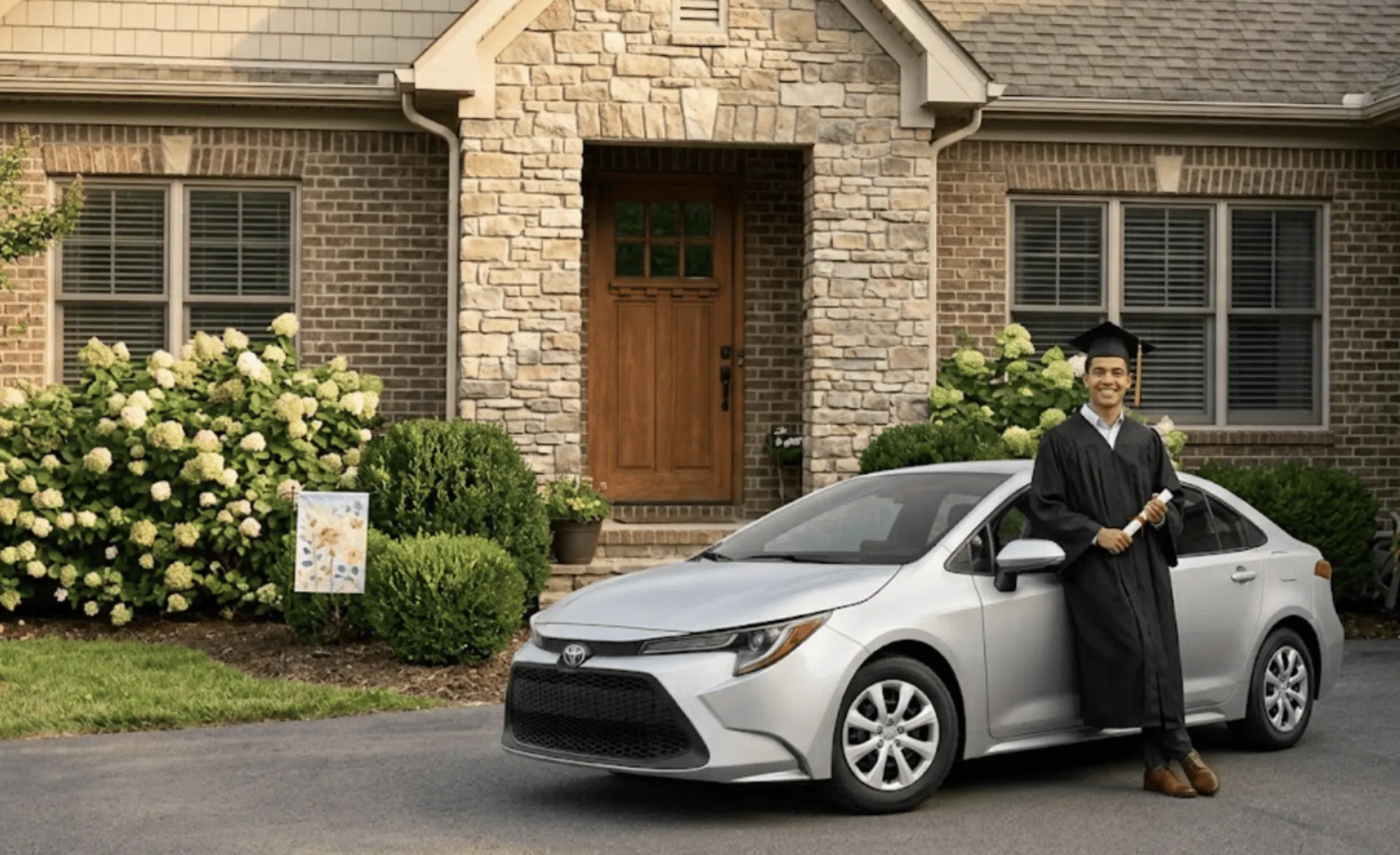
Triangle college graduates should bring proof of graduation or eligible enrollment, proof of current employment, proof of residence, driver’s license, insurance information, budget details, and any trade-in information before shopping for a Toyota. At Mark Jacobson Toyota, we recommend preparing those items before the first visit so our finance team can help you review vehicle options, available programs, and monthly-payment expectations with less guesswork. For a Duke graduate starting an RTP job, a Corolla Hybrid or Camry Hybrid can make daily commuting easier because both focus on fuel efficiency, Toyota Safety Sense, and low-stress ownership.
Buying the first vehicle after graduation is not only about choosing a model. It is also about building a practical ownership plan around employment, credit approval, insurance, parking, commuting, and service timing. A UNC graduate moving to a Durham apartment may need a compact Toyota that parks easily. An NC State graduate commuting from Raleigh may care most about pre-approval and a predictable payment. A parent helping from Chapel Hill may want strong safety technology and a clear checklist before visiting.
This guide walks through the documents we recommend bringing, how the Toyota College Graduate Rebate fits the buying process, which Toyota models make sense for first commutes and first budgets, and how graduates and parents can plan together without overbuying.
View College Grad ProgramDefinition: A Toyota college grad car buying guide is a checklist that helps recent graduates prepare documents, budget, financing questions, model choices, and rebate eligibility before visiting a dealership. For drivers in Durham, Raleigh, Chapel Hill, Cary, and Apex, it supports first-job commuting and early ownership planning.
Table of Contents
- What Recent Graduates Should Bring to the Dealership
- How the Toyota College Graduate Rebate Fits the Buying Process
- Toyota Models That Fit First Commutes and First Budgets
- Ownership Cost Analysis: How to Build a First-Year Toyota Budget After Graduation
- Family and Lifestyle Fit: How Parents and Graduates Can Choose Together Without Overbuying
- Key Takeaways
- Toyota College Grad Car Buying Guide Triangle NC FAQ
What Recent Graduates Should Bring to the Dealership
Recent graduates have a smoother Toyota buying visit when they bring proof of school status, employment details, residence information, insurance planning, and a realistic budget before choosing a vehicle.
Proof of Graduation, Employment, Residence, and Insurance
We recommend recent graduates prepare the paperwork before falling in love with a vehicle. Toyota’s College Rebate guidance says qualified shoppers must present proof of graduation within the previous two years from purchase date or current enrollment in an eligible undergraduate or graduate program, plus proof of current employment. Program details can vary by region, finance source, and current offer, so we review eligibility with each shopper before applying any program expectation to the numbers.
For a UNC graduate moving into a Durham apartment, we recommend bringing proof of residence, insurance information, driver’s license, and employment documentation to the appointment. That helps our finance team understand where the vehicle will be registered, how the ownership plan should be built, and whether the shopper is ready to move from browsing to numbers. It also gives parents a clearer role if they are helping compare payment, insurance, or down payment options.
Graduates should also think about insurance before choosing a model. A Corolla, Corolla Hybrid, Prius, Camry Hybrid, RAV4, or Corolla Cross may each create a different insurance and payment picture. We can help compare the vehicle side of the decision, while the graduate confirms insurance details with their provider.
- Bring proof of graduation or eligible enrollment.
- Bring proof of current employment or accepted employment details when applicable.
- Bring driver’s license, residence information, and insurance planning details.
- Bring trade-in information if a current vehicle will be part of the purchase.
- Bring a monthly payment target and down payment comfort range.
| Item to Bring | Why It Matters | Example for Triangle Graduates | Best For |
|---|---|---|---|
| Proof of graduation or eligible enrollment | Helps verify college program eligibility | Duke, UNC, NC State, NCCU, or graduate-program documentation | Recent graduates reviewing rebate basics |
| Proof of employment | Supports finance review and program requirements | RTP job offer, current pay information, or employment confirmation | Graduates starting first full-time jobs |
| Proof of residence | Helps with registration and ownership planning | Durham apartment, Raleigh address, or Chapel Hill residence | Graduates moving after school |
| Insurance information | Needed before completing vehicle ownership | Policy quote or provider contact details | First-time buyers and parent-assisted purchases |
| Budget and down payment target | Helps narrow the model and trim search | Monthly payment range based on first-job income | Graduates planning a sustainable purchase |
| Trade-in details | Can affect the final purchase structure | Older student vehicle or family vehicle being replaced | Shoppers lowering amount financed |
Based on Toyota official website.
Start Finance Pre-ApprovalBudget, Monthly Payment, Trade-In, and Down Payment Information
A recent graduate’s best Toyota choice is usually the one that fits the first year after school, not only the excitement of delivery day. We recommend setting a payment range before comparing trims. That number should account for insurance, fuel, parking, student loan timing, rent, moving costs, and the kind of commute the graduate will drive each week.
For an NC State graduate commuting from Raleigh to a new job, pre-approval can make the conversation more productive because it helps define the purchase range before the shopper compares Corolla Hybrid, Camry Hybrid, Prius, or RAV4. A trade-in can also change the picture if the graduate is replacing an older car from school. We can help review trade value, but the buyer should bring the title or payoff information when available.
Our finance team also helps graduates understand that credit approval, current offers, and program eligibility are connected but not identical. A rebate program may help the deal, but the full purchase still depends on lender approval, vehicle choice, term, down payment, and current finance conditions.
Parent Co-Planning, Credit History, and First-Car Appointment Expectations
Many graduate purchases include a parent or family member in the planning process. We welcome that because a first post-college vehicle should be clear, practical, and comfortable for everyone involved. A parent helping a Chapel Hill graduate may care about safety features, ToyotaCare, long-term reliability, and whether the monthly payment leaves enough room for rent and early-career expenses.
We recommend graduates and parents agree on three items before visiting: budget range, vehicle size, and must-have features. Toyota Safety Sense can be an important part of that conversation because current Toyota models offer driver-assistance technology that supports busy commuting around Durham, Raleigh, Chapel Hill, Cary, and Apex. ToyotaCare can also help new owners start with scheduled maintenance support.
For first-time buyers with limited credit history, we recommend starting the conversation early rather than guessing. Our team can review finance application steps, explain what information may be needed, and help compare new and used Toyota options without making the appointment feel rushed.
Value a Graduate Trade-InHow the Toyota College Graduate Rebate Fits the Buying Process
The Toyota College Graduate Rebate can support a purchase or lease, but graduates should treat it as one part of a complete buying plan that includes eligibility, credit approval, model choice, and current offer review.
College Graduate Rebate Eligibility and Buying-Step Comparison
The Toyota College Graduate Rebate is helpful, but it should not be the only item driving the decision. Toyota’s official guidance says shoppers must present qualifying school documentation and proof of current employment. Regional program details, lender requirements, and offer timing can change, so we recommend confirming the current program with our finance team before choosing a Toyota based on a rebate assumption.
We also recommend thinking about the rebate as a step in the buying process, not a shortcut around the rest of the process. Graduates still need to choose a model, review payment options, complete credit approval, prepare insurance, and understand ownership costs. That structure helps the appointment stay focused.
| Buying Step | What the Graduate Prepares | How We Help | Best For |
|---|---|---|---|
| Eligibility review | Proof of graduation or eligible enrollment and employment | We review current program basics and required documentation | Graduates checking rebate fit |
| Budget planning | Payment target, down payment, insurance estimate, and living costs | We help narrow the vehicle range | First-job buyers building a realistic plan |
| Model choice | Commute, parking, passenger, and cargo needs | We compare Corolla, Camry, Prius, RAV4, and Corolla Cross | Duke, UNC, and NC State graduates |
| Finance application | Personal, employment, and residence information | We support pre-approval and credit review steps | Graduates with limited or new credit history |
| Trade-in review | Current vehicle details, title, payoff, and condition | We can appraise the trade and explain how it affects the deal | Graduates replacing a school vehicle |
| Ideal Use Case | Prepared graduate ready to compare numbers | We connect eligibility, vehicle choice, and payment planning | Triangle shoppers ready for a practical first Toyota |
Based on Toyota official website.
The Toyota College Graduate Rebate fits best when the shopper already has documents, employment information, and a realistic model range ready. We recommend confirming eligibility first, then building the purchase around budget, credit approval, insurance, and the Toyota that fits the graduate’s commute. That order keeps the rebate helpful without letting it distract from the larger ownership decision.
Review New Toyota OffersDuke, UNC, NC State, and Triangle-Area Scenarios
Triangle graduates often have very different first-car needs. A Duke graduate starting an RTP job may want fuel efficiency and comfort. A UNC graduate moving to Durham may want easy parking and lower ownership complexity. An NC State graduate commuting from Raleigh may want pre-approval first because payment predictability matters before choosing a trim.
- If you are a Duke graduate starting an RTP job, we recommend Corolla Hybrid or Camry Hybrid because fuel economy and commute comfort matter every week.
- If you are a UNC graduate moving into a Durham apartment, we recommend Corolla, Prius, or Corolla Cross because parking ease and ownership simplicity can matter more than size.
- If you are an NC State graduate commuting from Raleigh, we recommend starting with finance pre-approval because a clear payment range makes model shopping easier.
- If you are a parent helping a Chapel Hill graduate, we recommend focusing on Toyota Safety Sense, ToyotaCare, insurance cost, and monthly budget before trim upgrades.
For Triangle graduates, the best Toyota choice starts with the first real routine after college. We recommend matching the vehicle to job location, parking, fuel cost, insurance, and budget before choosing features. A Corolla Hybrid can be the right fit for a cost-conscious first commute, while Camry Hybrid can make sense for a graduate who wants more midsize comfort for daily RTP driving.
Start the Graduate Buying Process With Us
If you are a recent graduate or a parent helping one, we recommend starting with our finance pre-approval path at https://www.markjacobsontoyota.com/preapproved.aspx before narrowing the vehicle list too far. Our team can review current program basics, talk through the Toyota College Graduate Rebate, and help you compare payment expectations across new Toyota models. We can also help you check current vehicle availability, trade-in value, and active offers in one conversation. If you are coming from Duke, UNC, NC State, NCCU, Raleigh, Chapel Hill, Cary, or Apex, we can connect your route and budget to a practical Toyota recommendation. Call us at 919-493-5599 or visit our Durham showroom, and we will help you prepare the buying steps in the right order.
Toyota Models That Fit First Commutes and First Budgets
The best Toyota for a recent graduate depends on first-job commute length, parking situation, insurance comfort, cargo needs, and how much room the buyer wants to keep in the monthly budget.
Corolla, Corolla Hybrid, Camry Hybrid, Prius, RAV4, and Corolla Cross Use Cases
We recommend starting with the daily routine before choosing a model. A small sedan may be perfect for apartment parking and a short commute. A hybrid sedan may make more sense for an RTP job with repeated weekly mileage. A compact SUV may be better for a graduate who needs cargo room, weekend gear space, or a little more ride height.
For a Cary graduate who wants lower fuel costs and easy ownership, Prius, Corolla Hybrid, and Camry Hybrid should be high on the list. For an Apex graduate carrying weekend gear, work equipment, or a dog, RAV4 or Corolla Cross may fit better. For a Durham graduate who simply wants an efficient, affordable first Toyota, Corolla remains one of the easiest starting points.
| Toyota Model | Graduate Fit | Local Use Case | Best For |
|---|---|---|---|
| Corolla | Simple, efficient compact sedan | Durham apartment parking and first-job commuting | Graduates who want a straightforward first Toyota |
| Corolla Hybrid | Compact size plus hybrid fuel savings | Duke graduate commuting to RTP | Cost-conscious commuters |
| Camry Hybrid | Midsize comfort with strong MPG | Raleigh to RTP highway driving | Graduates wanting more space and comfort |
| Prius | High-efficiency hatchback practicality | Cary buyer balancing fuel savings and cargo flexibility | Hybrid-focused graduates |
| RAV4 | Compact SUV space and versatility | Apex graduate with weekend gear or outdoor plans | Drivers needing more cargo room |
| Corolla Cross | Small SUV shape with city-friendly size | UNC graduate moving between Chapel Hill and Durham | Graduates wanting SUV height without going too large |
Based on Toyota official website.
For Triangle college graduates, Corolla and Corolla Hybrid are often the easiest first choices because they keep the ownership plan simple. Camry Hybrid is better when commute comfort matters. Prius is strong for fuel-focused shoppers who like hatchback flexibility. RAV4 and Corolla Cross make more sense when the graduate needs cargo room, ride height, or weekend versatility.
Schedule a Graduate Test DriveCompare Toyota Models for Life After Graduation
If you are still choosing between Corolla, Corolla Hybrid, Camry Hybrid, Prius, RAV4, and Corolla Cross, we recommend scheduling a test drive through https://www.markjacobsontoyota.com/testdrive.aspx so we can compare the models around your actual commute. Our team can help you check seating comfort, cargo space, visibility, Toyota Safety Sense features, and ToyotaCare support before you decide. We serve graduates and families from Durham, Raleigh, Chapel Hill, Cary, Apex, Duke, UNC, NC State, and nearby Triangle communities. Our Mark Says Yes! approach is especially helpful for first-time buyers because we focus on practical steps, not pressure. Call us at 919-493-5599 or visit us on Durham-Chapel Hill Blvd, and we will help you choose a Toyota that fits the first year after graduation.
Ownership Cost Analysis: How to Build a First-Year Toyota Budget After Graduation
A strong first-year Toyota budget should include payment, insurance, fuel, parking, service timing, registration, and a small emergency buffer before trim upgrades are added.
We recommend graduates think beyond the monthly payment because the first year after college often includes moving costs, rent changes, work clothing, student loan timing, and new insurance responsibilities. A Toyota that fits the payment but strains everything else is not the right match. The better plan is to create a full ownership estimate before comparing trims.
For a Cary graduate interested in lower fuel costs, Corolla Hybrid, Camry Hybrid, and Prius can help make the weekly commute more predictable. For a graduate who needs more space for weekend trips, RAV4 or Corolla Cross may be worth the extra budget if the cargo room will be used often. The key is making the upgrade serve a real routine.
We recommend listing monthly costs in one place: payment, insurance, fuel, parking, maintenance, registration, and an emergency cushion. Then compare Toyota models within that range. That approach helps graduates choose a Toyota they can enjoy instead of one that feels too tight after the first few months.
Family and Lifestyle Fit: How Parents and Graduates Can Choose Together Without Overbuying
Parents and graduates make better Toyota decisions when they agree on safety, budget, commute needs, parking, and cargo use before adding premium features.
Parent-assisted car shopping can work really well when everyone agrees on priorities early. We recommend starting with safety, budget, reliability, and commute fit. Toyota Safety Sense and ToyotaCare are useful discussion points because they help parents and graduates talk about driver assistance and early maintenance support in a practical way.
The most common overbuying pattern we see is choosing more vehicle than the graduate actually needs. A larger SUV may feel appealing, but a Corolla Hybrid or Camry Hybrid may fit better if the weekly routine is commuting and apartment parking. On the other hand, an Apex graduate with a dog, outdoor gear, or weekend travel plans may genuinely use the extra flexibility of Corolla Cross or RAV4.
- If the graduate has a short city commute, we recommend Corolla or Prius for easy daily use.
- If the graduate has a longer RTP commute, we recommend Corolla Hybrid or Camry Hybrid for fuel savings.
- If the graduate needs cargo room, we recommend Corolla Cross or RAV4 because the space will be used often.
- If parents are helping, we recommend agreeing on insurance and payment comfort before choosing trim upgrades.
For parents and graduates shopping together, the best Toyota is the one that fits the next two to three years, not only graduation week. A clear plan keeps the purchase practical, flexible, and easier to maintain.
Key Takeaways
- Graduates should bring school, employment, residence, insurance, budget, and trade-in information.
- The Toyota College Graduate Rebate should be confirmed with current eligibility and finance details.
- Corolla and Corolla Hybrid are strong first Toyota options for simple commuting.
- Camry Hybrid fits graduates who want more comfort for RTP driving.
- RAV4 and Corolla Cross make sense when cargo flexibility matters.
Toyota College Grad Car Buying Guide Triangle NC FAQ
What documents should a recent graduate bring to buy a Toyota?
We recommend bringing proof of graduation or eligible enrollment, proof of employment, driver’s license, proof of residence, insurance information, budget details, and trade-in information if a current vehicle is involved. Toyota’s College Rebate guidance includes school-status documentation and proof of current employment, and our finance team can review current program details with you. For a Duke, UNC, or NC State graduate starting a first job, arriving prepared helps us compare vehicles and numbers more clearly.
How does the Toyota College Graduate Rebate work?
The Toyota College Graduate Rebate can support eligible shoppers who meet current school-status, employment, finance, and program requirements. Toyota’s official guidance says shoppers must present proof of graduation within the previous two years from purchase date or eligible current enrollment, plus proof of current employment. We recommend confirming current eligibility with our finance team before building the purchase around the rebate because regional details, lender requirements, and offer timing can change.
Which Toyota is best for a recent college graduate?
The best Toyota for a recent college graduate depends on commute, budget, parking, insurance, and cargo needs. We recommend Corolla or Corolla Hybrid for simple first-job commuting, Camry Hybrid for longer RTP routes, Prius for high-efficiency hatchback flexibility, Corolla Cross for city-friendly SUV height, and RAV4 for graduates who need more cargo room. A Durham graduate with apartment parking may need a different Toyota than an Apex graduate with weekend gear.
Can parents help with the buying process?
Parents can absolutely help with planning, budgeting, model comparison, insurance conversations, and appointment preparation. We recommend parents and graduates agree on budget, safety features, commute needs, and must-have features before visiting. That makes the appointment more productive and helps our team compare practical Toyota choices without pushing the graduate into a vehicle that is larger or more expensive than the routine requires.
Related Articles
Keep reading more Toyota shopping guides, hybrid comparisons, and ownership tips from our Durham team.
Hybrid Commute
2026 Toyota Camry Hybrid MPG and Commute Guide for RTP Drivers
See how the all-hybrid Camry fits RTP commutes with MPG, comfort, AWD availability, Toyota Safety Sense, and ToyotaCare.
Graduate Guide
The Best Toyota Cars for Graduates
Compare Toyota models that fit the transition from college life to first jobs, new commutes, and early ownership planning.
Hybrid Guide
2026 Toyota Prius vs Prius Plug-in Hybrid: Which Saves You More in Durham?
Compare Toyota hybrid and plug-in hybrid choices for charging access, MPG, commuter routine, and ownership fit.
Service Guide
Toyota A/C Service & Repair Guide for Durham Summer Driving
Understand weak cooling, odors, airflow concerns, cabin filter checks, and summer service timing for Toyota owners.
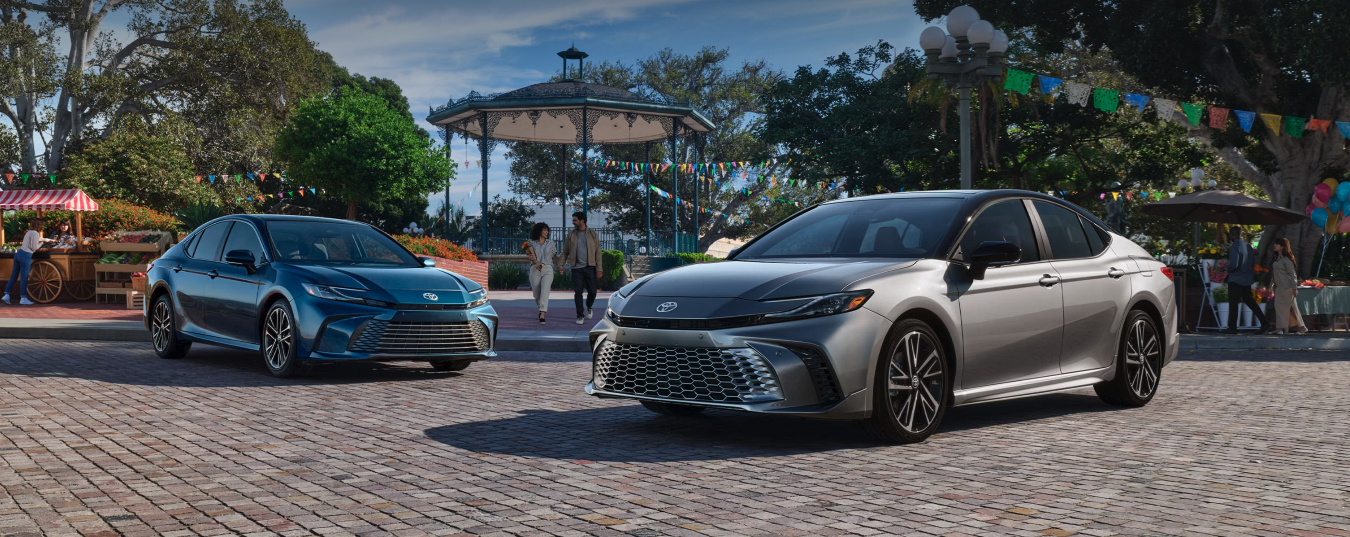
The 2026 Toyota Camry Hybrid is a strong fit for RTP commuters because it combines an all-hybrid powertrain, up to 51 combined EPA-estimated MPG, comfortable midsize sedan space, Toyota Safety Sense 3.0, and available Electronic On-Demand All-Wheel Drive for Triangle rain. At Mark Jacobson Toyota, we recommend it for Durham professionals who want fewer fuel stops on I-40, a quieter daily commute, and sedan comfort without moving into an SUV. For a driver commuting from Durham to Research Triangle Park five days a week, Camry Hybrid efficiency can make every workday feel easier.
The 2026 Camry is different from older Camry lineups because every trim now uses hybrid power. That matters for commuters because shoppers no longer need to choose between a gas Camry and a Camry Hybrid. Instead, the decision becomes which hybrid trim, drivetrain, and comfort level fits the route. LE gives the strongest efficiency focus, SE and Nightshade add sportier design, and XLE or XSE add more premium comfort for longer drive weeks.
We built this guide for RTP professionals, Raleigh commuters, Chapel Hill faculty, Cary hybrid shoppers, and Apex drivers who want a practical sedan that can handle work traffic, weekend errands, and long-term service planning. You will see how MPG, AWD, safety technology, ToyotaCare, trim choice, and commute mileage should shape the way you choose your next Camry.
View 2026 Camry DetailsDefinition: The 2026 Toyota Camry Hybrid is a midsize sedan with an all-hybrid powertrain, strong fuel economy, and available all-wheel drive. It is designed for drivers who want daily comfort and efficient commuting. For drivers in Durham, RTP, Raleigh, Chapel Hill, Cary, and Apex, it supports long weekday routes and Triangle traffic.
Table of Contents
- Why the 2026 Camry Hybrid Fits I-40 and RTP Commutes
- AWD Availability, Safety Tech, and Driver Assistance
- Ownership Support, ToyotaCare, and Service Planning
- Ownership Cost Analysis: How RTP Commute Patterns Change Camry Hybrid Value
- Local Driving Insight: When AWD Makes Sense for Triangle Rain
- Key Takeaways
- 2026 Toyota Camry Hybrid RTP Commute FAQ
Why the 2026 Camry Hybrid Fits I-40 and RTP Commutes
The 2026 Camry Hybrid fits RTP commuting because it turns every trim into a fuel-efficient sedan with daily comfort, useful power, and Toyota safety technology for long workweeks.
MPG, Fuel Stops, and Daily Driving Comfort
The biggest commuter advantage is fuel economy. Toyota lists the 2026 Camry with an all-hybrid powertrain and up to 51 combined EPA-estimated MPG, while FuelEconomy.gov lists 2026 Camry HEV configurations across front-wheel-drive and all-wheel-drive variants. That matters for RTP drivers because a weekly I-40 commute can quickly turn fuel stops into part of the work routine.
The 2026 Toyota Camry Hybrid delivers up to 51 combined EPA-estimated MPG, which makes it one of the strongest midsize sedan choices for RTP commuting. We recommend the Camry Hybrid LE for Durham professionals who want the highest efficiency focus and a calm daily drive. For shoppers who want more design personality while keeping hybrid efficiency, we recommend comparing SE and Nightshade next.
For a Durham professional driving to Research Triangle Park five days a week, fewer fuel stops are only one part of the value. The Camry also gives a lower seating position than most SUVs, smooth hybrid power delivery, and a cabin that feels right for longer workweeks. That mix is why many commuters still prefer a midsize sedan over a compact crossover.
- If your top priority is MPG, we recommend starting with Camry Hybrid LE.
- If you want sportier styling without giving up hybrid efficiency, we recommend Camry Hybrid SE or Nightshade.
- If you spend longer stretches on I-40, we recommend comparing XLE and XSE for added comfort features.
- If Triangle rain affects your confidence, we recommend checking available Electronic On-Demand AWD.
| Commute Factor | 2026 Toyota Camry Hybrid Benefit | Why It Matters for RTP Drivers | Best For |
|---|---|---|---|
| Fuel economy | Up to 51 combined EPA-estimated MPG | Helps reduce fuel-stop frequency during weekly commuting | Durham to RTP professionals |
| Powertrain | All-hybrid lineup | Every trim gives hybrid efficiency without a separate powertrain decision | Shoppers who want a simple Camry choice |
| Available power | Up to 232 net combined hp with available AWD | Supports confident merging and passing on I-40 | Commuters who want efficiency and response |
| Drivetrain choice | FWD or available Electronic On-Demand AWD | Lets drivers choose lower-complexity efficiency or added traction confidence | Triangle rain and suburban routes |
| Safety technology | Toyota Safety Sense 3.0 | Supports driver assistance during heavy commute traffic | RTP and Raleigh commuters |
| Ideal Use Case | Efficient midsize hybrid sedan | Balances comfort, MPG, and daily usability | Drivers with repeated weekday routes |
Based on Toyota official website.
Compare Available Camry ModelsHybrid Power Delivery, Regenerative Braking, and Traffic Flow
Hybrid driving feels especially useful in traffic because the system can blend gas and electric power smoothly while the vehicle moves through changing speeds. For Raleigh commuters who spend part of the morning in I-40 congestion, the Camry Hybrid powertrain supports a calmer driving feel than a traditional gas-only sedan. It is not just about the MPG number. It is also about how the vehicle manages low-speed movement, starts, stops, and acceleration.
Regenerative braking is another reason the Camry Hybrid feels natural in commute traffic. The system helps recover energy during deceleration, which pairs well with daily stop-and-go patterns around RTP, NC-147, and downtown Durham. Our sales team explains this during test drives because many shoppers feel the difference before they know the technical reason behind it.
For a Raleigh commuter who wants smoother behavior in traffic without switching to a plug-in vehicle, we recommend the Camry Hybrid because there is no charging routine. You drive, refuel, and let the hybrid system manage the power flow automatically. That simplicity is one of the strongest commuter advantages.
Sedan Size, Parking, Cabin Comfort, and Tech for Long Commute Weeks
The Camry Hybrid also works well because it gives commuters midsize comfort without the bulk of a larger SUV. A Chapel Hill faculty member driving US-15/501 and parking near campus may value the Camry’s lower profile, five-passenger cabin, and available technology because the car feels easy to place and comfortable enough for long weeks. For many Triangle drivers, that balance is more useful than maximum cargo height.
Available features such as a 12.3-inch digital gauge cluster, available Head-Up Display, and Toyota Audio Multimedia can make repeated routes feel more organized. These features matter most for drivers who spend enough time in the car to notice small comfort and information-display differences every day. We recommend XLE or XSE for shoppers who want a more premium commute experience.
What we see here in Durham is that Camry Hybrid shoppers often compare it with Corolla Hybrid, Prius, RAV4 Hybrid, and Crown. Camry sits in the middle as the commuter sedan with more room than compact options, easier daily handling than many SUVs, and a familiar midsize feel that works for both workdays and weekend errands.
AWD Availability, Safety Tech, and Driver Assistance
Available Electronic On-Demand AWD is most useful for Camry Hybrid drivers who want extra traction confidence in Triangle rain without moving away from sedan efficiency.
FWD vs Electronic On-Demand AWD Comparison
The Camry Hybrid decision often starts with front-wheel drive versus available Electronic On-Demand All-Wheel Drive. FWD gives the cleanest efficiency-focused setup for drivers who want maximum MPG and a simpler ownership path. AWD adds traction confidence by using an electric motor to help power the rear wheels when conditions call for it.
We recommend FWD for commuters who drive mostly predictable paved routes and want the highest efficiency focus. We recommend available AWD for Cary and Apex drivers who deal with wet neighborhood roads, early-morning Triangle rain, or hilly routes where added traction confidence feels worthwhile. The decision is not about one drivetrain being better for everyone. It is about matching the drivetrain to the commute.
| Comparison Point | Camry Hybrid FWD | Camry Hybrid Electronic On-Demand AWD | Best For |
|---|---|---|---|
| Primary advantage | Highest efficiency focus | Added traction confidence | Choose based on route and weather confidence |
| MPG priority | Best fit when MPG is the top goal | Still efficient, with some MPG tradeoff by trim | FWD for fuel-focused RTP commuters |
| Rain confidence | Good for normal paved commuting | Stronger fit for wet roads and traction concerns | AWD for Triangle rain and suburban hills |
| Power feel | Up to 225 net combined hp | Up to 232 net combined hp | AWD for shoppers wanting the stronger configuration |
| Ownership simplicity | Simpler drivetrain choice | More hardware and added traction capability | FWD for straightforward commuter value |
| Ideal Use Case | Durham to RTP daily commuter focused on MPG | Cary or Apex driver wanting wet-road confidence | Match drivetrain to daily roads and budget |
Based on Toyota official website.
The best drivetrain for a 2026 Toyota Camry Hybrid depends on how much you value efficiency versus traction confidence. We recommend FWD for RTP commuters who want the strongest MPG focus and mostly drive predictable routes. We recommend Electronic On-Demand AWD for Triangle drivers who want added confidence during rain, especially if they regularly drive through Cary, Apex, Chapel Hill hills, or early-morning wet roads.
Ask About Camry AWDLE, SE, Nightshade, XLE, and XSE Commuter Use Cases
Trim choice should follow the way the car will be used every week. Our customers who drive the Camry Hybrid for commuting often ask whether they should prioritize MPG, style, comfort, or tech. We recommend starting with your route, then matching the trim to what you will notice most often.
- If you are a Durham RTP professional driving I-40 daily, we recommend Camry Hybrid LE because it places efficiency and value first.
- If you are an Apex driver who wants a sportier look without losing hybrid commuting logic, we recommend Camry Hybrid SE or Nightshade because the design feels more expressive while staying practical.
- If you are a Chapel Hill faculty member spending long weeks between campus, Durham, and Raleigh, we recommend XLE because comfort and available tech become more noticeable over time.
- If you are a Cary shopper who wants sportier styling and available premium features, we recommend XSE because it gives the Camry a more upscale and energetic personality.
For most RTP commuters, the Camry Hybrid LE or SE is the strongest starting point because those trims keep the value and efficiency story clear. For drivers who spend more time in the cabin or want a more refined daily feel, XLE and XSE are worth comparing. Nightshade fits shoppers who want a distinctive look without turning the Camry decision into a luxury-sedan purchase.
Visit Us to Compare Camry Hybrid Trims
If you are comparing Camry Hybrid trims, we recommend visiting our Durham showroom so we can help you test drive the configurations that match your commute instead of choosing from specs alone. Our team can walk you through LE, SE, Nightshade, XLE, and XSE, then help you compare FWD and available Electronic On-Demand AWD based on your route, parking, and comfort priorities. We can also help you review current vehicle availability through https://www.markjacobsontoyota.com/searchnew.aspx and talk through payment options before you decide. If you commute to RTP, Raleigh, Chapel Hill, Cary, or Apex, we can help you connect each trim to the way you actually drive every week. Call us at 919-493-5599 or visit us on Durham-Chapel Hill Blvd so we can help you choose the Camry Hybrid that fits your routine.
Ownership Support, ToyotaCare, and Service Planning
RTP commuters should think about Camry Hybrid ownership as a weekly-mileage plan that includes ToyotaCare, tire rotations, inspections, and service timing.
Commute Mileage, Tire Rotations, Hybrid Maintenance, and Service Timing
An RTP commute can add miles quickly. A driver going from Durham to Research Triangle Park five days a week may not feel the mileage day by day, but the service schedule arrives faster than it does for a weekend-only vehicle. That is why we recommend thinking about the Camry Hybrid as both a fuel-saver and a vehicle that deserves consistent maintenance planning.
ToyotaCare gives new Toyota owners a strong starting point because it includes scheduled maintenance for a set time and mileage period, plus roadside assistance. For a high-mileage RTP commuter, that support is useful because tire rotations, inspections, and scheduled service can be planned around work routines instead of handled only when something feels wrong. Our service team helps Camry Hybrid owners keep that schedule clear.
For Durham and Raleigh drivers, service planning should also account for Triangle rain, potholes, I-40 construction zones, and heavy stop-and-go traffic. Tires, brakes, alignment, wiper blades, filters, and hybrid-system confidence all matter when the same route repeats every week. We recommend scheduling early when warning lights appear, ride feel changes, or tire wear starts to look uneven.
| Local Driver Profile | Commute or Ownership Need | Recommended Camry Hybrid Support | Ideal Use Case |
|---|---|---|---|
| Durham RTP commuter | High weekly mileage and fuel savings | Camry Hybrid LE or SE plus ToyotaCare planning | Efficient daily work route |
| Raleigh commuter | Stop-and-go traffic comfort | Hybrid powertrain, Toyota Safety Sense 3.0, scheduled inspections | Traffic-heavy weekday driving |
| Chapel Hill faculty member | Longer routes and campus parking | Camry Hybrid XLE or XSE with comfort and tech features | Premium-feeling commuter sedan |
| Cary hybrid shopper | Wet-road confidence and suburban routes | Available Electronic On-Demand AWD | Rainy Triangle mornings |
| Apex road-trip driver | Commute plus weekend travel | Camry Hybrid SE, XLE, or XSE with service planning | One sedan for workweeks and weekend miles |
| Ideal Use Case | Repeated weekly mileage | Hybrid efficiency plus consistent Toyota service | Drivers who want predictable ownership |
Based on Toyota official website.
For RTP commuters, the best Camry Hybrid ownership plan is to pair high MPG with consistent service timing. We recommend using ToyotaCare, tire rotations, multi-point inspections, and filter checks to keep the car ready for weekly mileage. That approach is especially useful for drivers who rely on one vehicle for work, errands, and weekend travel around the Triangle.
Schedule Camry ServicePlan Camry Hybrid Ownership With Our Team
If you already own a Camry Hybrid or are planning to buy one, we recommend building your service plan with our team from the start. Our service center can help you schedule maintenance through https://www.markjacobsontoyota.com/schedule-service.html, review ToyotaCare timing, and keep tire rotations, inspections, filters, and hybrid-related service questions organized around your commute. We also help shoppers compare Camry Hybrid with Corolla Hybrid, Prius, RAV4 Hybrid, and Crown if they are still deciding which Toyota fits their daily mileage best. Our Mark Says Yes! approach is built around practical guidance for Durham, Raleigh, Chapel Hill, Cary, and Apex drivers. Call us at 919-493-5599, visit our service center, or talk with our sales team so we can help you plan both the purchase and the ownership routine.
Ownership Cost Analysis: How RTP Commute Patterns Change Camry Hybrid Value
Camry Hybrid value becomes stronger when a driver repeats the same commute often enough for fuel savings, comfort, and service planning to matter every week.
A short test drive can show how the Camry Hybrid feels, but the real value appears during repeated weekday routes. An RTP professional who drives from Durham to work five days a week may care about fuel cost, seat comfort, tire wear, cabin quietness, and service timing more than a driver who only takes short weekend trips. That is why we recommend evaluating Camry Hybrid ownership by weekly mileage, not only by monthly payment.
The Camry Hybrid is also useful because it does not ask drivers to add charging to their schedule. Compared with Prius Plug-in Hybrid or other plug-in options, Camry Hybrid keeps the ownership routine simple. You refuel with regular gasoline, follow Toyota service timing, and let the hybrid system manage efficiency automatically.
For a high-mileage RTP commuter, we recommend comparing Camry Hybrid LE, SE, and XLE first because each trim solves a different cost question. LE makes the strongest efficiency case. SE adds a sportier daily feel. XLE adds comfort that can matter more when the car becomes your weekday office between meetings, errands, and family responsibilities.
Local Driving Insight: When AWD Makes Sense for Triangle Rain
AWD makes the most sense for Camry Hybrid drivers who value wet-road confidence more than the absolute highest MPG configuration.
Not every Triangle driver needs AWD, but some shoppers will appreciate the added confidence. Cary and Apex drivers who leave early on wet suburban roads may find available Electronic On-Demand AWD reassuring. Chapel Hill drivers who deal with hills, curves, and rainy mornings may also prefer the added traction support.
We recommend thinking of AWD as a confidence feature rather than a requirement. FWD is still the right choice for many Durham to RTP commuters because it keeps the efficiency story clean. AWD becomes more attractive when weather, road slope, neighborhood routes, or personal comfort make traction support worth the MPG tradeoff.
- If your route is mostly I-40 and paved main roads, we recommend starting with FWD for efficiency.
- If your neighborhood roads get slick during summer rain, we recommend comparing AWD during a test drive.
- If you drive between Chapel Hill and Durham during early mornings, we recommend considering AWD for added confidence.
- If your top priority is the strongest MPG number, we recommend keeping FWD high on the list.
For most RTP commuters, FWD is the clean commuter value. For Triangle drivers who place confidence in rain above maximum MPG, available AWD is worth a closer look.
Key Takeaways
- The 2026 Camry uses an all-hybrid powertrain across the lineup.
- Camry offers up to 51 combined EPA-estimated MPG for efficiency-focused commuters.
- Available Electronic On-Demand AWD adds confidence for Triangle rain and wet roads.
- LE is the cleanest commuter value, while XLE and XSE add more comfort and tech.
- RTP commuters should pair hybrid efficiency with ToyotaCare and consistent service timing.
2026 Toyota Camry Hybrid RTP Commute FAQ
Is the 2026 Toyota Camry Hybrid good for RTP commuting?
The 2026 Toyota Camry Hybrid is a strong fit for RTP commuting because every trim uses hybrid power and Toyota lists up to 51 combined EPA-estimated MPG. We recommend it for Durham professionals who want fewer fuel stops, midsize comfort, Toyota Safety Sense 3.0, and a simple no-charging ownership routine. For a driver using I-40 every weekday, the Camry Hybrid gives the right mix of efficiency, comfort, and familiar sedan handling.
What MPG does the 2026 Toyota Camry Hybrid get?
Toyota lists the 2026 Camry with up to 51 combined EPA-estimated MPG, depending on trim and drivetrain. FuelEconomy.gov also lists multiple 2026 Camry HEV front-wheel-drive and all-wheel-drive configurations, so the exact rating depends on the model selected. We recommend starting with LE if the highest MPG figure is your top priority. If you want sportier design or more comfort, SE, Nightshade, XLE, and XSE may be worth the MPG tradeoff.
Should I choose FWD or AWD for a Camry Hybrid in Durham?
We recommend FWD for most Durham to RTP commuters who want the strongest efficiency focus and mostly drive paved main routes. We recommend available Electronic On-Demand AWD for drivers who want extra traction confidence during Triangle rain, early-morning commutes, or wet neighborhood roads in Cary, Apex, or Chapel Hill. The right choice depends on whether you value maximum MPG or added weather confidence more in your daily routine.
Which Camry Hybrid trim is best for commuters?
We recommend Camry Hybrid LE for commuters who want the clearest fuel-efficiency value. We recommend SE or Nightshade for drivers who want sportier styling while keeping hybrid practicality. We recommend XLE for commuters who want a more comfort-focused cabin, and XSE for shoppers who want a more expressive premium feel. For RTP drivers, the best trim is the one that matches weekly mileage, comfort needs, and budget.
Related Articles
Keep reading more Toyota hybrid guides, commute advice, and ownership tips from our Durham team.
Hybrid Guide
2026 Toyota Prius vs Prius Plug-in Hybrid: Which Saves You More in Durham?
Compare Toyota hybrid and plug-in hybrid choices for charging access, MPG, commuter routine, and ownership fit.
SUV Comparison
2026 Toyota Highlander vs Grand Highlander: Which Toyota SUV Fits Your Family?
See how Toyota three-row SUVs compare for passenger space, cargo room, MPG, towing, and Triangle family routines.
Service Guide
Toyota A/C Service & Repair Guide for Durham Summer Driving
Understand weak cooling, odors, airflow concerns, cabin filter checks, and summer service timing for Toyota owners.
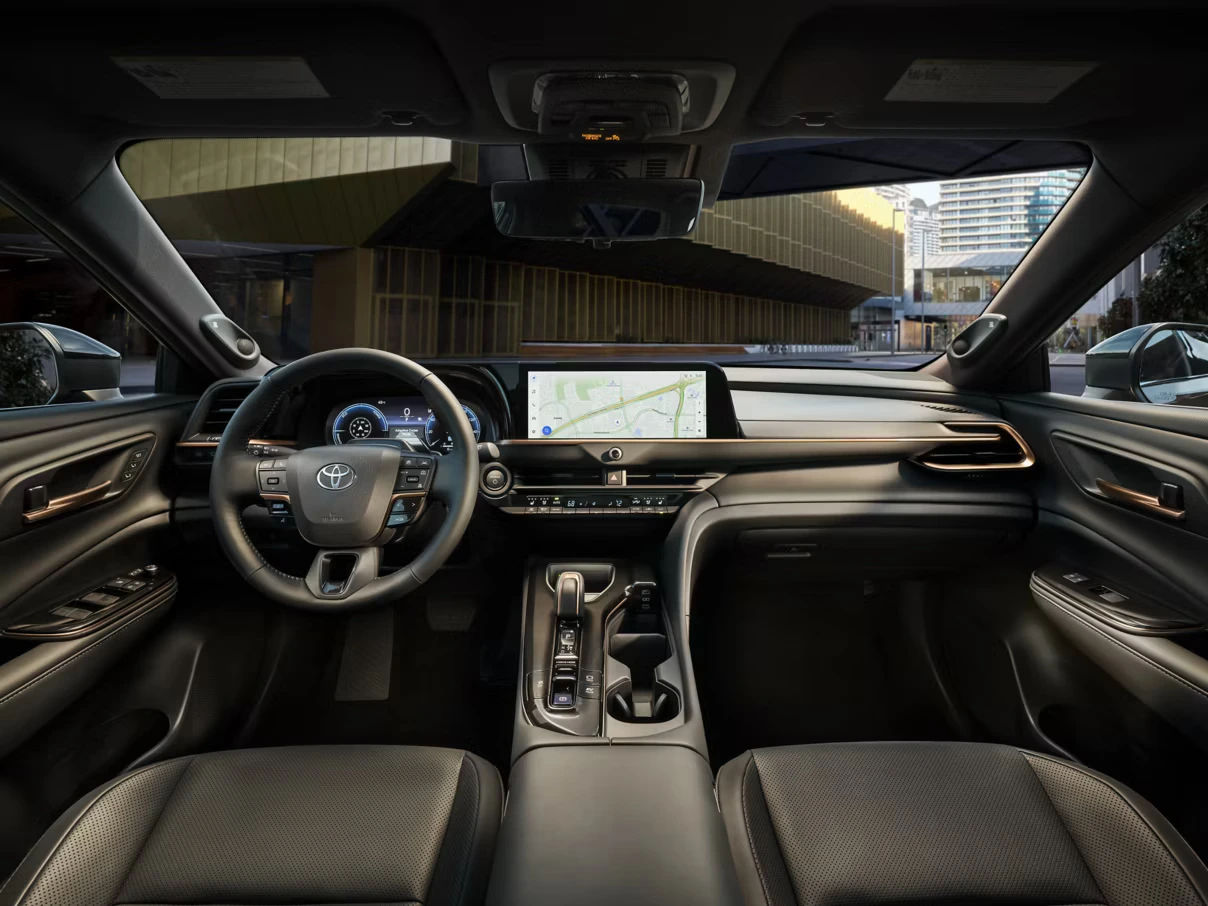
Toyota A/C service in Durham should be scheduled when your vents blow warm air, cooling feels weak, airflow drops, odors appear, or your cabin struggles during hot RTP, NC-147, or I-40 commutes. At Mark Jacobson Toyota, we recommend service before a small comfort issue becomes a bigger summer repair concern. For an RTP commuter whose A/C cools on the highway but feels weak in afternoon traffic, our first step is a symptom-based inspection that checks airflow, cabin filter condition, compressor behavior, belt condition, and refrigerant concerns.
North Carolina summer heat puts real pressure on an air conditioning system. The A/C may feel fine during a mild morning drive from Chapel Hill, then feel slow to cool after the vehicle sits in a sunny parking lot near Durham or Cary. Humidity adds another layer because musty odors, fogging, and poor cabin airflow often show up during rainy weeks or after short trips with the system cycling repeatedly.
This guide explains how we think through weak cooling, odors, low airflow, cabin filter symptoms, routine A/C service, deeper A/C repair concerns, current service specials, and the best timing for Durham-area drivers. You will also see how our service team separates simple maintenance from a repair diagnosis so you can schedule confidently before the hottest part of summer.
Definition: Toyota A/C service is an inspection and repair process for the air conditioning system, cabin air filter, refrigerant level, compressor operation, belts, and airflow concerns. It is designed to restore cabin comfort and identify cooling issues. For drivers in Durham, Raleigh, Chapel Hill, Cary, and Apex, it helps manage summer heat and humidity.
Table of Contents
- Why North Carolina Heat Stresses Toyota A/C Systems
- A/C Repair vs Routine A/C Service
- Toyota A/C Service Coupons and Service Specials
- Service Expertise Detail: What Our Technicians Check First During A/C Diagnosis
- Ownership Cost Analysis: Why Early A/C Checks Can Protect Summer Comfort
- Key Takeaways
- Toyota A/C Service Coupons Durham NC FAQ
Why North Carolina Heat Stresses Toyota A/C Systems
North Carolina summer heat makes small A/C issues easier to feel because the system has to cool a hot cabin, manage humidity, and maintain steady airflow in stop-and-go traffic.
Weak Cooling, Warm Air, and Airflow Changes in Summer Traffic
Weak cooling is one of the most common summer concerns our service advisors hear from Toyota owners. A driver may notice that the A/C feels comfortable during a morning commute, then blows warmer air after the vehicle sits in the sun. That symptom can point to several possibilities, including low refrigerant, restricted airflow, a condenser concern, compressor operation, or a cabin filter that is limiting air movement.
Our service team advises Durham drivers to pay attention to when the weak cooling happens. If the air gets colder at highway speed but feels weaker in traffic, the system may need a closer inspection under real operating conditions. If the vent temperature never gets cold, our technicians look at the system differently than they would for a vehicle that cools slowly but eventually reaches a comfortable cabin temperature.
For an RTP commuter who drives from Durham to Research Triangle Park every weekday, we recommend an A/C performance check when cooling changes between morning and afternoon driving. That driver is asking the A/C system to recover from parked cabin heat, manage I-40 traffic, and keep airflow steady through repeated stop-and-go conditions. We use those details to decide whether the first check should focus on airflow, refrigerant behavior, or compressor response.
- If the A/C starts cold then turns warm, we recommend a full performance diagnosis.
- If airflow feels weak from every vent, we recommend checking the cabin air filter and blower operation.
- If only one vent feels different, we recommend checking vent direction and blend-door behavior.
- If the system smells musty, we recommend a cabin filter and odor-related inspection.
| A/C Symptom | What the Driver Feels | First Service Path | Best For |
|---|---|---|---|
| Weak cooling | Air is cool but not cold enough during afternoon heat | A/C performance check and vent temperature review | RTP commuters in summer traffic |
| Warm air from vents | The system runs but does not cool the cabin | Refrigerant, compressor, and system operation diagnosis | Drivers whose A/C no longer cools at all |
| Low airflow | Fan sounds active but cabin airflow feels restricted | Cabin air filter, blower, and vent airflow inspection | Chapel Hill and Durham short-trip drivers |
| Musty odor | Cabin smells damp when A/C starts | Cabin filter and moisture-related inspection | Raleigh parents after humid rain |
| Noise when A/C runs | Clicking, rattling, or belt noise appears with A/C use | Belt, compressor, fan, and related component review | Current Toyota owners noticing new sounds |
| Slow cabin cooling | A/C works but needs too much time to cool the cabin | Airflow and system performance check | Apex families before summer trips |
Based on Toyota official website.
Schedule A/C ServiceOdors, Humidity, and Cabin Air Filter Symptoms
Odors are a different type of A/C complaint because the system may still cool while the cabin feels unpleasant. North Carolina humidity can make musty smells more noticeable, especially after rainy weeks, short errands, or long parking periods. Toyota owner guidance connects dirty filters and refrigerant leaks with common air conditioning issues, and we see cabin filter concerns become more obvious when summer humidity rises.
For a Raleigh parent sitting in school pickup lines with kids in the back seat, a musty odor can turn into a daily comfort problem fast. We recommend checking the cabin air filter first because it is a direct airflow and cabin-quality item. If airflow is strong but the odor remains, our technicians can continue checking the system for moisture-related causes and other A/C concerns.
Our parts and service team also reminds drivers that cabin air filter condition can affect perceived A/C performance. A restricted filter may make the system seem weaker because less air is moving through the vents. That is why a filter check can be part of a smart A/C visit even when the refrigerant system is not the main issue.
Why A/C Symptoms Feel Worse on NC-147, I-40, and Short-Trip Driving
A/C symptoms often feel worse during short trips because the cabin never has enough time to recover from parked heat. A Chapel Hill student driving short campus routes may feel poor airflow more than a driver spending thirty uninterrupted minutes at steady speed. Around Durham, NC-147 and I-40 commuting can add another pattern: the A/C works during steady movement, then struggles when traffic slows.
What we see here in Durham is that many A/C concerns are not constant at first. They appear after the car has been parked in the sun, after a humid storm, or during the hottest hour of the commute. We recommend describing the exact pattern when you schedule because those details help our service advisors start with the right inspection path.
For Cary drivers who use a Toyota for daily errands, work, and evening activities, we suggest scheduling before weak cooling becomes part of every trip. Summer heat rarely makes an A/C issue feel better on its own. A symptom that appears twice in one week is usually worth checking before a longer drive.
See Toyota Service OptionsA/C Repair vs Routine A/C Service
The fastest way to choose the right A/C service path is to start with the symptom, then separate airflow maintenance from deeper cooling system diagnosis.
Symptom-by-Symptom A/C Service Comparison
Not every A/C concern requires the same type of visit. Some symptoms point first to routine maintenance, such as a dirty cabin air filter or restricted airflow. Other symptoms may require repair diagnosis, especially when the vents blow warm air, cooling changes suddenly, or the A/C makes a new sound.
We recommend a symptom-first conversation because it protects the customer from guessing. A driver who says “my A/C is broken” may actually have a restricted cabin air filter. Another driver who says “it just needs a recharge” may have a refrigerant leak or a component issue that needs diagnosis before refrigerant is added.
| Service Question | Routine A/C Service Path | A/C Repair Diagnosis Path | Best For |
|---|---|---|---|
| Main symptom | Weak airflow, mild odor, slow cooling | Warm air, no cooling, new noise, sudden change | Drivers deciding how urgent the visit feels |
| First check | Cabin air filter and vent airflow | System performance, compressor, refrigerant, and leak concerns | Service advisors building the right inspection path |
| Customer example | Chapel Hill driver with reduced airflow | Durham commuter with warm air during traffic | Local drivers with different symptoms |
| Parts that may be involved | Cabin air filter or related airflow items | Compressor, belt, refrigerant line, condenser, or blower concern | Owners wanting to understand possible next steps |
| Timing | Best before peak heat or a road trip | Best as soon as cooling changes noticeably | Families planning summer travel |
| Ideal Use Case | Driver wants preventive comfort check | Driver needs a specific cooling issue diagnosed | Current Toyota owners choosing the right visit type |
Based on Toyota official website.
The key difference between routine Toyota A/C service and A/C repair is the symptom pattern. If airflow is weak or the cabin smells musty, we usually start with cabin filter and airflow checks. If the vents blow warm air or cooling stops suddenly, we recommend repair diagnosis because refrigerant, compressor operation, belts, or other components may need closer testing.
Visit Our Service DepartmentRefrigerant, Compressor, Belt, Blower, and Cabin Filter Checks
Our technicians do not treat every A/C concern as the same repair. We start with how the system behaves, then check the items most likely to match that symptom. For a Cary rideshare driver who needs consistent passenger comfort during long summer shifts, we recommend an appointment as soon as airflow or cooling changes because the cabin has to stay comfortable for every ride.
- If you drive daily from Durham to RTP and the A/C feels weak only in traffic, we recommend a performance check because the system needs to be tested under load.
- If you live in Raleigh and smell musty air after humid rain, we recommend a cabin filter and odor-related inspection because airflow quality may be the first concern.
- If you drive around Chapel Hill and airflow feels low on every fan setting, we recommend a filter, blower, and vent review because the cooling system may not be the only issue.
- If you use your Toyota for Cary rideshare shifts, we recommend checking current service specials and scheduling quickly because passenger comfort affects your workday.
What most owners do not realize is that A/C diagnosis is both a comfort issue and a systems check. Refrigerant concerns, compressor behavior, belt condition, blower operation, and cabin filter condition can all create different versions of “my A/C is not working right.” We recommend letting our service team match the inspection to the symptom instead of replacing parts based on a guess.
Dealership Visit Paragraph 1
If your Toyota A/C feels weak, smells musty, or blows warm air, we recommend scheduling a service visit through our online scheduler at https://www.markjacobsontoyota.com/schedule-service.html before the next hot commute makes the issue harder to ignore. Our service advisors can help you describe the symptom, note when it happens, and decide whether the visit should begin with airflow, cabin filter, or cooling performance checks. Our certified technicians handle Toyota maintenance and repair needs with equipment, service procedures, and Genuine Toyota Parts support built for your vehicle. We can also help you review current service specials before the appointment so you know what offers may apply at the time of your visit. Call us at 919-493-5599 or schedule online, and we will help you get the A/C concern checked in a clear, practical way.
Toyota A/C Service Coupons and Service Specials
Service specials are most useful when drivers know the symptom first, then let our service team confirm which A/C service path fits the vehicle.
How Durham Drivers Should Use Service Specials Without Guessing the Repair
We recommend checking Toyota service specials before scheduling, but we do not recommend assuming a coupon tells the whole repair story. A service special may apply to maintenance, inspection, parts, or seasonal service, while the actual A/C concern still needs to be diagnosed properly. For a Durham owner who wants to use an A/C service coupon but does not know whether the issue is routine service or repair, the best step is to describe the symptom first and let our advisors match the visit to the concern.
Local driving patterns matter. Apex families planning an RDU airport run or a beach trip should check the A/C before the vehicle is packed. Raleigh parents dealing with school pickup heat should not wait until the cabin stops cooling completely. Cary drivers who park outside all day may notice slow cooling sooner than drivers with shaded parking. Chapel Hill students with older Toyota models may feel low airflow during short trips before they notice a bigger issue.
| Local Driver | Summer A/C Scenario | Recommended Service Action | Ideal Use Case |
|---|---|---|---|
| Durham commuter | A/C struggles after work on NC-147 | Schedule A/C performance check | Daily driver needing reliable cooling |
| RTP professional | Cooling changes between morning and afternoon commute | Describe timing and request A/C diagnosis | Commuter with heat-related symptoms |
| Raleigh parent | Musty odor during humid pickup lines | Cabin air filter and odor inspection | Family vehicle used in summer humidity |
| Chapel Hill student | Weak airflow during short campus trips | Cabin filter, blower, and vent check | Older Toyota with airflow concern |
| Cary rideshare driver | Cabin comfort must stay steady for passengers | Schedule service and review current specials | High-use Toyota owner |
| Apex road-trip family | Needs cooling checked before a summer trip | Pre-trip A/C and cabin filter inspection | Family preparing for longer travel |
Based on Toyota official website.
For Durham drivers, Toyota A/C service coupons work best as a starting point, not a diagnosis. We recommend reviewing current offers, then scheduling with enough symptom detail for our team to prepare properly. That approach helps us separate cabin filter, airflow, refrigerant, compressor, and belt-related concerns without turning the visit into guesswork.
View Parts Specials Book Toyota A/C RepairService Expertise Detail: What Our Technicians Check First During A/C Diagnosis
Our A/C diagnosis starts with the customer’s symptom, then moves through airflow, cabin filter, visible component, vent temperature, and deeper system checks as needed.
We start with the driver’s description because the pattern matters. A system that smells musty needs a different first look than a system that blows warm air from every vent. A system that cools at highway speed but feels weak in traffic gives our technicians a different clue than a system that never cools at all.
Our first checks often include vent airflow, cabin air filter condition, fan operation, belt condition, visible A/C line concerns, and temperature behavior at the vents. If those early checks point to a deeper cooling concern, we can continue into refrigerant and component diagnosis. This step-by-step approach helps current Toyota owners avoid guessing and gives our service advisors clearer information to explain.
For a Durham owner preparing for a July road trip, we recommend bringing the Toyota in before the trip if cooling feels slow, airflow drops, or odors appear. That driver does not need to know whether the concern is a filter, refrigerant, compressor, or belt. Our job is to start with the symptom and build the right inspection path from there.
Ownership Cost Analysis: Why Early A/C Checks Can Protect Summer Comfort
An early A/C check can help separate simple airflow or filter concerns from repair concerns before summer heat makes the problem more urgent.
A/C service timing matters because cabin comfort issues rarely become easier to live with in July and August. If a Toyota owner waits until the system stops cooling completely, the visit may feel more urgent and less flexible. We recommend scheduling when symptoms first become repeatable because our team can evaluate the system before the driver is dealing with daily discomfort.
Early checks are especially useful for owners who rely on one vehicle for commuting, school pickup, rideshare work, or family travel. A cabin air filter concern may be simple to address, while warm air or sudden cooling loss may need a deeper repair diagnosis. The value is knowing which path fits the vehicle.
- If your A/C odor appears after humid rain, we recommend checking the cabin air filter early.
- If airflow drops across every fan setting, we recommend scheduling before peak summer heat.
- If vents blow warm air, we recommend repair diagnosis instead of assuming the system needs only a recharge.
- If you have a summer road trip planned, we recommend checking A/C performance before the vehicle is packed.
For Apex families driving to RDU or the coast, early A/C service protects the comfort part of the trip. For Cary rideshare drivers, it helps protect passenger comfort and workday consistency. For Durham commuters, it keeps daily driving from becoming a hot-cabin routine.
Key Takeaways
- Weak cooling, warm air, low airflow, and odors are the main signs to schedule Toyota A/C service.
- Cabin air filter concerns can affect airflow and cabin comfort during humid Durham summers.
- Warm air from the vents usually deserves repair diagnosis, not a guess-based fix.
- RTP commuters should schedule service when cooling changes between morning and afternoon traffic.
- Current service specials can help, but the symptom should guide the appointment type.
Toyota A/C Service Coupons Durham NC FAQ
When should I schedule Toyota A/C service in Durham?
We recommend scheduling Toyota A/C service when your vents blow warm air, cooling feels weak, airflow drops, or the cabin smells musty after humid weather. Based on what our service team sees in Durham, these symptoms often become more noticeable during NC-147, I-40, and RTP commutes because the system has to cool a hot cabin in heavy summer conditions. For a driver who parks outside all day, slow cooling after work is a strong reason to schedule an inspection.
Why is my Toyota A/C blowing warm air?
Warm air from a Toyota A/C system can be connected to refrigerant concerns, compressor operation, belt condition, condenser performance, or another cooling system issue. We do not recommend assuming the vehicle only needs refrigerant because a leak or component concern may need to be diagnosed first. If your Toyota blows warm air in Durham summer traffic, our technicians can check vent temperature, system operation, visible components, and related A/C behavior to identify the right service path.
Can a cabin air filter affect A/C cooling?
A cabin air filter can affect how strong the airflow feels from the vents, even when the A/C system itself is still capable of cooling. If the filter is restricted, the cabin may take longer to feel comfortable because less air is moving through the system. We recommend a cabin filter check for Raleigh parents, Chapel Hill students, and Cary commuters who notice weak airflow, musty odors, or slower cooling after humid weather.
Where can I find Toyota A/C service coupons in Durham NC?
We recommend checking our current Toyota Service Specials and Coupons before scheduling, then describing the A/C symptom when you book the appointment. Current offers can change, so the best approach is to review the service specials and let our advisors match the visit to your Toyota’s symptom. Durham, Raleigh, Chapel Hill, Cary, and Apex drivers can schedule online or call us at 919-493-5599.
Related Articles
Keep reading more Toyota service guides, maintenance tips, and ownership advice from our Durham team.
New
2026 Toyota Highlander vs Grand Highlander: Which Toyota SUV Fits Your Family?
Compare the 2026 Toyota Highlander vs Grand Highlander for space, MPG, trims, towing, and family fit at Mark Jacobson Toyota in Durham, NC.
Brake Service
2026 Toyota Sequoia: Power, Space, and Luxury for Durham Families
See the 2026 Toyota Sequoia full-size SUV with i-FORCE MAX power, towing, trims, and family fit at Mark Jacobson Toyota in Durham, NC.
New
2026 Toyota Prius vs Prius Plug-in Hybrid: Which Saves You More in Durham?
Compare the 2026 Toyota Prius vs Prius Plug-in Hybrid for MPG, charging, cost, and commuter fit at Mark Jacobson Toyota in Durham, NC
2026 Toyota Prius vs Prius Plug-in Hybrid Overview
If you are comparing the 2026 Toyota Prius vs Prius Plug-in Hybrid, the regular Prius is the better choice when you want excellent MPG with no charging routine, while the Prius Plug-in Hybrid is better when you can charge at home and want to cover short trips on electric power before using gas. At Mark Jacobson Toyota, we recommend the regular Prius for Raleigh or Durham drivers without reliable charging access. We recommend Prius Plug-in Hybrid for a Durham commuter driving to RTP who can plug in at home and wants to reduce gas use on predictable daily routes.
The regular Prius is simple. It uses gas and electric power automatically, never needs to be plugged in, and FuelEconomy.gov lists a 2026 Prius FWD model at 57 combined MPG. The Prius Plug-in Hybrid adds a larger rechargeable battery, electric-only driving capability, and stronger total system performance, but it asks the driver to build charging into daily life. That charging habit is what decides whether the extra cost and plug-in hardware make sense.
In this guide, we compare MPG, MPGe, electric range, charging needs, trims, pricing logic, commuter use cases, tax-credit considerations, and Toyota hybrid alternatives like Corolla Hybrid, Camry Hybrid, and RAV4 Hybrid. Our goal is to help Durham, Raleigh, Chapel Hill, Cary, and Apex shoppers choose the Prius version that actually saves money and fits their daily routine.
Table of Contents
- Fuel Economy, Electric Range, and Charging Differences
- Prius Trims, Pricing, and Best-Fit Configurations
- Local Driving Fit for Durham, Raleigh, Chapel Hill, Cary, and Apex
- Ownership Cost Analysis: When Plugging In Actually Pays Off
- Contrarian Insight: Why the Regular Prius May Be the Smarter Buy
- Key Takeaways
- 2026 Toyota Prius vs Prius Plug-in Hybrid FAQ for Durham Drivers
The 2026 Toyota Prius is a hybrid hatchback that uses gas and electric power without plugging in. The 2026 Prius Plug-in Hybrid adds a larger rechargeable battery for electric-only driving before operating like a hybrid. For Durham-area drivers, the better choice depends on commute length, charging access, and fuel-savings goals.
Fuel Economy, Electric Range, and Charging Differences
The regular Prius wins on simplicity and maximum no-plug fuel economy, while Prius Plug-in Hybrid wins when short daily routes and reliable charging let drivers use electric power often.
Prius MPG vs Prius Plug-in Hybrid electric range and MPGe
The regular 2026 Prius is built around automatic hybrid efficiency. FuelEconomy.gov lists the 2026 Prius FWD at 57 combined MPG, 57 city MPG, 56 highway MPG, and a total range of 644 miles. That makes it a strong fit for drivers who want fuel savings without changing habits. You drive it, refuel it, and let the hybrid system manage gas and electric power in the background.
The Prius Plug-in Hybrid changes the math because it can use grid electricity for short trips before it behaves like a hybrid. Published 2026 Prius Plug-in Hybrid information lists the SE grade with up to about 44 miles of electric-only range, while other trims are generally positioned around roughly 40 miles, depending on configuration and source updates. That is why we recommend the plug-in model only when a driver can charge consistently enough to use that EV range most days.
The key difference between Prius and Prius Plug-in Hybrid is charging access. The regular Prius delivers up to 57 combined MPG in FWD form without plugging in, which makes it the simpler fuel-saver. Prius Plug-in Hybrid can save more gas on short trips if the driver charges regularly, but without charging, its main advantage shrinks quickly.
| Efficiency Factor | 2026 Toyota Prius | 2026 Prius Plug-in Hybrid | Best For |
|---|---|---|---|
| Primary Powertrain | Hybrid gas-electric system | Plug-in hybrid system with rechargeable battery | Choose based on charging access |
| Top MPG Reference | 57 combined MPG for FWD model | Up to about 52 MPG in hybrid operation based on published estimates | Prius for no-plug MPG simplicity |
| Electric-Only Driving | No plug-in EV-only range | Up to about 44 miles on SE grade | Prius Plug-in Hybrid for short charged commutes |
| Charging Required | No | Recommended to get full value | Prius for apartment or uncertain charging |
| Fuel Type | Regular gasoline | Regular gasoline and electricity | Depends on daily routine |
| Ideal Use Case | High-mileage mixed driving with no charging routine | Short commute with home charging | Match the car to your charging habits |
Based on current Toyota published specifications, FuelEconomy.gov, and credible automotive reporting where 2026 Plug-in Hybrid EPA listings were not fully reflected at time of verification.
- Choose Prius if you want excellent MPG without plugging in.
- Choose Prius Plug-in Hybrid if your regular route fits within the electric range and you can charge often.
- Choose Prius if your parking situation makes charging inconvenient.
- Choose Prius Plug-in Hybrid if your home setup makes overnight charging easy.
Charging at home, public charging, and daily commute math
Charging is the habit that makes Prius Plug-in Hybrid work. A Durham RTP commuter with a predictable 20 to 35 mile daily route and a garage or driveway charging setup may use very little gas during the week. That driver gets the strongest case for the plug-in model because the electric range is used regularly. If that same driver also takes weekend trips, the gas engine provides backup without the planning required by a battery-electric vehicle.
For a Raleigh apartment dweller without reliable charging, we usually recommend Prius instead. Public charging can help, but a plug-in hybrid makes the most sense when charging is convenient enough to become routine. If charging feels like a chore, drivers may end up using the plug-in mostly as a regular hybrid, which weakens the cost advantage. The regular Prius avoids that problem because the fuel-saving system works automatically every day.
Performance, horsepower, and how each Prius feels to drive
The current Prius generation is much stronger and more responsive than many shoppers expect. The regular Prius gives commuters the calm, efficient feel they want while still feeling modern on NC-147, I-40, and city streets. It is not just a fuel-saver for slow driving. It feels smoother, quicker, and more refined than older Prius shoppers may remember.
Prius Plug-in Hybrid adds a stronger performance personality because the plug-in system delivers more total system output than the standard hybrid. That added response matters for drivers who want efficiency but do not want the car to feel sleepy. For an Apex eco-conscious homeowner who can charge at home and still wants a quicker-feeling hatchback, Prius Plug-in Hybrid becomes more compelling. For a Cary high-mileage driver who just wants reliable MPG across city, highway, and errands, the regular Prius is usually the cleaner recommendation.
Check Prius AvailabilityPrius Trims, Pricing, and Best-Fit Configurations
The right Prius choice starts with lifestyle first, then trim, because the plug-in upgrade only pays off when the driver’s charging routine supports it.
Prius vs Prius Plug-in Hybrid trim and feature comparison
The regular Prius generally fits shoppers who want the lowest-friction path to excellent fuel economy. FuelEconomy.gov lists 2026 Prius MSRP information from $28,550 to $35,565, which gives buyers a lower entry point than the plug-in model. The regular Prius also offers the advantage of available all-wheel drive on select configurations, which can matter for drivers who want extra traction confidence during Triangle rain.
The Prius Plug-in Hybrid is positioned higher because it adds a rechargeable battery, electric-only driving, and a more specialized ownership pattern. Published 2026 pricing information places Prius Plug-in Hybrid trims above the regular Prius, with SE, XSE, Nightshade, and XSE Premium choices. The plug-in model can be the better value for homeowners who charge often and drive shorter routes, but the regular Prius remains the easier recommendation for many buyers because it needs no charging plan.
| Comparison Point | 2026 Toyota Prius | 2026 Prius Plug-in Hybrid | Best For |
|---|---|---|---|
| Entry Cost Logic | Lower starting range based on FuelEconomy.gov MSRP data | Higher starting position due to plug-in hardware | Prius for budget-focused efficiency |
| Charging Need | No charging needed | Charging strongly recommended | Prius for simplest ownership |
| Electric Driving | No plug-in range | Short-trip electric driving when charged | Plug-in Hybrid for home chargers |
| AWD Availability | Available on select Prius configurations | Front-wheel drive focus | Prius for drivers wanting AWD availability |
| Trim Personality | LE, XLE, Nightshade, Limited | SE, XSE, Nightshade, XSE Premium | Match trim to comfort and tech priorities |
| Ideal Use Case | Mixed commute, no charging, high MPG | Short commute, home charging, lower gas use | Daily routine decides the winner |
Based on current Toyota published specifications, FuelEconomy.gov, and credible automotive reporting.
We recommend the regular Prius for shoppers who want the strongest blend of price, simplicity, MPG, and possible AWD availability. We recommend Prius Plug-in Hybrid for drivers who can charge at home and keep most daily driving within the electric range. The plug-in model is not automatically the better fuel-saver for every buyer. It becomes the better choice when the driver’s home, parking, and commute make plugging in easy.
Get Pre-Approved for PriusWhich Prius setup should Durham-area drivers choose?
For Durham-area drivers, the best Prius setup depends on charging reliability. A driver with a garage, driveway, or consistent workplace charging can get more value from Prius Plug-in Hybrid. A driver who parks on the street, lives in an apartment without charging, or drives long mixed routes may be better served by the regular Prius. Our customers often start by asking which model gets the best numbers, but the smarter question is which model matches the way they park and drive.
- If you commute from Durham to RTP and can charge at home, we recommend Prius Plug-in Hybrid because many weekday trips may use little gas.
- If you live in Raleigh without reliable charging, we recommend Prius because the hybrid system works without any new routine.
- If you drive mixed city and highway routes around Cary, we recommend Prius because high MPG remains consistent without planning.
- If you own a home in Apex and want more electric-only driving, we recommend Prius Plug-in Hybrid XSE or XSE Premium because charging access supports the upgrade.
For Durham commuters, Prius Plug-in Hybrid is the better choice when daily mileage is predictable and charging is easy. The regular Prius is the better choice when the driver wants fuel savings without thinking about plugs, public chargers, or parking setup. We recommend choosing by routine first because that is what determines real savings.
If you are choosing between Prius and Prius Plug-in Hybrid, we recommend talking with our team about your commute, parking setup, home charging access, and monthly budget before choosing a trim. We can help you compare regular Prius trims with Prius Plug-in Hybrid trims, explain current vehicle availability, and walk through finance options in a way that matches how you actually drive. We can also compare Prius with Corolla Hybrid, Camry Hybrid, RAV4 Hybrid, and other Toyota hybrids if you are still deciding how much space or efficiency you need. Drivers from Durham, Raleigh, Chapel Hill, Cary, and Apex can call us at 919-493-5599 or start with Toyota hybrid research online before visiting. We want the Prius decision to feel practical, not confusing.
Local Driving Fit for Durham, Raleigh, Chapel Hill, Cary, and Apex
Prius is strongest for Triangle drivers who want effortless MPG everywhere, while Prius Plug-in Hybrid is strongest for short local routes with easy charging at home or work.
RTP commutes, downtown parking, I-40 traffic, charging access, and Triangle weather
Local driving conditions make this comparison more concrete. Durham and RTP commuters often have predictable routes, which can help the Prius Plug-in Hybrid make sense if charging is available at home. Raleigh drivers who depend on apartment parking or shared garages may find the regular Prius easier because it avoids charging uncertainty. Chapel Hill students, staff, and faculty should think carefully about where the car will park during the day because charging access can change the plug-in value quickly.
Based on our experience with Triangle shoppers, the regular Prius fits the widest range of drivers because it gets excellent MPG regardless of parking setup. Prius Plug-in Hybrid fits a narrower but very strong use case: drivers with shorter daily routes and easy charging. If your weekly driving includes I-40 traffic, downtown Durham parking, US-15/501 trips, and errands across Cary or Apex, the regular Prius stays easy. If most driving is local and charging is automatic at night, the plug-in version can cut gas use significantly.
| Local Driver Profile | Primary Need | Recommended Prius | Why It Works |
|---|---|---|---|
| Durham RTP commuter | Short predictable route and home charging | Prius Plug-in Hybrid | Electric range can cover many weekday miles |
| Raleigh apartment driver | Excellent MPG without reliable charging | Prius | No plug-in routine required |
| Chapel Hill student or faculty commuter | Mixed parking access and short local trips | Prius or Plug-in Hybrid depending charging | Charging access decides value |
| Cary high-mileage driver | City, highway, errands, and no charging plan | Prius | Consistent MPG with no planning |
| Apex eco-conscious homeowner | Home charging and electric-only driving goal | Prius Plug-in Hybrid XSE or XSE Premium | Charging supports the extra plug-in cost |
| Ideal Use Case | Match efficiency to parking and commute | Prius for simplicity, Plug-in Hybrid for charging access | The best choice depends on daily routine |
Based on current Toyota published specifications, FuelEconomy.gov, and local driving use-case analysis.
Value Your Trade Toward Prius
If you are comparing Toyota hybrids beyond Prius, we can help you decide whether a hatchback, sedan, or SUV fits your life better. Our team can compare Prius with Corolla Hybrid, Camry Hybrid, RAV4 Hybrid, Corolla Cross Hybrid, and other Toyota electrified options based on passenger space, cargo room, AWD availability, and commute patterns. We serve Durham, Raleigh, Chapel Hill, Cary, and Apex shoppers every day, and our Mark Says Yes! approach is built around helping each driver choose the Toyota that fits real life. If you want plug-in efficiency but need more room, we can also discuss Toyota plug-in and hybrid SUV options as they become available. Call us at 919-493-5599 or visit us at 4516 Durham-Chapel Hill Blvd so we can help you compare efficient Toyota choices side by side.
Ownership Cost Analysis: When Plugging In Actually Pays Off
Prius Plug-in Hybrid pays off best when the driver can charge often, drive mostly short trips, and replace gasoline miles with electric miles most weekdays.
The plug-in upgrade is not just about having a charging port. It is about using that charging port often enough to change your fuel spending. A Durham driver with a 30-mile round-trip commute and home charging may be able to complete many weekdays mostly on electric power. That is where Prius Plug-in Hybrid makes the most sense because the larger battery is doing useful work day after day.
A driver with no reliable charging has a very different ownership case. Without charging, the Prius Plug-in Hybrid still operates as a hybrid, but the main reason to pay more becomes harder to justify. We recommend calculating your average weekday mileage, whether you can plug in overnight, and how often you take longer trips. Those three details tell us more than a spec sheet alone.
Federal tax-credit claims also need caution. IRS guidance states that clean vehicle credits are not available for vehicles acquired after Sept. 30, 2025, with limited acquisition timing rules for vehicles placed in service later. Because of that, we do not recommend assuming a 2026 Prius Plug-in Hybrid federal credit applies unless current IRS rules and seller reporting confirm eligibility for your exact purchase situation.
Contrarian Insight: Why the Regular Prius May Be the Smarter Buy
The regular Prius may be the smarter buy for many Durham-area drivers because it delivers exceptional MPG without requiring home charging, charging planning, or a higher plug-in price.
The plug-in model is appealing, but we do not recommend it automatically. Many shoppers are better served by the regular Prius because it gives them outstanding fuel economy with fewer lifestyle requirements. For an apartment driver in Raleigh, a student in Chapel Hill, or a high-mileage Cary driver who mixes highway and city routes, the regular Prius may save money more consistently because it does not depend on charging access.
The regular Prius also keeps the ownership decision cleaner. It avoids questions about outlet access, charging time, public charger reliability, and whether the driver will remember to plug in. That simplicity has real value. If your main goal is lower fuel cost with less planning, Prius is often the easiest Toyota to recommend.
- If you cannot charge at home, we recommend Prius first.
- If you drive long mixed routes every day, we recommend Prius first.
- If you want AWD availability, we recommend checking Prius configurations first.
- If you want electric-only driving and can charge nightly, we recommend Prius Plug-in Hybrid.
For many Triangle shoppers, the regular Prius is not the less advanced choice. It is the more practical choice. Prius Plug-in Hybrid is excellent when the routine fits, but the regular Prius fits more routines.
Schedule Prius ServiceKey Takeaways
- The regular 2026 Prius is best for drivers who want excellent MPG without plugging in.
- Prius Plug-in Hybrid is best for short daily commutes with reliable charging access.
- FuelEconomy.gov lists a 2026 Prius FWD model at 57 combined MPG.
- Prius Plug-in Hybrid offers electric-only driving when charged, but charging habits determine savings.
- Do not assume federal tax-credit eligibility for a 2026 purchase without checking current IRS rules.
2026 Toyota Prius vs Prius Plug-in Hybrid FAQ for Durham Drivers
What is the difference between Prius and Prius Plug-in Hybrid?
The 2026 Prius is a regular hybrid that uses gas and electric power automatically without plugging in. The Prius Plug-in Hybrid adds a larger rechargeable battery that can support electric-only driving before the vehicle returns to hybrid operation. We recommend Prius for drivers who want simple fuel savings with no charging routine. We recommend Prius Plug-in Hybrid for drivers who can charge often and keep many daily trips within the electric range.
Is the Prius Plug-in Hybrid worth it if I cannot charge at home?
Prius Plug-in Hybrid is usually harder to justify if you cannot charge at home or work. The plug-in model still functions as a hybrid when the battery charge is depleted, but the main value comes from using electric miles regularly. For Raleigh apartment drivers or Durham shoppers without dependable charging access, we usually recommend the regular Prius because it delivers excellent MPG without asking the driver to change parking or charging habits.
Which Prius is better for commuting in Durham?
The better Prius for Durham commuting depends on charging access. If you drive a predictable route to RTP and can charge at home, Prius Plug-in Hybrid can reduce gas use on many weekday trips. If your commute changes often, you park where charging is uncertain, or you want the simplest fuel-saving setup, the regular Prius is usually the better choice. We recommend matching the car to your parking setup before comparing trims.
Does the 2026 Prius Plug-in Hybrid qualify for tax credits?
We do not recommend assuming a federal clean vehicle credit applies to a 2026 Prius Plug-in Hybrid purchase. IRS guidance states that clean vehicle credits are not available for vehicles acquired after Sept. 30, 2025, with specific timing rules for vehicles acquired before that date and placed in service later. Tax rules can be complex, so we recommend checking current IRS guidance and speaking with a qualified tax professional before making any purchase decision based on incentives.
We are here to help you choose the right Toyota hybrid at Mark Jacobson Toyota, 4516 Durham-Chapel Hill Blvd, Durham, NC 27707. Our team works with drivers from Durham, Raleigh, Chapel Hill, Cary, and Apex who want clear guidance on MPG, charging, trims, tax-credit questions, trade value, and finance options. We can compare Prius and Prius Plug-in Hybrid side by side, review ToyotaCare, discuss Mark Says Yes!, and help you decide whether a regular hybrid or plug-in hybrid fits your daily routine better. Call us at 919-493-5599, start online, or visit our Durham showroom so we can help you choose the Toyota that saves money in the way you actually drive.
2026 Toyota Sequoia Overview
The 2026 Toyota Sequoia is Toyota’s full-size SUV for Durham-area families who need standard hybrid power, serious towing strength, three-row space, and premium comfort in one large Toyota. At Mark Jacobson Toyota, we recommend the Sequoia for drivers who need more capability than a midsize SUV can offer, especially families towing a small camper, boat, utility trailer, or weekend gear while still carrying passengers comfortably. With a standard i-FORCE MAX hybrid powertrain, 437 horsepower, 583 lb.-ft. of torque, and towing capability of up to 9,500 pounds, the Sequoia is built for bigger family jobs.
That size and power make the Sequoia different from Toyota SUVs like Grand Highlander, Land Cruiser, and 4Runner. Grand Highlander is easier for many families to live with every day, Land Cruiser leans into rugged heritage, and 4Runner brings trail personality in a midsize shape. Sequoia is the answer when your household needs full-size SUV strength, three-row comfort, and towing capability in the same vehicle.
In this guide, we explain i-FORCE MAX power, towing features, MPG expectations, seating choices, trim differences, local driving fit, ownership planning, and use cases for Durham, Raleigh, Chapel Hill, Cary, and Apex families. We will also help you decide which Sequoia trim makes the most sense for family comfort, towing, premium travel, or off-road character.
Table of Contents
- Introduction
- Definition Block
- i-FORCE MAX Hybrid Powertrain and Towing Capability
- Sequoia Trims, Seating, and Best-Fit Configurations
- Local Driving, Family Trips, and Triangle Towing Needs
- Trim-Level Deep Dive: When Sequoia Beats Grand Highlander, Land Cruiser, and 4Runner
- Ownership Cost Analysis: Full-Size Hybrid SUV Value, Service, Tires, and Long-Term Use
- Key Takeaways
- 2026 Toyota Sequoia FAQ for Durham Full-Size SUV Shoppers
The 2026 Toyota Sequoia is a full-size three-row SUV with a standard i-FORCE MAX hybrid powertrain. It is designed for families and drivers who need strong towing capability, passenger space, and premium comfort. For Durham, Raleigh, Chapel Hill, Cary, and Apex drivers, it supports road trips, towing, and larger household needs.
i-FORCE MAX Hybrid Powertrain and Towing Capability
The 2026 Sequoia stands apart because every model uses Toyota’s i-FORCE MAX hybrid powertrain, giving full-size SUV shoppers strong torque, towing confidence, and standard hybrid engineering.
437 horsepower, 583 lb-ft of torque, and why Sequoia is always hybrid
The 2026 Sequoia uses Toyota’s i-FORCE MAX twin-turbo V6 hybrid powertrain as standard equipment. That setup produces 437 horsepower and 583 lb.-ft. of torque, which gives the Sequoia the kind of low-end strength families feel when merging, climbing grades, carrying passengers, or towing. Instead of treating hybrid technology only as a fuel-saving feature, Toyota uses it here to support power delivery in a full-size SUV.
The 2026 Toyota Sequoia is a standard hybrid full-size SUV with 437 horsepower and 583 lb.-ft. of torque from its i-FORCE MAX powertrain. We recommend it for Durham-area drivers who need full-size SUV strength, not just extra seating. For a family towing a small camper while carrying kids and luggage, the Sequoia’s torque is the key reason to choose it over a smaller Toyota SUV.
| Core Spec | 2026 Toyota Sequoia | Why It Matters |
|---|---|---|
| Powertrain | i-FORCE MAX twin-turbo V6 hybrid | Standard hybrid power across the lineup |
| Horsepower | 437 hp | Strong full-size SUV acceleration |
| Torque | 583 lb.-ft. | Helpful for towing, loaded driving, and highway passing |
| Transmission | 10-speed automatic | Built for smooth power delivery and towing control |
| Max Towing | Up to 9,500 lb when properly equipped | Supports campers, boats, and utility trailers |
| EPA MPG | Up to 22 combined depending on configuration | Hybrid efficiency for a full-size SUV |
| Best For | Large families, towing users, premium SUV shoppers | Drivers who need space and capability together |
Based on current Toyota published specifications and FuelEconomy.gov.
- Choose Sequoia if towing strength is a regular need, not a rare wish.
- Choose Grand Highlander if you want three rows with easier daily size.
- Choose Land Cruiser if adventure character matters more than full-size seating.
- Choose 4Runner if rugged midsize capability is the priority.
Up to 9,500 lb of towing and the towing features that matter
Towing is one of the biggest reasons to step up to Sequoia. Toyota lists a maximum towing capability of up to 9,500 pounds when properly equipped, which gives families room to consider small campers, boats, utility trailers, and other weekend gear. The Sequoia also offers towing-focused hardware such as an Integrated Trailer Brake Controller and Trailer-Sway Control, both of which matter when load control and driver confidence are part of the decision.
For a Durham family that wants one SUV for kids, cargo, and a small camper, we recommend looking at Sequoia Limited or Platinum first because those grades balance comfort and capability without pushing every buyer into the highest luxury trims. If the family also wants stronger off-road personality, TRD Pro deserves attention. The important step is to match towing needs to the actual trailer, passengers, cargo, and route, not just the maximum rating.
MPG, full-size weight, and daily driving expectations around Durham
The Sequoia’s hybrid system does not make it a small-SUV efficiency play. It is still a full-size SUV, and shoppers should compare it against full-size needs. EPA listings show Sequoia fuel economy varies by drive configuration, with up to 22 combined MPG for certain 4×2 configurations and lower ratings for 4×4 models. That is useful context for buyers who want power and size, but it is not the same ownership profile as a RAV4 Hybrid or Highlander Hybrid.
For daily Durham driving, Sequoia works best when the size earns its place. If you need three rows, towing capability, premium comfort, and frequent passenger capacity, the vehicle makes sense. If you rarely tow and mostly commute alone, Grand Highlander or Highlander may be easier to live with. What we see locally is that Sequoia shoppers usually know they need more vehicle, but they still benefit from understanding the tradeoff in parking, fuel use, tires, and service.
Sequoia Trims, Seating, and Best-Fit Configurations
The best Sequoia trim depends on whether your priority is value, family comfort, towing confidence, off-road personality, or premium full-size SUV luxury.
SR5, Limited, Platinum, TRD Pro, 1794, and Capstone comparison
The 2026 Sequoia lineup gives shoppers a wide range of personalities. SR5 is the practical entry point for full-size Toyota SUV strength. Limited adds comfort and convenience for families who want a more complete daily experience. Platinum moves toward premium family travel. TRD Pro gives the Sequoia a more rugged look and off-road attitude. 1794 brings a western-inspired premium cabin feel, while Capstone sits at the top for shoppers who want the most upscale Sequoia expression.
The smartest way to compare these trims is by household use. A family that tows sometimes and wants comfort may not need Capstone. A driver who values design, luxury, and a more premium cabin may not be satisfied with SR5. For Cary shoppers who want premium seating and upscale materials, 1794 or Capstone deserve a closer look. For Apex adventure drivers who want off-road character with three-row utility, TRD Pro is the more natural match.
| Trim | Core Personality | Best Family or Driving Fit | Ideal Use Case |
|---|---|---|---|
| SR5 | Practical full-size Sequoia entry | Families needing power and space without maximum luxury | Durham family stepping into full-size SUV capability |
| Limited | Comfort-focused family trim | Drivers wanting stronger comfort and everyday usability | Family towing occasionally and commuting regularly |
| Platinum | Premium family travel trim | Road-trip households wanting more comfort features | Raleigh family using I-40 for frequent travel |
| TRD Pro | Off-road-inspired full-size SUV | Drivers wanting rugged character and towing strength | Apex adventure driver with weekend gear |
| 1794 | Premium western-inspired cabin | Luxury shoppers who want distinctive interior design | Cary buyer wanting comfort and full-size presence |
| Capstone | Top premium Sequoia expression | Drivers wanting the most upscale Sequoia experience | Premium family SUV shopper prioritizing refinement |
Based on current Toyota published specifications.
We recommend Limited as the most balanced Sequoia trim for many Durham-area families because it pairs the core i-FORCE MAX strength with the comfort features most households use every day. We recommend Platinum or Capstone for Raleigh road-trip families that want more premium travel comfort. We recommend TRD Pro for drivers who want Sequoia strength with a more rugged personality.
Check Sequoia AvailabilityWhich Sequoia trim should Durham-area drivers choose?
The right Sequoia trim should match the jobs the SUV will handle every week. A buyer who needs family seating, towing confidence, and a sensible price position should start with SR5 or Limited. A family that spends a lot of time on the highway should compare Limited and Platinum carefully because comfort features matter more over long distances. A premium shopper should consider 1794 or Capstone, while a weekend adventure driver should put TRD Pro at the top of the list.
- If you tow a small camper near Durham, we recommend Limited because it balances comfort and capability well.
- If you take frequent family trips from Raleigh, we recommend Platinum because highway comfort becomes more important.
- If you want distinctive luxury in Cary, we recommend 1794 or Capstone because the cabin feel is a major part of the value.
- If you want off-road personality in Apex, we recommend TRD Pro because it gives Sequoia a more rugged attitude.
For most Durham-area full-size SUV shoppers, the best Sequoia trim is the one that fits the repeat use case, not the one with the longest feature list. We recommend starting with towing needs, passenger load, and comfort expectations. Then we help shoppers compare trims based on how often each feature will actually matter.
If you are considering Sequoia, we recommend visiting our Durham showroom so we can compare trims, seating layouts, towing needs, and current vehicle availability with you directly. Our team can help you think through trailer weight, family size, cargo use, and whether SR5, Limited, Platinum, TRD Pro, 1794, or Capstone fits your routine best. We can also help you compare Sequoia with Grand Highlander, Land Cruiser, 4Runner, Tundra, or Sienna if you are still deciding which Toyota body style makes the most sense. Drivers from Durham, Raleigh, Chapel Hill, Cary, and Apex can call us at 919-493-5599 or start with the 2026 Sequoia information online before stopping by. We want the visit to answer practical questions about towing, parking, passenger comfort, and daily use.
Local Driving, Family Trips, and Triangle Towing Needs
The Sequoia is most useful around Durham when a family needs one SUV for people, towing, highway travel, and weekend gear.
Durham traffic, I-40 travel, lake weekends, school schedules, and family comfort
A full-size SUV has to justify itself on local roads. Around Durham, that means dealing with downtown traffic, NC-147 commuting, I-40 travel, summer heat, Triangle rain, school schedules, and weekend routes toward Jordan Lake or Falls Lake. The Sequoia’s size is not ideal for every driver, but it makes sense when the household regularly carries people and gear together. For Chapel Hill outdoor families carrying coolers, sports equipment, and weekend gear, Sequoia gives more room and strength than smaller Toyota SUVs.
Based on our experience with Triangle families, Sequoia is the right fit when towing or full-size space is a regular part of life. For a Raleigh road-trip household that carries passengers and luggage for long highway drives, Sequoia Platinum or Capstone can make travel feel easier. For an Apex family that wants towing plus a more rugged personality, TRD Pro gives the Sequoia a stronger adventure feel. For Cary luxury SUV shoppers, 1794 and Capstone give full-size Toyota capability with a more premium cabin.
| Local Driver Profile | Primary Need | Recommended Sequoia Fit | Why It Works |
|---|---|---|---|
| Durham towing family | Kids, cargo, and small camper capability | Limited or Platinum | Comfort plus towing strength |
| Raleigh road-trip household | Highway comfort and passenger space | Platinum or Capstone | Better long-distance family comfort |
| Chapel Hill outdoor family | Gear space for lake weekends and sports | SR5 or Limited | Strong full-size utility without top-trim pricing |
| Cary luxury SUV shopper | Premium cabin feel and large-SUV presence | 1794 or Capstone | More refined interior and upscale personality |
| Apex adventure driver | Rugged appearance and weekend capability | TRD Pro | Best Sequoia trim for off-road personality |
| Ideal Use Case | One SUV for towing, passengers, and trips | Sequoia with trim matched to use | Full-size power and family flexibility together |
Based on current Toyota published specifications.
Value Your Trade Toward SequoiaIf you are comparing Sequoia against another Toyota SUV or truck, we can help you work through the decision with real numbers and real use cases. Our team can review your trade value, discuss finance options, and help you decide whether full-size SUV capability is the right move or whether Grand Highlander, Land Cruiser, 4Runner, Tundra, or Sienna would fit better. We serve Durham, Raleigh, Chapel Hill, Cary, and Apex drivers every day, and our Mark Says Yes! approach is built around helping each shopper choose the vehicle that fits life beyond the test drive. If towing, family space, or premium comfort is pushing you toward Sequoia, we can help you compare trims in a practical way. Call us at 919-493-5599 or visit us at 4516 Durham-Chapel Hill Blvd so we can help you make the Sequoia decision with confidence.
Trim-Level Deep Dive: When Sequoia Beats Grand Highlander, Land Cruiser, and 4Runner
Sequoia is the better Toyota choice when full-size space, towing strength, and three-row comfort matter more than easy parking or midsize maneuverability.
We recommend Sequoia over Grand Highlander when towing strength and full-size SUV presence are major needs. Grand Highlander is easier for many families to drive every day and can be the smarter choice when space matters more than towing. Sequoia becomes the better fit when a family needs more muscle, more road-trip authority, and stronger towing confidence.
We recommend Sequoia over Land Cruiser when three-row family use is more important than adventure heritage. Land Cruiser is a smart choice for drivers who want a rugged Toyota SUV with a different personality, but Sequoia gives larger families more full-size utility. We recommend Sequoia over 4Runner when towing, passenger space, and premium full-size comfort matter more than a midsize off-road SUV shape.
For a Triangle family comparing Toyota SUVs, the decision should start with the job. If the job is commuting and occasional third-row use, Grand Highlander may be easier. If the job is family travel, towing, and full-size comfort, Sequoia is the stronger answer.
Ownership Cost Analysis: Full-Size Hybrid SUV Value, Service, Tires, and Long-Term Use
Sequoia ownership makes the most sense when the family truly uses its towing strength, passenger room, and full-size comfort often enough to justify the larger running costs.
Sequoia buyers should plan for full-size SUV ownership, even though the powertrain is hybrid. That means fuel, tires, brakes, alignment, and service should be considered differently than they would be on a smaller SUV. The i-FORCE MAX system brings serious power and useful efficiency for the class, but it does not turn Sequoia into a compact crossover. The value is in capability, not minimum operating cost.
Our service team advises towing families to pay close attention to tire condition, brake performance, fluid checks, and multi-point inspections. Trailer loads, summer heat, Triangle traffic, and hilly routes can add stress over time. ToyotaCare can help with covered factory-scheduled maintenance during the eligible period, and our certified technicians can help keep the Sequoia aligned with Toyota maintenance expectations.
- If you tow regularly, we recommend staying ahead of tire, brake, and fluid inspections.
- If you carry a full passenger load often, we recommend regular alignment and tire rotation checks.
- If you mostly commute alone, we recommend comparing Sequoia with Grand Highlander before choosing the larger SUV.
- If you plan to keep the SUV long term, we recommend choosing the trim that fits your daily comfort needs from the start.
For a Durham family that uses the Sequoia for towing, road trips, school schedules, and weekend gear, the long-term value can be strong. For a driver who only needs occasional space, a smaller Toyota SUV may be easier and less costly to live with.
Schedule Sequoia ServiceKey Takeaways
- The 2026 Sequoia uses a standard i-FORCE MAX hybrid powertrain with 437 hp and 583 lb.-ft. of torque.
- Properly equipped Sequoia models can tow up to 9,500 lb.
- Limited is a strong balanced trim for many Durham-area families.
- TRD Pro fits drivers who want a more rugged Sequoia personality.
- Grand Highlander may be easier if towing and full-size space are not regular needs.
2026 Toyota Sequoia FAQ for Durham Full-Size SUV Shoppers
Is the 2026 Toyota Sequoia a hybrid?
The 2026 Toyota Sequoia is a standard hybrid full-size SUV. Every model uses the i-FORCE MAX twin-turbo V6 hybrid powertrain, which produces 437 horsepower and 583 lb.-ft. of torque. We recommend it for drivers who want hybrid engineering used for strength and torque delivery, not just fuel savings. For Durham families that tow, carry passengers, and take longer trips, that standard hybrid setup is one of the biggest reasons to consider Sequoia.
How much can the 2026 Toyota Sequoia tow?
The 2026 Toyota Sequoia can tow up to 9,500 pounds when properly equipped. That makes it a strong Toyota option for families towing small campers, boats, utility trailers, or weekend gear. We recommend confirming your actual trailer weight, passenger load, cargo weight, and trim configuration before making a towing decision. For shoppers around Durham, Raleigh, and Chapel Hill, the best approach is to match the Sequoia setup to the real load instead of shopping by maximum rating alone.
Which 2026 Sequoia trim is best for families?
We recommend Sequoia Limited for many families because it balances comfort, capability, and daily usability well. Platinum is a strong fit for road-trip households that want more premium comfort. TRD Pro is the better choice for drivers who want a rugged appearance and off-road personality. 1794 and Capstone make sense for premium SUV shoppers who want a more upscale cabin. The best family trim depends on towing needs, passenger count, comfort expectations, and budget.
Is the Sequoia better than Grand Highlander for large families?
Sequoia is better than Grand Highlander when a family needs full-size SUV strength, stronger towing capability, and a larger vehicle presence. Grand Highlander can be better for families that want three rows, strong efficiency, and easier everyday maneuverability without needing full-size towing strength. We recommend Sequoia when towing and heavy family use are regular needs. We recommend Grand Highlander when space matters, but a smaller and easier-to-drive Toyota SUV would fit better.
We are here to help you choose the right Toyota full-size SUV at Mark Jacobson Toyota, 4516 Durham-Chapel Hill Blvd, Durham, NC 27707. Our team works with drivers from Durham, Raleigh, Chapel Hill, Cary, and Apex who need clear guidance on towing, family space, trim features, trade value, finance options, and long-term ownership. We can compare Sequoia trims side by side, review ToyotaCare, discuss Mark Says Yes!, and help you decide whether Sequoia or another Toyota model fits your routine better. Call us at 919-493-5599, review the 2026 Sequoia information online, or visit our Durham showroom so we can help you make the full-size SUV decision confidently.
2026 Highlander vs Grand Highlander Overview
If your family is comparing the 2026 Toyota Highlander vs Grand Highlander, the short answer is clear. At Mark Jacobson Toyota, we recommend the Highlander for families that want three-row flexibility in a more manageable SUV, and we recommend the Grand Highlander for households that regularly use the third row, carry more cargo, or take longer family trips. For a Durham family of five that only needs the third row occasionally, Highlander usually makes daily life easier. For a Cary family with car seats, strollers, older kids, and luggage, Grand Highlander is usually the better fit.
The two SUVs overlap in Toyota’s three-row family lineup, but they solve different problems. Highlander offers seating for up to eight, available hybrid efficiency, standard all-wheel drive on gas models for 2026, and a more city-friendly footprint. Grand Highlander adds a larger cabin, a more adult-friendly third row, more cargo room behind all seats, and available Hybrid MAX power for families that want stronger performance and towing capability.
In this guide, we compare size, passenger space, cargo room, gas and hybrid powertrains, MPG, towing, trims, local driving fit, and long-term ownership logic. We also give direct recommendations for Durham, Raleigh, Chapel Hill, Cary, and Apex shoppers who are trying to decide whether the smaller Highlander is enough or the larger Grand Highlander is worth stepping up to.
Table of Contents
- Introduction
- Definition Block
- Seating Capacity, Cargo Room, and Overall Size
- Hybrid Powertrains, MPG, Towing, and Configuration Choices
- Pricing, Trims, and Family Value for Triangle Shoppers
- Family and Lifestyle Fit: When Highlander Is Enough and When Grand Highlander Is Worth It
- Ownership Cost Analysis: MPG, Tires, Service, Insurance, and Long-Term Practicality
- Key Takeaways
- 2026 Toyota Highlander vs Grand Highlander FAQ for Durham Families
The 2026 Toyota Highlander and 2026 Toyota Grand Highlander are three-row SUVs designed for different family-space needs. Highlander prioritizes easier daily use and efficient family flexibility. Grand Highlander prioritizes expanded passenger and cargo room for larger households, frequent carpools, and longer family trips.
Seating Capacity, Cargo Room, and Overall Size
The real difference between Highlander and Grand Highlander is not whether both have three rows. It is how comfortable and useful those three rows feel when your family uses them every week.
Third-row comfort and passenger space for real family use
Highlander works well for families that want a third row available without moving into the largest possible Toyota SUV. Toyota positions the 2026 Highlander as a versatile three-row SUV, and it remains a strong fit for households that usually carry four or five people but want the option to bring extra passengers when needed. For a Durham family that rotates between school drop-off, grocery runs, youth sports, and weekend plans, that flexibility can be enough.
Grand Highlander is different because its third row is built for more regular use. Toyota lists 33.5 inches of third-row legroom, and that extra room changes the way the SUV feels when older kids, grandparents, or adult passengers ride in back. For a Triangle household with frequent carpools, Grand Highlander gives passengers more breathing room and gives parents fewer compromises when every seat is filled.
The Grand Highlander is the better Toyota SUV if your family uses the third row more than occasionally because its larger cabin and 33.5 inches of third-row legroom make the back row more realistic for growing kids and additional passengers. We recommend Highlander when the third row is backup space. We recommend Grand Highlander when the third row is part of the weekly routine.
| Family Space Factor | 2026 Toyota Highlander | 2026 Toyota Grand Highlander | Best For |
|---|---|---|---|
| Passenger Capacity | Up to 8 passengers | Up to 8 passengers | Both support family seating flexibility |
| Third-Row Comfort | Better for occasional use | 33.5 inches of third-row legroom | Grand Highlander for regular third-row use |
| Cabin Feel | More compact three-row layout | Larger, more open family cabin | Grand Highlander for larger households |
| Daily Footprint | Easier to place and park | Larger body with more room | Highlander for tighter daily routes |
| Family Flexibility | Strong for smaller families needing backup seating | Stronger for families that fill seats often | Depends on third-row frequency |
| Ideal Use Case | Family of four or five with occasional guests | Family of five or more with regular full-cabin use | Match the SUV to weekly passenger load |
Based on current Toyota published specifications.
- Choose Highlander if your third row is mostly for occasional friends, cousins, or short local trips.
- Choose Grand Highlander if older kids, grandparents, or carpool passengers use the third row often.
- Choose Highlander if daily parking and tighter city driving matter more than maximum cabin space.
- Choose Grand Highlander if passenger comfort matters more than a smaller exterior footprint.
Cargo room behind the third row and max cargo flexibility
Cargo space is where many families understand the Grand Highlander immediately. Highlander gives families useful cargo flexibility, especially when the third row is folded, but Grand Highlander provides more room when all seats are in use. Toyota lists Grand Highlander with 20.6 cubic feet of cargo space behind the third row and up to 97.5 cubic feet of maximum cargo volume. That matters because real families rarely travel with every seat folded down.
For Cary parents with two car seats, a stroller, backpacks, and grocery bags, Grand Highlander solves a more practical loading problem. It gives families more room behind passengers instead of asking them to choose between people and gear. Highlander can still be the right choice for families that do not pack heavily or rarely use the third row, but Grand Highlander becomes easier to justify when cargo space is needed even with the cabin full.
We recommend thinking about cargo in two ways. First, ask how much space you need with the third row folded. Second, ask how much room you need when every passenger seat is occupied. The second question is often the one that points families toward Grand Highlander.
Daily maneuverability, parking, and Durham-area usability
Highlander remains appealing because it feels easier to live with around Durham. A smaller footprint helps when parking near restaurants, school lots, grocery stores, downtown areas, and older parking decks. For a Durham family of five that wants extra seating but does not carry a full cabin every day, Highlander often gives the right mix of comfort, utility, and simplicity.
Grand Highlander is easier to justify when the larger size solves a problem every week. For Raleigh families that carpool across town or Chapel Hill households that take longer family trips, the extra space may matter more than tighter parking. What we see in family-SUV shopping is that buyers regret too little space more often than they regret having a slightly larger vehicle, but only when the space is truly being used.
View Grand Highlander Details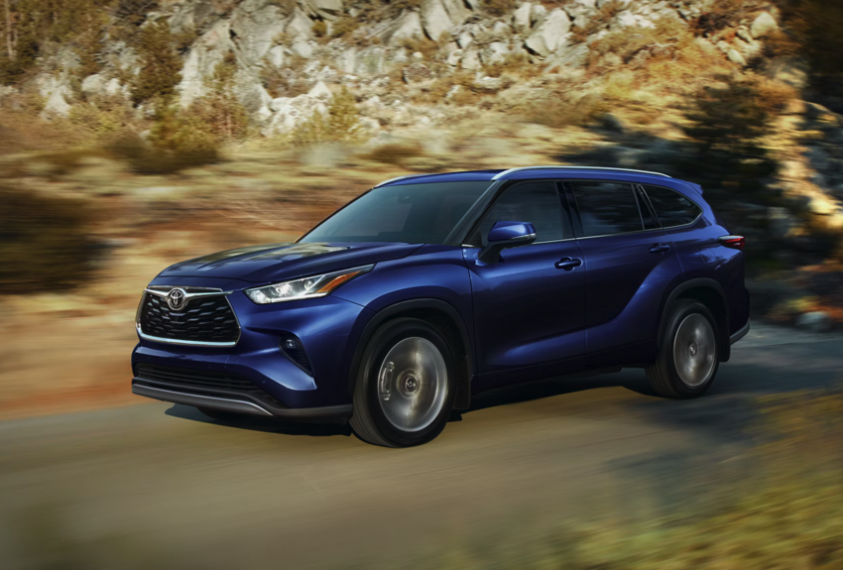
Hybrid Powertrains, MPG, Towing, and Configuration Choices
Highlander is the cleaner choice for families that want simpler three-row capability, while Grand Highlander offers more powertrain range for shoppers comparing gas, hybrid, and Hybrid MAX needs.
Highlander vs Grand Highlander powertrain comparison
The 2026 Highlander lineup gives shoppers a practical choice between turbo gas power and hybrid efficiency. Toyota confirms the gas Highlander uses a 2.4-liter turbocharged four-cylinder engine with 265 horsepower and 310 lb.-ft. of torque, and gas models add standard all-wheel drive for 2026. The Highlander Hybrid is the efficiency play, with up to a 35 MPG combined rating and 243 net combined horsepower. That makes Highlander a strong fit for families that want a traditional three-row Toyota SUV with a straightforward gas or hybrid decision.
Grand Highlander adds more choice because it offers gas, Hybrid, and Hybrid MAX powertrains. The standard Grand Highlander Hybrid focuses on efficiency and family space, while Hybrid MAX is the performance-focused option with 362 net combined horsepower and up to 5,000 pounds of towing capacity. That makes Grand Highlander especially useful for shoppers who want more room and more powertrain flexibility in the same family SUV.
| Powertrain Factor | 2026 Toyota Highlander | 2026 Toyota Grand Highlander | Best For |
|---|---|---|---|
| Gas Engine | 2.4L turbo with 265 hp and 310 lb.-ft. | Gas option available | Highlander for simpler gas SUV shopping |
| Hybrid Option | Highlander Hybrid with up to 35 MPG combined | Grand Highlander Hybrid with up to 36 MPG combined | Both for efficiency-focused families |
| Performance Hybrid | No Hybrid MAX version | Hybrid MAX with 362 net combined hp | Grand Highlander for stronger hybrid performance |
| All-Wheel Drive | Standard AWD on gas models for 2026 | Available AWD depending on grade and powertrain | Highlander gas for built-in AWD simplicity |
| Towing | Up to 5,000 lbs on gas models, up to 3,500 lbs on hybrid models | Up to 5,000 lbs with Hybrid MAX | Grand Highlander Hybrid MAX for stronger hybrid towing |
| Ideal Use Case | Families wanting easier daily size and proven three-row utility | Families wanting more space and more configuration range | Match powertrain to passenger, cargo, and towing needs |
Based on current Toyota published specifications.
The best Toyota three-row SUV powertrain depends on the family job. We recommend Highlander gas for shoppers who want turbo power, standard AWD, and a manageable footprint. We recommend Highlander Hybrid for families focused on MPG. We recommend Grand Highlander Hybrid when space and efficiency matter together, and Grand Highlander Hybrid MAX when a larger family SUV also needs stronger acceleration or higher towing capability.
Which configuration should Durham drivers choose?
For Durham drivers, the right configuration depends less on the badge and more on your actual routine. A daily commuter parent who wants strong MPG and a size that feels easier in parking lots should start with Highlander Hybrid. A family that regularly fills every row should start with Grand Highlander Hybrid. A household that tows, travels with more people, or wants stronger hybrid performance should look closely at Grand Highlander Hybrid MAX.
- If you commute around Durham and rarely fill all three rows, we recommend Highlander Hybrid because it keeps the family-SUV experience efficient and easier to manage.
- If you live in Cary and carry car seats, strollers, and sports gear, we recommend Grand Highlander because the larger cargo area will be used often.
- If you travel from Chapel Hill with older kids and grandparents, we recommend Grand Highlander Hybrid because the third row and cargo space matter more.
- If you tow a small trailer or want stronger passing power, we recommend Grand Highlander Hybrid MAX because it adds the performance side of the lineup.
For a Raleigh commuter parent, the Highlander Hybrid is usually the cleaner daily choice because it pairs family seating with strong efficiency and a more manageable size. For a Chapel Hill road-trip family, Grand Highlander Hybrid is usually the smarter choice because the larger cabin and cargo space reduce packing stress. The right answer is the SUV that solves your weekly routine, not the one that only looks better on paper.
If you are choosing between Highlander and Grand Highlander, we recommend visiting our Durham showroom and testing the space instead of deciding from specs alone. Sit in the third row, open the liftgate, check cargo room with the seats up, and compare how each SUV feels from the driver’s seat. Our team can walk you through gas, hybrid, and Hybrid MAX choices, explain current vehicle availability, and help you request numbers for the configuration that fits your family. Drivers from Durham, Raleigh, Chapel Hill, Cary, and Apex can call us at 919-493-5599 or start with our Toyota SUV research tools online before visiting. We want the comparison to feel practical, because the right three-row SUV should fit your family without creating a harder daily routine.
Pricing, Trims, and Family Value for Triangle Shoppers
The smarter value is not always the cheaper SUV. It is the Toyota three-row SUV that your family will not outgrow too quickly or overbuy unnecessarily.
Trim differences, budget fit, and local use-case recommendations
Highlander keeps the family decision cleaner for many buyers because its trims focus on mainstream comfort, hybrid efficiency, and premium family features without forcing shoppers into the largest SUV in the lineup. Families moving up from RAV4 often find Highlander easier to accept because it adds three-row flexibility while still feeling approachable. Grand Highlander, on the other hand, is better for families that already know they need more space and want to choose from a broader mix of gas, hybrid, and Hybrid MAX grades.
For Triangle shoppers, we recommend using real local routines to decide. Durham commuting, Raleigh to RTP traffic, Chapel Hill road trips, Cary school and sports schedules, and Apex weekend travel all reveal different needs. A family that usually carries five people can often choose Highlander confidently. A family that carries passengers and luggage together should move Grand Highlander higher on the list.
| Driver Profile | Local Scenario | Recommended Toyota SUV | Why It Fits |
|---|---|---|---|
| Durham family of five | Needs three rows occasionally but wants easier daily parking | Highlander | Good balance of flexibility and manageable size |
| Cary parents with car seats | Need stroller and grocery space with passengers aboard | Grand Highlander | More cargo room behind occupied seats |
| Raleigh commuter parent | Wants MPG, comfort, and simpler weekday driving | Highlander Hybrid | Strong efficiency with easier daily usability |
| Chapel Hill road-trip household | Travels with older kids, luggage, and grandparents | Grand Highlander Hybrid | Better cabin and cargo flexibility for longer trips |
| Apex family upgrading from RAV4 | Needs more room but not maximum size | Highlander XLE or Limited | Natural step up without overbuying space |
| Triangle household with towing needs | Wants larger cabin and stronger hybrid performance | Grand Highlander Hybrid MAX | Best fit for power, space, and towing logic |
Based on current Toyota published specifications.
For families in Durham and nearby communities, Highlander is often the better value when the third row is backup space and daily maneuverability matters. Grand Highlander is often the better value when the third row, cargo area, and road-trip comfort are weekly needs. We recommend deciding by frequency, not by the rare biggest trip of the year.
Value Your Trade for a Toyota SUVIf payment, trade value, or long-term family fit is the biggest question, we can help you compare Highlander and Grand Highlander with real numbers. Our team can review your current vehicle, discuss finance options, and help you decide whether the step up in size is worth it for your household. We work with families from Durham, Raleigh, Chapel Hill, Cary, and Apex every day, and our Mark Says Yes! approach is built around practical guidance instead of pressure. If you are moving from a RAV4, Camry, Sienna, or an older three-row SUV, we can help you compare space, payment, and ownership needs in one visit. Call us at 919-493-5599 or visit us at 4516 Durham-Chapel Hill Blvd so we can help you choose the Toyota SUV that fits your real routine.
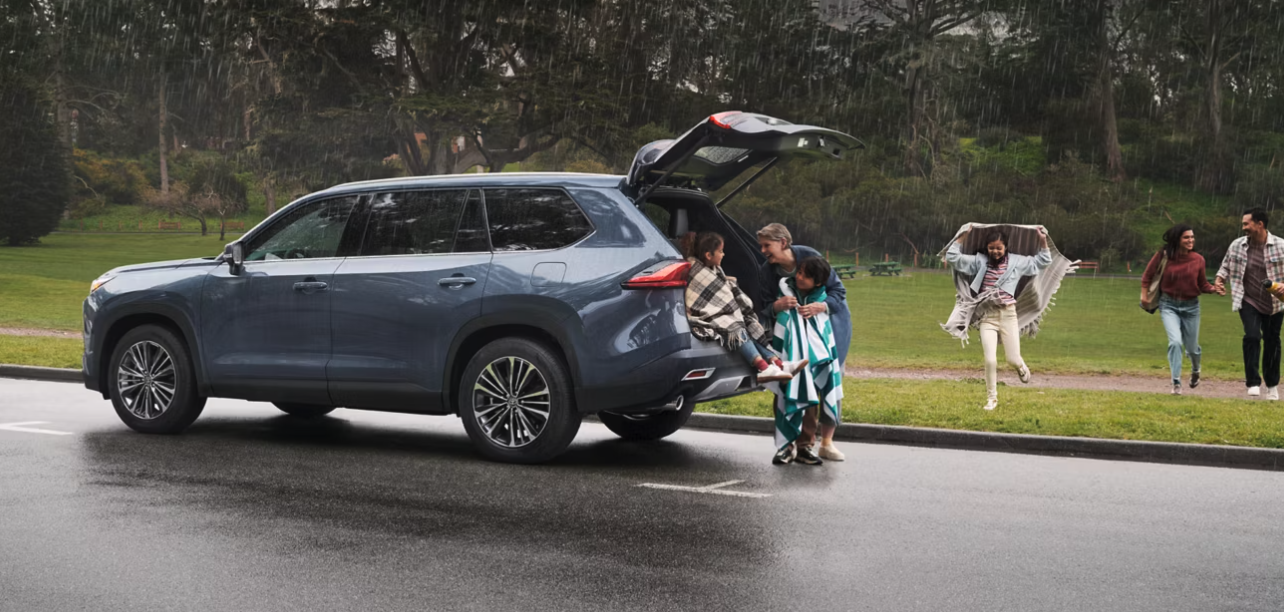
Family and Lifestyle Fit: When Highlander Is Enough and When Grand Highlander Is Worth It
Highlander is enough when your family needs flexible seating, while Grand Highlander is worth it when extra room solves a weekly passenger or cargo problem.
We recommend Highlander when your family wants a three-row SUV but does not constantly use all three rows. It is the better fit for households that need a flexible third row for friends, visiting relatives, or occasional carpool duty. For an Apex family upgrading from RAV4, Highlander often feels like the right step because it adds seating without making daily driving feel oversized.
We recommend Grand Highlander when your family has already outgrown smaller three-row flexibility. If you regularly carry older kids, grandparents, sports gear, luggage, or multiple car seats, the larger SUV is not just a luxury. It becomes the vehicle that prevents daily frustration. For Cary parents packing strollers and groceries or a Chapel Hill household planning longer trips, Grand Highlander can become the better ownership decision very quickly.
The cleanest way to decide is to count how often you use the third row and cargo space at the same time. If that happens a few times a year, Highlander is usually enough. If that happens most weeks, Grand Highlander is usually worth it.
Ownership Cost Analysis: MPG, Tires, Service, Insurance, and Long-Term Practicality
The better long-term value depends on whether the SUV keeps fitting your family after the first year of school runs, commuting, road trips, and service visits.
Ownership value is not only about MSRP. It also includes fuel use, tire replacement, service, insurance, parking ease, and the chance that your family outgrows the vehicle too soon. Highlander usually gives the cleaner cost case for families that need flexibility more than maximum space. Its available hybrid efficiency, manageable size, and ToyotaCare support make it a smart fit for commuters and smaller families who still want three rows.
Grand Highlander makes the better cost argument when its extra room prevents a future trade-in that happens too early. If your family constantly fights for space, packs heavily, or uses all three rows, buying too small can cost more in frustration and replacement timing. Grand Highlander Hybrid is especially attractive because it gives families larger-SUV usefulness with strong fuel economy. Hybrid MAX makes sense when stronger power and towing matter enough to justify the added cost.
- If you want lower overall family-SUV complexity, we recommend Highlander because it is easier to live with every day.
- If you want more room without jumping to a full-size SUV, we recommend Grand Highlander because it expands family utility meaningfully.
- If fuel cost is a major concern, we recommend comparing Highlander Hybrid and Grand Highlander Hybrid first.
- If towing or acceleration matters, we recommend Grand Highlander Hybrid MAX because it gives the stronger performance setup.
Our service team also reminds families that tires, brakes, alignment, and regular inspections matter more as vehicle size, passenger load, and trip frequency increase. Whether you choose Highlander or Grand Highlander, consistent factory-scheduled maintenance helps protect the ownership value you are counting on.
Schedule Toyota SUV ServiceKey Takeaways
- Highlander is the better fit when three-row seating is flexible backup space rather than a constant need.
- Grand Highlander is better when the third row and cargo area are used together often.
- Highlander Hybrid reaches up to 35 MPG combined, while Grand Highlander Hybrid reaches up to 36 MPG combined.
- Grand Highlander Hybrid MAX is the stronger choice for buyers who want more power and towing capability.
- For Durham commuting, Highlander usually feels easier; for family trips, Grand Highlander usually feels roomier.
2026 Toyota Highlander vs Grand Highlander FAQ for Durham Families
What is the main difference between the 2026 Highlander and Grand Highlander?
The main difference is usable space. Highlander gives families three rows in a more manageable SUV, while Grand Highlander provides a larger cabin, more third-row comfort, and more cargo room for full-family travel. We recommend Highlander when your third row is occasional. We recommend Grand Highlander when your family regularly carries passengers and cargo at the same time, especially for road trips, carpools, and busy Triangle family schedules.
Is the Grand Highlander worth it over the Highlander?
Grand Highlander is worth it when the extra room solves a weekly problem. If your family uses the third row often, carries strollers or sports gear, or takes longer trips with older kids and grandparents, the larger SUV usually justifies itself. If your family usually carries four or five people and only occasionally needs extra seating, Highlander often makes more sense because it is easier to drive, park, and fit into daily Durham routines.
Which Toyota SUV is better for Durham commuting?
For most Durham commuting, we recommend Highlander because it gives families useful three-row flexibility in a more manageable size. It is easier to place in traffic, easier to park, and available as a hybrid for strong fuel efficiency. Grand Highlander can still commute well, but it makes the most sense when your household uses the extra cabin and cargo room often enough to justify the larger footprint every day.
Which one should families with car seats, strollers, or older kids choose?
Families with multiple car seats, strollers, older kids, or frequent third-row passengers should start with Grand Highlander. The larger cabin and more useful cargo area help when the SUV is loaded with both people and gear. We recommend Highlander for lighter family duty, but we recommend Grand Highlander when space needs are already obvious before the test drive. That is usually the clearest sign that the larger Toyota SUV is the better fit.
We are here to help you choose the right Toyota three-row SUV at Mark Jacobson Toyota, 4516 Durham-Chapel Hill Blvd, Durham, NC 27707. Our team works with families from Durham, Raleigh, Chapel Hill, Cary, and Apex who want clear guidance on space, MPG, trims, payments, trade value, and long-term ownership fit. We can compare Highlander and Grand Highlander side by side, discuss ToyotaCare, review Mark Says Yes! options, and help you decide which SUV fits the way your family moves every week. Call us at 919-493-5599, start online, or visit our Durham showroom so we can help you choose confidently.

2026 Toyota GR Corolla: Performance & Overview
The 2026 Toyota GR Corolla is a turbocharged, all-wheel-drive performance hatchback built for drivers who want serious speed, grip, and everyday usability in one compact Toyota. At Mark Jacobson Toyota, we recommend it for Durham drivers who want a 300-horsepower car with GR-FOUR All-Wheel Drive, a choice between an 8-speed automatic and a 6-speed manual, and hatchback flexibility for daily life. For a young professional commuting on NC-147 who still wants a fun weekend car, the GR Corolla makes sense because it combines rally-inspired hardware with five-door practicality.
This is not a regular Corolla with a sport appearance package. The 2026 GR Corolla uses a turbocharged 1.6-liter G16E-GTS three-cylinder engine that makes 300 horsepower and 295 lb.-ft. of torque. It also gives drivers selectable GR-FOUR torque distribution, available Michelin Pilot Sport 5 performance tires, high-performance brakes, circuit-tuned suspension, and available Premium Plus equipment such as a forged carbon-fiber roof and head-up display.
Our goal in this guide is simple. We want to help Durham, Raleigh, Chapel Hill, Cary, and Apex shoppers understand the 2026 Toyota GR Corolla performance specs, trim differences, transmission choices, local driving fit, and ownership considerations before making a decision. We will also compare it with practical Toyota alternatives like Corolla Hatchback, Corolla Hybrid, and GR86 so buyers can decide whether they need maximum performance, maximum efficiency, or something between the two.
Table of Contents
- Engine Specs, Horsepower, and GR-FOUR AWD Performance
- 2026 GR Corolla Trims, Pricing, and Best-Fit Configurations
- How the GR Corolla Fits Triangle Roads and Local Driving
- Technical Deep Dive: Why GR-FOUR AWD Matters Beyond Track Driving
- Ownership Cost Analysis: Tires, Brakes, Fuel, and Maintenance for a Performance Hatchback
- Key Takeaways
- 2026 Toyota GR Corolla FAQ for Durham Performance Shoppers
The 2026 Toyota GR Corolla is a compact performance hatchback with a turbocharged engine, all-wheel drive, and track-inspired handling hardware. It is designed for drivers who want high-output performance in a practical five-seat body style. For drivers in Durham, Raleigh, Chapel Hill, Cary, and Apex, it provides year-round traction and daily usability.
Engine Specs, Horsepower, and GR-FOUR AWD Performance
The 2026 GR Corolla is defined by its 300-horsepower turbo engine, GR-FOUR AWD system, and driver-focused transmission choices rather than appearance upgrades alone.
Turbocharged 1.6-liter engine, horsepower, and torque delivery
The heart of the 2026 GR Corolla is its turbocharged 1.6-liter G16E-GTS three-cylinder engine. Toyota rates it at 300 horsepower and 295 lb.-ft. of torque, which gives this compact hatchback the kind of output many shoppers associate with larger performance cars. That output matters for Durham drivers because the GR Corolla can feel energetic in short passing zones, quick on highway ramps, and responsive during weekend drives without giving up the easy loading and rear-seat access of a hatchback body.
The GR Corolla delivers 300 horsepower and 295 lb.-ft. of torque from a turbocharged 1.6-liter engine, which makes it one of the most performance-focused Toyota models available for compact-car shoppers. We recommend it for drivers who want a daily Toyota with real enthusiast hardware instead of a regular commuter car with sporty styling. For Raleigh commuters who want quick acceleration and a compact footprint, this engine is the reason the GR Corolla stands apart from Corolla Hatchback and Corolla Hybrid.
| Performance Spec | 2026 Toyota GR Corolla | Why It Matters |
|---|---|---|
| Engine | Turbocharged 1.6-liter 3-cylinder | Compact engine with high output and quick response |
| Horsepower | 300 hp | Strong acceleration for a compact hatchback |
| Torque | 295 lb.-ft. | Useful pull for daily driving and spirited back-road use |
| Drivetrain | GR-FOUR All-Wheel Drive | Traction advantage in rain, curves, and performance driving |
| Transmission Choices | 8-speed automatic or 6-speed manual | Lets shoppers choose convenience or driver involvement |
| EPA MPG | Up to 21 city, 28 highway, 24 combined with manual | Performance-focused economy, not hybrid-car efficiency |
| Best For | Performance hatchback shoppers | Drivers who want speed, grip, and daily usability in one Toyota |
Based on current Toyota published specifications and FuelEconomy.gov.
- The GR Corolla is best for shoppers who prioritize performance over maximum fuel savings.
- The regular Corolla Hatchback is better for buyers who want lower ownership costs and simple daily transportation.
- The Corolla Hybrid is better for commuters who care more about MPG than turbocharged acceleration.
- The GR86 is better for drivers who want rear-wheel-drive sports-car balance instead of hatchback practicality.
GR-FOUR AWD, Torsen differentials, and cornering confidence
The GR-FOUR All-Wheel Drive system is one of the main reasons we see performance shoppers take the GR Corolla seriously. Toyota says the system has selectable front-to-rear torque distribution settings of 60:40 for everyday driving, 50:50 for maximum stability, and 30:70 for a more rear-biased feel. That is useful because the car is not locked into one personality. A driver can use the calmer setting for weekday traffic and a more aggressive setting for a Saturday morning drive outside the city.
For Chapel Hill drivers who deal with rain, changing pavement, and curving rural roads, GR-FOUR AWD is not just a track feature. It helps the GR Corolla feel planted in conditions where a front-wheel-drive compact can feel busy. The available front and rear Torsen limited-slip differentials also matter because they help manage power delivery when traction changes mid-corner. Our sales team walks customers through this system carefully because AWD performance is only meaningful when the buyer understands how it changes the drive.
Manual vs automatic: which transmission fits your driving style?
The transmission choice is where the GR Corolla becomes personal. The 6-speed manual is the enthusiast choice because it gives drivers more control, more interaction, and the traditional hot-hatch feeling many GR shoppers want. The 8-speed automatic is the easier everyday choice because it adds paddle shifters and removes clutch work from Durham traffic. Neither option is wrong. The right one depends on whether the driver values daily convenience or maximum involvement.
For a Cary driver using the GR Corolla as a year-round commuter, we often recommend the 8-speed automatic because stop-and-go driving on I-40 can make a manual feel less relaxing over time. For a weekend performance driver who enjoys choosing every shift, we recommend the 6-speed manual because it gives the car a more connected feel. What we see here in Durham is that shoppers who test both transmissions usually know quickly which version fits their personality.
2026 GR Corolla Trims, Pricing, and Best-Fit Configurations
The 2026 GR Corolla lineup is easiest to understand as a choice between essential performance value and Premium Plus equipment that adds more comfort, design, and track-inspired hardware.
GR Corolla vs GR Corolla Premium Plus comparison
The 2026 lineup includes the GR Corolla and GR Corolla Premium Plus grades in Toyota’s current model information. Toyota lists a starting MSRP of $40,120 for GR Corolla, with MSRP excluding delivery processing and handling. Mark Jacobson Toyota’s local model information shows a starting figure of $39,920, and pricing can vary based on equipment, transmission, region, fees, and market updates. For article accuracy, we recommend treating Toyota’s current published MSRP as the primary reference and local vehicle availability as the shopping reference.
The Premium Plus grade is the better fit for drivers who want the GR Corolla to feel more special every day. It adds features shoppers often associate with a more complete enthusiast package, including available carbon-fiber roof design, enhanced interior details, head-up display availability, and appearance upgrades. The base GR Corolla is still the pure performance value because the main performance identity, turbo power, AWD, and transmission choice remain central to the car.
| Comparison Point | 2026 GR Corolla | 2026 GR Corolla Premium Plus | Best For |
|---|---|---|---|
| Starting MSRP | $40,120, excluding delivery processing and handling | Higher MSRP depending on configuration | GR Corolla for value-focused performance shoppers |
| Engine Output | 300 hp and 295 lb.-ft. | 300 hp and 295 lb.-ft. | Both deliver the same core turbo output |
| Drivetrain | GR-FOUR AWD | GR-FOUR AWD | Both for all-weather performance traction |
| Transmission Choice | 8-speed automatic or 6-speed manual | 8-speed automatic or 6-speed manual | Both for drivers choosing convenience or engagement |
| Premium Features | Performance essentials | More comfort, design, and specialty equipment | Premium Plus for drivers who want a more complete package |
| Ideal Use Case | Daily driver with serious performance hardware | Performance hatchback with added premium feel | Choose based on budget and desired equipment |
Based on current Toyota published specifications.
We recommend the standard GR Corolla for buyers who want the most direct route to 300 horsepower, GR-FOUR AWD, and a true performance hatchback experience. We recommend the GR Corolla Premium Plus for shoppers who want the same core performance but also care about a richer interior feel, available head-up display, and more distinctive exterior details. The key difference is not raw horsepower. The key difference is how complete you want the car to feel every day.
Check GR Corolla AvailabilityWhich GR Corolla setup should Durham drivers choose?
For Durham-area shoppers, the right GR Corolla setup depends on daily route, driving personality, and how often the car will be used in traffic. A buyer who wants maximum connection should start with the 6-speed manual. A buyer who wants performance but also deals with school traffic, RTP commuting, and frequent stoplights should consider the 8-speed automatic. Our customers who choose performance cars usually know the spec sheet matters, but the daily routine decides whether they enjoy the car long term.
- If you commute on NC-147 and want less fatigue in traffic, we recommend the 8-speed automatic because it keeps the car easier to live with every day.
- If you drive for fun on weekends and want full involvement, we recommend the 6-speed manual because it makes every shift part of the experience.
- If you are upgrading from Corolla Hatchback in Cary, we recommend the GR Corolla grade first because it gives you the main performance hardware without forcing every premium feature.
- If you want a special-feeling performance Toyota for both daily driving and weekend use, we recommend Premium Plus because the extra equipment makes the cabin and exterior feel more complete.
For performance shoppers in Durham, the best 2026 GR Corolla setup is the one that matches how the car will be driven Monday through Friday, not just how it looks in a weekend scenario. We recommend the manual for drivers who want engagement first and the automatic for drivers who want speed with less effort in traffic. Premium Plus is the better choice when the buyer wants the GR Corolla to feel like a specialty vehicle every time they open the door.
If you are serious about the GR Corolla, we recommend visiting our Durham showroom so we can compare transmission choices, available colors, and incoming vehicle options with you directly. Our team can help you decide whether the 6-speed manual or 8-speed automatic fits your route, your comfort level, and your long-term ownership plan. We can also help you compare GR Corolla with Corolla Hatchback, Corolla Hybrid, GR86, or another Toyota model if you are still deciding between performance and everyday economy. Drivers from Durham, Raleigh, Chapel Hill, Cary, and Apex can call us at 919-493-5599 or start with our 2026 GR Corolla information online before stopping by. We want the test-drive process to answer real questions about steering feel, seat comfort, visibility, ride firmness, and how the car fits your daily routine.
How the GR Corolla Fits Triangle Roads and Local Driving
The GR Corolla makes the most sense locally for drivers who want all-weather grip, compact size, and performance that still works in Durham traffic and Triangle rain.
Durham rain, I-40 traffic, NC-147 curves, and weekend drives
Durham-area driving gives the GR Corolla a real reason to exist beyond track-day fantasy. Triangle rain, summer heat, patched pavement, downtown Durham traffic, NC-147 commuting, and I-40 congestion all test whether a performance car is usable. The GR Corolla’s compact size helps in parking decks and city traffic, while GR-FOUR AWD helps the car feel secure when weather changes quickly. For Raleigh commuters who want more confidence during wet highway drives, AWD becomes part of the daily value.
Based on our experience with Triangle drivers, the GR Corolla fits best when a shopper wants one compact car that can handle weekday responsibilities and still feel rewarding on weekend roads. For Chapel Hill drivers using US-15/501, the torque-rich engine and AWD system add confidence during merging and curving sections. For Apex or Cary buyers who want a fun Toyota without moving into a larger vehicle, the hatchback layout keeps the car more practical than a traditional two-door sports car.
| Local Driving Scenario | Driver Need | GR Corolla Feature | Recommended Fit |
|---|---|---|---|
| Durham downtown traffic | Compact size and responsive power | Hatchback footprint and turbo torque | Good fit for performance-minded commuters |
| Raleigh to RTP commute | Rain confidence and highway stability | GR-FOUR AWD and Toyota Safety Sense 3.0 | Good fit for drivers who want grip and assistance features |
| Chapel Hill back roads | Cornering confidence | Torsen limited-slip differentials and tuned suspension | Strong fit for weekend driving |
| Cary daily errands | Usability and easy loading | Five-door hatchback body | Better fit than a two-door sports car |
| Apex weekend trip | Fun drive plus cargo flexibility | Rear hatch and fold-down seating | Good fit for light gear and overnight bags |
| Ideal Use Case | One car for weekday duty and weekend fun | 300 hp, AWD, hatchback utility | Best for drivers who value performance first |
Based on current Toyota published specifications.
Value Your Trade Toward GR CorollaIf you are comparing the GR Corolla with another Toyota or trying to decide whether a performance hatchback fits your budget, we can help you build the numbers around your real routine. Our team can review your trade value, discuss monthly payment options, and help you compare new Toyota models without turning the visit into a rushed decision. We work with drivers from Durham, Raleigh, Chapel Hill, Cary, and Apex every day, and our Mark Says Yes! approach is built around helping shoppers find a Toyota that fits their needs and their comfort level. If you already own a Corolla, Camry, RAV4, GR86, or another vehicle, we can help you understand how the GR Corolla changes the ownership picture. Call us at 919-493-5599 or visit us at 4516 Durham-Chapel Hill Blvd so we can walk through the performance, finance, and trade details together.
Technical Deep Dive: Why GR-FOUR AWD Matters Beyond Track Driving
GR-FOUR AWD matters because it helps the GR Corolla put power down with more confidence in daily rain, tight corners, and spirited driving.
Some shoppers hear AWD and think only about winter weather, but that misses the point of the GR Corolla. GR-FOUR AWD is a performance traction system, not just a bad-weather feature. The selectable 60:40, 50:50, and 30:70 torque distribution settings let the driver choose a feel that matches the road and the mood. That gives the GR Corolla more range than a typical front-wheel-drive hot hatch.
For a Durham driver who wants one car for workdays and weekend fun, GR-FOUR AWD helps the GR Corolla feel more settled when the road surface changes. On rainy Triangle mornings, the system supports traction and stability. On a dry weekend drive, it helps the car feel more eager and balanced. We recommend paying attention to this system during a test drive because it is one of the clearest reasons to choose GR Corolla over a regular Corolla model.
The Torsen limited-slip differentials also add value because they help distribute power more effectively when cornering. For a Chapel Hill driver who enjoys winding roads, this can make the car feel more precise. For a daily commuter, it supports a calmer sense of control. That mix of confidence and excitement is the GR Corolla’s technical advantage.
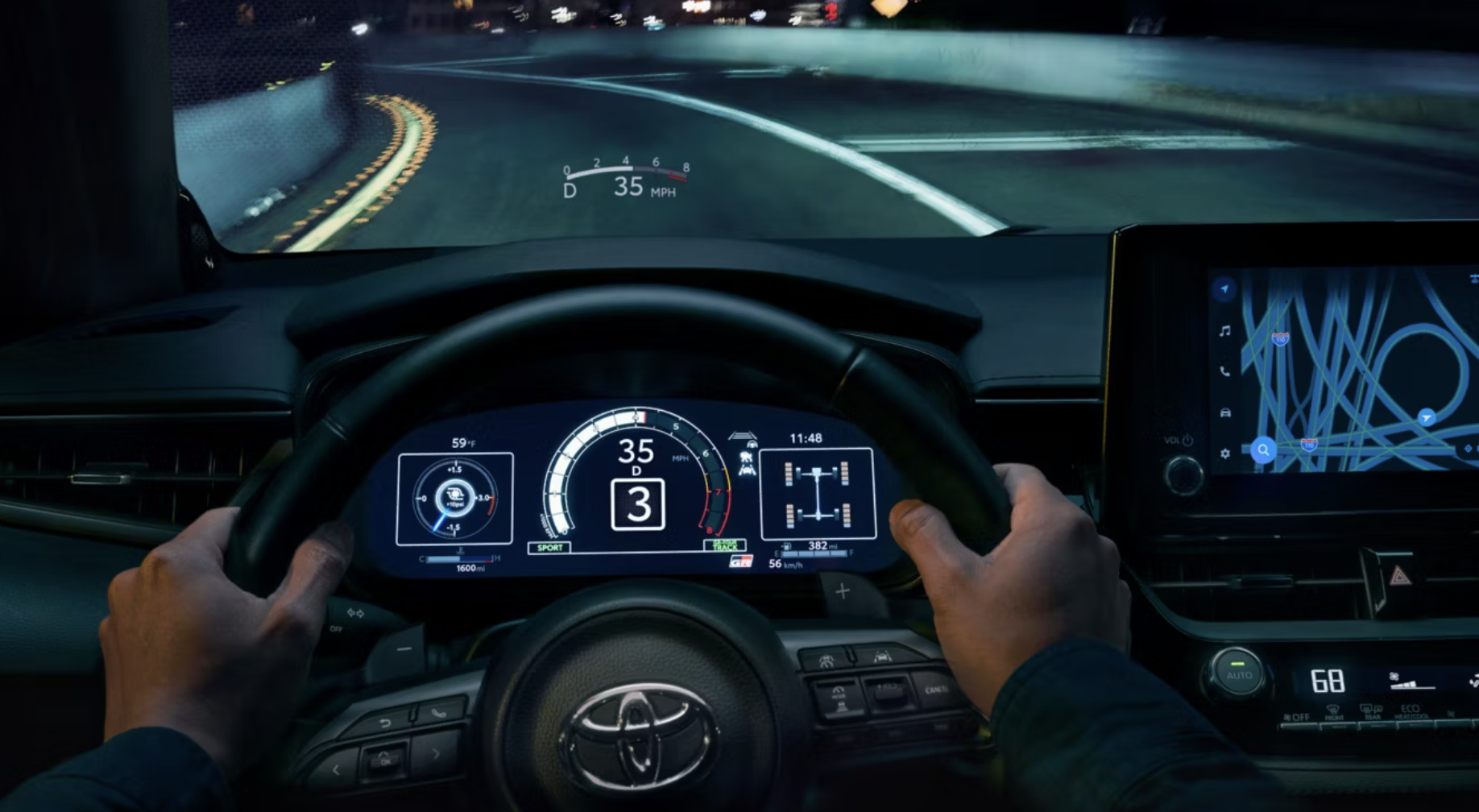
Ownership Cost Analysis: Tires, Brakes, Fuel, and Maintenance for a Performance Hatchback
The GR Corolla can work as a daily driver, but buyers should plan for performance-car fuel, tire, brake, and maintenance expectations rather than regular Corolla ownership costs.
The GR Corolla is still a Toyota, but it is not built around the same ownership priorities as Corolla Hybrid or Corolla Hatchback. It uses premium gasoline, performance tires, high-output turbo hardware, and upgraded brakes. FuelEconomy.gov lists the 2026 GR Corolla manual at 24 combined MPG, with 21 city and 28 highway. That is reasonable for a 300-horsepower AWD performance hatchback, but it is not the right fit for shoppers whose main goal is fuel savings.
Our service team advises GR Corolla shoppers to think about tires and brakes as part of the performance value. Sticky tires and stronger brakes are part of why the car feels sharp, but they may wear faster depending on driving style. If you drive aggressively, take frequent weekend drives, or spend a lot of time in stop-and-go traffic, inspections matter. ToyotaCare can help with scheduled maintenance during the covered period, and our certified technicians can help keep the vehicle aligned with factory expectations.
- If you want maximum MPG, we recommend Corolla Hybrid instead of GR Corolla because efficiency is its main strength.
- If you want practical daily driving with a lower cost profile, Corolla Hatchback may fit better than GR Corolla.
- If you want performance first, we recommend planning for premium fuel, tire inspections, brake checks, and regular service visits.
- If you drive in heavy Durham traffic, we recommend staying consistent with maintenance because heat, braking, and short trips can add wear.
For an Apex weekend road tripper who wants a fun car with luggage space, the GR Corolla can still be practical. The key is to buy it for what it is. It is a compact performance hatchback with daily usability, not an economy hatchback with a few sporty touches.
Schedule GR Corolla ServiceKey Takeaways
- The 2026 GR Corolla makes 300 horsepower and 295 lb.-ft. of torque from a turbocharged 1.6-liter engine.
- GR-FOUR AWD gives the car selectable torque distribution for daily driving, stability, and a more rear-biased feel.
- The 6-speed manual is best for driver involvement, while the 8-speed automatic fits daily traffic better.
- Premium Plus is the stronger fit for shoppers who want more comfort, design, and specialty equipment.
- For maximum MPG, Corolla Hybrid is the smarter Toyota choice.
- For performance with hatchback practicality, GR Corolla is the stronger enthusiast choice.
2026 Toyota GR Corolla FAQ for Durham Performance Shoppers
How much horsepower does the 2026 Toyota GR Corolla have?
The 2026 Toyota GR Corolla has 300 horsepower and 295 lb.-ft. of torque from a turbocharged 1.6-liter three-cylinder engine. We recommend it for shoppers who want a compact Toyota with true performance hardware, not just sport styling. For a Raleigh commuter who wants quick acceleration, AWD traction, and a car that still fits easily into parking decks and tight spaces, the GR Corolla offers a strong mix of power and practicality.
Is the 2026 GR Corolla good for daily driving?
The 2026 GR Corolla can be a good daily driver if you want performance first and are comfortable with performance-car ownership expectations. It has five doors, hatchback utility, available automatic transmission convenience, Toyota Safety Sense 3.0, and all-wheel drive. We recommend the 8-speed automatic for shoppers who spend a lot of time in Durham traffic, while the 6-speed manual is better for drivers who want a more involved experience every time they drive.
Should I choose the manual or automatic GR Corolla?
We recommend the 6-speed manual if you want the most connected GR Corolla driving experience and enjoy choosing every shift yourself. We recommend the 8-speed automatic if your routine includes I-40 traffic, daily commuting, or frequent city driving. Both versions keep the core GR Corolla performance identity, so the decision should come down to how much convenience you want during the week versus how much involvement you want on weekend drives.
What is the difference between GR Corolla and Premium Plus?
The standard GR Corolla gives shoppers the main performance pieces, including 300 horsepower, GR-FOUR AWD, and manual or automatic transmission choices. Premium Plus adds more premium equipment and a more specialty feel, making it better for buyers who want the GR Corolla to feel more complete every day. We recommend starting with the standard grade for value and moving to Premium Plus if comfort, design, and extra equipment matter as much as speed.
We are here to help you choose the right performance Toyota at Mark Jacobson Toyota, 4516 Durham-Chapel Hill Blvd, Durham, NC 27707. Our team works with drivers from Durham, Raleigh, Chapel Hill, Cary, and Apex who want a car that fits real daily life while still feeling exciting on the right road. We can help you compare GR Corolla, GR86, Corolla Hatchback, Corolla Hybrid, and other Toyota models so the final choice matches your budget, route, and driving style. Our Mark Says Yes! approach and ToyotaCare support help make the shopping and ownership process clearer from the start. Call us at 919-493-5599, review the 2026 GR Corolla information online, or visit our Durham showroom so we can help you decide whether this turbocharged AWD hatchback is the right Toyota for you.
If your family is choosing between the 2026 Toyota Highlander Hybrid and the 2026 Toyota Grand Highlander Hybrid, the short answer is simple. At Mark Jacobson Toyota, we recommend the Highlander Hybrid for families who want a more manageable three-row SUV with strong efficiency and standard all-wheel drive without stepping into a larger footprint. We recommend the Grand Highlander Hybrid for households that regularly use the third row and need more usable cargo space behind it. Both are strong family vehicles. The difference is how much space your family actually uses every week.
The numbers explain why this distinction matters. Toyota says the 2026 Highlander Hybrid delivers a manufacturer-estimated 35 combined MPG, seats up to eight, and offers up to 84.3 cubic feet of cargo space with the seats folded. The Grand Highlander Hybrid reaches up to 36 combined MPG, adds 20.6 cubic feet of cargo behind the third row, opens up to 97.5 cubic feet of max cargo room, and gives the third row 33.5 inches of legroom. That means the Grand Highlander Hybrid is not simply a bigger Highlander. It is the better answer when your family-space problem is already real instead of theoretical.
In this guide, we compare family space, hybrid MPG, towing, trim differences, daily-driver fit, and long-term value for Durham, Raleigh, Chapel Hill, Cary, and Apex households. We also give direct recommendations for commuters, parents with car seats, families of five, road-trip households, and buyers trying to decide when Highlander Hybrid is enough and when Grand Highlander Hybrid is worth the step up.
Table of Contents
- Seating Capacity, Cargo Room, and Overall Family Space
- Hybrid Powertrains and Fuel Economy Compared
- Pricing, Trims, and Feature Differences That Matter
- When Highlander Hybrid Is Enough and When Grand Highlander Hybrid Is Worth the Step Up
- Which Toyota Hybrid SUV Gives You the Better Long-Term Family Value?
- Key Takeaways
- 2026 Toyota Highlander Hybrid vs Grand Highlander Hybrid FAQ for Durham Families
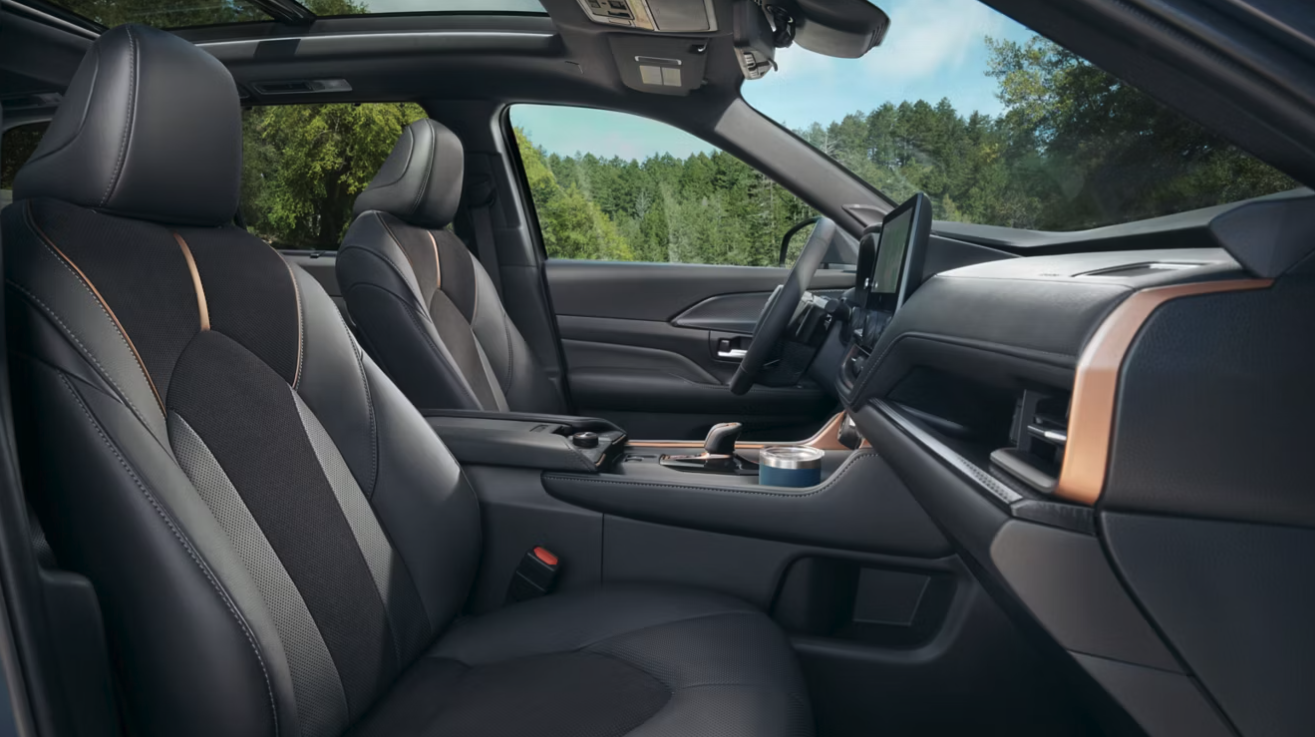
The 2026 Toyota Highlander Hybrid and 2026 Toyota Grand Highlander Hybrid are three-row hybrid SUVs built for different family needs. Highlander Hybrid prioritizes efficiency and easier daily maneuverability. Grand Highlander Hybrid prioritizes third-row comfort and cargo flexibility for larger households and longer trips.
Seating Capacity, Cargo Room, and Overall Family Space
The biggest real-world difference between Highlander Hybrid and Grand Highlander Hybrid is not fuel economy. It is how much usable family space you get when all the seats are actually in use.
Third-row comfort, seating layouts, and who really fits best
The Highlander Hybrid still works well for many families because it gives you three rows in a more manageable overall SUV size. Toyota says it seats up to eight and makes AWD standard across the 2026 Hybrid lineup. For a Durham family of four or five that only uses the third row occasionally, that can be enough. The Highlander Hybrid still gives parents a family-friendly Toyota SUV with better maneuverability and a slightly smaller footprint for parking decks, tighter retail lots, and daily commuting around RTP and Durham.
The Grand Highlander Hybrid changes the conversation because its third row is more believable for regular use. Toyota says it also seats up to eight, but the key difference is the 33.5 inches of third-row legroom. That is why families with older kids, grandparents, or regular carpool duty understand the vehicle immediately. For a Chapel Hill road-trip family or an Apex household with more frequent full-cabin use, the Grand Highlander Hybrid feels less like a compromise and more like the right tool.
| Family Space Factor | 2026 Highlander Hybrid | 2026 Grand Highlander Hybrid | Best Fit |
|---|---|---|---|
| Passenger Capacity | Up to 8 | Up to 8 | Both fit larger families on paper |
| Third-Row Comfort | More occasional-use oriented | 33.5 inches of third-row legroom | Grand Highlander Hybrid for regular third-row use |
| Overall Footprint | More manageable daily size | Larger three-row body | Highlander Hybrid for easier urban use |
| Family Flexibility | Strong for lighter family use | Better for bigger households and trips | Grand Highlander Hybrid for heavier family duty |
| School-Run Practicality | Easier to place and park | More room when everyone rides together | Depends on passenger count |
| Best For | Families who do not max out cabin space often | Families who regularly use all three rows | Different needs, not a simple winner |
Based on Toyota official website and Toyota USA Newsroom.
- Choose Highlander Hybrid if you want a three-row SUV that still feels easier to manage every day.
- Choose Grand Highlander Hybrid if your third row needs to be useful more than occasionally.
- Choose Grand Highlander Hybrid if your household often includes older kids, grandparents, or carpools.
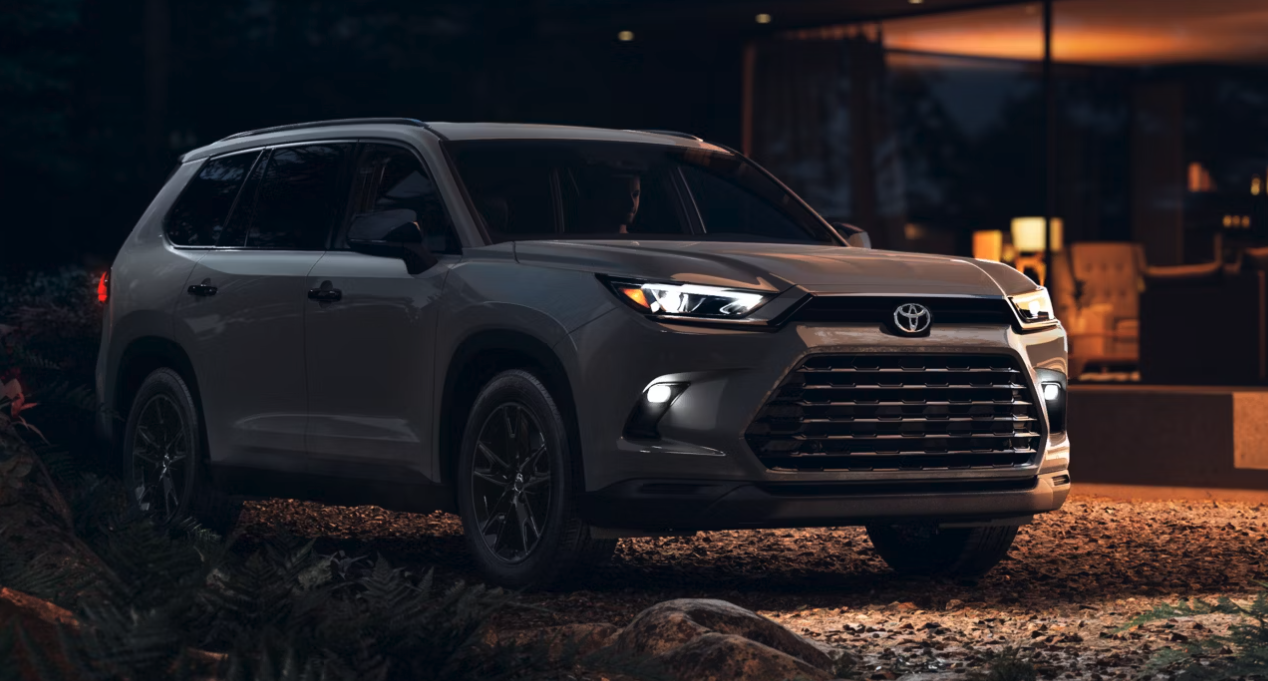
Cargo behind the third row, max cargo, and family loading scenarios
Cargo is where the Grand Highlander Hybrid makes its strongest case. Toyota says the Highlander Hybrid offers up to 84.3 cubic feet of cargo space with the seats folded, while the Grand Highlander Hybrid reaches 97.5 cubic feet. More importantly for family life, the Grand Highlander Hybrid gives you 20.6 cubic feet behind the third row. That matters because families rarely drive around with every seat folded flat. They drive around with kids in the back, backpacks, groceries, sports gear, and maybe a stroller still needing a place to go.
For Cary parents with car seats and strollers, the Grand Highlander Hybrid solves a more immediate problem because it keeps more useful cargo room even when the third row is occupied. The Highlander Hybrid can still work well for smaller households or families who rarely fill every row, but it starts to feel tighter faster. If your family is already doing the mental math of who rides, what gets packed, and whether something has to stay home, the Grand Highlander Hybrid usually starts making more sense.
Which SUV feels easier to live with around Durham
For everyday Durham driving, Highlander Hybrid feels easier to live with for many buyers. Its smaller size helps when parking at shopping centers, navigating older garages, or making repeated runs through tighter urban and suburban routes. For a Raleigh commuter parent or a Durham family that values easier maneuverability as much as family utility, that matters. Not every family wants the larger SUV if they do not truly need the extra room.
Grand Highlander Hybrid feels easier to live with only if your family regularly uses what the extra size provides. If your third row is occupied often, if your cargo area fills up quickly, or if your road trips regularly expose the limitations of a smaller three-row, then the larger body stops feeling like a burden and starts feeling like the reason you bought it. That is the real comparison. We recommend shopping these SUVs based on how often you use the extra space, not just whether more space sounds good in theory.
View 2026 Grand Highlander HybridHybrid Powertrains and Fuel Economy Compared
Both Toyota hybrid SUVs make a strong efficiency case, but the better value depends on whether your household benefits more from easier packaging or from the Grand Highlander’s added family space.
Highlander Hybrid vs Grand Highlander Hybrid on MPG, AWD, towing, and pricing position
The Highlander Hybrid holds one of the cleanest family-SUV efficiency stories in Toyota’s lineup. Toyota says the 2026 Highlander Hybrid earns a manufacturer-estimated 35 combined MPG and now comes with standard all-wheel drive across the lineup. It also offers up to 243 net combined horsepower and towing up to 3,500 pounds. For many Triangle families, that is enough capability wrapped in a more manageable body.
The Grand Highlander Hybrid reaches up to 36 combined MPG in standard Hybrid form, which means it can actually edge out Highlander Hybrid on fuel economy while also giving you more cabin and cargo room. That is what makes this comparison more interesting than a normal bigger-SUV-equals-worse-MPG story. The Grand Highlander Hybrid gives you more room without meaningfully punishing you at the pump. The tradeoff is really about price position and footprint, not simply efficiency.
| Comparison Point | 2026 Highlander Hybrid | 2026 Grand Highlander Hybrid | Best For |
|---|---|---|---|
| Combined MPG | 35 combined | Up to 36 combined | Near tie, slight edge to Grand Highlander Hybrid |
| Drivetrain | Standard AWD | FWD or AWD depending on trim | Highlander Hybrid for buyers who want AWD built in |
| Horsepower | 243 net combined hp | Standard Hybrid focuses on efficiency; Hybrid MAX adds more power | Depends on whether you want standard Hybrid or MAX logic |
| Towing | Up to 3,500 lbs | Standard Hybrid up to 3,500 lbs; Hybrid MAX can go higher | Comparable for standard hybrid family use |
| Pricing Position | Smaller three-row hybrid SUV | Larger three-row hybrid SUV with more room | Highlander Hybrid for easier value entry |
| Overall Buy Logic | Easier daily footprint | More family space without a major MPG penalty | Depends on household size and space needs |
Based on Toyota official website and Toyota USA Newsroom. MSRP varies by trim and dealer processing and handling are excluded.
The verdict here is direct. If you want the more manageable SUV with strong efficiency and standard AWD, choose Highlander Hybrid. If you want more third-row and cargo utility without giving up the hybrid advantage, choose Grand Highlander Hybrid. The difference is not which one is the better hybrid. The difference is which one solves your family-space problem more efficiently.
Which Toyota hybrid SUV is the smarter buy for your budget and routine?
For most Durham-area families that do not regularly max out the cabin, Highlander Hybrid is the smarter buy. It gives you excellent MPG, standard AWD, and a more manageable everyday size. We recommend it first for commuter families, parents who mostly carry up to five people, and buyers who want three-row flexibility without always paying the size penalty of the larger SUV.
- If you commute in Durham and want a three-row hybrid that is easier to drive and park, choose Highlander Hybrid.
- If your family regularly uses the third row and still needs real cargo room, choose Grand Highlander Hybrid.
- If your daily routes are shorter and space matters more than footprint, Grand Highlander Hybrid is often worth it.
- If your main goals are standard AWD, strong MPG, and easier maneuverability, Highlander Hybrid is usually the cleaner value play.
What most buyers do not realize is that the smarter SUV is often the one that stops you from solving the wrong problem. If your space needs are occasional, Highlander Hybrid usually wins. If your space needs are constant, Grand Highlander Hybrid usually justifies itself very quickly.
If you are serious about choosing between Highlander Hybrid and Grand Highlander Hybrid, we recommend bringing your family to our Durham showroom and comparing the vehicles side by side. Test the third row, check the cargo area behind it, and look at how the second-row layout fits your real routine. Our team can help you compare trims, show you which versions are available in inventory, explain how the size difference affects daily life, and help you request a quote on the hybrid SUV that fits your household best. Buyers from Durham, Raleigh, Chapel Hill, Cary, and Apex can call us at 919-493-5599 or start online before visiting. We want this comparison to get clearer once you see the vehicles in person.
Pricing, Trims, and Feature Differences That Matter
The trim walk matters because these two SUVs do not only differ in size. They also differ in how much premium comfort and family flexibility you can access at each price step.
Highlander Hybrid grades vs Grand Highlander Hybrid grades, premium features, and Triangle family fit
Toyota keeps the 2026 Highlander Hybrid lineup focused with XLE, Limited, and Platinum grades. That helps because it pushes the vehicle slightly more upscale and keeps the decision cleaner for buyers who already know they want the hybrid version. The Grand Highlander Hybrid offers a wider spread depending on standard Hybrid versus Hybrid MAX, which gives families more room to choose between value-oriented space and premium performance-oriented space.
For Triangle family fit, the Highlander Hybrid XLE is a strong answer for buyers who want a well-equipped three-row without stepping into the larger vehicle. Grand Highlander Hybrid XLE and Limited make the strongest case for larger households because they pair the more usable cabin with the core family features most shoppers care about. Once you move toward Grand Highlander Hybrid MAX Limited or Platinum, the decision becomes more about premium family travel than just efficient family transportation.
| Family Profile | Primary Need | Recommended SUV | Why It Fits |
|---|---|---|---|
| Durham family of five | Easy commuting and three-row flexibility | Highlander Hybrid XLE | Strong balance of space, MPG, and maneuverability |
| Cary parents with car seats and strollers | More cargo behind the third row | Grand Highlander Hybrid XLE or Limited | Extra size pays off in daily family loading |
| Raleigh commuter parent | Standard AWD and strong MPG | Highlander Hybrid | Cleaner daily-driver hybrid logic |
| Chapel Hill road-trip family | More passenger comfort and luggage room | Grand Highlander Hybrid | More believable full-family travel space |
| Apex household with older kids or grandparents | More usable third row | Grand Highlander Hybrid | Rear-passenger comfort becomes more important |
| Triangle upsizer from a smaller crossover | Need three rows but not necessarily maximum size | Highlander Hybrid or Grand Highlander Hybrid depending row use | Use frequency of third-row and cargo load to decide |
Based on Toyota official website and Toyota USA Newsroom.
For Durham and Triangle families, the best way to choose is to ask whether you are buying flexibility or solving a daily space problem. Highlander Hybrid is usually the better flexibility buy. Grand Highlander Hybrid is usually the better space-problem buy.
Schedule a Toyota Hybrid SUV Test DriveIf you are comparing these hybrid SUVs based on monthly payment, trade value, or whether the larger Grand Highlander is really worth it, we can help you work through that with real numbers. Our team can review your current vehicle through our trade tools, help you compare finance paths, and show you where the size and trim jumps become meaningful in real family use. We serve Durham, Raleigh, Chapel Hill, Cary, and Apex drivers every day, and our Mark Says Yes! approach is built around helping families buy the SUV that fits their routine, not just the one with the biggest spec sheet. If you want to compare Highlander Hybrid and Grand Highlander Hybrid in one visit, call us at 919-493-5599 or stop by our showroom at 4516 Durham-Chapel Hill Blvd. We are here to make the family-SUV decision easier and more grounded in real life.
When Highlander Hybrid Is Enough and When Grand Highlander Hybrid Is Worth the Step Up
Highlander Hybrid is enough for more families than they think, but Grand Highlander Hybrid becomes the better choice quickly once the third row and cargo area are regular parts of daily life.
We recommend Highlander Hybrid when your family needs three rows as a flexible backup rather than a constant requirement. It is the better fit for families who want a larger SUV than a RAV4, but do not want to move into the bigger Grand Highlander footprint if they will only occasionally use the extra room. That is why it works so well for Durham commuters, Raleigh parents with lighter daily loads, and buyers who want standard AWD and hybrid efficiency in a more manageable package.
We recommend Grand Highlander Hybrid when the extra size solves recurring problems. If your family regularly uses the third row, if you carry more gear behind it, or if your road trips keep reminding you that the smaller vehicle is working too hard, the Grand Highlander Hybrid becomes easier to justify. For a Chapel Hill family that travels often or an Apex household with older kids and grandparents, that difference is not subtle. It shows up in comfort, cargo, and how often the SUV actually feels relaxed doing its job.
For lighter family use, Highlander Hybrid is usually enough. For regular full-cabin use, Grand Highlander Hybrid is usually worth it. That is the cleanest way to think about the step up.
See Toyota Hybrid SUV FeaturesWhich Toyota Hybrid SUV Gives You the Better Long-Term Family Value?
The better long-term value depends less on which SUV is cheaper up front and more on whether your family will outgrow the smaller one too quickly.
We recommend thinking about value in three layers. First is purchase price. Second is fuel economy. Third is how often the vehicle’s size solves or creates family friction. Highlander Hybrid often wins the cleaner total-cost case because it gives you strong hybrid efficiency, standard AWD, and easier daily usability in a smaller package. For many families, that is the right long-term answer because it avoids overbuying size they will not actually use.
Grand Highlander Hybrid wins the value case when it prevents the household from outgrowing the vehicle. If you regularly use the third row, carry more than light cargo, or know your family will continue needing that added room, the larger SUV becomes the better financial choice because it avoids the compromise and upgrade cycle. That is especially true when the efficiency difference between the two vehicles is so small. You are not paying a huge fuel penalty for the extra room. You are mainly deciding whether the added size will earn its keep.
We also remind buyers that ToyotaCare and our service team support help both vehicles make a strong long-term ownership case. The smartest family SUV is the one that still feels right after the first year of school runs, grocery trips, and weekend packing, and that is where this comparison usually tells the truth.
- Choose Highlander Hybrid for the stronger total-cost case if your family space needs are lighter.
- Choose Grand Highlander Hybrid if you know the extra room will be used regularly.
- Choose Highlander Hybrid if daily maneuverability matters as much as three-row flexibility.
- Choose Grand Highlander Hybrid if you want to avoid outgrowing the SUV too quickly.
Key Takeaways
- Highlander Hybrid is the better fit for families who want easier daily maneuverability and standard AWD.
- Grand Highlander Hybrid is the better fit for households that regularly use the third row and cargo space behind it.
- Highlander Hybrid delivers 35 combined MPG, while Grand Highlander Hybrid reaches up to 36 combined MPG.
- Grand Highlander Hybrid gives a much stronger family-space advantage behind the third row.
- If your space needs are occasional, Highlander Hybrid is often enough.
- If your space needs are constant, Grand Highlander Hybrid usually justifies the step up quickly.
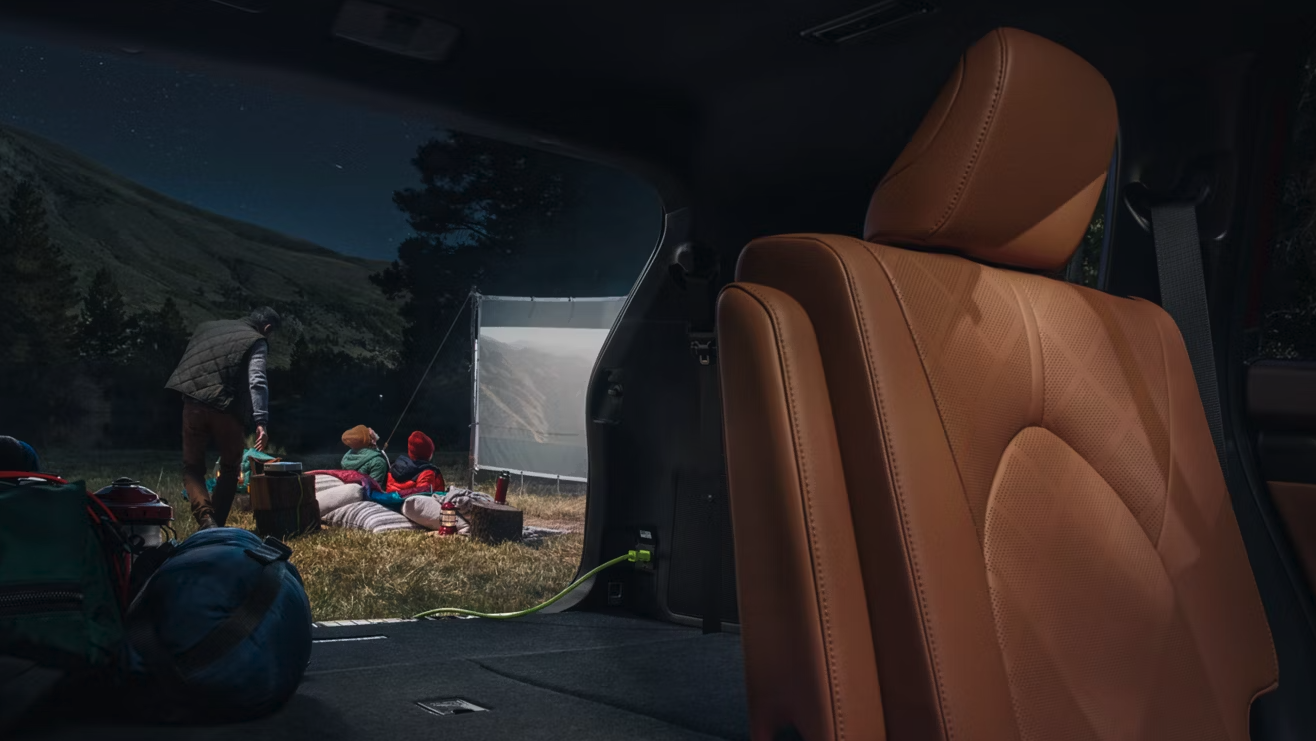
2026 Toyota Highlander Hybrid vs Grand Highlander Hybrid FAQ for Durham Families
Should I buy the Highlander Hybrid or Grand Highlander Hybrid?
We recommend the Highlander Hybrid if your family wants a three-row hybrid SUV that is easier to drive and park every day, especially if the third row is more occasional than constant. We recommend the Grand Highlander Hybrid if your family regularly uses all three rows and needs more cargo space behind them. For many Durham-area buyers, the decision comes down to how often the extra room would actually be used, not whether more room sounds nice in theory.
Which Toyota hybrid SUV has more cargo space?
The Grand Highlander Hybrid has more cargo space, especially behind the third row. Toyota says it offers 20.6 cubic feet behind the third row and up to 97.5 cubic feet of max cargo space. The Highlander Hybrid reaches up to 84.3 cubic feet overall, but it gives up more usable room when all seats are occupied. That is why the Grand Highlander Hybrid makes more sense for families that regularly travel with passengers and luggage at the same time.
Which one is better for Durham commuting?
For most Durham commuting situations, we recommend the Highlander Hybrid. It is easier to place in traffic, easier to park, and still gives families three-row flexibility with strong hybrid efficiency and standard AWD. The Grand Highlander Hybrid can still commute well, but it makes the most sense when your family is using the added space often enough to justify driving the larger SUV every day.
When is the Grand Highlander Hybrid worth the extra size?
The Grand Highlander Hybrid is worth the extra size when your family regularly uses the third row, needs more real cargo room behind it, or has older kids and additional passengers who make the smaller third-row layout feel tight. If the extra room solves recurring family-space problems, it becomes easier to justify very quickly. If those situations are only occasional, Highlander Hybrid is often the smarter and easier vehicle to live with.
We are here to help you choose the right Toyota hybrid SUV at Mark Jacobson Toyota, 4516 Durham-Chapel Hill Blvd, Durham, NC 27707. Our team works with families from Durham, Raleigh, Chapel Hill, Cary, and Apex every day, and we know how often the right SUV choice comes down to third-row use, cargo needs, and daily routine more than anything else. We can walk you through Highlander Hybrid and Grand Highlander Hybrid side by side, compare trims, review trade value and finance options, and help you test the SUV that actually fits your household. Our Mark Says Yes! approach is built around practical guidance and a shopping process that stays clear from start to finish. Call us at 919-493-5599, start online, or visit us in person so we can help you find the Toyota hybrid SUV that makes sense for the way your family moves.
If you are shopping the 2026 Toyota 4Runner in Durham, the good news is that Toyota has made the trim walk easier to understand than many body-on-frame SUVs. The lineup now has a clearer split between everyday trims, off-road trims, and premium trims, which means buyers can choose by lifestyle and budget instead of just climbing a feature ladder at random. At Mark Jacobson Toyota, we think that matters because the 2026 4Runner now offers nine grades, and the differences between them are meaningful enough that the “best trim” depends less on which one costs more and more on how you actually use an SUV in Durham, Raleigh, Chapel Hill, Cary, and Apex.
Toyota says the 2026 4Runner starts at $41,570, plus $1,450 for delivery processing and handling, and offers nine grades: SR5, TRD Sport, TRD Sport Premium, TRD Off-Road, TRD Off-Road Premium, Limited, Platinum, TRD Pro, and Trailhunter. Toyota also says the standard i-FORCE 2.4-liter turbo engine makes up to 278 horsepower and 317 lb-ft of torque, while the available i-FORCE MAX hybrid reaches up to 326 horsepower and 465 lb-ft. Toyota Safety Sense 3.0 is standard on all models, and the lineup now includes trims as different in personality as Platinum and Trailhunter. That makes this 4Runner guide less about memorizing names and more about finding the version that fits your daily life.
In this article, we break down the trims from SR5 through Platinum, then into TRD Pro and Trailhunter, and explain which 4Runner makes the most sense for commuters, off-road buyers, family adventure shoppers, and premium-trim buyers in the Triangle.
Table of Contents
- SR5, TRD Sport, and TRD Sport Premium: Everyday Value and Daily Driveability
- TRD Off-Road, TRD Off-Road Premium, TRD Pro, and Trailhunter: Built for the Trail
- Limited and Platinum: Luxury, Technology, and Premium 4Runner Comfort
- Which 2026 4Runner Trim Matches the Way You Drive in the Triangle?
- When a Higher 4Runner Trim Is Worth It and When a Simpler Trim Delivers Better Long-Term Value
- Key Takeaways
- 2026 Toyota 4Runner Trims FAQ for Durham Drivers
The 2026 Toyota 4Runner is a body-on-frame SUV available in nine trims that range from everyday-use SR5 models to premium Platinum and trail-focused TRD Pro and Trailhunter versions. For Durham-area drivers, the right trim depends on daily use, off-road interest, drivetrain needs, and budget.
SR5, TRD Sport, and TRD Sport Premium: Everyday Value and Daily Driveability
The lower and mid-level 4Runner trims matter because they will be the smartest choice for more buyers than the halo off-road grades or the top premium trim.
What SR5 gives you for the money in 2026
The SR5 is still the trim that makes the most sense for buyers who want the 4Runner’s core identity without paying for hardware or luxury features they will rarely use. Toyota says SR5 comes standard with the 2.4-liter turbocharged i-FORCE engine, and it is available in rear-wheel drive or part-time four-wheel drive. Toyota also says SR5 includes an 8-inch multimedia screen, LED head and fog lights, Smart Key, a power rear liftgate window, and a 7-inch multi-information display. That is a strong baseline because it keeps the rugged 4Runner character intact while still giving buyers the features that matter most for daily use.
For a Durham commuter replacing an older SUV or a first-time 4Runner buyer, SR5 often becomes the best answer quickly. It gives you the body-on-frame SUV identity, a manageable entry point into the lineup, and enough modern technology to avoid feeling stripped down. The local Mark Jacobson Toyota 4Runner page also supports SR5’s value positioning with projected EPA numbers of 20 city, 26 highway, and 22 combined MPG in RWD form, which helps it make a cleaner daily-driver case than many buyers expect from a rugged SUV.
TRD Sport and TRD Sport Premium for buyers who want sharper street-focused personality
TRD Sport and TRD Sport Premium make sense for buyers who like the 4Runner but want it to feel a little more tailored to daily on-road driving. Toyota says TRD Sport adds sport-tuned suspension, 20-inch alloy wheels, a gloss-black hood scoop, automatic climate control, a 12.3-inch digital gauge cluster, and Qi wireless charging. That gives it a stronger street personality than SR5 and makes it easier to recommend to buyers who want a 4Runner for Durham roads and Triangle commuting more than for deep trail work.
TRD Sport Premium then adds the features many daily-use buyers actually care about: SofTex-trimmed power seats, a 14-inch touchscreen, JBL Premium Audio with JBL FLEX speaker, Panoramic View Monitor, heated steering wheel, and a hands-free power liftgate. That makes it the everyday 4Runner trim for buyers who want the model’s rugged identity but also want a noticeably more comfortable and tech-forward cabin. For Raleigh or Cary buyers who love the 4Runner look but spend far more time on pavement than on trails, TRD Sport Premium can be one of the most rational trims in the whole lineup.
| Everyday Trim | Core Strength | Drive and MPG Logic | Best For |
|---|---|---|---|
| SR5 | Best value entry into 4Runner ownership | RWD or part-time 4WD; projected up to 22 combined MPG in RWD | Durham commuters and first-time 4Runner buyers |
| TRD Sport | Sharper street-focused styling and suspension feel | RWD or 4WD; similar efficiency positioning to SR5 depending setup | Buyers who want on-road personality |
| TRD Sport Premium | Best daily-driver comfort and tech in the non-premium walk | RWD or 4WD; more comfort-focused cabin experience | Raleigh and Cary buyers wanting rugged style plus comfort |
| Standard Powertrain | i-FORCE 2.4L turbo | Up to 278 hp and 317 lb-ft | Most everyday-use buyers |
| Technology Step-Up | 8-inch to available 14-inch touchscreen | Higher trims add JBL, PVM, and convenience features | Families and commuters wanting modern SUV usability |
| Overall Buy Logic | Choose by how much daily comfort you want | All three keep the core 4Runner identity | Broadest buyer group in the lineup |
Based on Toyota official website and Toyota USA Newsroom. Local projected MPG figures come from Mark Jacobson Toyota’s 2026 4Runner page.
View 2026 Toyota 4Runner InventoryWhich everyday 4Runner trim fits commuters, families, and first-time 4Runner buyers best
For most Durham-area buyers, SR5 is the smartest starting point because it delivers the 4Runner’s basic promise without forcing you too far up the trim ladder. We recommend it first for buyers replacing an older SUV, for shoppers who want body-on-frame capability without making off-road hardware the center of the purchase, and for households that mostly want a durable, recognizable Toyota SUV for daily life and weekend flexibility.
We recommend TRD Sport for buyers who want the 4Runner to feel more visually assertive and a bit more street-oriented. We recommend TRD Sport Premium for those who know they want the stronger cabin, larger screen, and added convenience features every day. The everyday trim verdict is straightforward. If value matters most, start with SR5. If comfort and daily polish matter more, work upward toward TRD Sport Premium.
- Choose SR5 for the cleanest value and ownership story.
- Choose TRD Sport if you want more street-focused style and suspension character.
- Choose TRD Sport Premium if daily comfort and tech matter enough to justify the jump.
TRD Off-Road, TRD Off-Road Premium, TRD Pro, and Trailhunter: Built for the Trail
The off-road side of the 4Runner lineup is where Toyota gives buyers the most personality, but the right choice depends on whether you want occasional trail confidence or a truly purpose-built adventure SUV.
Off-road trim ladder, i-FORCE MAX availability, suspension hardware, and trail tech
Toyota has built a very clear off-road ladder for the 2026 4Runner. TRD Off-Road is the entry point for buyers who want serious trail hardware without paying halo-trim money. Toyota says it includes underbody protection, 18-inch wheels, 33-inch all-terrain tires, Bilstein shocks, Multi-Terrain Select, Crawl Control, and an electronic locking rear differential. That makes it the trim we recommend first for buyers who actually plan to leave the pavement but do not need the most specialized version of the 4Runner.
TRD Off-Road Premium builds on that with a more comfortable and better-equipped cabin, adding Multi-Terrain Monitor, SofTex power seats, the 14-inch touchscreen, JBL Premium Audio, a hands-free power liftgate, and a heated steering wheel. Toyota also notes that the i-FORCE MAX hybrid is available on TRD Off-Road and TRD Off-Road Premium, and that Stabilizer Disconnect is now optional on i-FORCE MAX TRD Off-Road Premium. That makes TRD Off-Road Premium one of the most interesting trims in the lineup because it blends real trail credibility with comfort you will appreciate on the drive home.
Then the lineup splits into halo territory. Toyota says TRD Pro is exclusively powered by i-FORCE MAX and includes TRD-tuned FOX QS3 adjustable shocks, 33-inch Toyo tires, TRD performance intake and exhaust, and a much more overt off-road-performance identity. Trailhunter is also exclusively i-FORCE MAX and is positioned as the overlanding flagship, with Old Man Emu forged shocks, a high-mount air intake, onboard air compressor, ARB roof rack, RIGID fog lamps, and other expedition-focused equipment. The difference is important. TRD Pro is the higher-speed, performance-flavored off-road 4Runner. Trailhunter is the long-haul adventure and overlanding 4Runner.
| Off-Road Trim | Powertrain and Hardware | Trail Personality | Best For |
|---|---|---|---|
| TRD Off-Road | i-FORCE standard; i-FORCE MAX available; Bilstein shocks, locker, Crawl Control | Best trail-value entry point | Cary and Durham buyers wanting real off-road capability |
| TRD Off-Road Premium | Adds premium cabin features; i-FORCE MAX available; optional SDM on i-FORCE MAX | Best mix of trail hardware and comfort | Buyers who off-road but also daily-drive the SUV |
| TRD Pro | Standard i-FORCE MAX; FOX QS3 shocks; 33-inch tires; performance intake and exhaust | Performance-focused halo off-roader | Drivers wanting the flagship TRD trail identity |
| Trailhunter | Standard i-FORCE MAX; Old Man Emu shocks; air compressor; high-mount intake; ARB rack | Purpose-built overlanding trim | Chapel Hill and Raleigh buyers wanting expedition-style gear |
| Standard i-FORCE MAX Output | 326 hp and 465 lb-ft | More torque and stronger trail-driving feel | Premium off-road buyers |
| Overall Buy Logic | Choose by how specialized your trail use really is | Do not overbuy halo hardware if TRD Off-Road already fits | Most 4Runner off-road shoppers |
Based on Toyota official website and Toyota USA Newsroom. Projected local MPG for i-FORCE MAX 4WD off-road-related trims is 23 city, 24 highway, and 23 combined according to Mark Jacobson Toyota.
Which 2026 off-road 4Runner trim is the smartest buy for your budget and use case?
For most Durham-area buyers who want a genuine off-road 4Runner, the smartest buy is TRD Off-Road or TRD Off-Road Premium. Those trims give you the equipment that matters most on trails without forcing you into a halo-trim budget. TRD Off-Road is the better answer if your priority is hardware and value. TRD Off-Road Premium is the better answer if you also want the SUV to feel more comfortable and well-equipped on normal days.
- Choose TRD Off-Road if you want the strongest trail-capability value.
- Choose TRD Off-Road Premium if you want trail hardware plus daily comfort.
- Choose TRD Pro if you want the highest-profile performance off-road trim.
- Choose Trailhunter if overlanding gear and expedition-style utility are central to the reason you want a 4Runner.
What most buyers discover is that TRD Off-Road Premium is often the lineup sweet spot. It feels serious enough off-road, but still works well as a Durham-area daily driver. TRD Pro and Trailhunter are easier to justify when their specific identities are the point, not just because they sit at the top.
If you are serious about buying a trail-ready 4Runner, we recommend comparing TRD Off-Road, TRD Off-Road Premium, TRD Pro, and Trailhunter side by side in person. Our team can walk you through the real hardware differences, explain where the comfort and tech upgrades show up, and help you decide whether i-FORCE MAX, SDM availability, or one of the halo off-road trims actually fits your use. Buyers from Durham, Raleigh, Chapel Hill, Cary, and Apex can call us at 919-493-5599 or start online before visiting. We can also help you request a quote on the 4Runner that fits your trail plans and daily use without pushing you into more trim than you need.
Limited and Platinum: Luxury, Technology, and Premium 4Runner Comfort
The premium side of the 4Runner lineup matters because not every buyer wants the SUV mainly for trail hardware. Some want the 4Runner identity with better comfort, stronger tech, and a more refined daily-driving experience.
Limited vs Platinum on comfort, full-time 4WD logic, premium tech, and Durham daily-driver fit
Limited is the trim we recommend first for buyers who want the 4Runner to feel more refined without fully leaving the model’s rugged roots. Toyota says Limited adds heated and ventilated leather-trimmed front seats, a 14-inch touchscreen, JBL Premium Audio, an available digital rearview mirror, a power moonroof, and available power-extending running boards. Toyota also says Limited can be configured with the i-FORCE MAX hybrid, and that on i-FORCE MAX models it offers available full-time four-wheel drive with a center locking differential. That makes Limited the premium 4Runner for buyers who want more comfort and a more polished road-trip or daily-commute experience.
Platinum sits above Limited and is where the 4Runner starts feeling explicitly premium. Toyota says Platinum includes standard i-FORCE MAX, full-time 4WD, premium leather seating, heated second-row outboard seats, a standard tow tech package, a head-up display, and rain-sensing wipers. The practical implication for Durham-area buyers is clear. Platinum is the best version of the 4Runner for shoppers who want the model’s rugged SUV identity but will use it mostly as a comfortable, feature-rich daily driver with occasional weekend capability. For Apex or RTP buyers who want a 4Runner because they love the model but do not need TRD Pro or Trailhunter hardware, Platinum can make much more sense than the off-road halo trims.
| Premium Trim | Core Strength | Drive and Feature Logic | Best For |
|---|---|---|---|
| Limited | Best blend of comfort and traditional 4Runner capability | Available i-FORCE MAX; available full-time 4WD on hybrid models | Families and commuters wanting a refined 4Runner |
| Platinum | Most luxurious 4Runner in the lineup | Standard i-FORCE MAX and standard full-time 4WD | Premium SUV buyers who still want 4Runner identity |
| Cabin and Comfort | Leather, JBL, larger screen, moonroof, comfort features | Platinum adds more second-row and premium-touch features | Durham daily drivers and family-road-trip buyers |
| Technology | 14-inch touchscreen, JBL, digital rearview mirror availability | Platinum adds HUD and standard tow tech package | Buyers who prioritize feature depth |
| Efficiency Position | Local projected hybrid 4WD trims rated 23 combined in i-FORCE MAX form | Premium trim does not erase the hybrid advantage | Premium buyers wanting stronger efficiency logic |
| Overall Buy Logic | Limited for balanced refinement | Platinum for the highest comfort and feature ceiling | Different premium priorities |
Based on Toyota official website, Toyota USA Newsroom, and Mark Jacobson Toyota’s 2026 4Runner page.
For Durham and Triangle buyers, Limited usually makes the most sense when you want the 4Runner to feel more comfortable and well-equipped without maximizing spend. Platinum is easier to justify when you know the premium features will be enjoyed every day and when full-time 4WD, stronger hybrid performance, and added comfort matter enough to define the purchase.
See 2026 4Runner Premium FeaturesIf you are comparing Limited and Platinum based on payment, trade value, or whether the premium jump is actually worth it, we can help you work that through with real numbers. Our team can review your current vehicle through our trade tools, compare finance options, and show you where the feature and comfort differences become meaningful in real daily use. We serve Durham, Raleigh, Chapel Hill, Cary, and Apex drivers every day, and our Mark Says Yes! approach is built around helping buyers choose the right 4Runner for the way they actually drive. If you want to compare premium 4Runner trims in one visit, call us at 919-493-5599 or stop by our showroom at 4516 Durham-Chapel Hill Blvd. We are here to make the trim decision easier and more practical.
Which 2026 4Runner Trim Matches the Way You Drive in the Triangle?
The smartest 4Runner trim is the one that matches how your SUV will actually be used in Durham and the Triangle, not the one with the biggest feature list or the loudest identity.
We recommend SR5 for buyers who want the simplest path into 4Runner ownership and do not need specialized trail or premium hardware. We recommend TRD Sport and TRD Sport Premium for buyers who love the 4Runner image but spend most of their time on-road and want a better daily-driver feel. We recommend TRD Off-Road and TRD Off-Road Premium for buyers who genuinely plan to use the SUV’s off-road capability but still want it to work well around town. We recommend Trailhunter and TRD Pro only when their specialized hardware and identity are part of the reason you want the vehicle in the first place.
For premium daily drivers, Limited and Platinum make the most sense. Limited is the stronger all-around premium value. Platinum is the better choice for buyers who want the most feature-rich, comfort-focused 4Runner possible. Once you think about the lineup through the lens of routine rather than status, the trim walk becomes much easier.
For most Triangle buyers, the lineup sweet spots are SR5, TRD Sport Premium, TRD Off-Road Premium, and Limited. The halo trims are excellent, but they are easiest to justify when they solve a real lifestyle need instead of just looking exciting on the brochure.
See Toyota SUV FeaturesWhen a Higher 4Runner Trim Is Worth It and When a Simpler Trim Delivers Better Long-Term Value
A higher 4Runner trim is worth it when its hardware, comfort, or hybrid setup will improve daily life often enough to justify the price. Otherwise, the simpler trim usually wins the long-term value case.
We recommend thinking about 4Runner value in three layers. First is purchase price. Second is powertrain and fuel use. Third is whether the trim’s extra equipment will actually be used. SR5 often wins the cleanest long-term value argument because it gives you the core 4Runner experience without a lot of expensive extras. TRD Sport Premium and Limited become strong value plays when the comfort and technology upgrades show up every day in commuting, road trips, and family use. TRD Off-Road Premium becomes the smartest buy when you genuinely off-road but still want cabin comfort.
TRD Pro, Trailhunter, and Platinum are easiest to justify when the buyer truly wants their specialized role. That means trail-focused performance for TRD Pro, overlanding equipment for Trailhunter, and premium comfort and feature depth for Platinum. The best 4Runner is not always the most expensive one. It is the one that still feels right after a year of driving, fueling, loading, and paying for the ownership experience. That is why we recommend the mid-line trims first for many buyers and the halo trims only when their identity is central to why you want a 4Runner at all.
We also remind buyers that ToyotaCare and our service team support make a strong difference in the ownership story. The smartest trim is the one that feels like it solved the right problem, not the one that simply gave you the most features for one weekend.
- Choose SR5 for the cleanest entry-value case.
- Choose TRD Sport Premium or Limited for the strongest daily-driver value if comfort and tech matter.
- Choose TRD Off-Road Premium if you want real trail capability without jumping straight to halo pricing.
- Choose Platinum, TRD Pro, or Trailhunter only when their specialized role defines why you want the SUV.
Key Takeaways
- The 2026 Toyota 4Runner lineup includes nine trims from SR5 through Platinum, TRD Pro, and Trailhunter.
- SR5 is the best place to start for most value-focused buyers.
- TRD Sport Premium is a strong everyday 4Runner for buyers who want more comfort and technology.
- TRD Off-Road and TRD Off-Road Premium are the smartest trail-capability trims for most shoppers.
- Platinum is the premium 4Runner choice, while TRD Pro and Trailhunter are the specialized halo off-road trims.
- The right trim depends on whether your routine is commuter-focused, trail-focused, or premium-daily-driver focused.
2026 Toyota 4Runner Trims FAQ for Durham Drivers
What are the 2026 Toyota 4Runner trim levels?
The 2026 Toyota 4Runner comes in nine trims: SR5, TRD Sport, TRD Sport Premium, TRD Off-Road, TRD Off-Road Premium, Limited, Platinum, TRD Pro, and Trailhunter. Toyota has organized these trims into everyday, off-road, and premium personalities, which makes the lineup easier to shop based on lifestyle and budget.
Which 2026 Toyota 4Runner trim is best?
For many Durham-area buyers, the best 2026 Toyota 4Runner trim is SR5, TRD Sport Premium, TRD Off-Road Premium, or Limited depending on how the SUV will be used. SR5 is the strongest value trim. TRD Sport Premium is a smart daily-driver upgrade. TRD Off-Road Premium is the sweet spot for trail buyers. Limited is the best premium-value trim for comfort-focused shoppers.
Is the 2026 Toyota 4Runner hybrid available on every trim?
No. The i-FORCE MAX hybrid is available on TRD Off-Road, TRD Off-Road Premium, and Limited, and it comes standard on Platinum, TRD Pro, and Trailhunter. SR5, TRD Sport, and TRD Sport Premium use the standard i-FORCE turbo engine. That means hybrid availability starts in the middle of the lineup, not at the bottom.
What is the difference between TRD Pro and Trailhunter?
TRD Pro is the performance-focused halo off-road trim, built around FOX QS3 shocks, a TRD performance air intake and exhaust, and a more aggressive trail-driving identity. Trailhunter is the overlanding-focused halo trim, built around Old Man Emu shocks, an onboard air compressor, an ARB roof rack, and expedition-style equipment. Both use i-FORCE MAX, but they serve different kinds of off-road buyers.
We are here to help you choose the right 2026 Toyota 4Runner at Mark Jacobson Toyota, 4516 Durham-Chapel Hill Blvd, Durham, NC 27707. Our team works with drivers from Durham, Raleigh, Chapel Hill, Cary, and Apex every day, and we know how often the right trim choice comes down to daily use, off-road goals, comfort priorities, and long-term ownership value more than anything else. We can walk you through the trims side by side, compare SR5, TRD, Limited, Platinum, TRD Pro, and Trailhunter, review trade value and finance options, and help you test the 4Runner that actually fits your life. Our Mark Says Yes! approach is built around practical guidance and a shopping process that stays clear from start to finish. Call us at 919-493-5599, start online, or visit us in person so we can help you find the 4Runner trim that makes sense for the way you drive.
Connect with us


Recent Blog Entries
- 2026 Toyota Sienna AWD Guide for Durham Families
- Toyota Car Buying Checklist for Triangle College Graduates
- 2026 Toyota Camry Hybrid MPG and Commute Guide for RTP Drivers
- Toyota A/C Service & Repair Guide for Durham Summer Driving
- 2026 Toyota Prius vs Prius Plug-in Hybrid: Which Saves You More in Durham?