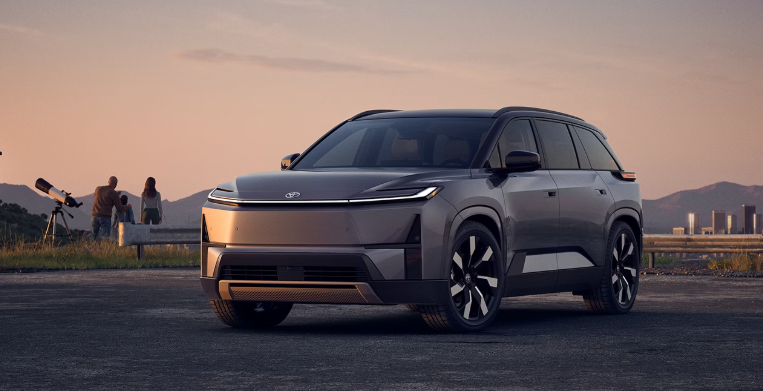



Blog / Durham New Toyota Cars

2026 Toyota Highlander vs Grand Highlander: Which Toyota SUV Fits Your Family?

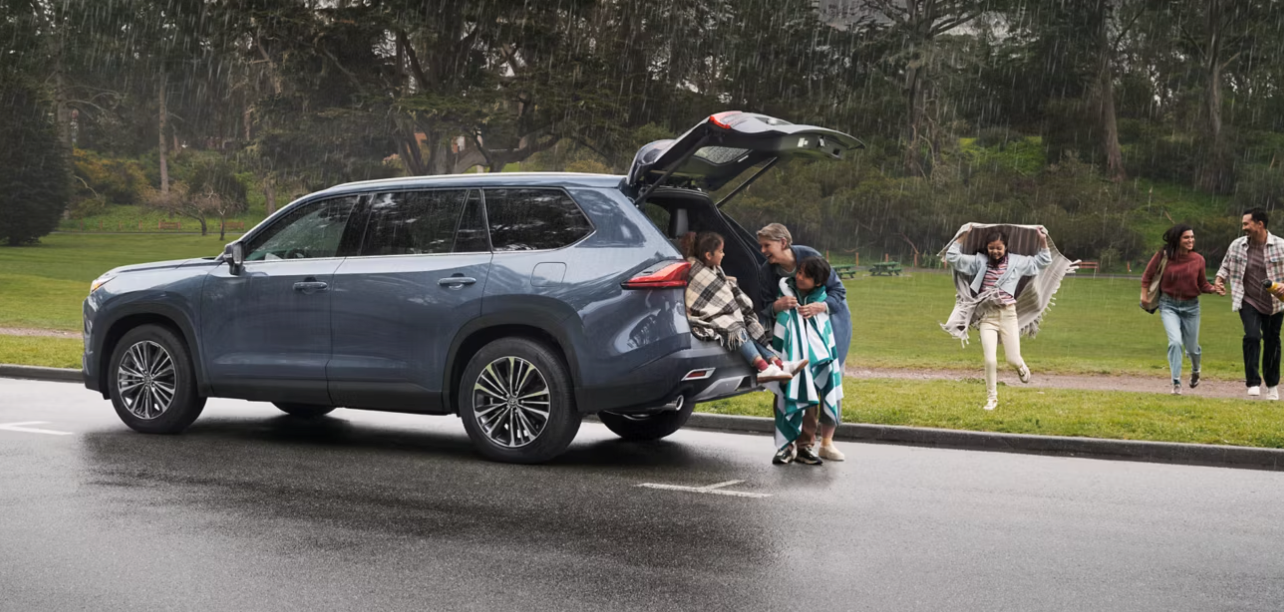
2026 toyota grand highlander exterior
2026 Highlander vs Grand Highlander | Mark Jacobson Toyota

2026 Highlander vs Grand Highlander Overview

If your family is comparing the 2026 Toyota Highlander vs Grand Highlander, the short answer is clear. At Mark Jacobson Toyota, we recommend the Highlander for families that want three-row flexibility in a more manageable SUV, and we recommend the Grand Highlander for households that regularly use the third row, carry more cargo, or take longer family trips. For a Durham family of five that only needs the third row occasionally, Highlander usually makes daily life easier. For a Cary family with car seats, strollers, older kids, and luggage, Grand Highlander is usually the better fit.

The two SUVs overlap in Toyota’s three-row family lineup, but they solve different problems. Highlander offers seating for up to eight, available hybrid efficiency, standard all-wheel drive on gas models for 2026, and a more city-friendly footprint. Grand Highlander adds a larger cabin, a more adult-friendly third row, more cargo room behind all seats, and available Hybrid MAX power for families that want stronger performance and towing capability.

In this guide, we compare size, passenger space, cargo room, gas and hybrid powertrains, MPG, towing, trims, local driving fit, and long-term ownership logic. We also give direct recommendations for Durham, Raleigh, Chapel Hill, Cary, and Apex shoppers who are trying to decide whether the smaller Highlander is enough or the larger Grand Highlander is worth stepping up to.

The 2026 Toyota Highlander and 2026 Toyota Grand Highlander are three-row SUVs designed for different family-space needs. Highlander prioritizes easier daily use and efficient family flexibility. Grand Highlander prioritizes expanded passenger and cargo room for larger households, frequent carpools, and longer family trips.
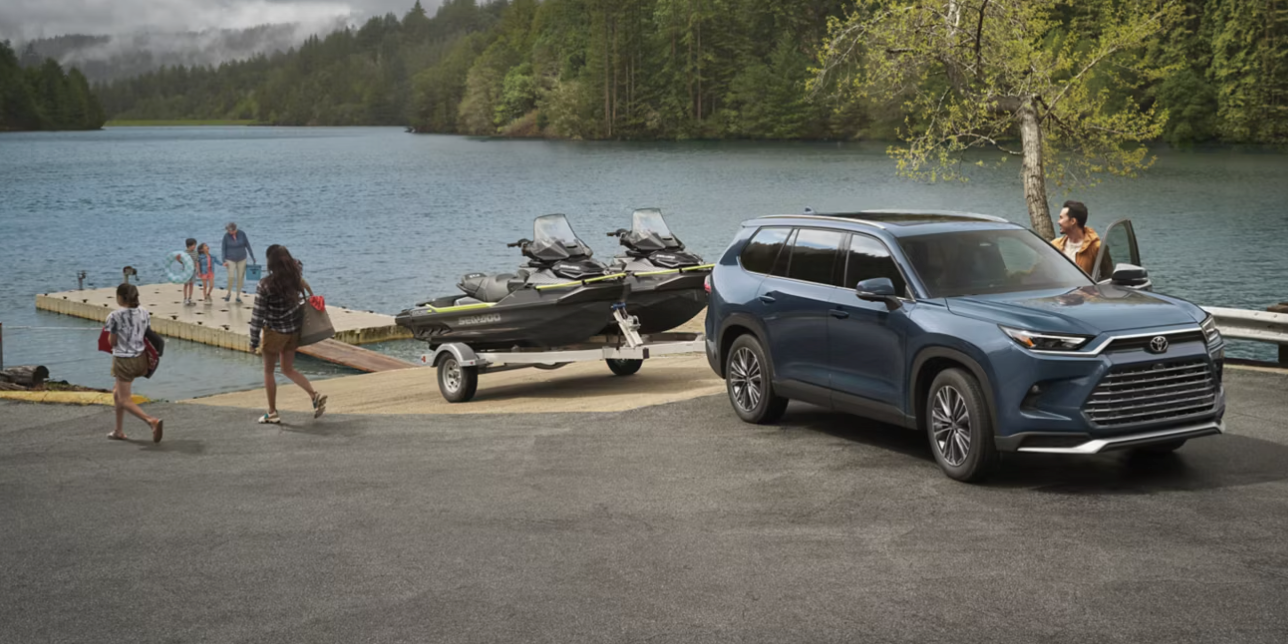
2026 Toyota Highlander vs Grand Highlander

Seating Capacity, Cargo Room, and Overall Size

The real difference between Highlander and Grand Highlander is not whether both have three rows. It is how comfortable and useful those three rows feel when your family uses them every week.

Third-row comfort and passenger space for real family use

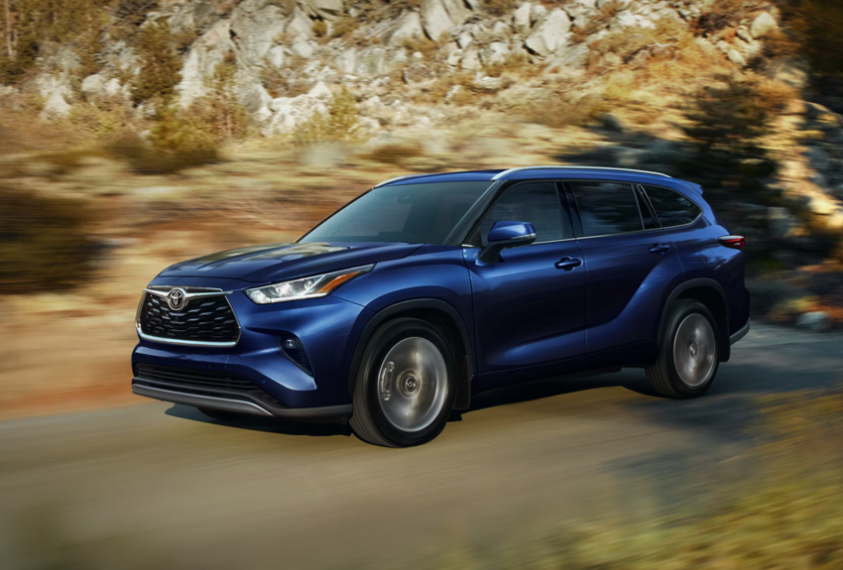
Highlander works well for families that want a third row available without moving into the largest possible Toyota SUV. Toyota positions the 2026 Highlander as a versatile three-row SUV, and it remains a strong fit for households that usually carry four or five people but want the option to bring extra passengers when needed. For a Durham family that rotates between school drop-off, grocery runs, youth sports, and weekend plans, that flexibility can be enough.

Grand Highlander is different because its third row is built for more regular use. Toyota lists 33.5 inches of third-row legroom, and that extra room changes the way the SUV feels when older kids, grandparents, or adult passengers ride in back. For a Triangle household with frequent carpools, Grand Highlander gives passengers more breathing room and gives parents fewer compromises when every seat is filled.

The Grand Highlander is the better Toyota SUV if your family uses the third row more than occasionally because its larger cabin and 33.5 inches of third-row legroom make the back row more realistic for growing kids and additional passengers. We recommend Highlander when the third row is backup space. We recommend Grand Highlander when the third row is part of the weekly routine.

Family Space Factor2026 Toyota Highlander2026 Toyota Grand HighlanderBest For
Passenger CapacityUp to 8 passengersUp to 8 passengersBoth support family seating flexibility
Third-Row ComfortBetter for occasional use33.5 inches of third-row legroomGrand Highlander for regular third-row use
Cabin FeelMore compact three-row layoutLarger, more open family cabinGrand Highlander for larger households
Daily FootprintEasier to place and parkLarger body with more roomHighlander for tighter daily routes
Family FlexibilityStrong for smaller families needing backup seatingStronger for families that fill seats oftenDepends on third-row frequency
Ideal Use CaseFamily of four or five with occasional guestsFamily of five or more with regular full-cabin useMatch the SUV to weekly passenger load

Based on current Toyota published specifications.

  • Choose Highlander if your third row is mostly for occasional friends, cousins, or short local trips.
  • Choose Grand Highlander if older kids, grandparents, or carpool passengers use the third row often.
  • Choose Highlander if daily parking and tighter city driving matter more than maximum cabin space.
  • Choose Grand Highlander if passenger comfort matters more than a smaller exterior footprint.
View Highlander Research

Cargo room behind the third row and max cargo flexibility

Cargo space is where many families understand the Grand Highlander immediately. Highlander gives families useful cargo flexibility, especially when the third row is folded, but Grand Highlander provides more room when all seats are in use. Toyota lists Grand Highlander with 20.6 cubic feet of cargo space behind the third row and up to 97.5 cubic feet of maximum cargo volume. That matters because real families rarely travel with every seat folded down.

For Cary parents with two car seats, a stroller, backpacks, and grocery bags, Grand Highlander solves a more practical loading problem. It gives families more room behind passengers instead of asking them to choose between people and gear. Highlander can still be the right choice for families that do not pack heavily or rarely use the third row, but Grand Highlander becomes easier to justify when cargo space is needed even with the cabin full.

We recommend thinking about cargo in two ways. First, ask how much space you need with the third row folded. Second, ask how much room you need when every passenger seat is occupied. The second question is often the one that points families toward Grand Highlander.

Daily maneuverability, parking, and Durham-area usability

Highlander remains appealing because it feels easier to live with around Durham. A smaller footprint helps when parking near restaurants, school lots, grocery stores, downtown areas, and older parking decks. For a Durham family of five that wants extra seating but does not carry a full cabin every day, Highlander often gives the right mix of comfort, utility, and simplicity.

Grand Highlander is easier to justify when the larger size solves a problem every week. For Raleigh families that carpool across town or Chapel Hill households that take longer family trips, the extra space may matter more than tighter parking. What we see in family-SUV shopping is that buyers regret too little space more often than they regret having a slightly larger vehicle, but only when the space is truly being used.

View Grand Highlander Details
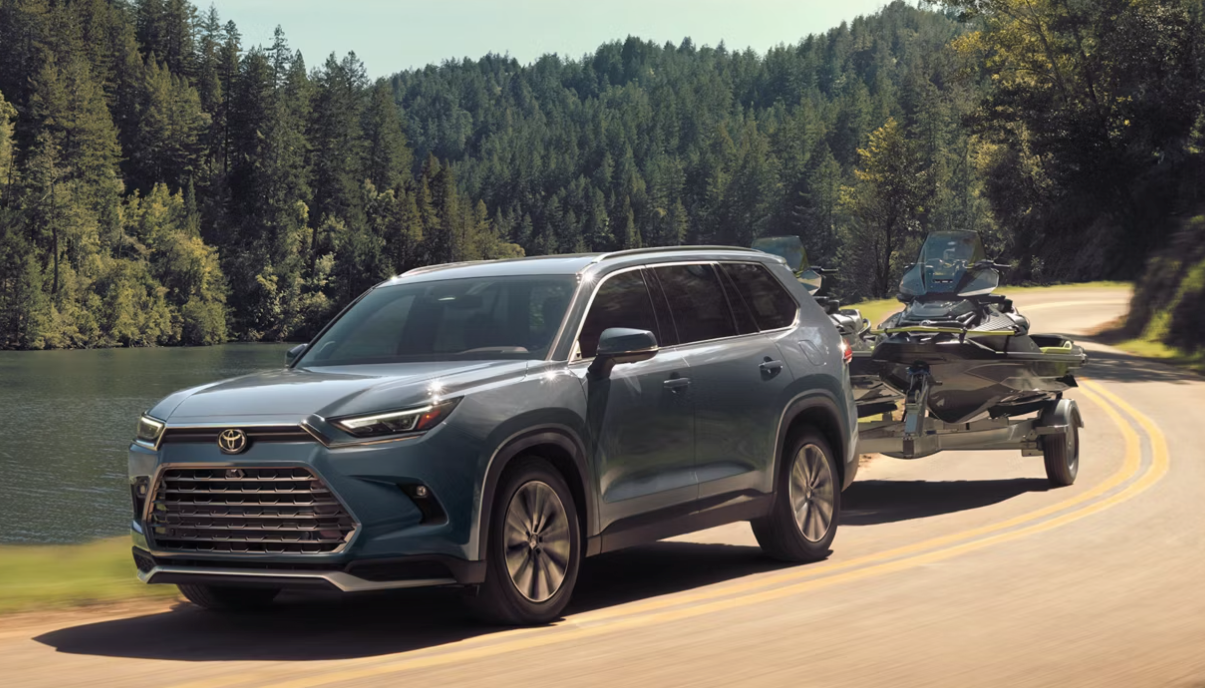
2026 Toyota Highlander vs Grand Highlander

Hybrid Powertrains, MPG, Towing, and Configuration Choices

Highlander is the cleaner choice for families that want simpler three-row capability, while Grand Highlander offers more powertrain range for shoppers comparing gas, hybrid, and Hybrid MAX needs.

Highlander vs Grand Highlander powertrain comparison

The 2026 Highlander lineup gives shoppers a practical choice between turbo gas power and hybrid efficiency. Toyota confirms the gas Highlander uses a 2.4-liter turbocharged four-cylinder engine with 265 horsepower and 310 lb.-ft. of torque, and gas models add standard all-wheel drive for 2026. The Highlander Hybrid is the efficiency play, with up to a 35 MPG combined rating and 243 net combined horsepower. That makes Highlander a strong fit for families that want a traditional three-row Toyota SUV with a straightforward gas or hybrid decision.

Grand Highlander adds more choice because it offers gas, Hybrid, and Hybrid MAX powertrains. The standard Grand Highlander Hybrid focuses on efficiency and family space, while Hybrid MAX is the performance-focused option with 362 net combined horsepower and up to 5,000 pounds of towing capacity. That makes Grand Highlander especially useful for shoppers who want more room and more powertrain flexibility in the same family SUV.

Powertrain Factor2026 Toyota Highlander2026 Toyota Grand HighlanderBest For
Gas Engine2.4L turbo with 265 hp and 310 lb.-ft.Gas option availableHighlander for simpler gas SUV shopping
Hybrid OptionHighlander Hybrid with up to 35 MPG combinedGrand Highlander Hybrid with up to 36 MPG combinedBoth for efficiency-focused families
Performance HybridNo Hybrid MAX versionHybrid MAX with 362 net combined hpGrand Highlander for stronger hybrid performance
All-Wheel DriveStandard AWD on gas models for 2026Available AWD depending on grade and powertrainHighlander gas for built-in AWD simplicity
TowingUp to 5,000 lbs on gas models, up to 3,500 lbs on hybrid modelsUp to 5,000 lbs with Hybrid MAXGrand Highlander Hybrid MAX for stronger hybrid towing
Ideal Use CaseFamilies wanting easier daily size and proven three-row utilityFamilies wanting more space and more configuration rangeMatch powertrain to passenger, cargo, and towing needs

Based on current Toyota published specifications.

The best Toyota three-row SUV powertrain depends on the family job. We recommend Highlander gas for shoppers who want turbo power, standard AWD, and a manageable footprint. We recommend Highlander Hybrid for families focused on MPG. We recommend Grand Highlander Hybrid when space and efficiency matter together, and Grand Highlander Hybrid MAX when a larger family SUV also needs stronger acceleration or higher towing capability.

Which configuration should Durham drivers choose?

For Durham drivers, the right configuration depends less on the badge and more on your actual routine. A daily commuter parent who wants strong MPG and a size that feels easier in parking lots should start with Highlander Hybrid. A family that regularly fills every row should start with Grand Highlander Hybrid. A household that tows, travels with more people, or wants stronger hybrid performance should look closely at Grand Highlander Hybrid MAX.

  • If you commute around Durham and rarely fill all three rows, we recommend Highlander Hybrid because it keeps the family-SUV experience efficient and easier to manage.
  • If you live in Cary and carry car seats, strollers, and sports gear, we recommend Grand Highlander because the larger cargo area will be used often.
  • If you travel from Chapel Hill with older kids and grandparents, we recommend Grand Highlander Hybrid because the third row and cargo space matter more.
  • If you tow a small trailer or want stronger passing power, we recommend Grand Highlander Hybrid MAX because it adds the performance side of the lineup.

For a Raleigh commuter parent, the Highlander Hybrid is usually the cleaner daily choice because it pairs family seating with strong efficiency and a more manageable size. For a Chapel Hill road-trip family, Grand Highlander Hybrid is usually the smarter choice because the larger cabin and cargo space reduce packing stress. The right answer is the SUV that solves your weekly routine, not the one that only looks better on paper.

If you are choosing between Highlander and Grand Highlander, we recommend visiting our Durham showroom and testing the space instead of deciding from specs alone. Sit in the third row, open the liftgate, check cargo room with the seats up, and compare how each SUV feels from the driver’s seat. Our team can walk you through gas, hybrid, and Hybrid MAX choices, explain current vehicle availability, and help you request numbers for the configuration that fits your family. Drivers from Durham, Raleigh, Chapel Hill, Cary, and Apex can call us at 919-493-5599 or start with our Toyota SUV research tools online before visiting. We want the comparison to feel practical, because the right three-row SUV should fit your family without creating a harder daily routine.

Check Toyota SUV AvailabilityGet Pre-Approved for a Toyota SUV

Pricing, Trims, and Family Value for Triangle Shoppers

The smarter value is not always the cheaper SUV. It is the Toyota three-row SUV that your family will not outgrow too quickly or overbuy unnecessarily.

Trim differences, budget fit, and local use-case recommendations

Highlander keeps the family decision cleaner for many buyers because its trims focus on mainstream comfort, hybrid efficiency, and premium family features without forcing shoppers into the largest SUV in the lineup. Families moving up from RAV4 often find Highlander easier to accept because it adds three-row flexibility while still feeling approachable. Grand Highlander, on the other hand, is better for families that already know they need more space and want to choose from a broader mix of gas, hybrid, and Hybrid MAX grades.

For Triangle shoppers, we recommend using real local routines to decide. Durham commuting, Raleigh to RTP traffic, Chapel Hill road trips, Cary school and sports schedules, and Apex weekend travel all reveal different needs. A family that usually carries five people can often choose Highlander confidently. A family that carries passengers and luggage together should move Grand Highlander higher on the list.

Driver ProfileLocal ScenarioRecommended Toyota SUVWhy It Fits
Durham family of fiveNeeds three rows occasionally but wants easier daily parkingHighlanderGood balance of flexibility and manageable size
Cary parents with car seatsNeed stroller and grocery space with passengers aboardGrand HighlanderMore cargo room behind occupied seats
Raleigh commuter parentWants MPG, comfort, and simpler weekday drivingHighlander HybridStrong efficiency with easier daily usability
Chapel Hill road-trip householdTravels with older kids, luggage, and grandparentsGrand Highlander HybridBetter cabin and cargo flexibility for longer trips
Apex family upgrading from RAV4Needs more room but not maximum sizeHighlander XLE or LimitedNatural step up without overbuying space
Triangle household with towing needsWants larger cabin and stronger hybrid performanceGrand Highlander Hybrid MAXBest fit for power, space, and towing logic

Based on current Toyota published specifications.

For families in Durham and nearby communities, Highlander is often the better value when the third row is backup space and daily maneuverability matters. Grand Highlander is often the better value when the third row, cargo area, and road-trip comfort are weekly needs. We recommend deciding by frequency, not by the rare biggest trip of the year.

Value Your Trade for a Toyota SUV

If payment, trade value, or long-term family fit is the biggest question, we can help you compare Highlander and Grand Highlander with real numbers. Our team can review your current vehicle, discuss finance options, and help you decide whether the step up in size is worth it for your household. We work with families from Durham, Raleigh, Chapel Hill, Cary, and Apex every day, and our Mark Says Yes! approach is built around practical guidance instead of pressure. If you are moving from a RAV4, Camry, Sienna, or an older three-row SUV, we can help you compare space, payment, and ownership needs in one visit. Call us at 919-493-5599 or visit us at 4516 Durham-Chapel Hill Blvd so we can help you choose the Toyota SUV that fits your real routine.
2026 Toyota Highlander vs Grand Highlander

Family and Lifestyle Fit: When Highlander Is Enough and When Grand Highlander Is Worth It

Highlander is enough when your family needs flexible seating, while Grand Highlander is worth it when extra room solves a weekly passenger or cargo problem.

We recommend Highlander when your family wants a three-row SUV but does not constantly use all three rows. It is the better fit for households that need a flexible third row for friends, visiting relatives, or occasional carpool duty. For an Apex family upgrading from RAV4, Highlander often feels like the right step because it adds seating without making daily driving feel oversized.

We recommend Grand Highlander when your family has already outgrown smaller three-row flexibility. If you regularly carry older kids, grandparents, sports gear, luggage, or multiple car seats, the larger SUV is not just a luxury. It becomes the vehicle that prevents daily frustration. For Cary parents packing strollers and groceries or a Chapel Hill household planning longer trips, Grand Highlander can become the better ownership decision very quickly.

The cleanest way to decide is to count how often you use the third row and cargo space at the same time. If that happens a few times a year, Highlander is usually enough. If that happens most weeks, Grand Highlander is usually worth it.

Ownership Cost Analysis: MPG, Tires, Service, Insurance, and Long-Term Practicality

The better long-term value depends on whether the SUV keeps fitting your family after the first year of school runs, commuting, road trips, and service visits.

Ownership value is not only about MSRP. It also includes fuel use, tire replacement, service, insurance, parking ease, and the chance that your family outgrows the vehicle too soon. Highlander usually gives the cleaner cost case for families that need flexibility more than maximum space. Its available hybrid efficiency, manageable size, and ToyotaCare support make it a smart fit for commuters and smaller families who still want three rows.

Grand Highlander makes the better cost argument when its extra room prevents a future trade-in that happens too early. If your family constantly fights for space, packs heavily, or uses all three rows, buying too small can cost more in frustration and replacement timing. Grand Highlander Hybrid is especially attractive because it gives families larger-SUV usefulness with strong fuel economy. Hybrid MAX makes sense when stronger power and towing matter enough to justify the added cost.

  • If you want lower overall family-SUV complexity, we recommend Highlander because it is easier to live with every day.
  • If you want more room without jumping to a full-size SUV, we recommend Grand Highlander because it expands family utility meaningfully.
  • If fuel cost is a major concern, we recommend comparing Highlander Hybrid and Grand Highlander Hybrid first.
  • If towing or acceleration matters, we recommend Grand Highlander Hybrid MAX because it gives the stronger performance setup.

Our service team also reminds families that tires, brakes, alignment, and regular inspections matter more as vehicle size, passenger load, and trip frequency increase. Whether you choose Highlander or Grand Highlander, consistent factory-scheduled maintenance helps protect the ownership value you are counting on.

Schedule Toyota SUV Service

Key Takeaways

  • Highlander is the better fit when three-row seating is flexible backup space rather than a constant need.
  • Grand Highlander is better when the third row and cargo area are used together often.
  • Highlander Hybrid reaches up to 35 MPG combined, while Grand Highlander Hybrid reaches up to 36 MPG combined.
  • Grand Highlander Hybrid MAX is the stronger choice for buyers who want more power and towing capability.
  • For Durham commuting, Highlander usually feels easier; for family trips, Grand Highlander usually feels roomier.

2026 Toyota Highlander vs Grand Highlander FAQ for Durham Families

What is the main difference between the 2026 Highlander and Grand Highlander?

The main difference is usable space. Highlander gives families three rows in a more manageable SUV, while Grand Highlander provides a larger cabin, more third-row comfort, and more cargo room for full-family travel. We recommend Highlander when your third row is occasional. We recommend Grand Highlander when your family regularly carries passengers and cargo at the same time, especially for road trips, carpools, and busy Triangle family schedules.

Is the Grand Highlander worth it over the Highlander?

Grand Highlander is worth it when the extra room solves a weekly problem. If your family uses the third row often, carries strollers or sports gear, or takes longer trips with older kids and grandparents, the larger SUV usually justifies itself. If your family usually carries four or five people and only occasionally needs extra seating, Highlander often makes more sense because it is easier to drive, park, and fit into daily Durham routines.

Which Toyota SUV is better for Durham commuting?

For most Durham commuting, we recommend Highlander because it gives families useful three-row flexibility in a more manageable size. It is easier to place in traffic, easier to park, and available as a hybrid for strong fuel efficiency. Grand Highlander can still commute well, but it makes the most sense when your household uses the extra cabin and cargo room often enough to justify the larger footprint every day.

Which one should families with car seats, strollers, or older kids choose?

Families with multiple car seats, strollers, older kids, or frequent third-row passengers should start with Grand Highlander. The larger cabin and more useful cargo area help when the SUV is loaded with both people and gear. We recommend Highlander for lighter family duty, but we recommend Grand Highlander when space needs are already obvious before the test drive. That is usually the clearest sign that the larger Toyota SUV is the better fit.

We are here to help you choose the right Toyota three-row SUV at Mark Jacobson Toyota, 4516 Durham-Chapel Hill Blvd, Durham, NC 27707. Our team works with families from Durham, Raleigh, Chapel Hill, Cary, and Apex who want clear guidance on space, MPG, trims, payments, trade value, and long-term ownership fit. We can compare Highlander and Grand Highlander side by side, discuss ToyotaCare, review Mark Says Yes! options, and help you decide which SUV fits the way your family moves every week. Call us at 919-493-5599, start online, or visit our Durham showroom so we can help you choose confidently.
Posted in:

Related Posts

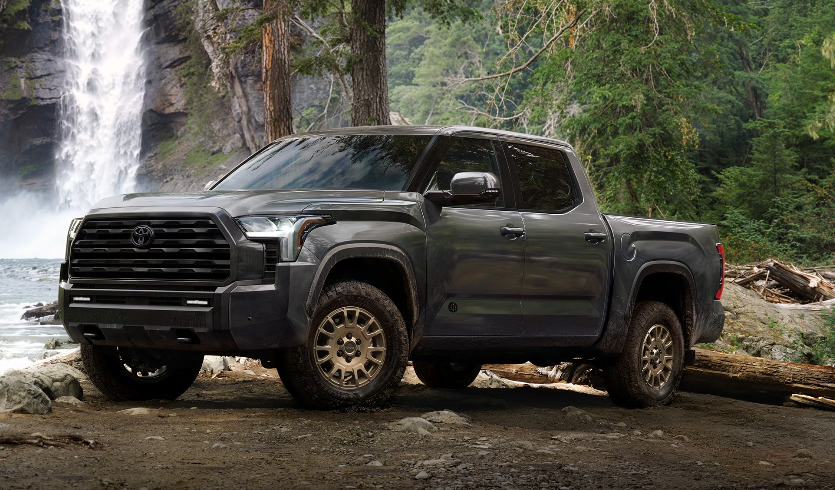
2027 Toyota Tundra i-FORCE MAX Trim Guide for Durham Drivers

2027 Toyota Tundra i-FORCE MAX Trim Guide for Durham Drivers

Toyota Tundra Hybrid Guide • Durham, NC Comparing Hybrid Power, Towing Capability, and Trims for Triangle Drivers The 2027 Toyota Tundra i-FORCE MAX pairs a twin-turbo V6 with a hybrid electric motor to deliver strong torque for towing and hauling while keeping fuel economy more competitive than a traditional large V8 truck. Here at Mark Jacobson Toyota, we work with a lot of Durham, Cary, and Apex buyers who need a truck that can genuinely handle towing a boat to Jordan Lake or hauling equipment for work during the week, and the i-FORCE MAX is usually the powertrain we steer those conversations toward. The Tundra lineup spans work-focused grades through the luxury-oriented Capstone, and the right configuration depends heavily on whether you are buying primarily for towing capacity, off-road capability, or daily comfort. Toyota USA has not yet published the complete 2027 i-FORCE MAX availability by grade, so contact Mark Jacobson Toyota for the latest hybrid trim information rather than assuming an SR5 hybrid configuration is available. This guide walks through the powertrain itself, how the trims differ, and how to think about bed configuration and equipment based on how you actually plan to use the truck. Definition: The Toyota i-FORCE MAX is a hybrid powertrain available on the Tundra, combining a twin-turbo V6 engine with an electric motor integrated into the transmission to add torque and improve efficiency. It is commonly chosen by buyers who need strong towing and payload capacity along with better fuel economy than a comparable non-hybrid full-size truck. For drivers across Durham, Cary, Apex, and the Research Triangle, it provides the torque needed for towing boats, trailers, and equipment while reducing fuel stops on longer work days or weekend trips. Tundra Hybrid Research Guide 2027 Tundra i-FORCE MAX Guide: Trims, Towing, Bed Options, and Ownership Hybrid Powertrain, Torque, and Towing Trim Differences From SR5 Through Capstone Bed Configurations and Work-Ready Features TRD Off-Road and TRD Pro Technology Interior Technology and Everyday Comfort Safety Technology and Trailer Features ToyotaCare and Ownership Support What to Ask Before Towing Near Capacity Key Takeaways Tundra i-FORCE MAX Frequently Asked Questions i-FORCE MAX Hybrid Powertrain, Torque, and Towing Capacity The i-FORCE MAX powertrain pairs Toyota's twin-turbo V6 with an electric motor positioned between the engine and transmission, which means the electric motor adds torque right when you need it most, during initial acceleration and under load. For anyone who has tried to get a loaded trailer moving from a dead stop, that immediate torque delivery is the practical difference between the hybrid and the standard i-FORCE gas-only engine, rather than just a fuel economy talking point. Toyota USA has not yet published the complete 2027 horsepower, torque, towing, and payload specifications by configuration. Contact Mark Jacobson Toyota for the latest information on the specific truck you are considering. As a general pattern across recent Tundra i-FORCE MAX model years, the hybrid powertrain has offered higher torque than the standard V6, which is why we recommend discussing it with our team if you tow regularly rather than only occasionally. Payload and Trailering Numbers by Configuration Payload and towing capacity shift depending on the truck's cab, bed length, drivetrain, equipment, and powertrain. Not every Tundra configuration is available with i-FORCE MAX. We walk every serious towing customer through the specific truck's payload label and Toyota's applicable towing specifications before they buy, since published maximum figures may not match the exact truck on our lot. 2027 Tundra Trim Priorities and Capacity Planning Trim Tier Focus Towing Capacity Payload Capacity Best Fit SR5 Work-focused value; 2027 hybrid availability not yet confirmed Contact our team for configuration-specific specifications Contact our team for the vehicle's payload label Contractors, fleet buyers, budget-conscious towing Limited Balanced comfort and capability Contact our team for configuration-specific specifications Contact our team for the vehicle's payload label Families who tow occasionally and want daily comfort TRD Pro Off-road performance Contact our team for configuration-specific specifications Contact our team for the vehicle's payload label Weekend off-roaders and Blue Ridge trips 1794 Edition / Capstone Luxury and top-tier equipment Contact our team for configuration-specific specifications Contact our team for the vehicle's payload label Buyers prioritizing comfort and premium features alongside capability Exact towing and payload figures vary by configuration. Use the vehicle's loading and certification labels together with Toyota's applicable towing specifications and Owner's Manual; the payload label alone does not establish maximum trailer weight. Discuss Your Towing Needs Trim Differences From SR5 Through Capstone The Tundra's trim walk covers a wide range of buyers. SR5 is the practical starting point, built for buyers who want strong capability without paying for features they will not use. Limited adds comfort and technology upgrades aimed at families and buyers who want a more refined daily truck. The TRD Off-Road package and TRD Pro grade shift the focus toward off-road hardware, including upgraded suspension, all-terrain tires, and Toyota's off-road driving aids. 1794 Edition and Capstone sit at the top of the lineup, emphasizing premium interior materials, additional technology, and a more upscale overall presentation. Contact Mark Jacobson Toyota for the complete 2027 i-FORCE MAX grade and package combinations as Toyota releases them. Which Trim Fits Contractor Use vs Family Towing If you are buying primarily as a work truck, the SR5 is worth comparing for strong capability without paying for premium comfort features you may not need at a job site. Fleet buyers and contractors in Durham, Cary, and Apex tend to consider this part of the lineup because the value proposition is straightforward: strong capability, lower upfront cost, and enough durability to handle daily work use. If you specifically want i-FORCE MAX, our team can explain the confirmed 2027 hybrid configurations as they become available. If towing is more occasional, such as pulling a boat to Jordan Lake on weekends or hauling a camper for family trips, the Limited trim's added comfort features make the truck more pleasant to live with day to day. For buyers who want both serious capability and a more refined interior, the 1794 Edition or Capstone deliver that combination, though at a noticeably higher price point that is worth cross-shopping against your actual towing needs rather than just the equipment list. Bed Configurations and Work-Ready Features Bed length is one of the more overlooked decisions in a Tundra purchase, and it has real consequences for what the truck can actually carry. A shorter bed improves maneuverability in tighter spaces, which matters for anyone navigating downtown Durham or a tight job site, while a longer bed adds cargo length for hauling lumber, equipment, or larger loads without needing a trailer for every job. Toyota's available bed features, including a durable bed liner, tie-down points, and available power outlets, matter more to contractors and outdoor enthusiasts than they might seem on paper. We recommend thinking through your actual typical cargo, not just your occasional largest load, when choosing bed length, since most owners use their truck bed for routine hauling far more often than for the rare maximum-capacity job. i-FORCE vs i-FORCE MAX Powertrain Comparison Feature i-FORCE (Standard V6) i-FORCE MAX (Hybrid) Engine Twin-turbo V6 Twin-turbo V6 with integrated electric motor Torque delivery Strong, traditional turbo response Added torque from electric motor under load Fuel economy Complete 2027 ratings not yet published by Toyota USA Complete 2027 ratings not yet published by Toyota USA Best for Buyers prioritizing lower upfront cost Buyers who tow or haul regularly and want added torque Availability Gas powertrain offered within the Tundra lineup Contact our team for confirmed 2027 hybrid grade availability Contact Mark Jacobson Toyota for the latest 2027 fuel economy ratings and pricing differences between the two powertrains as Toyota releases the complete specifications. Off-Road Technology on TRD Off-Road and TRD Pro For Tundra buyers planning regular trips off paved roads, whether that means a gravel forest service road in the mountains or a muddy job site, the TRD Off-Road package and TRD Pro grade add hardware beyond a standard work-focused configuration. Multi-Terrain Select adjusts throttle response and traction control for specific surfaces like mud, sand, or rock, which takes some of the guesswork out of driving in conditions most daily commuters never encounter. Crawl Control functions similarly to low-speed cruise control for technical terrain, letting the truck manage throttle and braking at a slow, controlled pace while the driver focuses on steering. Availability depends on the specific grade, package, and drivetrain. TRD Pro adds Toyota's upgraded off-road suspension, all-terrain tires, and additional underbody protection, which noticeably changes how the truck handles rutted or uneven terrain compared to a standard suspension setup. For a buyer whose primary use is towing and highway driving with only occasional off-pavement trips, this hardware may be more capability than you need day to day. For someone regularly hauling gear into the Blue Ridge backcountry or navigating unpaved job sites, it is a genuinely useful upgrade rather than a styling package. Interior Technology and Everyday Comfort Even a work-focused truck spends most of its time on ordinary drives, not hauling maximum loads, so interior comfort and technology matter more than buyers sometimes expect going in. The 2027 Tundra's standard 14-inch Toyota Audio Multimedia touchscreen, wireless smartphone integration, and available JBL premium audio system make daily commuting between Durham and RTP, or a long highway drive out to a job site, considerably more comfortable than older-generation trucks. Higher trims add more advanced driver information displays and additional convenience features, but even the SR5 comes equipped with the core technology most buyers actually use daily. Safety Technology and Trailer Features Every 2027 Tundra comes with Toyota Safety Sense 4.0 as standard equipment. Features like available blind spot monitoring become especially useful when towing a trailer that extends your effective length and blocks portions of your rear visibility, and trailer sway control and available trailer-specific technology add a meaningful layer of confidence when hauling a boat or camper on I-40 or through mountain grades heading toward the Blue Ridge. Driver-assistance features do not replace correct loading, suitable towing equipment, or attentive driving. ToyotaCare and Ownership Support for Durham Truck Owners Toyota's current program materials indicate that MY2027 vehicles generally carry a ToyotaCare window covering the first year or 10,000 miles of factory-scheduled maintenance. For a work truck that racks up miles quickly, hitting that mileage threshold faster than a typical commuter vehicle is a real possibility, so we recommend reviewing the exact ToyotaCare terms and when scheduled maintenance becomes an owner-paid expense for your specific Tundra. The end of ToyotaCare maintenance coverage does not mean the vehicle's warranty has ended. Our Toyota-certified technicians are equipped to service both the i-FORCE and i-FORCE MAX powertrains using Toyota-specific diagnostic equipment and Genuine Toyota parts, which matters for a hybrid work truck where the electric motor and battery components benefit from manufacturer-trained service rather than a generalist shop. ToyotaCare and Warranty Snapshot Coverage Area 2027 Tundra i-FORCE MAX ToyotaCare maintenance window 1 year / 10,000 miles, whichever comes first, under current program terms Hybrid components Serviced by Toyota-certified technicians using Toyota diagnostic equipment Safety suite Toyota Safety Sense 4.0 standard Trailer technology Trailer sway control and available trailer-specific features Financing Toyota Financial Services available through our finance team, subject to credit approval Schedule Toyota Service Field Operations: What to Ask Before You Tow at Maximum Capacity We do not claim to have observed every towing scenario our customers encounter, but we can walk through the practical questions worth asking before you tow anywhere near a Tundra's maximum rated capacity. First, confirm the exact payload and towing figures for your specific VIN, not the trim's advertised maximum, since options and configuration change the real number. Second, factor in passengers, cargo, aftermarket accessories, and trailer tongue weight, all of which count against your payload capacity and can add up faster than expected. Third, discuss Toyota's requirements for a weight-distributing hitch, trailer brakes, and a compatible brake controller with our team before towing, since towing at or near capacity puts more demand on brakes, cooling, and suspension components over time. For buyers planning regular trips toward the Blue Ridge Mountains, the added elevation and sustained grades change how a loaded truck behaves compared to flat Piedmont driving, and the i-FORCE MAX's added torque genuinely helps on long uphill pulls compared to the standard powertrain, which is one of the more practical reasons we point mountain-trip-focused buyers toward the hybrid option. Our sales team can walk you through current Tundra i-FORCE MAX availability, trim-specific towing and payload information, and financing options built around how you actually plan to use the truck. Visit us at 4516 Durham-Chapel Hill Blvd in Durham, call 919-493-5599 during our current published sales hours, or browse current inventory at https://www.markjacobsontoyota.com/. If you are buying for contractor or fleet use, ask our finance team about current commercial financing options through Toyota Financial Services. Talk With Our Truck Team Key Takeaways The i-FORCE MAX pairs a twin-turbo V6 with a hybrid electric motor, adding torque under load. Toyota USA has not yet published complete 2027 hybrid availability by grade; contact Mark Jacobson Toyota for current information. Exact towing and payload capacity vary by configuration. Review the vehicle's loading labels and Toyota's applicable towing specifications. SR5 fits contractor and fleet buyers focused on value and capability; Limited, 1794 Edition, and Capstone add comfort and premium equipment. Standard Toyota Safety Sense 4.0 and available trailer-specific technology support daily driving and towing. Review current ToyotaCare terms, since a work truck can reach the mileage threshold faster than a typical commuter vehicle. Frequently Asked Questions How much can the 2027 Tundra i-FORCE MAX tow? Toyota USA has not yet published the complete 2027 configuration-specific towing specifications. Contact Mark Jacobson Toyota for the latest rating information for the truck you are considering. Our team can review the vehicle's payload label, Toyota's applicable towing specifications, and what those limits mean for your boat, camper, or work trailer. What is the difference between i-FORCE and i-FORCE MAX? i-FORCE is Toyota's standard twin-turbo V6 gas engine, while i-FORCE MAX adds a hybrid electric motor integrated into the transmission. The hybrid version delivers additional torque under load, which makes it worth comparing for buyers who tow or haul regularly. The standard i-FORCE can still be a reasonable option for buyers prioritizing a lower upfront cost with lighter-duty use. Compare the published fuel economy ratings for the specific configurations once Toyota releases the complete 2027 figures. Which Tundra trim is best for a contractor or work truck? For most contractor and fleet buyers, the SR5 is worth considering for capability and value without premium comfort features. If daily comfort for a long workday matters more to you, the Limited trim adds a more refined interior. If you specifically want i-FORCE MAX, contact our team for confirmed 2027 hybrid availability rather than assuming an SR5 hybrid is offered. We can walk through SR5 and Limited options side by side based on your specific work needs. Does the Tundra i-FORCE MAX need different maintenance than the standard gas engine? The hybrid components benefit from service by Toyota-certified technicians using Toyota-specific diagnostic equipment, though routine maintenance like tire rotations, brake service, and fluid checks follow a similar schedule to the standard i-FORCE engine. Our service department can walk you through the specific maintenance schedule for your Tundra, and we recommend confirming current ToyotaCare coverage for your model year before your first scheduled service. Whether you need the 2027 Tundra i-FORCE MAX for daily contractor work, weekend towing to Jordan Lake, or family trips into the Blue Ridge Mountains, we want to make sure you leave our dealership with the trim and configuration that actually matches how you use a truck. Visit our team at 4516 Durham-Chapel Hill Blvd, Durham, NC 27707, or call 919-493-5599 during our current published sales hours to discuss current i-FORCE MAX availability and trim-specific towing information. You can also start browsing at https://www.markjacobsontoyota.com/ before you come in. As an authorized Toyota dealer, we can walk you through financing, current incentives, and how SR5 compares to Limited, TRD Pro, or Capstone for your specific towing and daily driving needs. Call Mark Jacobson Toyota Request a Test Drive Related Toyota Insights & Ownership Guides Toyota Truck Comparison 2026 Toyota Tacoma vs Tundra: Which Truck Is Right for You in Durham? Compare Toyota midsize and full-size trucks for daily driving, towing needs, and everyday utility around Durham. Read More → Toyota Ownership Coverage ToyotaCare vs ToyotaCare Plus vs Extended Warranty: What Durham Owners Should Know Understand the differences between scheduled maintenance plans and repair protection when planning long-term truck ownership. Read More →

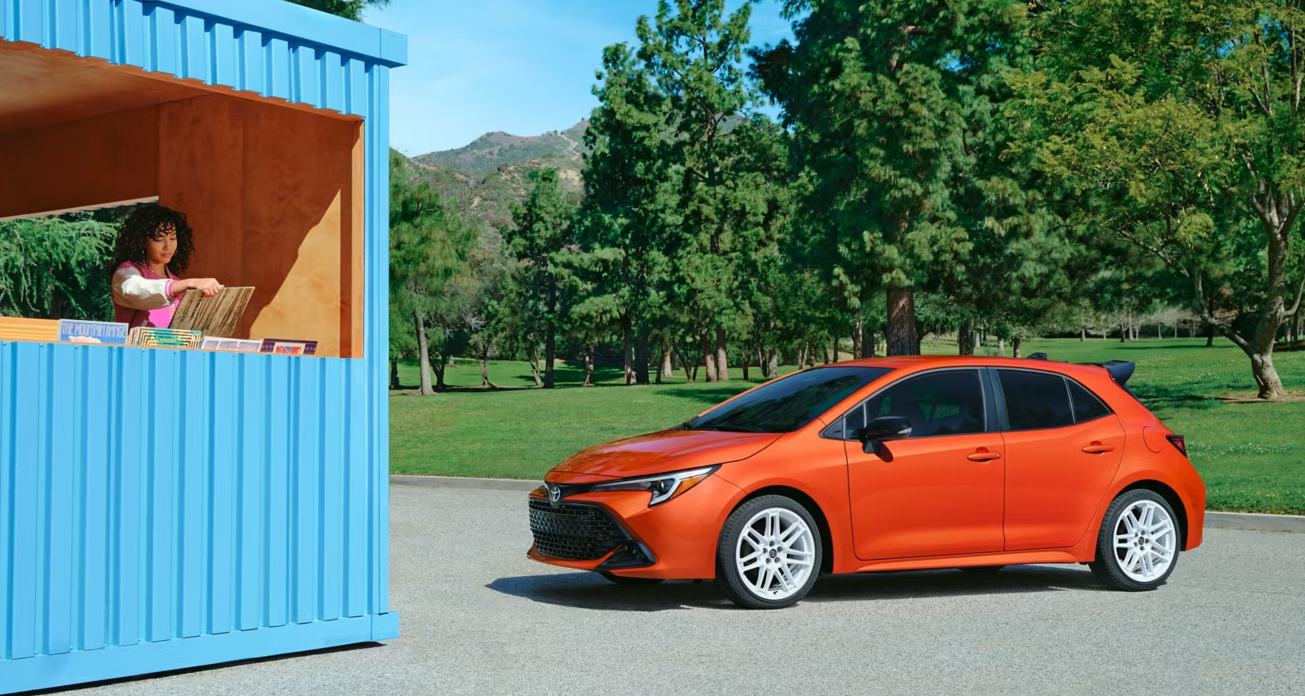
2026 corolla hatchback

2027 Toyota Corolla Hatchback Trim Guide for Durham Drivers

Toyota Corolla Hatchback Guide • Durham, NC Comparing SE, Nightshade, and XSE Trims for Triangle Commuters The 2027 Toyota Corolla Hatchback gives Durham drivers Corolla reliability and efficiency in a more versatile body style than the sedan, with a rear hatch that opens up genuinely useful cargo space for students, young professionals, and anyone who wants a smaller footprint without sacrificing practicality. Here at Mark Jacobson Toyota, we see a lot of interest in the Hatchback from Duke, UNC, and NC State students and their families, along with RTP commuters who want a fuel-efficient daily driver that can still handle a Target run or a dorm move-in without folding down half the seats. The 2027 Corolla Hatchback is available in SE and XSE trims, each built around Toyota's Dynamic Force engine and standard Toyota Safety Sense technology. Where the two trims really differ is in equipment level, wheel size, and a handful of comfort and technology features, rather than in the core mechanical experience. For a Durham or RTP buyer trying to decide between the two, or trying to decide whether the Hatchback makes more sense than the Corolla sedan, this guide walks through the specifics you actually need before you visit us. Definition: The 2027 Toyota Corolla Hatchback is a compact, fuel-efficient hatchback variant of the Corolla built on Toyota's TNGA-C platform, offered in SE and XSE trims. It is commonly chosen by first-time buyers, students, and commuters who want Corolla reliability with added cargo flexibility. For drivers across Durham, Chapel Hill, Raleigh, Cary, and the Research Triangle, it provides an efficient daily commuter with standard safety technology and a rear hatch configuration suited to everyday hauling needs. Corolla Hatchback Research Guide 2027 Corolla Hatchback Guide: SE vs XSE, MPG, Cargo, and Ownership Fuel Economy and SE vs XSE Trim Differences Toyota Safety Sense and Standard Technology Cargo Space and Hatchback Practicality ToyotaCare and Ownership Cost Corolla Hatchback vs Corolla Cross Duke, UNC, NC State, and RTP Driving Cargo Shape and Everyday Loading Key Takeaways Corolla Hatchback Frequently Asked Questions Fuel Economy and Everyday Commuter Value The Corolla Hatchback is built around Toyota's Dynamic Force engine, the same efficiency-focused powertrain family found across much of the current Corolla lineup. For Triangle commuters driving between Durham, RTP, Chapel Hill, and Raleigh on a regular basis, that efficiency translates directly into fewer fill-ups and lower fuel costs over a typical work week, particularly for anyone spending real time in stop-and-go traffic on I-40 or NC-147 during peak commuting hours. Beyond the headline fuel economy number, the Corolla Hatchback's continuously variable transmission is tuned to keep the engine operating in its most efficient range during typical commuting speeds, rather than simply being about a single EPA rating. That matters in practice because the Triangle's mix of highway commuting and stop-and-go college-town traffic is exactly the kind of driving where a well-tuned CVT shows its value compared to a traditional automatic that shifts through more gears than it needs to. SE vs XSE Trim Differences The SE trim is the practical, well-equipped starting point for most Corolla Hatchback shoppers. It includes the full Toyota Safety Sense suite, a touchscreen infotainment system with wireless Apple CarPlay and Android Auto, and 16-inch alloy wheels. The XSE trim builds on that foundation with upgraded interior materials, a standard 10.5-inch touchscreen, additional convenience features like heated front seats, 18-inch graphite-colored alloy wheels, and a sportier exterior appearance. For a student or first-time buyer focused primarily on reliability and low running costs, the SE trim generally covers everything that matters day to day. For a buyer who wants a bit more comfort and technology without stepping up to a different model entirely, the XSE closes most of that gap while staying within the Corolla family's efficient, low-maintenance reputation. Table 1: 2027 Corolla Hatchback SE vs XSE Feature SE XSE Engine Dynamic Force 4-cylinder Dynamic Force 4-cylinder Transmission CVT CVT Toyota Safety Sense Toyota Safety Sense 3.0 standard Toyota Safety Sense 3.0 standard Wheels 16-inch alloy wheels 18-inch graphite-colored alloy wheels Infotainment Standard touchscreen, wireless Apple CarPlay/Android Auto; 10.5-inch touchscreen available with SE Premium Package Standard 10.5-inch touchscreen, wireless Apple CarPlay/Android Auto Seating comfort Cloth upholstery SofTex-trimmed heated front seats with sport fabric inserts Best fit Budget-focused first-time buyers and commuters Buyers who want added comfort and styling within the Corolla lineup Confirm current MSRP for each trim with our sales team, since pricing can shift with equipment packages and current incentives. Compare SE and XSE Trims Toyota Safety Sense and Standard Technology Every 2027 Corolla Hatchback comes with Toyota Safety Sense 3.0 as standard equipment, not as an option reserved for higher trims. That includes a Pre-Collision System with Pedestrian Detection, Lane Departure Alert with Steering Assist, Automatic High Beams, and Full-Speed Range Dynamic Radar Cruise Control. For a Duke or UNC student driving unfamiliar roads for the first time, or a parent handing their student their first car, having that safety suite standard rather than optional is one of the more reassuring parts of the Corolla Hatchback's value proposition. Wireless Apple CarPlay and Android Auto come standard as well, which means no cables tangled in the center console and a simpler way to keep navigation, music, and calls connected during the daily commute between Durham and RTP or a longer drive back to campus after a break. Cargo Space and Hatchback Practicality This is where the Hatchback earns its place in the Corolla lineup rather than simply being a styling alternative to the sedan. With the rear seats up, the hatch opens to a cargo area that handles grocery runs, luggage, and typical daily hauling without much thought. Fold the 60/40 split rear seats down, and the space expands significantly, enough for a dorm move, a bike with the front wheel removed, or a larger Target or Costco haul that would not fit in a sedan's trunk. The hatch's low liftover height also makes loading heavier items easier than lifting them into a raised SUV cargo area, which is a small but real convenience for anyone hauling groceries solo on a weeknight. We tell shoppers that cargo height and the shape of the opening often matter more in daily use than the total published cargo volume number, since a wide, low opening can be more genuinely useful than a taller space that is awkward to load. Which Trim Fits a Student or First-Time Buyer For students commuting between Durham, Chapel Hill, and campus, or driving home to Raleigh or Cary for the weekend, the SE trim's combination of standard safety technology, strong fuel economy, and lower price point tends to be the practical choice. It keeps monthly payments manageable while still delivering everything that matters for daily reliability. For a young professional in RTP who wants a slightly more comfortable daily commuter, or a family buying a Hatchback as a second car with a bit more equipment, the XSE's added comfort features and styling upgrades can be worth the price difference, particularly if you plan to keep the vehicle for several years and want the interior to feel a little more finished during that time. Table 2: Fuel Economy and Cargo Space by Trim Metric SE XSE Published estimated MPG, city/highway 32 city / 41 highway 30 city / 38 highway Cargo space, seats up Standard Hatchback cargo area Standard Hatchback cargo area Cargo space, seats folded Significantly expanded with 60/40 split-fold seats Significantly expanded with 60/40 split-fold seats Typical use case Daily commuting, grocery runs, light hauling Same daily use, plus added comfort for longer drives Weekly fuel cost impact for Triangle commuting Depends on weekly mileage, fuel prices, and the vehicle being compared Depends on weekly mileage, fuel prices, and the vehicle being compared Fuel economy estimates are published by Toyota for the 2027 Corolla Hatchback. Actual mileage varies with driving conditions, vehicle condition, and driving habits. ToyotaCare and Ownership Cost for First-Time Buyers Ownership cost matters as much as the sticker price for most Corolla Hatchback buyers, particularly students and first-time buyers working with a tighter budget. Toyota's current program materials indicate that MY2027 vehicles generally carry a ToyotaCare window covering the first year or 10,000 miles of factory-scheduled maintenance, which is shorter than the 2-year/25,000-mile structure that applied to many earlier Corolla model years. We recommend confirming the exact ToyotaCare terms for your specific 2027 Hatchback before you buy, since knowing what is and is not covered early on makes it easier to budget for maintenance after that initial window closes. Beyond scheduled maintenance, the Corolla Hatchback's reputation for low long-term repair costs is one of the more practical reasons students and first-time buyers gravitate toward it. Our Toyota-certified technicians use Genuine Toyota parts for everything from routine oil changes to brake service, which matters for resale value down the road, since a documented maintenance history with Toyota parts tends to reassure a future buyer more than a mix of aftermarket components. Table 3: ToyotaCare and Safety Technology Snapshot Coverage Area 2027 Corolla Hatchback ToyotaCare maintenance window 1 year / 10,000 miles, whichever comes first, under current program terms Standard safety suite Toyota Safety Sense 3.0 across SE and XSE Standard tech Wireless Apple CarPlay and Android Auto Recommended seasonal service Cabin air filter check each spring for pollen season Service support Available through our Toyota-certified service department using Genuine Toyota parts Schedule Toyota Service Corolla Hatchback vs Corolla Cross: Two Different Kinds of Practical Some shoppers come in comparing the Corolla Hatchback to the Corolla Cross, and it is worth addressing that directly since both wear the Corolla name but serve different needs. The Corolla Cross is a small SUV with a higher ride height, more ground clearance, and available all-wheel drive, which makes it a better fit for anyone who wants a slightly more commanding driving position or occasional light off-pavement driving toward the mountains. The Corolla Hatchback sits lower, drives more like the efficient commuter car it is built to be, and generally costs less to buy and maintain over time. For a Durham or RTP commuter whose driving is almost entirely on paved roads and highways, the Hatchback's lower stance and efficiency usually make more sense financially. For a family that wants a bit more cargo height, a higher seating position, or the option of all-wheel drive for occasional winter weather, the Corolla Cross is worth a look before you decide. We are happy to show both side by side so you can see the practical differences rather than just comparing spec sheets. Duke, UNC, NC State, and RTP: Where the Hatchback Makes Sense We see three distinct groups gravitate toward the Corolla Hatchback in our market, and each has a slightly different reason. Students at Duke, UNC, and NC State like the combination of low running costs, easy parking in tight campus and downtown Durham spaces, and a hatch that handles move-in and move-out days without renting a larger vehicle. RTP commuters driving daily between Durham, Morrisville, and the Park appreciate the fuel economy on repetitive highway and surface-street driving, especially with gas prices that can swing throughout the year. Families looking for a reliable, affordable second vehicle often land on the Hatchback specifically because the cargo flexibility makes it more useful than a sedan for weekend errands, even though it is not a full SUV. Spring pollen season is also worth mentioning here, since it affects every vehicle in our market regardless of body style. A clogged cabin air filter during oak and pine pollen season can reduce airflow and cabin air quality noticeably, and it is one of the simpler, lower-cost maintenance items we recommend checking each spring for any Corolla Hatchback used for regular Triangle commuting. Our sales team can help you compare the SE and XSE trims in person and talk through current pricing, lease options, and whether the Corolla sedan or Hatchback body style fits your actual daily routine better. Visit us at 4516 Durham-Chapel Hill Blvd in Durham, call 919-493-5599 during our current published sales hours, or browse current inventory at https://www.markjacobsontoyota.com/. If you are a recent or upcoming graduate from one of the Triangle's universities, ask our finance team about current Toyota Financial Services and college graduate program terms, since eligibility and amounts can vary by region and are worth confirming directly with us. Schedule a Corolla Test Drive Forgotten Specs: Why Cargo Shape Matters More Than the Number on the Spec Sheet Most Hatchback comparisons lead with a single cargo volume figure, and that number genuinely undersells how the Corolla Hatchback works in real life. Two vehicles with similar published cargo volume can feel completely different to load depending on the shape of the opening, the height of the liftover, and how flat the cargo floor sits once the rear seats are folded. The Corolla Hatchback's rear hatch opens to a wide, low opening that makes sliding in a duffel bag, a case of water, or a stack of moving boxes easier than lifting them over a high SUV bumper. When the 60/40 split rear seats fold, the resulting floor sits close to flat, which matters if you are sliding in a bike, a folded table, or flat-packed furniture from a dorm move rather than stacking irregular items. We encourage shoppers to physically load something into the cargo area during a test drive rather than relying on the published cubic-foot number alone, since that is the only way to know whether a specific vehicle's cargo space actually fits your typical hauling needs. Key Takeaways The 2027 Corolla Hatchback comes in SE and XSE trims, both built on the Dynamic Force engine with standard Toyota Safety Sense technology. SE covers the practical needs of most students and first-time buyers; XSE adds comfort and styling upgrades for buyers who want more equipment. The Hatchback's low, wide cargo opening and 60/40 split-folding rear seats make it more versatile for hauling than the Corolla sedan. Standard Toyota Safety Sense technology applies across both trims, not reserved for higher-equipped versions. Confirm current MSRP, EPA MPG ratings, and ToyotaCare terms for the specific 2027 unit you are considering before purchase. Spring cabin air filter replacement is a simple, worthwhile maintenance item for any Corolla Hatchback used for regular Triangle commuting. Frequently Asked Questions What is the difference between the Corolla Hatchback and the Corolla sedan? The Hatchback and sedan share the same efficient Dynamic Force engine and core safety technology, but the Hatchback's rear hatch and folding seats give it more cargo flexibility for hauling larger or bulkier items. The sedan offers a traditional trunk with more enclosed storage. The right choice usually comes down to whether cargo versatility or a more traditional sedan layout matters more for your daily routine. Our sales team can show you both back to back. Is the 2027 Corolla Hatchback a good car for a college student in Durham or Chapel Hill? Yes, for most students it is a strong fit. It combines low fuel costs, standard safety technology, and enough cargo flexibility to handle move-in and move-out days, all while remaining easy to park around campus and downtown Durham. We recommend the SE trim for students focused on keeping costs down, with the XSE as an option for those who want a bit more comfort and technology. Does the Corolla Hatchback come with all-wheel drive? No. The 2027 Corolla Hatchback SE and XSE use front-wheel drive. If all-wheel drive is a priority, our sales team can help you compare other Corolla-family options, including appropriately equipped Corolla Hybrid sedan and Corolla Cross models. How often should I replace the cabin air filter during North Carolina pollen season? We generally recommend checking the cabin air filter each spring given how heavy oak and pine pollen can get across the Triangle, though your exact interval depends on your driving environment and Toyota's maintenance guide for your specific vehicle. Our service department can check it during a routine visit and let you know if it needs replacing. Whether you are a student at Duke, UNC, or NC State, a first-time buyer, or an RTP commuter looking for an efficient daily driver with real cargo flexibility, we want to help you figure out whether the 2027 Corolla Hatchback is the right fit before you commit to anything. Visit our team at 4516 Durham-Chapel Hill Blvd, Durham, NC 27707, or call us at 919-493-5599 during our current published sales hours to see current SE and XSE inventory. You can also start browsing at https://www.markjacobsontoyota.com/ before you come in. As an authorized Toyota dealer, we can walk you through financing, current incentives, and how the Hatchback compares to the Corolla sedan for your specific daily driving, so you leave with the version of the Corolla that actually fits your life. Schedule Your Test Drive Call Mark Jacobson Toyota Related Toyota Insights & Ownership Guides Toyota Graduate Guide The Best Toyota Cars for Graduates Explore Toyota options for life after graduation, from efficient compact cars to versatile vehicles for new commutes and changing routines. Read More → Toyota Ownership Coverage ToyotaCare vs ToyotaCare Plus vs Extended Warranty: What Durham Owners Should Know Understand the differences between scheduled maintenance plans and repair protection when budgeting for Toyota ownership. Read More →

2027 Toyota Highlander BEV: What Durham Families Should Know

2027 Toyota Highlander BEV: What Durham Families Should Know

Toyota Electric SUV Guide • Durham, NC Three-Row Comfort, Cargo Space, and Daily Versatility The 2027 Toyota Highlander BEV is an all-new, all-electric version of Toyota's three-row family SUV, and it represents a real departure from the gas and hybrid Highlander that Triangle families already know. Here at Mark Jacobson Toyota, we have been fielding questions from Durham, Chapel Hill, and RTP families who want to know whether this is simply an electric trim of the current Highlander or something different under the skin. It is genuinely different. The 2027 Highlander BEV rides on a dedicated battery-electric platform, uses NACS (North American Charging Standard) charging hardware, and comes with Toyota Safety Sense 4.0 as standard equipment across the lineup. Toyota's current official information identifies two grades, XLE and Limited, each available with front-wheel drive or all-wheel drive through a dual-motor setup. For a Triangle family cross-shopping this against a Highlander Hybrid, a Toyota bZ, or a three-row from another brand, the Highlander BEV's biggest selling points are seating for up to eight, a completely reworked interior built around the electric platform, and the ability to charge overnight at home instead of stopping for gas. Definition: The 2027 Toyota Highlander BEV is an all-new, battery-electric version of Toyota's three-row midsize SUV, built on a dedicated EV platform rather than the existing gas or hybrid Highlander chassis. It is designed primarily for families who need three-row seating and want to move to an electric daily driver without downsizing. For drivers across Durham, Chapel Hill, Raleigh, Cary, and the Research Triangle, it offers gas-free daily commuting, overnight home charging, and standard advanced safety technology, provided local charging infrastructure and driving patterns fit an EV's range and charging rhythm. Highlander Electric SUV Research 2027 Toyota Highlander BEV Guide: Charging, Seating, Safety, and Ownership All-New Electric Platform and Trim Differences NACS Charging and Range for Triangle Driving Seating, Cargo, and Family Usability Toyota Safety Sense 4.0 Highlander BEV vs. Highlander Hybrid ToyotaCare and First-Year EV Ownership How the Electric Platform Changes Driving Highlander Hybrid Ownership Perspective Key Takeaways Highlander BEV Frequently Asked Questions All-New Three-Row Battery-Electric Platform The first thing we explain to Highlander shoppers is that the BEV is not a plug-in version of the familiar Highlander Hybrid. It uses a purpose-built electric architecture, which changes how the vehicle drives, where the weight sits, and how the cabin is packaged. Because there is no transmission tunnel or engine bay to work around, Toyota's engineers had more freedom with floor height, second-row legroom, and underfloor storage. XLE vs Limited Grade Differences Toyota's current product information for the Highlander BEV lists two grades at launch. XLE is the entry point into the BEV lineup and comes with TSS 4.0, a digital instrument cluster, dual-zone climate control, and the base battery and motor configuration. Limited adds a larger available battery pack in some configurations, upgraded interior trim, a premium audio system, and additional driver convenience features. Both grades are available with front-wheel drive (single motor) or all-wheel drive (dual motor), which is a meaningful decision point for Triangle families who make occasional trips toward the mountains or simply want extra traction confidence during North Carolina's winter ice events. Table 1: 2027 Highlander BEV Trim Comparison Feature XLE Limited Drivetrain options FWD or AWD (dual motor) FWD or AWD (dual motor) Safety suite Toyota Safety Sense 4.0 standard Toyota Safety Sense 4.0 standard Seating Up to 8 passengers (configuration dependent) Up to 8 passengers (configuration dependent) Interior trim level Standard cloth/synthetic upholstery, digital cluster Upgraded materials, additional comfort features Charging hardware NACS port, onboard AC charger NACS port, onboard AC charger Best fit Families who want core BEV capability and safety tech Families who want additional comfort and tech at a higher price point Contact Mark Jacobson Toyota for current battery specifications, EPA-rated range information, pricing by grade, and local availability before you make a final decision. Ask About Highlander BEV NACS Charging and Realistic Range for Triangle Driving This is the section we spend the most time on with families, because charging habits matter more for day-to-day satisfaction than the number on a spec sheet. The Highlander BEV uses NACS, the same charging connector standard used by Tesla's Supercharger network, which means owners get access to a large and still-growing public fast-charging network across North Carolina in addition to Toyota-approved home charging equipment. For most Triangle commutes, a full overnight charge on a Level 2 home charger covers daily driving between Durham, RTP, Chapel Hill, and Raleigh with room to spare. Where range becomes a real planning question is on longer trips, such as a weekend drive to the North Carolina mountains or a family trip to the coast, where DC fast charging along I-40 or I-85 becomes part of the itinerary rather than an afterthought. We recommend that any family cross-shopping the Highlander BEV think through their actual weekly driving pattern, including how often they make trips beyond a single charge's worth of range, rather than relying on a single advertised range figure that assumes ideal conditions. Home Charging, Workplace Charging, and RTP Commutes Home charging is where most Highlander BEV owners will do the majority of their charging. A Level 2 home charger, similar to what plug-in hybrid and EV owners already use, is the practical way to wake up to a full battery every morning. For RTP commuters specifically, a growing number of employers in the Park and around Duke, UNC, and NC State have added workplace charging, which can meaningfully extend effective daily range for anyone with a longer commute along I-40 or US-15-501. Table 2: Charging Options and What to Expect Charging Type Typical Use Case What It Adds Level 2 home charging Overnight, daily routine Full charge by morning for typical commuting Workplace Level 2 charging Weekday top-off at RTP, Duke, UNC, NC State employers Extends effective range for longer commutes NACS DC fast charging Road trips, longer weekend drives Significant range added in well under an hour at a compatible station Public Level 2 charging Shopping centers, parking decks Convenient top-off, not a primary charging strategy We tell every Highlander BEV shopper the same thing: map out where you would realistically charge on a normal week before you commit, because an EV's convenience depends entirely on whether charging fits your routine rather than becoming a chore. Seating, Cargo, and Family Usability Because the BEV platform removes the need for a traditional drivetrain tunnel, Toyota was able to rework the interior packaging compared to the gas and hybrid Highlander. Second-row legroom benefits from the flatter floor, and Toyota's current configurations support seating for up to eight passengers depending on whether you choose captain's chairs or a bench in the second row. Cargo space behind the third row remains usable for everyday errands, and folding the third row flat opens up significantly more room for the kind of hauling Triangle families actually do, from Costco runs to hauling gear for a weekend at Jordan Lake. Because there is no engine up front, the Highlander BEV also gains a front trunk (frunk) in some configurations, which is a genuinely useful spot for charging cables or wet gear that you would rather not put next to the kids. TSS 4.0 Safety Technology Every 2027 Highlander BEV comes standard with Toyota Safety Sense 4.0, which is a meaningfully updated suite compared to TSS 3.0 found on many current Toyota models. TSS 4.0 generally brings improved sensor range and processing for features like pre-collision warning with pedestrian and cyclist detection, dynamic radar cruise control, lane departure alert with steering assist, and automatic high beams, tuned specifically for the BEV platform's sensor placement. For families driving through Duke and UNC event traffic, merging onto I-40 during RTP rush hour, or navigating wet roads during a Piedmont thunderstorm, having the most current version of Toyota's safety suite standard on every grade, rather than reserved for higher trims, is one of the more practical reasons to consider the BEV over an older Highlander generation. Choosing Between the Highlander BEV and the Highlander Hybrid This is the question we hear most often, and it deserves an honest answer rather than a sales pitch. The Highlander Hybrid remains in Toyota's lineup alongside the new BEV, and for good reason: not every family's routine fits an EV cleanly. If you regularly drive long distances without predictable charging access, tow a trailer, or simply are not ready to change your fueling habits, the Highlander Hybrid's gas-electric powertrain offers familiar, flexible range without any charging planning at all. The Highlander BEV makes the most sense for families who can charge at home or work consistently, whose daily driving fits comfortably within a single charge, and who want to eliminate gas stops and reduce fuel costs for routine RTP and Triangle commuting. It is also the better fit for anyone who specifically wants the newest safety technology and the quieter, smoother driving character that comes with an electric powertrain. Neither vehicle is the objectively "better" choice; the right one depends on how your family actually drives, which is exactly the kind of decision our team can walk through with you using your real commute and travel patterns rather than a generic recommendation. Here at Mark Jacobson Toyota, our sales team can help you compare the Highlander BEV against the Highlander Hybrid side by side, including current pricing, incentives, and what is actually arriving on our lot. Visit us at 4516 Durham-Chapel Hill Blvd in Durham, call 919-493-5599 during our current published sales hours, or start browsing our inventory at https://www.markjacobsontoyota.com/. Because the Highlander BEV is a newly launched model, we recommend confirming current availability with us directly rather than assuming a specific configuration is on the lot, and our finance team can also walk you through Toyota Financial Services options once you have settled on a grade and drivetrain. Compare Highlander Options ToyotaCare and What to Expect as a First-Year EV Owner Toyota's current program materials indicate that MY2027 vehicles, including the Highlander BEV, generally carry a ToyotaCare maintenance structure covering normal factory-scheduled service for the vehicle's first year or 10,000 miles, whichever comes first. This is a shorter window than the 2-year/25,000-mile structure that has applied to many earlier Toyota model years, so we recommend confirming the exact terms that apply to your specific Highlander BEV before you sign, since program details can vary and Toyota may publish model-specific exceptions. Beyond scheduled maintenance, owning an EV for the first time mostly means adjusting habits rather than learning new mechanical skills. There is no oil to change and far fewer moving parts to wear out compared to a gas engine, but tire wear, cabin air filtration during pollen season, and brake system checks still matter, and our Toyota-certified technicians are equipped to handle Highlander BEV service using Toyota-specific diagnostic equipment. Table 3: ToyotaCare and Ownership Support Coverage Area What Applies to MY2027 Highlander BEV ToyotaCare maintenance window Generally 1 year / 10,000 miles under current MY2027 program terms. Contact Mark Jacobson Toyota for the coverage applicable to your vehicle. Safety suite Toyota Safety Sense 4.0 standard on all grades Charging hardware NACS port standard, onboard AC charging Service support Available through our Toyota-certified service department using Toyota diagnostic equipment Financing Toyota Financial Services options available through our finance team, subject to credit approval Our service department is also a resource once you are driving your Highlander BEV day to day. If you have questions about charging behavior, tire wear from the vehicle's additional battery weight, or seasonal service needs heading into a Piedmont winter, call our service team at 919-251-6630 or schedule through https://www.markjacobsontoyota.com/schedule-toyota-service.html. Schedule Toyota Service Technical Deep Dive: How a BEV Platform Changes the Way the Highlander Drives Families who have driven a Highlander Hybrid will notice a different character behind the wheel of the BEV, and it comes down to more than just the absence of engine noise. A gas or hybrid Highlander carries its weight up front, around the engine and transmission, while the Highlander BEV's battery pack sits low in the floor, spanning much of the vehicle's length. That lower, more evenly distributed weight lowers the center of gravity, which tends to make the vehicle feel more planted through curves on roads like US-15-501 between Durham and Chapel Hill, and steadier during quick lane changes in RTP traffic. Electric motors also deliver their full torque immediately, without the brief delay of a transmission searching for the right gear. In practical terms, that means merging onto I-40 or pulling away from a stoplight feels noticeably more responsive than in the hybrid, even though the two vehicles are aimed at the same family buyer. Dual-motor AWD configurations add a further layer of capability by sending power independently to the front and rear axles, which can help with traction during a sudden downpour or one of the Triangle's occasional ice events, though we still recommend cautious driving in winter weather regardless of drivetrain. Regenerative braking is another adjustment. Instead of coasting the way a gas vehicle does when you lift off the accelerator, the Highlander BEV uses the electric motors to slow the vehicle and recapture energy back into the battery. Most drivers adapt to this within the first week or two, and some prefer it once they are used to driving with one pedal doing most of the work in stop-and-go traffic around Duke, UNC, or downtown Durham. Future Perspective: Why the Highlander Hybrid Is Staying in Our Lineup Some shoppers assume that once Toyota releases a battery-electric version of a popular model, the hybrid version is on its way out. That is not what is happening with the Highlander, and it reflects Toyota's broader strategy of offering hybrid, plug-in hybrid, and battery-electric versions of its most popular vehicles side by side rather than replacing one with another. The reasoning is practical. A meaningful share of Triangle families still tow trailers, take unpredictable long-distance trips, or live somewhere charging is not yet convenient, and for those buyers a hybrid remains the better fit today. Toyota's hybrid-first approach over the past two decades has also built a reputation for reliability and resale value that many buyers specifically seek out, and the Highlander Hybrid continues to benefit from that track record. At the same time, offering a dedicated BEV platform lets Toyota build a vehicle optimized from the ground up for electric driving, rather than compromising a gas-based design to accommodate a battery. For Durham and RTP shoppers, this means the decision is not about picking the version of the Highlander that will still be supported in a few years. Both are current, fully supported parts of Toyota's lineup, and the right one depends entirely on how your family actually drives, not on guessing which technology Toyota will favor next. Key Takeaways The 2027 Highlander BEV is an all-new, dedicated battery-electric three-row SUV, not an electric version of the existing Highlander Hybrid. Toyota's current lineup includes XLE and Limited grades, each available with FWD or AWD, and every grade comes standard with Toyota Safety Sense 4.0. NACS charging hardware gives owners access to a wide public fast-charging network in addition to home Level 2 charging. Seating for up to eight and a reworked interior layout come from the ground-up BEV platform rather than a retrofit of the gas Highlander. ToyotaCare for MY2027 vehicles generally covers the first year or 10,000 miles; confirm exact terms before purchase. The Highlander Hybrid remains a strong option for families whose routine does not fit consistent home or workplace charging. Frequently Asked Questions Is the 2027 Toyota Highlander BEV the same vehicle as the Highlander Hybrid with a bigger battery? No. The Highlander BEV uses a dedicated battery-electric platform rather than the gas/hybrid Highlander's chassis and powertrain. That means different underlying architecture, a reworked interior layout, and different charging and range considerations. Both vehicles remain in Toyota's current lineup, so the choice comes down to whether your driving pattern and charging access favor a full EV or a traditional hybrid. Our sales team can walk through both side by side. What charging equipment do I need at home for a Highlander BEV? Most owners install a Level 2 home charger, which charges the vehicle fully overnight for typical daily driving. The Highlander BEV uses Toyota's NACS charging port, which also gives access to public NACS-compatible fast-charging stations for longer trips. We recommend discussing your home's electrical setup with a licensed electrician before installation, and our team can point you toward current Toyota-approved charging equipment options. Does the 2027 Highlander BEV still seat up to eight passengers? Toyota's current configurations for the Highlander BEV support seating for up to eight, depending on whether you choose a second-row bench or captain's chairs. Exact seating capacity varies by trim and configuration, so we recommend confirming the specific layout on the unit you are considering when you visit us or review current inventory. How does ToyotaCare work on a 2027 model compared to older Toyotas? Toyota's current program materials indicate that MY2027 vehicles generally carry a shorter ToyotaCare window, covering the first year or 10,000 miles of factory-scheduled maintenance, compared to the 2-year/25,000-mile structure that applied to many earlier model years. Because program terms can include model-specific exceptions, we recommend confirming the exact ToyotaCare coverage that applies to your specific Highlander BEV before you finalize your purchase. We know an all-new, all-electric Highlander is a bigger decision than a routine trim upgrade, and we want Durham, Chapel Hill, Raleigh, Cary, and RTP families to make that decision with accurate information rather than guesswork. Our team at 4516 Durham-Chapel Hill Blvd, Durham, NC 27707 can walk you through current Highlander BEV availability, pricing, and how it compares to the Highlander Hybrid for your specific routine. Call our sales team at 919-493-5599 during our current published sales hours, or start researching online at https://www.markjacobsontoyota.com/. As an authorized Toyota dealer, we can also connect you with Toyota Financial Services for financing or lease options once you know which grade and drivetrain fit your family. We are here to help you figure out whether the Highlander BEV fits your life, not just tell you that it does. Call Mark Jacobson Toyota Explore Toyota Options Related Toyota Insights & Ownership Guides Toyota Family SUV Guide 2026 Toyota Highlander vs Grand Highlander: Which Toyota SUV Fits Your Family? Compare Toyota three-row SUVs for passenger space, cargo flexibility, and everyday family driving. Read More → Toyota Ownership Coverage ToyotaCare vs ToyotaCare Plus vs Extended Warranty: What Durham Owners Should Know Understand the differences between scheduled maintenance plans and repair protection when planning Toyota ownership. Read More →