Blog

Toyota Dashboard Warning Lights: What They Mean and What to Do

toyota-help-what-do-the-dashboard-warning-lights-mean4-1

Is your Toyota displaying an unfamiliar dashboard light? At Mark Jacobson Toyota in Durham, we understand that car dashboard symbols can sometimes be confusing. Let’s break down the most common warning lights you might see and what actions you should take.

Critical Warning Lights (Stop Immediately!)

These dashboard lights require immediate attention:

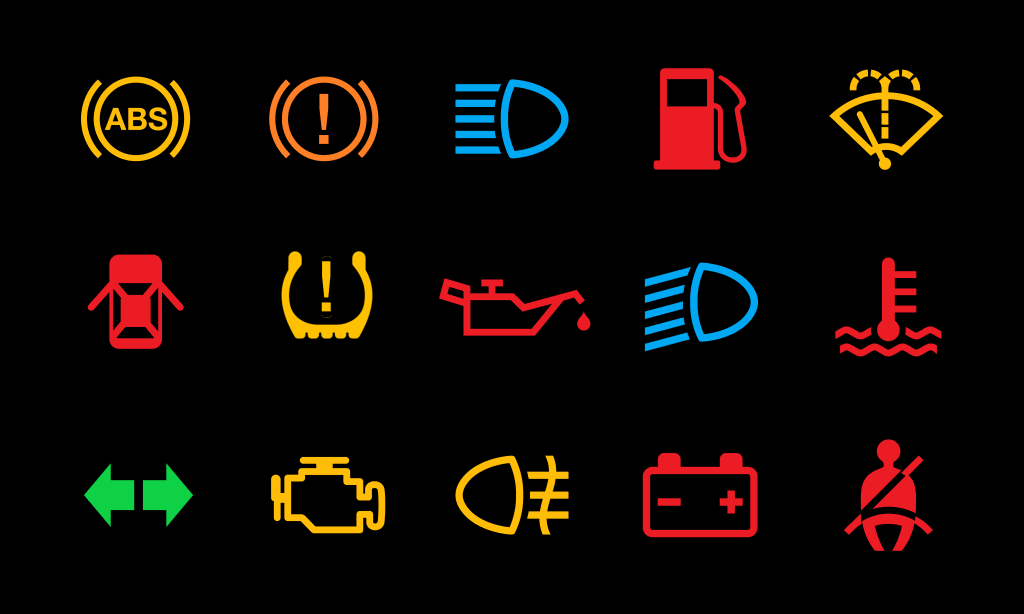
Brake System Warning

What it means: There may be low brake fluid or a malfunction in the brake system.
What to do: If the parking brake is fully released and the light remains on, do not drive the vehicle. Call for brake service immediately.

Charging System Warning

What it means: Your vehicle’s charging system has a malfunction.
What to do: Stop the vehicle immediately and contact us for help.

High Engine Coolant Temperature Warning

What it means: Your engine is overheating.
What to do: Pull over safely, turn off the engine, and allow it to cool. Then, schedule a service with us.

Low Engine Oil Pressure Warning

What it means: Your engine oil pressure is dangerously low, which can cause severe damage.
What to do: Stop the vehicle in a safe location and call Mark Jacobson Toyota for assistance.

Maintenance and System Alerts

These lights indicate issues that need attention soon:

Check Engine (Malfunction Indicator Lamp)

What it means: There may be an issue with the engine, throttle, or transmission system.
What to do: Have your Toyota inspected at our dealership as soon as possible.

Low Fuel Level Warning

What it means: Your fuel level is dangerously low.
What to do: Refuel immediately.

Low Windshield Washer Fluid Warning

What it means: The windshield washer fluid is low.
What to do: Refill the washer fluid reservoir.

Maintenance Required Reminder

What it means: Your vehicle is due for maintenance based on the mileage driven. This light illuminates for about 3 seconds and then flashes for 15 seconds after approximately 4,500 miles (7,200 km) since the last reset.
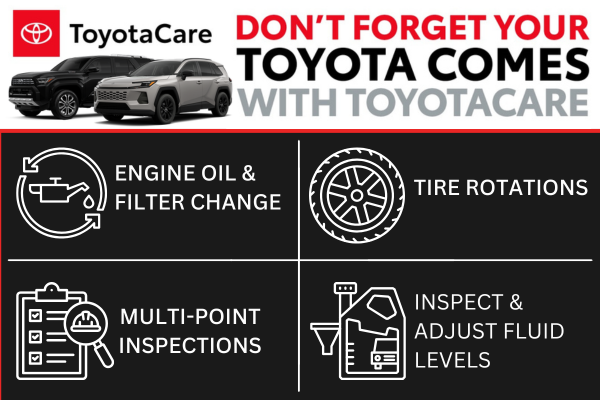
What to do: Schedule a ToyotaCare service appointment.

Power Steering Warning

What it means: Indicates a malfunction in the Electric Power Steering (EPS) system.
What to do: Do not ignore this warning. Have your vehicle inspected immediately. Failure to do so may result in unpredictable steering behavior and increase the risk of an accident.

SRS Airbag Warning

What it means: There may be an issue with the airbag, passenger occupant classification, or seat belt pretensioner system.
What to do: Have your airbag system checked as soon as possible.

Tire Pressure Warning

What it means: One or more tires have low air pressure.
What to do: Check and inflate your tires. If the light stays on, visit us for an inspection.

Safety and Driving Indicators

These lights are simply informational or serve as safety reminders:

  • Blind Spot Monitor (BSM) Indicator
  • Cruise Control Indicator
  • Open Door Warning
  • Seat Belt Reminder
  • Traction Control

What to Do If a Warning Light Stays On

If any warning light remains on after taking corrective action, schedule a service appointment with Mark Jacobson Toyota as soon as possible. 

Our expert technicians are ready to help keep your Toyota in peak condition. They are equipped to diagnose and repair any issues indicated by your dashboard lights. We serve customers throughout Durham, Chapel Hill, and Hillsborough.

Addressing warning lights promptly can prevent more serious issues and help maintain your Toyota’s performance and reliability. Visit us at Mark Jacobson Toyota—Where We Say Yes to keeping your vehicle running smoothly with expert service and genuine Toyota parts.

Schedule service today by calling our service department or using our online scheduling tool.

Recommended Posts

2026 Land Cruiser Hybrid Durham Guide

2026 Toyota Land Cruiser Hybrid Guide for Durham

The 2026 Toyota Land Cruiser hybrid pairs a 326-horsepower i-FORCE MAX turbo-hybrid powertrain with full-time four-wheel drive, locking differentials, and up to 8.7 inches of ground clearance, giving Durham drivers a genuinely trail-capable SUV that still works as a daily vehicle. At Mark Jacobson Toyota, we recommend it for families and outdoor drivers who want real off-road hardware without stepping into full-size SUV territory, especially those planning weekend trips into the Blue Ridge Mountains or hauling gear to Jordan Lake. For a Cary family loading kayaks and camping gear for a mountain weekend, the Land Cruiser's cargo space, locking differentials, and Multi-Terrain Select give the confidence to leave pavement behind without leaving comfort behind either. Two trims, the 1958 and the Land Cruiser, split the lineup between value-focused simplicity and premium comfort, and both share the same hybrid powertrain and off-road hardware. That single-powertrain approach is different from how we sell the Tacoma or Tundra, where buyers choose between gas and i-FORCE MAX power. Here, every 2026 Land Cruiser is a hybrid, which means every Durham-area buyer gets the same torque delivery and fuel efficiency regardless of trim. In this guide, we walk through the hybrid powertrain and trail hardware, trim differences, cargo and family fit, local driving comfort around Durham and RTP, mountain-trip planning toward Blue Ridge and Jordan Lake, ownership costs, and who the 2026 Land Cruiser actually fits best. By the end, you will know whether the Land Cruiser, the 4Runner, or the Sequoia makes more sense for your household, and which Land Cruiser trim lines up with how you plan to use it. Table of Contents Introduction Definition Block Hybrid Powertrain, 4WD, and Trail Capability 326 hp, 465 lb-ft, and why every Land Cruiser is a hybrid Full-time 4WD, locking differentials, and Multi-Terrain Select i-FORCE MAX Ownership and ToyotaCare Trim Comparison, Cargo, and Family Adventure Decision Support Land Cruiser vs 4Runner vs Sequoia comparison Cargo, comfort, and which Toyota SUV fits your household Daily Driving Comfort and Blue Ridge, Jordan Lake Road Trips Durham traffic, RTP commutes, and Triangle road trips Who the 2026 Land Cruiser Fits Best Land Cruiser Hybrid Ownership: Fuel Savings, Maintenance, and Long-Term Value Key Takeaways 2026 Toyota Land Cruiser FAQ for Durham Adventure Drivers Closing The 2026 Toyota Land Cruiser is a midsize, body-on-frame SUV built around a standard i-FORCE MAX hybrid powertrain and full-time four-wheel drive. It is designed for drivers who want dedicated off-road hardware, including locking differentials and low-range gearing, alongside daily comfort and hybrid efficiency. For drivers in Durham, Raleigh, Chapel Hill, Cary, and Apex, it supports routine commuting as well as weekend trips into the mountains or toward area lakes. Hybrid Powertrain, 4WD, and Trail Capability The 2026 Land Cruiser stands apart from other Toyota SUVs because every model, regardless of trim, runs the same 326-horsepower i-FORCE MAX hybrid powertrain paired with full-time four-wheel drive and locking differentials. 326 hp, 465 lb-ft, and why every Land Cruiser is a hybrid The 2026 Toyota Land Cruiser uses a 2.4-liter turbocharged i-FORCE MAX hybrid four-cylinder engine paired with an electric motor built into the eight-speed automatic transmission. That setup produces 326 horsepower and 465 lb.-ft. of torque, with peak torque arriving low in the rev range at 1,700 rpm. For Durham-area drivers, that means strong low-speed pulling power for trail obstacles, boat ramps, and loaded cargo runs, not just headline horsepower numbers. The 2026 Toyota Land Cruiser produces 326 horsepower and 465 lb.-ft. of torque from its i-FORCE MAX hybrid powertrain, with EPA ratings of 22 mpg city, 25 mpg highway, and 23 mpg combined. We recommend it for Apex and Cary drivers who want a genuine off-road SUV that does not force a major fuel-economy tradeoff for daily commuting. Every 2026 Land Cruiser, whether 1958 or Land Cruiser trim, shares this same drivetrain, so the powertrain decision is already made for you; the trim choice comes down to comfort and technology instead. You can review full specifications on our 2026 Land Cruiser research page before you decide. Spec Land Cruiser 1958 Land Cruiser Why It Matters Powertrain i-FORCE MAX 2.4L turbo hybrid i-FORCE MAX 2.4L turbo hybrid Identical drivetrain across the lineup Horsepower 326 hp 326 hp Same trail and highway power on both trims Torque 465 lb.-ft. 465 lb.-ft. Strong low-end pulling power for trails and cargo Starting MSRP* Around $58,000 Around $63,000 Entry pricing vs. added comfort and tech Infotainment Screen 8-inch touchscreen 12.3-inch touchscreen Larger display and tech on Land Cruiser trim Off-Road Hardware Locking diffs, low range Locking diffs, low range, Multi-Terrain Monitor Extra trail tech on the Land Cruiser trim Best For Value-focused off-road buyers Buyers wanting more comfort and tech Matches trim to priorities Based on Toyota's official website. *Starting MSRP shown before destination charge; confirm current pricing with our sales team. Choose the 1958 if you want standard locking differentials and low-range gearing without paying for a premium trim. Choose the Land Cruiser trim if the larger touchscreen and extra off-road tech matter to you. Choose the 4Runner instead if a more compact off-road footprint matters more than retro styling. For an Apex weekend off-roader who tackles North Carolina trails on Saturday and commutes to work Monday through Friday, the Land Cruiser 1958 delivers the core off-road hardware without paying for premium comfort features a daily commute does not need. View 2026 Land Cruiser Inventory Full-time 4WD, locking differentials, and Multi-Terrain Select Every 2026 Land Cruiser comes standard with full-time four-wheel drive, a two-speed transfer case with low range, and locking center and rear differentials, hardware that Toyota reserves for genuinely trail-focused models. Multi-Terrain Select lets the driver tune throttle and traction response for mud, sand, rock, or snow, and CRAWL Control manages throttle and brake input automatically on technical descents. Ground clearance reaches up to 8.7 inches, giving the Land Cruiser real breathing room over rutted fire roads and rocky trailheads without requiring an aftermarket lift. For a Chapel Hill outdoor family that spends weekends at trailheads west of the Triangle, that hardware means fewer compromises between a comfortable daily driver and a vehicle that can handle a rough forest-service road. We recommend confirming the available Stabilizer Disconnect Mechanism if your trail use leans toward technical rock crawling rather than gravel roads, since it changes articulation on tougher terrain. Toyota Safety Sense 3.0 comes standard as well, giving every Land Cruiser driver the same adaptive cruise control and lane-centering support you would expect on a Camry or RAV4. i-FORCE MAX Ownership and ToyotaCare Because the 2026 Land Cruiser's hybrid system is standard equipment rather than an upgrade, ownership looks different than it did on older gas-only Land Cruiser generations. The hybrid battery and electric motor are covered under Toyota's hybrid system warranty, and every new Land Cruiser includes ToyotaCare for factory-scheduled maintenance during the covered period, which helps offset some of the added complexity of the hybrid hardware. Our service team at Mark Jacobson Toyota advises hybrid Land Cruiser owners to keep up with routine oil changes, coolant checks, and 12-volt battery health, since the system still relies on a conventional engine working alongside the electric motor. For a Durham family keeping the Land Cruiser long term, we recommend using ToyotaCare visits to have our certified technicians inspect skid plates, differential fluid, and underbody protection after a season of trail use. That combination of hybrid coverage and off-road-aware service is one of the more overlooked reasons to buy from a dealership that services what it sells. Trim Comparison, Cargo, and Family Adventure Decision Support The right 2026 Land Cruiser choice comes down to whether you need Toyota's most trail-focused hardware in a midsize body, or whether the 4Runner or Sequoia would actually fit your household better. Land Cruiser vs 4Runner vs Sequoia comparison Once you know you want a rugged Toyota SUV, the next question at our Mark Jacobson Toyota showroom is usually which one. The Land Cruiser, 4Runner, and Sequoia all share off-road-capable roots, but they solve different problems for Triangle households. The Land Cruiser is Toyota's most trail-focused midsize SUV, built around locking differentials and low-range gearing as standard equipment on every trim. The 4Runner offers similar midsize proportions with its own i-FORCE MAX hybrid option on upper trims, but the Land Cruiser makes hybrid power standard across its entire lineup. The Sequoia moves into full-size territory, trading some off-road focus for three-row seating and stronger towing. Criteria Land Cruiser 4Runner Sequoia Body Style Midsize, 2-row Midsize, 2 or 3-row Full-size, 3-row Standard Powertrain i-FORCE MAX hybrid, 326 hp Gas standard; i-FORCE MAX hybrid available on upper trims i-FORCE MAX hybrid, 437 hp Max Towing Up to 6,000 lb Up to 6,000 lb on hybrid trims Up to 9,500 lb Ground Clearance Up to 8.7 in Varies by trim Varies by trim Seating 5 passengers 5 or 7 passengers 7 to 8 passengers Off-Road Hardware Locking diffs and low range standard Locking rear diff on TRD trims Available TRD Pro hardware Best For Buyers wanting standard trail hardware on every trim Buyers wanting flexible gas or hybrid trim choice Families needing three rows and maximum towing Based on Toyota's official website. We recommend the Land Cruiser over the 4Runner when standard hybrid power and locking differentials on every trim matter more than choosing between a gas and hybrid 4Runner. We recommend the 4Runner over the Land Cruiser when a smaller footprint or an available third row matter more to your household than dedicated trail hardware. We recommend the Sequoia over both when your family needs three-row seating and towing capacity beyond 6,000 pounds; Land Cruiser buyers who mainly need off-road confidence and daily comfort typically do not need that extra size. Schedule a Land Cruiser Test Drive Cargo, comfort, and which Toyota SUV fits your household Beyond body style and towing, the right choice depends on how your household actually uses the vehicle week to week. For a Raleigh family that road-trips several times a year and occasionally tows a small trailer, the Land Cruiser's standard hybrid torque and off-road hardware make sense without stepping up to Sequoia-level size. For a Durham commuter who wants three-row flexibility only a few times a year, the 4Runner's available third row can solve that problem without full-size dimensions. For a Cary family that camps regularly and carries a small boat or utility trailer, the Sequoia's 9,500-pound towing capacity is worth the larger footprint. If you want standard hybrid power and off-road hardware on every trim, choose the Land Cruiser. If you want to choose between gas and hybrid, or want an available third row in a midsize footprint, choose the 4Runner. If you tow more than 6,000 pounds or need consistent three-row seating, choose the Sequoia. If you mostly need cargo space for gear rather than passenger capacity, the Land Cruiser's 37.5 cubic feet behind the second row will likely cover it. We recommend visiting our Durham showroom to compare all three side by side, since the differences in ride height, cargo access, and interior feel are easier to judge in person than on a spec sheet. If the Land Cruiser, 4Runner, or Sequoia comparison has you leaning toward the Land Cruiser, we would love to walk you through both trims in person at our Mark Jacobson Toyota showroom. Our team can show you the difference between the 1958's 8-inch touchscreen and the Land Cruiser trim's larger 12.3-inch display, and we can pull up current inventory so you can see exactly which colors and packages are on our lot today. We can also compare the Land Cruiser side by side with a 4Runner or Sequoia if you are still weighing towing needs, seating, or budget before you decide. Drivers from Durham, Raleigh, Chapel Hill, Cary, and Apex are welcome to call us at 919-493-5599 or review current availability on our website before stopping by. We want your visit to answer real questions about cargo space, ground clearance, and how the hybrid powertrain actually feels on the road, not just repeat what you already read online. Get Pre-Approved for Your Land Cruiser Daily Driving Comfort and Blue Ridge, Jordan Lake Road Trips The 2026 Land Cruiser earns its place around Durham and the Triangle when a household actually uses the off-road hardware for weekend trips into the mountains or toward area lakes, not just for looks. Durham traffic, RTP commutes, and Triangle road trips Daily driving around Durham and Research Triangle Park means downtown traffic, NC-147, I-40 congestion during commute hours, and Triangle rain that can turn back roads slick with little warning. The Land Cruiser's higher seating position, standard four-wheel drive, and Toyota Safety Sense 3.0 suite give Durham and RTP commuters more visibility and confidence in daily traffic than a standard car-based crossover, even before you leave pavement. Where the Land Cruiser earns its keep is on weekend trips outside the Triangle. Blue Ridge Mountain routes involve grades, gravel forest-service roads, and elevation changes that reward standard locking differentials and low-range gearing, while Jordan Lake trips call for cargo space rather than technical off-road hardware. Based on our experience at Mark Jacobson Toyota, the households that get the most value are already planning a few mountain or lake trips a year, not just shopping for rugged styling. Local Driver Profile Primary Need Recommended Trim Why It Works Cary mountain-trip family Off-road capability plus cargo Land Cruiser trim Multi-Terrain Monitor and larger cargo access Apex Jordan Lake weekender Cargo for coolers and gear Land Cruiser 1958 Full off-road hardware without premium pricing Durham daily commuter Traffic visibility, rain confidence Land Cruiser 1958 Standard 4WD and Toyota Safety Sense 3.0 Chapel Hill trailhead regular Ground clearance for gravel roads Land Cruiser trim Locking diffs, low range, 8.7-in clearance Raleigh road-trip household Long-distance comfort Land Cruiser trim Larger touchscreen, upgraded comfort Ideal Use Case Commuting plus mountain or lake trips Land Cruiser hybrid, either trim Standard hybrid power, real off-road hardware Based on Toyota's official website and current Land Cruiser specifications. For a Cary family heading to the Blue Ridge Parkway for a fall weekend, the Land Cruiser's Multi-Terrain Select and cargo room handle gravel overlooks without hesitation. For an Apex household that stays closer to Jordan Lake, a 4Runner or RAV4 could cover that use case for less money. Value Your Trade Toward a Land Cruiser If mountain trips, lake weekends, or just more confidence in Triangle traffic are pulling you toward the Land Cruiser, we invite you to stop by our Mark Jacobson Toyota showroom so we can talk through real routes and real use, not just spec sheets. Our team has helped drivers across Durham, Raleigh, Chapel Hill, Cary, and Apex choose between Land Cruiser trims, and we are glad to compare current inventory with you in person. As part of our Mark Says Yes! approach, we work to find financing and trade options that fit your budget rather than pushing you toward the highest trim available. If you already own a Toyota or another vehicle you are ready to trade, we can give you a real trade value before you decide on a Land Cruiser trim. Call us at 919-493-5599, review current inventory on our website, or visit us at 4516 Durham-Chapel Hill Blvd so we can help you plan the right Land Cruiser purchase around how you actually plan to use it. Browse Current Land Cruiser Inventory Who the 2026 Land Cruiser Fits Best The 2026 Land Cruiser fits best with households that already spend real time outdoors, not with shoppers who simply want a rugged look for the school run. The clearest way to know if the Land Cruiser fits your life is to look at how you actually spend weekends, not how you picture yourself using an SUV. If your calendar already includes trips to the mountains, regular lake weekends, or towing a small trailer a few times a year, the Land Cruiser's standard hybrid power and off-road hardware get used instead of sitting idle in a driveway. If your typical weekend looks more like grocery runs and youth sports, a RAV4 or Highlander from our Durham lineup will likely serve you better and cost less to own. We also see two common Land Cruiser buyers walk through our doors. The first is an established outdoor family that has outgrown a smaller SUV and wants dedicated trail hardware without moving to a full-size Sequoia. The second is a Raleigh or Cary professional who wants a distinctive, retro-styled Toyota with genuine capability, even if most of their driving stays on pavement. Both buyers are well served by the Land Cruiser, but for different reasons, and knowing which one you are helps you choose between the value-focused 1958 and the more feature-rich Land Cruiser trim. For a Chapel Hill family that already owns kayaks, a bike rack, and camping gear, the Land Cruiser is the kind of Toyota that gets used for its intended purpose most weekends, which is exactly the kind of ownership that makes the higher price worth it. Land Cruiser Hybrid Ownership: Fuel Savings, Maintenance, and Long-Term Value Land Cruiser ownership costs make the most sense when you weigh hybrid fuel savings and ToyotaCare coverage against the vehicle's premium price and how often you actually use the off-road hardware. Every 2026 Land Cruiser carries a higher starting price than a RAV4 or 4Runner, so ownership planning should start with an honest look at fuel, maintenance, and how often the off-road hardware actually gets used. The standard i-FORCE MAX hybrid system helps offset some of that cost with EPA-rated fuel economy of 22 mpg city, 25 mpg highway, and 23 mpg combined, figures that are competitive for a body-on-frame off-road SUV even though they will not match a car-based crossover. If you drive mostly highway miles for work, expect fuel costs closer to the 25 mpg highway rating. If you do a lot of stop-and-go Durham traffic, plan around the 22 mpg city figure instead. If you tow near the 6,000-pound maximum regularly, expect fuel economy to drop below EPA ratings. If you keep the vehicle mostly for weekend trail use, your annual mileage and fuel cost will likely stay lower than a daily-driven Land Cruiser. Our service team advises Land Cruiser owners to use ToyotaCare visits to check differential fluid, skid plate condition, and tire wear after any season of heavier trail use, since off-road miles add stress that highway commuting does not. For a Durham family planning to keep a Land Cruiser for eight to ten years, that combination of hybrid efficiency and proactive off-road-aware service tends to matter more than the sticker price difference between trims. We recommend budgeting for slightly higher tire and alignment costs if you use the Land Cruiser off-road regularly. We recommend sticking with genuine OEM parts for differential and drivetrain service to protect long-term reliability. Schedule Land Cruiser Service Key Takeaways Every 2026 Land Cruiser uses a standard i-FORCE MAX hybrid powertrain with 326 hp and 465 lb.-ft. of torque. EPA ratings reach 22 mpg city, 25 mpg highway, and 23 mpg combined. The Land Cruiser trim adds a 12.3-inch touchscreen and extra off-road tech over the 1958. We recommend the Sequoia instead if your family needs three rows and towing above 6,000 lb. Ground clearance reaches up to 8.7 inches for Blue Ridge and forest-service road trips. 2026 Toyota Land Cruiser FAQ for Durham Adventure Drivers Is the 2026 Toyota Land Cruiser a hybrid? Yes, every 2026 Toyota Land Cruiser is a standard hybrid. Each trim uses the same i-FORCE MAX turbocharged 2.4-liter four-cylinder hybrid powertrain, producing 326 horsepower and 465 lb.-ft. of torque through an eight-speed automatic transmission. We recommend it for Durham-area drivers at Mark Jacobson Toyota who want hybrid efficiency without giving up off-road hardware, since the Land Cruiser also comes standard with full-time four-wheel drive and locking differentials. Unlike the Tacoma or Tundra, where hybrid power is reserved for upper trims, the Land Cruiser makes it standard across the lineup, so both trims deliver identical power and efficiency. How much can the 2026 Toyota Land Cruiser tow? The 2026 Toyota Land Cruiser can tow up to 6,000 pounds when properly equipped, which supports small campers, utility trailers, and light boats for most Triangle families. We recommend confirming your trailer weight, passenger load, and cargo before towing near the maximum rating, since real-world capacity depends on how the vehicle is loaded. For a Cary family towing a small camper a few times a year, that figure is enough without a full-size SUV. If you tow heavier loads, we recommend the Sequoia instead. Is the Toyota Land Cruiser good for mountain trips near Durham? The Toyota Land Cruiser is well suited to mountain trips from Durham because it combines standard locking differentials, low-range gearing, and up to 8.7 inches of ground clearance with real cargo space for gear. For a family planning a Blue Ridge Parkway weekend, Multi-Terrain Select helps manage gravel overlooks and grade changes without extra driver input. We recommend the Land Cruiser trim over the 1958 if your trips regularly include more technical forest-service roads, since the added off-road tech gives extra confidence on tougher terrain. What is the difference between the Land Cruiser 1958 and Land Cruiser trim? The 1958 is the value-focused entry point, with an 8-inch touchscreen and core off-road hardware. The Land Cruiser trim adds a 12.3-inch display and extra off-road tech like a Multi-Terrain Monitor. Both share the same 326-horsepower hybrid powertrain, so the choice comes down to comfort, not capability. We are here to help you find the right 2026 Toyota Land Cruiser at Mark Jacobson Toyota, 4516 Durham-Chapel Hill Blvd, Durham, NC 27707. Our team works with drivers across Durham, Raleigh, Chapel Hill, Cary, and Apex who want a genuine off-road Toyota SUV without guessing which trim actually fits their weekends. We can walk you through the 1958 and Land Cruiser trims side by side, explain how ToyotaCare and Toyota's hybrid coverage protect your investment, and compare the Land Cruiser against the 4Runner or Sequoia if you are still deciding. As part of our Mark Says Yes! approach, we work to make financing and trade-in conversations straightforward rather than stressful. Call us at 919-493-5599, review current Land Cruiser availability on our website, or visit our Durham showroom so we can help you plan your next mountain trip, lake weekend, or daily commute with confidence. Related Articles Keep reading more Toyota model guides, service tips, and ownership advice from Mark Jacobson Toyota. Full-Size SUV Guide 2026 Toyota Sequoia: Power, Space, and Luxury for Durham Families See how the full-size, standard-hybrid Sequoia compares to Land Cruiser for towing, seating, and Triangle family trips. Read More Family SUV Guide 2026 Toyota Highlander vs Grand Highlander: Which Toyota SUV Fits Your Family? Compare seating, cargo, and everyday comfort for Durham, Raleigh, and Cary families choosing between two popular Toyota SUVs. Read More Hybrid Guide 2026 Toyota Camry Hybrid MPG and Commute Guide for RTP Drivers If your daily driving matters more than weekend off-roading, see how the Camry Hybrid handles Triangle commutes. Read More Service Guide Toyota A/C Service & Repair Guide for Durham Summer Driving Keep your Land Cruiser or any Toyota comfortable on hot Triangle days and long mountain drives with our A/C service tips. Read More

2026 toyota rav4 exterior

How to Evaluate a Toyota Lease Offer in Durham, NC

Evaluating a Toyota lease offer in Durham comes down to five numbers: capitalized cost, residual value, money factor, lease term, and mileage allowance, plus a clear look at what fees are due at signing versus rolled into your monthly payment. At Mark Jacobson Toyota, we walk shoppers through these same five items every time we build a lease quote, because a low monthly payment can hide a high money factor or an unrealistic mileage limit just as easily as it can reflect a genuinely good deal. For a first-time lessee in Durham comparing offers from two dealerships, knowing what each number actually means is the difference between negotiating from strength and simply trusting the payment on the page. A lease offer is not one number, it is a stack of smaller decisions: how much of the vehicle's price you are financing, what it is projected to be worth at lease-end, the rate you are charged on that difference, how long you commit to the term, and how many miles you are allowed to drive each year. Change any one of those inputs and the monthly payment moves, sometimes without changing whether the deal is actually good. In this guide, we break down what makes up a lease payment, what to review before you sign, how mileage allowances should match your actual driving, the questions worth asking about any offer, and how to compare current Toyota lease opportunities here in Durham. Table of Contents Introduction Definition Block What Makes Up a Toyota Lease Payment Capitalized Cost, Residual Value, Money Factor, and Lease Term How Money Factor Works Like an Interest Rate How Lease Term Length Changes Your Payment What to Review Before Accepting a Lease Offer Lease vs finance comparison Due-at-Signing Costs, Taxes, Fees, and Monthly Payments How Mileage Allowances Affect a Toyota Lease Choosing a Limit That Fits Durham and RTP Driving Questions to Ask About a Toyota Lease Offer Compare Toyota Lease Opportunities in Durham Key Takeaways Toyota Lease FAQ for Durham Shoppers Closing A Toyota lease offer is a financing structure in which a customer pays for the vehicle's projected depreciation over a set term rather than its full purchase price. It is designed to lower monthly payments compared to a traditional loan while limiting mileage and requiring the vehicle's return or purchase at lease-end. For drivers in Durham, Raleigh, Chapel Hill, Cary, and Apex, evaluating an offer means reviewing capitalized cost, residual value, money factor, term, mileage allowance, and fees together, not the payment alone. What Makes Up a Toyota Lease Payment A Toyota lease payment is built from five moving parts, capitalized cost, residual value, money factor, term, and mileage allowance, and changing any one of them changes the deal even if the monthly payment looks the same. Capitalized Cost, Residual Value, Money Factor, and Lease Term Capitalized cost is the negotiated price of the vehicle used to calculate your lease, similar to the purchase price in a traditional loan. Residual value is Toyota's projection of what the vehicle will be worth at the end of the lease term, and it is set by the manufacturer, not negotiated at the dealership. The gap between capitalized cost and residual value is the amount you are actually paying for over the lease, plus rent charges based on the money factor, which functions like an interest rate. Lease term is simply how many months the agreement runs, most commonly 24, 36, or 39 months on Toyota leases. A Toyota lease payment is calculated from capitalized cost, residual value, money factor, and term, and Durham shoppers who understand these four inputs can spot a weak offer even when the advertised payment looks attractive. We recommend asking for the capitalized cost and residual value in writing before comparing any two lease offers, since a lower payment built on an inflated capitalized cost is not actually a better deal. Ask for the capitalized cost in writing before comparing offers between dealerships. Remember that residual value is set by Toyota Financial Services, not negotiated locally. Treat the money factor as an interest rate, not a fee you can ignore. Confirm the lease term matches how long you actually want to keep the vehicle. For a Raleigh shopper comparing a 36-month lease quote against a 39-month quote on the same Camry trim, the lower monthly payment on the longer term does not necessarily mean the better deal, since more months of money factor charges can offset the smaller payment. Read Our Lease vs Buy FAQ How Money Factor Works Like an Interest Rate Money factor is expressed as a small decimal, typically somewhere between 0.00100 and 0.00300 depending on credit, current promotions, and the model, and it functions the same way an interest rate does on a loan. Multiplying the money factor by 2,400 gives you a rough equivalent APR, which makes it easier to compare against a finance rate on the same vehicle. Because money factor is tied to credit approval and current manufacturer incentives, it can change between the time you first ask about a lease and the day you sign. We recommend asking our finance team to show you the money factor separately from the payment, rather than accepting a bundled number, since a promotional money factor on one model may not carry over to a different trim or color you actually want. How Lease Term Length Changes Your Payment Shorter lease terms, like 24 months, generally carry higher monthly payments because the vehicle's depreciation is compressed into fewer months, but they also get you into a new lease sooner, which can matter if you want the latest Toyota Safety Sense updates or model-year changes. Longer terms, like 39 months, spread the same depreciation over more payments, lowering the monthly cost but extending your mileage commitment and the odds of paying for wear at lease-end. For a Cary driver who trades vehicles every two to three years anyway, a shorter term can align naturally with that habit without changing much else about the deal. For a Durham family that prefers fewer transactions and does not mind driving the same vehicle a bit longer, a 39-month term on a lower-mileage lease often makes more sense. What to Review Before Accepting a Lease Offer Before accepting any Toyota lease offer, review it against a comparable finance offer and confirm every due-at-signing cost in writing, since the advertised payment rarely tells the whole story. Lease vs finance comparison Leasing and financing solve different problems, and the right structure depends on how long you plan to keep the vehicle and how many miles you drive. Leasing typically lowers the monthly payment and lets you drive a newer Toyota more often, but it comes with mileage limits and no equity at the end unless you buy the vehicle. Financing builds ownership and eventually eliminates the payment entirely, but usually carries a higher monthly cost while you are paying it off. Criteria Leasing Financing Best For Monthly Payment Typically lower Typically higher Leasing for lower monthly cost Mileage Limits Yes, usually 10k-15k mi/year No limit Financing for high-mileage drivers Equity at End None unless you buy it out Full ownership once paid off Financing for building equity Wear and Tear Risk Charges possible at turn-in Only matters at resale Financing for hard-use vehicles Upfront Costs Due-at-signing fees apply Down payment optional Leasing for lower upfront cash in some cases Vehicle Turnover Easy to change vehicles every few years Requires selling or trading Leasing for frequent upgraders Best For Drivers who want lower payments and newer models often Drivers who want to build equity and drive high mileage Matches structure to driving habits Based on standard Toyota Financial Services lease and finance structures; confirm current terms with our finance team. We recommend leasing over financing when you drive fewer than 12,000 to 15,000 miles a year and prefer a lower payment on a newer Toyota every few years. We recommend financing over leasing when you drive high mileage, plan to keep the vehicle long term, or want to build equity toward a future trade or payoff. Get Pre-Approved for Financing or Leasing Due-at-Signing Costs, Taxes, Fees, and Monthly Payments The monthly payment on a lease offer sheet only tells part of the story. Most Toyota leases include an acquisition fee charged by Toyota Financial Services, applicable state and local taxes, a first month's payment, and sometimes a security deposit or down payment, all due before you drive away. At lease-end, a disposition fee typically applies if you return the vehicle instead of buying it, and excess wear or mileage charges can apply if the vehicle falls outside normal guidelines. Cost Item When It's Due Typical Range Acquisition Fee At signing Set by Toyota Financial Services First Month's Payment At signing Equal to one monthly payment NC Sales Tax At signing or spread monthly Varies by lease structure Security Deposit At signing (if required) Often waived with strong credit Disposition Fee At lease-end, if returning the vehicle Set by Toyota Financial Services Excess Mileage Fee At lease-end, if over the allowance Per-mile charge above your limit Based on standard Toyota Financial Services lease terms; confirm exact figures with our finance team, since they can change with current promotions. Ask for a full breakdown of due-at-signing costs before comparing monthly payments between offers. Confirm whether NC sales tax is due upfront or spread across monthly payments. Ask whether the acquisition fee is included in the capitalized cost or charged separately. Ask about the disposition fee now, not at lease-end, so it is not a surprise. For an Apex shopper comparing two offers with identical monthly payments, the one with lower due-at-signing costs is the better deal, all else being equal, since that cash difference is real money out of pocket on day one. We also recommend asking whether a down payment lowers your monthly payment meaningfully or simply reduces cash you would rather keep, since a large down payment on a lease does not build equity the way it would on a loan. If you have a lease offer in hand, whether from us or another dealership, we would rather review it with you in person than have you guess which numbers matter. Our finance team at Mark Jacobson Toyota can break down the capitalized cost, money factor, and every due-at-signing fee on any offer sheet you bring in, and we can build a side-by-side comparison against financing the same vehicle. We also review current lease specials on RAV4, Camry, Corolla, and other popular models so you can see what is actually available right now rather than a generic advertised payment. Drivers from Durham, Raleigh, Chapel Hill, Cary, and Apex are welcome to call us at 919-493-5599 or stop by before signing anything. We want you to leave the conversation understanding every number on the page, not just the payment. Visit Our Toyota Leasing Center How Mileage Allowances Affect a Toyota Lease The mileage allowance you choose changes both your monthly payment and your risk of excess-mileage charges at lease-end, so it should match your real annual driving, not a guess. Choosing a Limit That Fits Durham and RTP Driving Toyota leases typically offer 10,000, 12,000, or 15,000-mile annual allowances, and choosing the wrong one is one of the most common lease mistakes we see at our Durham showroom. A lower mileage allowance lowers your monthly payment because the vehicle is projected to depreciate less, but excess-mileage charges at lease-end, often 15 to 25 cents per mile, can erase that savings quickly if you underestimate your driving. A commute between Durham and Research Triangle Park, plus regular trips to Raleigh, Cary, or Apex, adds up faster than many first-time lessees expect. Driving Pattern Recommended Allowance Why Best For Durham-only local driving 10,000 mi/year Lowest payment for short, local trips Drivers with minimal daily commute Durham to RTP daily commute 12,000 mi/year Covers most weekday commuting patterns Most Triangle commuters Durham to Raleigh or Cary commute 15,000 mi/year Covers longer daily commutes with buffer Drivers commuting outside Durham Frequent weekend road trips 15,000 mi/year Buffer for Blue Ridge or coastal weekend trips Drivers who travel often beyond the Triangle Rideshare or delivery use Financing instead of leasing High mileage typically exceeds any lease allowance High-mileage commercial-style use Best For Matching allowance to actual annual mileage, not a guess Avoids excess-mileage charges at lease-end Every Durham-area lessee Based on standard Toyota Financial Services mileage tiers; confirm current per-mile overage rates with our finance team. We recommend pulling your last few months of odometer readings before choosing a mileage tier, rather than estimating from memory, since most Durham-area drivers underestimate how often they actually drive to Raleigh, Cary, or Apex for work or errands. See Current Lease Deals If you are not sure which mileage allowance fits your driving, bring your last few odometer readings or your typical weekly routes and we will help you work through it in person at Mark Jacobson Toyota. Our team can compare 10,000, 12,000, and 15,000-mile allowances side by side on the same model so you can see the exact payment difference before you choose. We also keep an eye on Duke Offers, UNC Offers, and other regional programs that occasionally affect lease pricing for Triangle drivers. If you already have a lease ending soon, we can talk through your options for turning it in early, extending it, or moving into a new Toyota lease. Call us at 919-493-5599, review current lease specials on our website, or visit us at 4516 Durham-Chapel Hill Blvd so we can help you choose an allowance that actually fits your life. See Your End-of-Lease Options Questions to Ask About a Toyota Lease Offer The questions you ask before signing a Toyota lease matter as much as the numbers on the offer sheet, especially around early termination, wear guidelines, and lease-end purchase options. Early termination is one of the more expensive surprises in leasing. If your circumstances change and you need to end a lease early, most agreements require paying the difference between remaining payments and the vehicle's current value, which can be a meaningful amount partway through a term. We recommend asking directly what early termination would cost at six, twelve, and twenty-four months into the lease, since the answer varies by how much depreciation has already occurred. Some Toyota lease agreements also allow a transfer to another driver in certain states, though North Carolina leases do not always support this, so we recommend confirming that option specifically rather than assuming it exists. Wear guidelines matter more than most first-time lessees expect. Toyota Financial Services allows for normal wear, but tears in upholstery, cracked windshields, or curb-damaged wheels can trigger charges at turn-in. For a Raleigh driver returning a lease for the first time, we recommend asking for a written copy of the wear-and-use guidelines rather than assuming "normal wear" matches your own definition. It also helps to schedule a pre-inspection through our service department a few months before turn-in, so any repairable issues can be addressed before Toyota's official inspection rather than after. Finally, ask about the lease-end purchase option, sometimes called the buyout price, which is generally the residual value plus a purchase fee. For a Chapel Hill family that has grown attached to their leased RAV4 or Highlander, knowing this number in advance, not at the final month, makes the decision to buy or return the vehicle much easier to plan around financially. If the vehicle's market value has risen above the residual value, buying it out can sometimes be the better financial move compared with leasing a new model. Compare Toyota Lease Opportunities in Durham The best way to evaluate a Toyota lease offer is to compare it against a second offer on the same model, not against a general sense of what a payment "should" cost. Lease pricing on models like the RAV4, Camry, Corolla, and Highlander changes with manufacturer incentives, regional promotions, and current inventory, which means the best deal this month may not be the best deal next month. We recommend asking for a written offer with capitalized cost, money factor, residual value, term, and mileage allowance clearly separated, then comparing that same structure against a second quote before deciding. It also helps to ask whether the offer reflects a specific in-stock vehicle or a general estimate, since pricing on a special-order unit can shift once it actually arrives. Compare identical trims and mileage allowances between offers, not just the bottom-line payment. Ask whether current incentives, like Duke Offers or UNC Offers, apply to your lease. Confirm the offer's expiration date, since lease pricing on a given model can change monthly. Ask whether a specific in-stock vehicle or a general estimate is behind the numbers you were quoted. For a Durham household choosing between leasing a Camry for daily commuting and leasing a RAV4 for more cargo flexibility, we recommend comparing both on the same term and mileage allowance so the comparison reflects the vehicles themselves, not mismatched lease structures. That same approach works whether you are comparing two Toyota models against each other or comparing our offer against a quote from another dealership. Browse Current RAV4 Lease Inventory Key Takeaways A Toyota lease payment is built from capitalized cost, residual value, money factor, and term. Money factor functions like an interest rate; multiply it by 2,400 for a rough APR comparison. We recommend matching your mileage allowance to actual driving, not a guess, to avoid overage fees. Due-at-signing costs and disposition fees should be reviewed separately from the monthly payment. Ask about early termination cost and wear guidelines before signing, not after. Toyota Lease FAQ for Durham Shoppers What is a good money factor on a Toyota lease? A competitive money factor typically falls between about 0.00100 and 0.00200, depending on credit approval and current manufacturer incentives, though promotional rates on specific models can go lower. We recommend multiplying any quoted money factor by 2,400 to get a rough equivalent APR, which makes it easier to compare against a finance rate on the same Toyota. For a Durham shopper with strong credit, we recommend asking directly whether a lower promotional money factor is available on the trim you want, since it is not always advertised. What fees are due at signing on a Toyota lease? Most Toyota leases include an acquisition fee, applicable NC sales tax, the first month's payment, and sometimes a security deposit, all due before you drive away. We recommend asking for a full written breakdown of these costs before comparing offers, since two leases with identical monthly payments can have very different due-at-signing totals. For a Cary shopper comparing quotes from two dealerships, that upfront number often matters as much as the monthly payment. How does mileage allowance affect a Toyota lease payment? A lower mileage allowance, like 10,000 miles a year, generally lowers your monthly payment because the vehicle is projected to depreciate less over the term. A higher allowance, like 15,000 miles, raises the payment slightly but protects you from excess-mileage charges at lease-end. We recommend reviewing your actual annual mileage from a recent odometer reading before choosing, since a Durham to RTP commute alone can approach 12,000 miles a year for many drivers. Can I end a Toyota lease early? Yes, but early termination usually requires paying the difference between your remaining payments and the vehicle's current value, which can be costly partway through a term. We recommend asking about early termination costs at the time you sign, not after your circumstances change, so you know the real cost before it becomes relevant. We are here to help you evaluate any Toyota lease offer at Mark Jacobson Toyota, 4516 Durham-Chapel Hill Blvd, Durham, NC 27707. Our finance team works with drivers across Durham, Raleigh, Chapel Hill, Cary, and Apex who want a clear breakdown of capitalized cost, money factor, mileage allowance, and fees before they sign anything. We can review an offer you already have, build a comparable finance quote, or walk you through current lease specials on RAV4, Camry, Corolla, and other popular Toyota models. As part of our Mark Says Yes! approach, we would rather explain every number than let a low advertised payment speak for itself. Call us at 919-493-5599, review current lease deals on our website, or visit our Durham showroom so we can help you lease with confidence. Related Articles Keep reading more Toyota buying guides, financing tips, and ownership advice from Mark Jacobson Toyota. Buying Guide Toyota Car Buying Checklist for Triangle College Graduates If you are new to leasing or financing, this checklist walks through the basics before your first Toyota purchase. Read More Hybrid Guide 2026 Toyota Camry Hybrid MPG and Commute Guide for RTP Drivers Thinking about leasing a Camry Hybrid for your commute? See real MPG expectations for Durham and RTP driving. Read More Family SUV Guide 2026 Toyota Highlander vs Grand Highlander: Which Toyota SUV Fits Your Family? Deciding what to lease? Compare these two family SUVs before you settle on a model and trim. Read More Adventure SUV Guide 2026 Toyota Land Cruiser Hybrid: Mountain Trip and Adventure Guide for Durham Drivers Considering leasing a Land Cruiser? See trims, hybrid ownership, and mileage needs for mountain and lake trips. Read More

Toyota 4Runner vs Land Cruiser Durham SUV

Toyota 4Runner vs Land Cruiser: Durham SUV Guide

The Toyota 4Runner is the better choice for Durham drivers who want a lower starting price, available seven-passenger seating, and a choice between gas and hybrid power, while the Land Cruiser is the better choice for drivers who want standard hybrid power and dedicated off-road hardware on every trim without shopping between engine options. At Mark Jacobson Toyota, we get this question constantly from Triangle shoppers cross-shopping our rugged Toyota SUV lineup, and the honest answer depends less on which SUV is "better" and more on how your household actually drives. For a Cary family that needs a third row for carpool season but also wants weekend trail capability, the 4Runner's available seven-passenger SR5 or Limited solves a problem the two-row-only Land Cruiser cannot. Both SUVs share Toyota's TNGA-F body-on-frame platform and Toyota Safety Sense 3.0, but they diverge quickly after that. The 4Runner spans nine trims from a value-focused SR5 to a trail-ready TRD Pro and overland-inspired Trailhunter, with i-FORCE MAX hybrid power standard on some trims and optional on others. The Land Cruiser keeps things simple with just two trims, the 1958 and Land Cruiser, and every single one is a hybrid. In this guide, we compare powertrain and towing, price and daily comfort, who actually buys each SUV around Durham, and which one we recommend for different households, so you can walk into our showroom already knowing which questions to ask. Table of Contents Introduction Definition Block Powertrain, 4WD, Towing, and Off-Road Hardware i-FORCE vs i-FORCE MAX hybrid specs Towing capacity and locking differentials compared Trail Features and Body-on-Frame Confidence Price, Value, Comfort, and Daily Practicality Price, seating, and cargo comparison Triangle Family Use vs Blue Ridge Adventure Use 4Runner and Land Cruiser Buyer Profiles Around Durham Who actually buys each SUV in the Triangle Which SUV We Recommend for Durham Drivers 4Runner vs Land Cruiser Ownership: Fuel, Maintenance, and Long-Term Value Key Takeaways 4Runner vs Land Cruiser FAQ for Durham Shoppers Closing The Toyota 4Runner and Toyota Land Cruiser are both body-on-frame, off-road-capable SUVs built on Toyota's TNGA-F platform. The 4Runner offers a wider trim range with a choice of gas or hybrid power, while the Land Cruiser is a smaller, two-trim lineup that is hybrid on every model. For drivers in Durham, Raleigh, Chapel Hill, Cary, and Apex, the right choice depends on seating needs, budget, and how often the vehicle will actually leave pavement. Powertrain, 4WD, Towing, and Off-Road Hardware The 4Runner lets you choose between a gas i-FORCE engine and an available i-FORCE MAX hybrid, while every Land Cruiser comes standard with the same 326-horsepower hybrid powertrain, and that single difference shapes almost every other comparison between the two. i-FORCE vs i-FORCE MAX hybrid specs The 2026 Toyota 4Runner starts with a standard 2.4-liter turbocharged i-FORCE engine producing 278 horsepower and 317 lb.-ft. of torque on SR5, TRD Sport, and TRD Sport Premium trims. Stepping up to the i-FORCE MAX hybrid, available on TRD Off-Road, TRD Off-Road Premium, and Limited, and standard on Platinum, TRD Pro, and Trailhunter, raises output to 326 horsepower and 465 lb.-ft. of torque, identical figures to every Land Cruiser trim. We recommend the i-FORCE MAX 4Runner for Durham drivers who want Land Cruiser-level power in a trim lineup with more price flexibility. The 2026 Toyota Land Cruiser skips the choice entirely: every 1958 and Land Cruiser trim uses the same i-FORCE MAX hybrid powertrain, with 326 horsepower, 465 lb.-ft. of torque, and an eight-speed automatic transmission. For a Raleigh driver who wants hybrid torque without researching which 4Runner trims include it, that simplicity is part of the Land Cruiser's appeal. You can review full specifications on our 4Runner research page or our Land Cruiser research page before you decide. Spec 4Runner (gas i-FORCE) 4Runner (i-FORCE MAX hybrid) Land Cruiser (all trims) Horsepower 278 hp 326 hp 326 hp Torque 317 lb.-ft. 465 lb.-ft. 465 lb.-ft. Transmission 8-speed automatic 8-speed automatic 8-speed automatic Combined MPG Up to 23 mpg Slightly lower than gas in most trims 23 mpg Availability SR5, TRD Sport, TRD Sport Premium Optional on Limited/TRD Off-Road; standard on Platinum, TRD Pro, Trailhunter Standard on both trims Best For Budget-focused buyers not chasing max torque Buyers wanting Land Cruiser-level torque with trim flexibility Buyers who want hybrid power without comparing trims Based on Toyota's official website. Choose the gas 4Runner if you want the lowest entry price and do not need maximum torque. Choose the hybrid 4Runner if you want Land Cruiser-level power with more trim choices. Choose the Land Cruiser if you would rather not compare engine options at all. For a Durham commuter cross-shopping a base SR5 4Runner against a Land Cruiser 1958, the power difference is real: 278 hp and 317 lb.-ft. versus 326 hp and 465 lb.-ft. We recommend test-driving both before assuming the Land Cruiser's extra torque matters for your actual commute. See 4Runner i-FORCE MAX Trims Towing capacity and locking differentials compared Towing is one of the more counterintuitive parts of this comparison. Gas-powered 4Runner trims, including the base SR5, tow up to 6,000 pounds, matching the Land Cruiser's maximum. But the hybrid top trims, Platinum, TRD Pro, and Trailhunter, are actually rated slightly lower at 5,800 pounds because of the added weight of the hybrid battery and motor. The Land Cruiser holds its 6,000-pound rating on every trim since the hybrid hardware was engineered into the vehicle from the start rather than added to an existing gas platform. Off-road hardware follows a similar trim-dependent pattern on the 4Runner. Locking rear differentials and Multi-Terrain Select are concentrated on TRD Off-Road, TRD Pro, and Trailhunter grades, while SR5 and Limited focus more on comfort and available third-row seating. On the Land Cruiser, locking center and rear differentials and low-range gearing come standard on both trims, no upgrade required. For an Apex household deciding between a 4Runner TRD Off-Road and a Land Cruiser 1958, both deliver similar trail hardware, but the Land Cruiser guarantees it without trim research. Trail Features and Body-on-Frame Confidence Both SUVs share Toyota's TNGA-F body-on-frame platform, which is the underlying reason either one can handle rutted trails, gravel forest-service roads, and towing loads that would stress a car-based crossover. The 4Runner's most capable trims reach up to 10.1 inches of ground clearance, noticeably more than the Land Cruiser's 8.7 inches, which gives TRD Pro and Trailhunter buyers an edge on technical terrain. The Land Cruiser counters with a more consistent off-road spec sheet across its narrower trim range, so buyers are not choosing between comfort trims and capability trims the way 4Runner shoppers sometimes have to. For a Chapel Hill trail regular comparing a 4Runner Trailhunter to a Land Cruiser trim, the deciding factor often comes down to whether overland-style equipment, like the Trailhunter's upgraded suspension and rear bumper, matters more than the Land Cruiser's simpler, standardized approach to off-road readiness. Price, Value, Comfort, and Daily Practicality The 4Runner's nine-trim lineup gives Durham shoppers far more price flexibility than the Land Cruiser's two trims, but that flexibility means comfort and off-road features are not standardized the way they are on every Land Cruiser. Price, seating, and cargo comparison Price is where the two SUVs separate the most. The 2026 4Runner starts at $41,870 MSRP for the SR5 and reaches $68,200 for the TRD Pro, giving Durham shoppers a wide range of entry points. The Land Cruiser starts around $58,000 for the 1958 and around $63,000 for the Land Cruiser trim, which puts its base price closer to a mid-to-upper 4Runner trim than to the 4Runner's entry point. Seating is another key difference: the 4Runner offers an available third row on gas SR5 and Limited trims for up to seven passengers, while hybrid 4Runner trims and every Land Cruiser trim seat five only, since the hybrid battery occupies the space a third row would use. Criteria 4Runner Land Cruiser Best For Starting MSRP* $41,870 (SR5) Around $58,000 (1958) 4Runner for lowest entry price Top Trim MSRP* $68,200 (TRD Pro) Around $63,000 (Land Cruiser) 4Runner for widest trim spread Seating 5 or 7 passengers (gas trims) 5 passengers only 4Runner for families needing a third row Cargo (2-row) 48.4 cu ft behind rear seat 37.5 cu ft behind second row 4Runner for more everyday cargo room Ground Clearance Up to 10.1 in (TRD Pro/Trailhunter) Up to 8.7 in 4Runner top trims for extreme clearance Trim Count 9 trims 2 trims Land Cruiser for simpler shopping Best For Buyers wanting price range and trim variety Buyers wanting a simple, fully-equipped hybrid SUV Matches shopping style to household Based on Toyota's official website. *Starting MSRP shown before destination charge; confirm current pricing with our sales team. We recommend the 4Runner over the Land Cruiser when budget flexibility or third-row seating matter more than a standardized off-road spec sheet. We recommend the Land Cruiser over the 4Runner when you would rather skip comparing nine trims and simply buy a fully-equipped hybrid off-road SUV. Neither vehicle is the wrong choice; they are built for different shopping priorities. Schedule a Side-by-Side Test Drive Triangle Family Use vs Blue Ridge Adventure Use Daily life around Durham and RTP tends to favor the 4Runner's flexibility, while dedicated mountain and trail use tends to favor the Land Cruiser's standardized hardware. For a Cary family managing carpool and after-school activities most weekdays, the 4Runner's available third row solves a real logistics problem that the Land Cruiser cannot. For a Raleigh household that spends most weekends on Blue Ridge Parkway routes or forest-service roads, the Land Cruiser's guaranteed locking differentials and low-range gearing remove the guesswork of picking the right 4Runner trim. If you need a third row for carpool or sports schedules, choose the 4Runner SR5 or Limited. If you want maximum trail hardware without comparing trims, choose the Land Cruiser. If your budget caps out near $45,000, the 4Runner is your only option between these two. If you want the widest ground clearance for technical trails, look at the 4Runner TRD Pro or Trailhunter. For an Apex family that splits time between school runs and weekend trips to Jordan Lake or the mountains, we often recommend test-driving a 4Runner Limited hybrid and a Land Cruiser 1958 back to back, since the price gap between them is smaller than shoppers expect. If you are still weighing the 4Runner against the Land Cruiser, we would rather show you both in person than have you guess from a spec sheet. Our team at Mark Jacobson Toyota can pull current 4Runner and Land Cruiser inventory so you can sit in both, compare cargo access, and feel the difference in ride height and interior space for yourself. We can also walk you through which 4Runner trims include the i-FORCE MAX hybrid, since availability changes trim to trim in ways that are easy to misread online. Drivers from Durham, Raleigh, Chapel Hill, Cary, and Apex are welcome to call us at 919-493-5599 or check current availability on our website before stopping by. We want your visit to answer real questions about seating, towing, and price, not just repeat a spec sheet you already read. Get Pre-Approved for Either SUV 4Runner and Land Cruiser Buyer Profiles Around Durham Around Durham and the Triangle, 4Runner buyers tend to prioritize budget and flexibility, while Land Cruiser buyers tend to already know they want standardized off-road capability and are willing to pay for it. Who actually buys each SUV in the Triangle At our Mark Jacobson Toyota showroom, the 4Runner shopper is often a Durham or Cary family cross-shopping SUVs in the low-to-mid $40,000s who wants a rugged Toyota with room to grow into a higher trim later. The Land Cruiser shopper has typically already decided they want a hybrid, off-road-focused SUV and are comparing it mainly against the 4Runner's upper trims or the Sequoia, not against mainstream crossovers. Both groups value Toyota reliability, but they arrive at our lot asking different questions. For a Chapel Hill professional who wants distinctive retro styling and does not mind a narrower trim lineup, the Land Cruiser fits that identity better than a 4Runner ever will. For a Raleigh family that needs to justify the purchase across daily commuting, carpool duty, and occasional weekend trips, the 4Runner's range of trims makes it easier to find one configuration that covers all three jobs. We also see a third pattern locally: buyers who start out shopping the Land Cruiser for its styling, then end up in a 4Runner Limited once they realize they need the available third row after all. Local Buyer Profile Primary Priority Better Fit Why Durham budget-conscious family Lowest entry price 4Runner SR5 $41,870 starting MSRP vs Land Cruiser's higher floor Cary carpool family Seven-passenger seating 4Runner SR5 or Limited Only 4Runner offers an available third row Raleigh mountain-trip household Standardized off-road hardware Land Cruiser Locking diffs and low range on every trim Apex trail enthusiast Maximum ground clearance 4Runner TRD Pro/Trailhunter Up to 10.1 in of clearance Chapel Hill style-focused buyer Distinctive retro design Land Cruiser Simpler lineup with a stronger design identity Ideal Use Case Matching budget and passenger needs to trim 4Runner or Land Cruiser depending on priority Neither SUV fits every household equally well Based on Toyota's official website and current trim availability. Value Your Trade Toward a 4Runner or Land Cruiser If one of these buyer profiles sounds like you, we invite you to stop by our Durham showroom so we can match you to the right trim rather than the right model on paper alone. Our team has helped drivers across Durham, Raleigh, Chapel Hill, Cary, and Apex work through this exact decision, and we are glad to pull current 4Runner and Land Cruiser inventory for a side-by-side look. As part of our Mark Says Yes! approach, we focus on finding financing and trade options that fit your budget rather than steering you toward whichever SUV has the higher price tag. If you already own a vehicle to trade, we can give you a real trade value before you commit to either model. Call us at 919-493-5599, review current inventory on our website, or visit us at 4516 Durham-Chapel Hill Blvd so we can help you make this decision with confidence. Browse 4Runner and Land Cruiser Inventory Which SUV We Recommend for Durham Drivers We recommend the 4Runner for most Durham households and the Land Cruiser specifically for buyers who already know they want standardized hybrid off-road hardware and are willing to pay for it. If you are still undecided, our honest recommendation starts with your budget and passenger count, not the spec sheet. If you need to stay closer to $45,000 or need seating for seven, the 4Runner is the only one of the two that can meet you there. If your budget already sits closer to $58,000 to $65,000 and you do not need a third row, the Land Cruiser's standardized hybrid power and off-road hardware make the decision simple. For a Durham family cross-shopping a 4Runner Limited hybrid against a Land Cruiser 1958, the two vehicles land closer in price than most shoppers expect, and at that point the decision often comes down to seating flexibility versus design identity rather than capability. For a Cary or Apex buyer who has already ruled out a third row and wants the most trail-ready SUV without comparing engine options, we recommend heading straight to the Land Cruiser. For a Raleigh household that genuinely cannot decide, we recommend a back-to-back test drive at our Durham showroom, since ride height, interior feel, and cargo access are easier to judge in person than from any comparison chart, including this one. We also encourage bringing your actual gear, whether that is car seats, camping equipment, or a trailer hitch, so you can confirm fit before signing paperwork rather than after. 4Runner vs Land Cruiser Ownership: Fuel, Maintenance, and Long-Term Value Ownership costs favor the 4Runner if you choose a gas trim and stay off trails, and favor the Land Cruiser's predictability if you want the same hybrid coverage and service routine on every trim without comparing options. Because the 4Runner offers both gas and hybrid trims, ownership costs vary more than they do on the hybrid-only Land Cruiser. A gas SR5 will cost less to service in some respects since it lacks hybrid-specific components, while an i-FORCE MAX 4Runner or any Land Cruiser trim carries the same hybrid system warranty coverage and ToyotaCare-eligible maintenance schedule. If you choose a gas 4Runner, expect simpler service intervals but no hybrid fuel-economy benefit. If you choose a hybrid 4Runner or any Land Cruiser, expect ToyotaCare coverage and hybrid system warranty protection. If you tow near the maximum rating regularly, budget for more frequent fluid and brake inspections on either SUV. If you plan heavy trail use, plan for tire and alignment costs regardless of which model you choose. Our service team advises owners of either SUV to keep up with differential fluid checks and skid plate inspections after seasons of off-road use, and to stick with genuine OEM parts for drivetrain service. For a Durham family planning to keep either SUV for eight to ten years, the Land Cruiser's single-powertrain simplicity can make budgeting slightly more predictable, while the 4Runner's trim range gives more control over the upfront price you pay to get there. Either way, we recommend using scheduled ToyotaCare visits to catch small issues, like uneven tire wear from trail use, before they turn into larger repairs. Schedule Service for Your 4Runner or Land Cruiser Key Takeaways The 4Runner starts at $41,870 MSRP; the Land Cruiser starts around $58,000. Every Land Cruiser is a 326-hp hybrid; the 4Runner offers both gas (278 hp) and hybrid (326 hp) options. Only the 4Runner offers available seven-passenger seating, on gas SR5 and Limited trims. The 4Runner's top trims reach 10.1 inches of ground clearance versus 8.7 inches on the Land Cruiser. We recommend the Land Cruiser for buyers who want standardized off-road hardware without comparing trims. 4Runner vs Land Cruiser FAQ for Durham Shoppers Is the 4Runner or Land Cruiser better for off-roading? Both are capable, but they get there differently. Every Land Cruiser trim comes standard with locking differentials and low-range gearing, while that same hardware on the 4Runner is concentrated on TRD Off-Road, TRD Pro, and Trailhunter trims. We recommend the Land Cruiser if you want guaranteed off-road hardware without trim research, and the 4Runner TRD Pro or Trailhunter if you want the highest ground clearance available between the two, since it reaches up to 10.1 inches versus the Land Cruiser's 8.7 inches. Does the 2026 Toyota 4Runner come as a hybrid? Yes, the 2026 4Runner offers an i-FORCE MAX hybrid powertrain producing 326 horsepower and 465 lb.-ft. of torque, standard on Platinum, TRD Pro, and Trailhunter and available on TRD Off-Road, TRD Off-Road Premium, and Limited. The SR5, TRD Sport, and TRD Sport Premium use the standard gas i-FORCE engine instead. We recommend confirming hybrid availability trim by trim, since it is not offered across the entire 4Runner lineup the way it is on every Land Cruiser. Can the 4Runner seat seven passengers? Yes, but only on gas-powered SR5 and Limited trims with the available third-row seat. Hybrid 4Runner trims are five-passenger only because the battery sits under the cargo floor where a third row would go. The Land Cruiser is five-passenger only on every trim. For a Cary family that needs seven seats, we recommend a gas SR5 or Limited 4Runner over any Land Cruiser or hybrid 4Runner trim. Is the 4Runner cheaper than the Land Cruiser? Yes, at the entry level. The 4Runner SR5 starts at $41,870 MSRP, well below the Land Cruiser 1958's starting price of around $58,000. At the top of each lineup, the gap narrows: a 4Runner Limited or Platinum can approach Land Cruiser pricing once options are added. We are here to help you choose between the 2026 Toyota 4Runner and Land Cruiser at Mark Jacobson Toyota, 4516 Durham-Chapel Hill Blvd, Durham, NC 27707. Our team works with drivers across Durham, Raleigh, Chapel Hill, Cary, and Apex who want a clear answer instead of a longer spec sheet. We can compare trims side by side, explain ToyotaCare and hybrid warranty coverage on either SUV, and help you decide based on your real budget and passenger needs. As part of our Mark Says Yes! approach, we keep financing and trade conversations straightforward rather than stressful, and we are glad to give you an honest opinion even if it points you toward the less expensive option. Call us at 919-493-5599, review current inventory on our website, or visit our Durham showroom so we can help you settle this comparison in person. Related Articles Keep reading more Toyota model guides, service tips, and ownership advice from Mark Jacobson Toyota. Adventure SUV Guide 2026 Toyota Land Cruiser Hybrid: Mountain Trip and Adventure Guide for Durham Drivers Get the full breakdown of Land Cruiser trims, hybrid ownership, and Blue Ridge and Jordan Lake trip planning. Read More Full-Size SUV Guide 2026 Toyota Sequoia: Power, Space, and Luxury for Durham Families Need three rows and more towing than either the 4Runner or Land Cruiser offers? See how Sequoia compares. Read More Family SUV Guide 2026 Toyota Highlander vs Grand Highlander: Which Toyota SUV Fits Your Family? If neither the 4Runner nor Land Cruiser fits your family's seating needs, compare these two crossover SUVs instead. Read More Service Guide Toyota A/C Service & Repair Guide for Durham Summer Driving Whichever SUV you choose, keep it comfortable on hot Triangle days and long mountain drives. Read More