



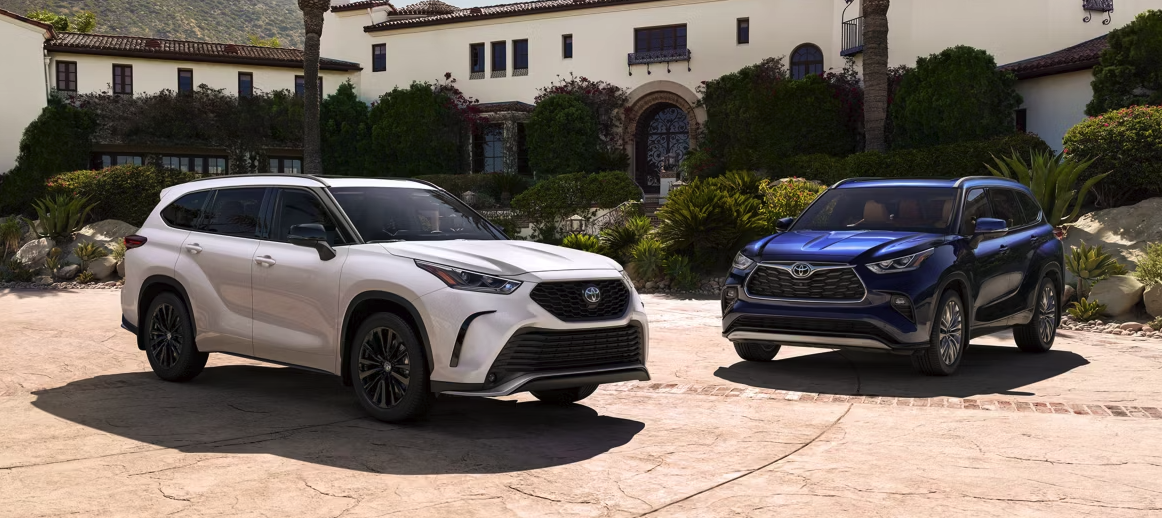
Toyota families in Durham have more choices than ever before, and the arrival of the Grand Highlander has sparked a common question among shoppers at Mark Jacobson Toyota: “What exactly is the difference between the standard Highlander and the Grand Highlander?” While they share a similar nameplate, these are two distinct vehicles designed for slightly different needs and life stages. The classic Highlander has been a staple in the Triangle for years, offering perfect mid-size agility for school runs and grocery getting. The Grand Highlander, however, answers the call for “more” more third-row space, more cargo capacity, and more power options. If you are debating which SUV fits your daily commute down I-40, your weekend road trips to the Outer Banks, and your growing family, this comparison will break down the dimensions, powertrains, and features to help you measure the right fit.
The Architecture of Space: Dimensions and Daily Life in Durham
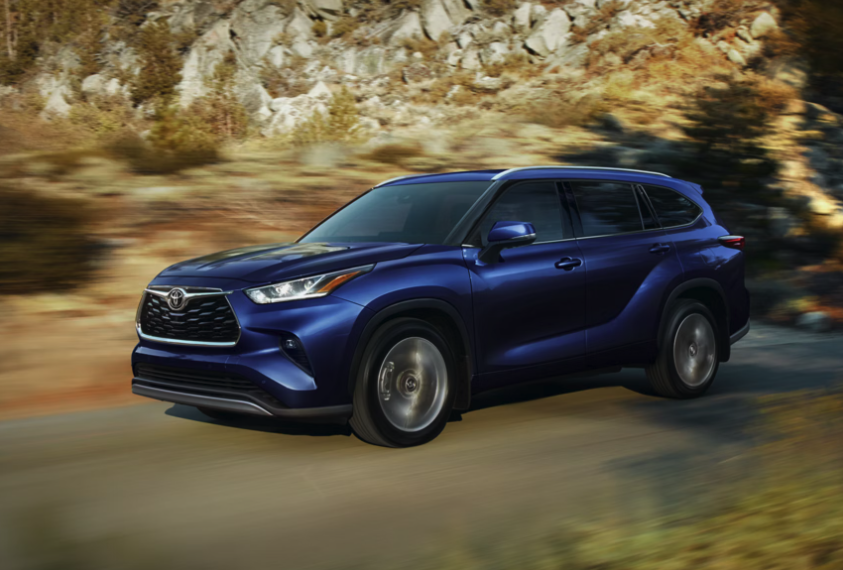
When navigating the bustling streets of Durham, from the historic Brightleaf District to the modern corridors of Research Triangle Park, the physical footprint of your vehicle dictates your daily comfort. The standard Toyota Highlander is built on the TNGA-K platform, offering a sophisticated balance of interior volume and exterior maneuverability. It measures approximately 194.9 inches in length, making it a favorite for those who frequently park in tight spaces at the Durham Performing Arts Center or older downtown parking garages.
Its design focuses on “efficient utility,” providing enough room for a family of five with a third row that serves as a vital safety net for carpooling duties or short trips to the Sarah P. Duke Gardens. However, for those who feel the “pinch” during holiday travel, the Grand Highlander emerges as the “stretched” alternative. It adds roughly 6.5 inches to the overall length and nearly 4 inches to the wheelbase. This isn’t merely a cosmetic extension; it is a structural reimagining that prioritizes every passenger equally.
The Grand Highlander’s boxier rear profile is a deliberate departure from the Highlander’s sloping roofline. This architectural choice maximizes vertical space, ensuring that even the passengers in the very back have enough headroom to avoid feeling cramped. In the Triangle’s competitive SUV market, this distinction is crucial. The standard Highlander offers a more car-like driving dynamic, feeling nimble around corners and easy to guide through the narrow lanes of local residential neighborhoods.
Conversely, the Grand Highlander offers a more commanding, “command-center” feel. It feels more substantial on the road, providing a sense of security and presence that resonates with drivers who are moving up from smaller crossovers. The choice between them often hinges on your specific “spatial threshold.” If your garage has strict depth limits or if you prefer a vehicle that feels “snappy” in city traffic, the Highlander remains the gold standard. But if your weekends involve hauling sports gear for the whole team or embarking on long-distance treks where elbow room is a non-negotiable luxury, the Grand Highlander’s architectural expansion provides a level of tranquility that smaller SUVs simply cannot replicate.
Maximizing Utility: Cargo Solutions for the Active North Carolina Lifestyle
While the passenger space gets the headlines, the cargo flexibility is where the Grand Highlander truly justifies its “Grand” moniker. In the standard Highlander, you have about 16 cubic feet of space behind the third row. For a Durham family, this is perfect for a week’s worth of groceries from the local Harris Teeter or a few backpacks for school. However, if you need to transport a full load of passengers plus luggage for a weekend at Jordan Lake, the Highlander might require you to utilize a roof rack.
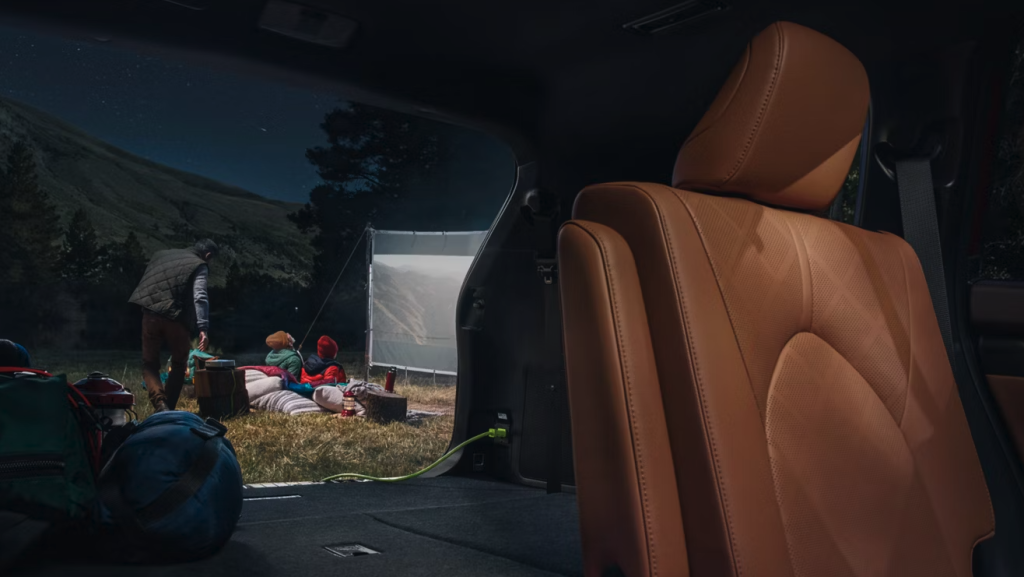
The Grand Highlander solves this by offering a staggering 20.6 cubic feet behind the third row. This extra five cubic feet is the difference between leaving a suitcase behind and fitting everyone’s gear inside the climate-controlled cabin. When you fold all the seats down, the Grand Highlander opens up to nearly 98 cubic feet of total volume, effectively turning the SUV into a covered transport for furniture hauls or massive bulk-shopping trips. This versatility ensures that whether you are carrying a double stroller, a set of golf clubs, or camping gear for the Appalachian Trail, you never have to play “cargo Tetris.”
Powertrains and Performance: Engineering for the Triangle’s Terrain
The mechanical heartbeat of these two SUVs reflects Toyota’s commitment to diverse driving needs. Both models come standard with a 2.4-liter turbocharged four-cylinder engine that delivers a robust 265 horsepower and 310 lb-ft of torque. This engine is specifically tuned to handle the stop-and-go nature of I-147 and the rolling hills of the North Carolina Piedmont. It provides immediate low-end torque, which is essential for merging into fast-moving traffic or passing slower vehicles on Highway 15-501. However, the true divergence appears when we look at the hybrid offerings.
The standard Highlander Hybrid utilizes the time-tested 2.5-liter hybrid system, yielding an impressive 36 combined MPG. This is the ultimate “commuter’s choice” for Durham residents who want to slash their fuel budget without sacrificing the utility of a three-row vehicle. It is smooth, quiet, and remarkably efficient for a vehicle of its size, making it a top contender for environmentally conscious families who spend a lot of time idling in school pickup lines.
The Grand Highlander takes performance a step further by offering the exclusive Hybrid MAX powertrain. This system is a revelation in the family SUV segment, combining the 2.4-liter turbo engine with powerful electric motors to produce 362 horsepower and a massive 400 lb-ft of torque. This isn’t just about speed; it’s about effortless capability.
When you are driving through the foothills or heading toward the Blue Ridge Mountains, the Hybrid MAX provides a surge of power that makes the vehicle feel much lighter than it actually is. It also standardizes full-time Electronic All-Wheel Drive, which provides superior traction during our occasional North Carolina “winter events” or heavy summer downpours. While the standard Highlander focuses on being the most efficient version of itself, the Grand Highlander (in its MAX trim) focuses on being the most powerful. It offers a 0-60 mph time of just over 6 seconds, a figure usually reserved for sports sedans, not eight-passenger haulers. This makes it the ideal choice for the driver who refuses to compromise on driving engagement while fulfilling their family duties.
The Hybrid MAX Advantage: Towing and Torque Explained
For Durham families with active outdoor hobbies, the Hybrid MAX powertrain in the Grand Highlander is a game-changer for towing and hauling. While the standard Highlander is rated to tow up to 5,000 pounds in its gas configuration (and 3,500 lbs in the hybrid), the Grand Highlander Hybrid MAX makes reaching that 5,000-pound limit feel effortless. The secret lies in the 400 lb-ft of torque, which is available almost instantly thanks to the electric motors.
This means when you are pulling a boat to Falls Lake or a camper through the undulating terrain of the Triangle, the engine doesn’t have to “hunt” for gears or scream at high RPMs. The power delivery is linear and confident. Additionally, the Hybrid MAX system is paired with a direct-shift six-speed automatic transmission rather than a CVT, providing a more traditional “mechanical” feel that many drivers prefer when towing heavy loads. This setup ensures that your weekend adventures are as stress-free as your weekday commutes, providing a level of mechanical “headroom” that smaller, less powerful engines simply cannot match.
Technology and Safety: A Generational Leap in Connectivity
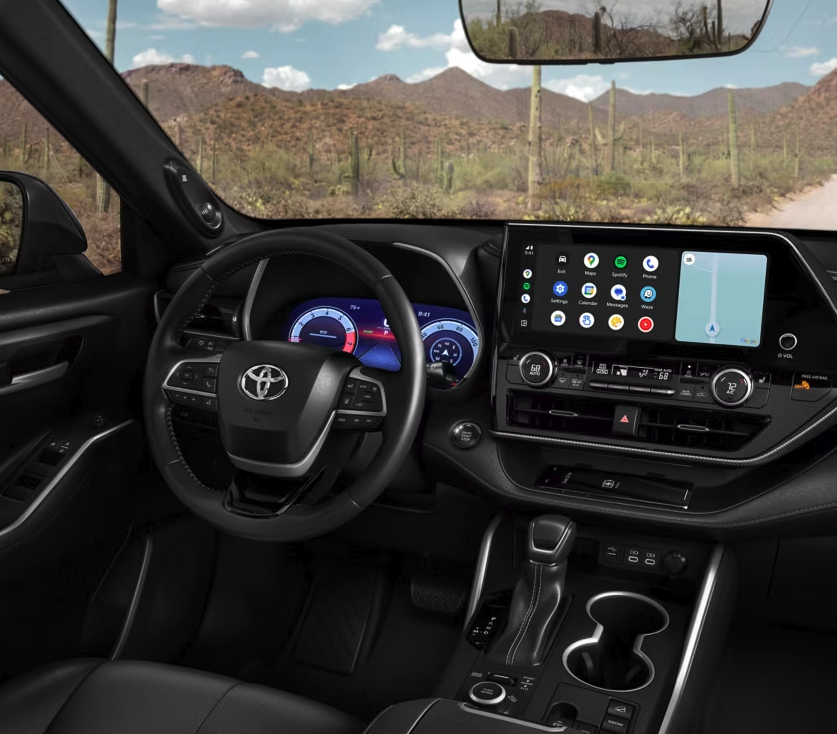
In today’s digital age, a vehicle’s interior is as much a mobile office and entertainment hub as it is a mode of transport. The standard Highlander comes well-equipped with the Toyota Audio Multimedia system, typically featuring an 8-inch or 12.3-inch touchscreen depending on the trim level. It is a highly intuitive system that supports wireless Apple CarPlay and Android Auto, ensuring your navigation and playlists are always at your fingertips during drives to Chapel Hill or Raleigh.
However, the Grand Highlander represents a “tech-first” approach. It features the 12.3-inch display as standard across almost all trims, and it integrates more deeply with the modern, multi-device lifestyle. With up to seven USB-C ports strategically placed throughout the cabin, the Grand Highlander ensures that every passenger even those in the third row can keep their tablets and smartphones charged during long trips. It also features 13 cupholders, many of which are designed to hold the oversized reusable water bottles that are so popular with students and athletes in Durham today.
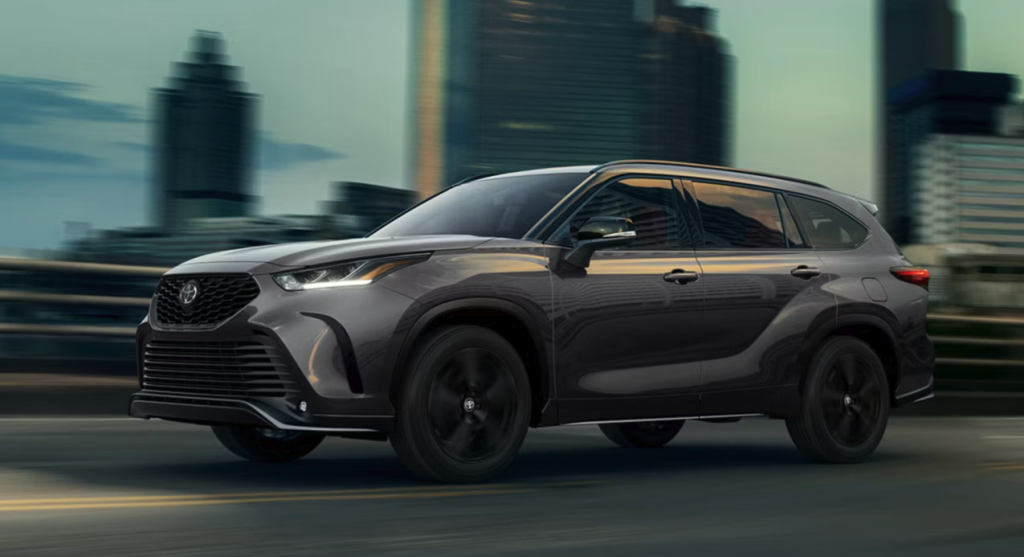
Safety is the cornerstone of the Toyota brand, and both vehicles are leaders in their class, but they utilize different generations of the Toyota Safety Sense (TSS) suite. The Highlander typically utilizes TSS 2.5+, a comprehensive system that includes Pre-Collision System with Pedestrian Detection and Lane Departure Alert. The Grand Highlander, being the newer entry, debuts with TSS 3.0.
This updated suite features enhanced sensors with greater range and resolution. For instance, the system can now detect motorcyclists and certain guardrails, providing an extra layer of protection on busy Durham roads like 15-501. One of the most significant additions in TSS 3.0 is Proactive Driving Assist (PDA). When enabled, PDA provides gentle braking into curves or subtle steering inputs to help maintain distance between your vehicle and a preceding vehicle or cyclist. It acts as a “silent co-pilot,” reducing driver fatigue during the grueling I-40 rush hour. Both models prioritize the safety of your most precious cargo, but the Grand Highlander offers the very latest in semi-autonomous assistance and sensing technology.
Advanced Safety Features: Navigating the I-40 Rush Hour
One of the most praised features for Durham drivers in the Grand Highlander is the available Traffic Jam Assist. This system is designed for the low-speed, “stop-and-go” traffic that characterizes the morning commute toward Research Triangle Park. Under certain conditions on limited-access highways, the system can take over steering, braking, and acceleration at speeds under 25 mph, allowing the driver to reduce the physical stress of congestion.
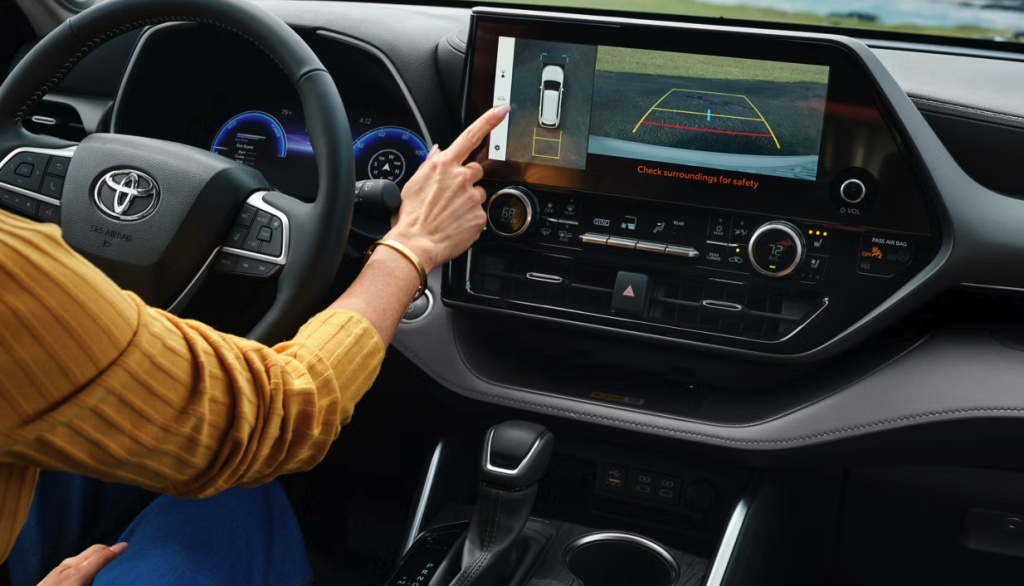
Complementing this is the available Panoramic View Monitor, which is especially helpful in the larger Grand Highlander. It provides a 360-degree overhead view of the vehicle, making it much easier to navigate tight parking spots near the American Tobacco Campus. Furthermore, both vehicles offer Blind Spot Monitor with Rear Cross-Traffic Alert as standard or available features, which are essential for safely changing lanes on high-speed NC highways. These technologies work in harmony to create a “safety bubble” around the vehicle, ensuring that whether you are a novice driver or a seasoned road warrior, you have the best possible tools to avoid collisions.
Trim Levels and Longevity: Investing in Your Family’s Future
Choosing between the Highlander and Grand Highlander also involves a strategic look at trim levels and long-term value. The standard Highlander offers a wider variety of trims, ranging from the budget-friendly L and LE to the luxurious Limited and Platinum. This allows Durham buyers to be very specific about their budget, potentially opting for a higher trim in the standard Highlander to get premium features like the JBL® Premium Audio system or a panoramic sunroof for the same price as a mid-tier Grand Highlander.
The Highlander has a legendary reputation for resale value; it is one of the most sought-after used vehicles in the Triangle, meaning your investment is well-protected. Because it has been in production for decades, its reliability is a known quantity, and parts are readily available at Mark Jacobson Toyota, ensuring that maintenance stays affordable over the lifespan of the vehicle.
The Grand Highlander, while commanding a higher initial price point, offers a “premium-as-standard” philosophy. Even the entry-level XLE trim on the Grand Highlander comes incredibly well-equipped with SofTex®-trimmed seats, heated front seats, and the larger 12.3-inch multimedia screen. For many families, the extra few thousand dollars in the MSRP is a small price to pay for the future-proofing that the extra space and newer technology provide.
As children grow into teenagers, the value of that “adult-sized” third row becomes immeasurable. Investing in the Grand Highlander now might prevent the need to trade in for a larger vehicle in three or four years. Furthermore, the Grand Highlander’s boxy, modern aesthetic is expected to age very well, maintaining its curb appeal in the competitive SUV market. Both vehicles are backed by Toyota’s 3-year/36,000-mile basic warranty and 5-year/60,000-mile powertrain warranty, plus ToyotaCare, which covers factory-scheduled maintenance for two years or 25,000 miles.
Total Cost of Ownership and the Triangle Resale Market
When considering the total cost of ownership in North Carolina, fuel efficiency and maintenance are paramount. The Highlander Hybrid’s 36 MPG rating is a significant advantage for those with high annual mileage, potentially saving hundreds of dollars at the pump each year compared to non-hybrid competitors. However, the Grand Highlander Hybrid (non-MAX) still achieves a remarkable 34 MPG, proving that you don’t have to sacrifice much efficiency for the extra size.
At Mark Jacobson Toyota, we see that Toyotas in the Durham area tend to hold their value significantly better than domestic or European counterparts. This high residual value means that when it comes time to trade in your Highlander or Grand Highlander for the next Toyota, you will likely have more equity to put toward your next purchase. Whether you choose the agility of the classic or the “grandeur” of the new model, you are buying into a legacy of durability that is perfectly suited for the diverse driving conditions of the Southeast.
Enhanced Visibility and Climate Innovation
A critical feature that many Durham drivers overlook until they need it is the Digital Rearview Mirror. In a large SUV like the Grand Highlander, the view out the back window can easily be obstructed by tall passengers or a trunk full of camping gear. This technology uses a dedicated camera mounted on the rear of the vehicle to project a high-resolution, wide-angle image directly onto the mirror. It effectively “sees through” all interior obstacles, providing a clear view of traffic on I-40 regardless of how much gear you’ve packed for a trip to the coast.
Furthermore, the climate control systems in the Grand Highlander have been optimized for the humid North Carolina summers. Unlike many SUVs that place air vents in the side pillars where they often blow directly on a passenger’s shoulder the Grand Highlander features ceiling-mounted vents for the second and third rows. This allows for a “curtain” of cool air to fall over the passengers, cooling the cabin much more evenly and quickly. This small engineering detail makes a massive difference in passenger comfort when the heat index in Durham climbs into the triple digits.
Both of these exceptional vehicles are proudly built in the USA at Toyota’s manufacturing facility in Princeton, Indiana. This domestic production ensures a high level of build quality specifically tailored for American road conditions and safety standards. It also means that for owners in the Triangle, genuine Toyota parts and accessories are readily available. By choosing either the Highlander or the Grand Highlander, you are supporting American manufacturing while driving a vehicle engineered to last for decades.
Experience the Difference at Mark Jacobson Toyota
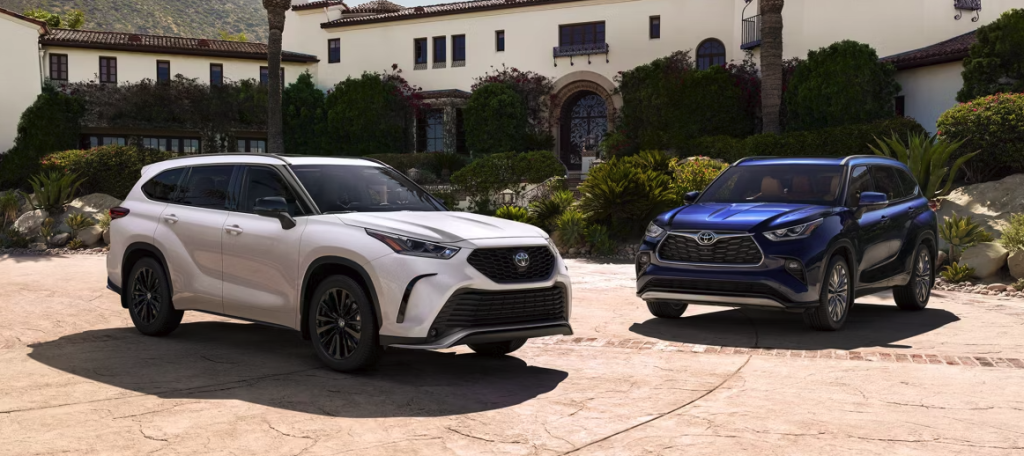
The only way to truly know which SUV belongs in your driveway is to sit in them. We invite you to bring your whole family to Mark Jacobson Toyota. Bring the car seats, bring the strollers, and bring the kids. Test the third row of the Highlander, then hop into the Grand Highlander to feel the difference. Our team is ready to facilitate a comprehensive side-by-side comparison. Visit us at 14516 Durham-Chapel Hill Blvd in Durham, NC, and let us help you find the perfect fit for your next North Carolina adventure.
Connect with us


